By Louis ‘Barok‘ C. Biraogo — March 29, 2025
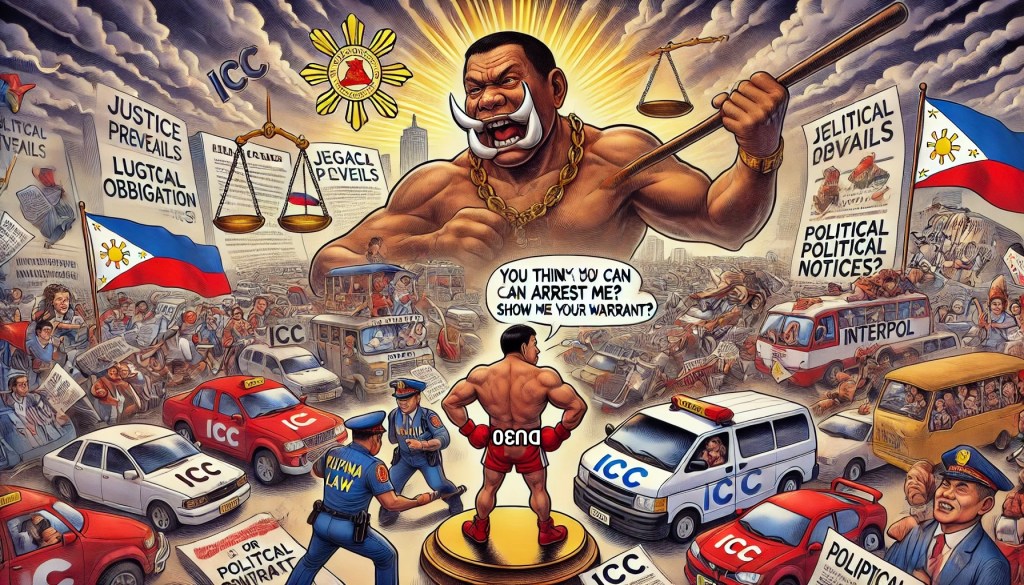
WHEN a Senate panel chaired by the President’s sister declares an arrest ‘unlawful,’ is it constitutional scrutiny or political theater? We parse the law behind the headlines—and it’s messier than a Manila traffic jam.
On March 27, 2025, Senator Imee Marcos dropped a bombshell: her Senate Foreign Relations Committee found “glaring violations” in the arrest of former President Rodrigo Duterte, claiming the Philippines had no duty to hand him over to the International Criminal Court (ICC) and hinting at executive overreach in assisting The Hague. Let’s dive into this quagmire—where international law, Philippine jurisprudence, and political score-settling collide. Was Duterte’s arrest a due process debacle, or a lawful flex of sovereign discretion? Let’s break it down with the rigor of a Supreme Court justice and the skepticism of a tabloid editor.
I. Legal Breakdown: Senate vs. Government Smackdown
The Senate’s report hinges on three claims: Duterte’s rights were trampled, the Philippines owed the ICC nothing post-2019 withdrawal, and the government’s ICC assist was a voluntary overstep. The government counters with residual duties, sovereign choice, and procedural compliance. Here’s the legal cage match.
A. Rome Statute: Jurisdiction Without Teeth?
The Philippines ditched the Rome Statute in 2019, but the ICC’s reach isn’t so easily shaken. Article 11(1) limits jurisdiction to crimes committed while a state is a party—covering Duterte’s drug war (2016–2019). Article 127(2) adds bite: withdrawal doesn’t erase obligations for pre-exit crimes or ongoing probes started before March 17, 2019.[^1] The ICC’s Duterte investigation, greenlit in 2021, fits this window.[^2] So, the Senate’s “no obligation” line holds water only if you ignore residual duties.
Article 59 governs arrests, requiring custodial states to follow national law when executing ICC warrants. Post-withdrawal, Article 86 (general cooperation) is off the table, but Article 87(5)(a) lets the ICC tap non-parties for help via ad hoc deals. The government could argue it voluntarily honored this, sidestepping the Senate’s claim of illegality. Problem is, without a Philippine warrant, Article 59’s “national law” clause points to a due process gap—unless domestic rules greenlighted it.
B. Interpol: Red Notice or Red Herring?
Interpol’s Constitution, Article 2(1), pushes mutual assistance “within the limits of [national] laws.”[^3] A Red Notice seeks arrests for extradition; a Diffusion Notice is a looser call for cooperation. The Senate gripes about an “unverified” Diffusion Notice, suggesting shaky grounds. If true, this skirts Interpol’s rigor—Red Notices need solid evidence, Diffusions less so.[^4] The government might counter that either notice, paired with ICC jurisdiction, justifies action, but Philippine law still demands judicial oversight unless an exception applies.
C. Philippine Law: Due Process or Executive Power Play?
The 1987 Constitution’s Article III, Section 2, is crystal: no arrest without a warrant unless probable cause is judicially vetted.[^5] Rule 113, Section 5, of the Rules of Court carves exceptions—warrantless arrests for in flagrante delicto or hot pursuit.[^6] If Duterte’s arrest lacked a Philippine warrant, it’s a constitutional foul unless he was caught mid-crime (unlikely, given he’s not dodging cops in Davao). The Senate’s “glaring violations” scream this breach, but details are thin—did cops storm his house sans paperwork, or was there a DOJ wink?
Republic Act 9851 (2009) domesticates ICC crimes and, under Section 17, nudges cooperation with international tribunals.[^7] Article II, Section 2, of the Constitution weaves international law into the legal fabric, bolstering the government’s claim that assisting the ICC aligns with national policy. Ethical codes like RA 6713 (public officials’ duty to justice) and the CPRA’s Canon I (upholding law) support this if the arrest was procedurally sound.[^8] But bypassing Rule 112’s preliminary investigation requirement—mandatory for warrant issuance—could sink the government’s case.[^9]
D. Supreme Court Precedents: Mixed Signals
- Pangilinan v. Cayetano (2021) upheld the ICC withdrawal but nodded to residual jurisdiction over pre-2019 crimes.[^10] It didn’t mandate cooperation, leaving it to executive discretion—fuel for the government, but a thorn for the Senate’s “no obligation” absolutism.
- Purganan (2002) relaxed extradition rules, saying foreign warrants don’t need local probable cause hearings if due process (e.g., bail rights) is respected.[^11] If Duterte got a hearing, this precedent blesses the arrest; if not, it’s a strike against the government.
- Rubrico v. Macapagal-Arroyo (2010) balanced state power with rights, affirming enforcement authority if lawful.[^12] A warrantless arrest sans exception flunks this test.
E. Government’s Counter-Punch
- Residual Duty (Article 127(2)): The government could argue the ICC probe’s pre-2019 roots trigger lingering cooperation duties, even post-withdrawal. The Senate’s blanket denial ignores this nuance.
- Voluntary Cooperation (Article 87(5)): Assisting the ICC was a sovereign call, not a legal shackle. Pangilinan backs this discretion, and RA 9851’s cooperation clause gives it domestic legs. The Senate’s “decided to assist” critique is political, not legal.
- Procedural Compliance (Rule 113-Section 5): If Duterte obstructed justice (e.g., defying an ICC summons), a warrantless arrest holds. Without specifics, the Senate’s “violations” claim is a shot in the dark.
II. Political Calculus: Family Feuds and Global Games
A. Domestic Drama: Marcos vs. Duterte, Round Two
Imee Marcos chairing this probe isn’t coincidence—it’s a neon sign of the Marcos-Duterte rift. Once allies, the families split over policy and power, with Duterte’s drug war legacy a lightning rod. Imee’s report smells like a lifeline to Duterte’s base—still rabid in Davao—painting Marcos Jr.’s ICC cozying as betrayal. Public sentiment splits hard: urban liberals cheer accountability; rural loyalists cry foul. The Senate’s oversight flex looks legit—Congress can probe executive acts—but Imee’s bias raises eyebrows. Is this legal critique or a 2025 midterm play?
B. International Stakes: Sovereignty on Trial
Duterte’s 2019 ICC exit was a middle finger to global justice. Marcos Jr.’s assist flips that script, eyeing brownie points with ICC states and human rights wonks. But it risks alienating sovereignty hawks and straining Interpol ties if the Diffusion Notice kerfuffle sours cooperation. The Philippines walks a tightrope: join the accountability club or double down on nationalist defiance? Either way, the ICC’s clout hinges on Manila’s goodwill—post-withdrawal, it’s all carrots, no sticks.
III. Verdict & Recommendations: Law, Politics, and a Pinch of Chaos
A. Legal Merits: A Tie With Asterisks
The Senate’s “glaring violations” claim has teeth if Duterte’s arrest skipped a warrant and hearing—Article III and Purganan don’t bend far. But the “no obligation” stance oversimplifies: Pangilinan and Article 127(2) keep pre-2019 crimes in play, and voluntary cooperation via Article 87(5) and RA 9851 is fair game. The government’s case hinges on procedural details—did a warrant exist, or did Rule 113 save the day? Without Interpol notice specifics or arrest records, it’s a draw. Gaps scream for daylight.
B. Political Reality: Oversight or Opportunism?
The Senate report reeks of partisan spice—Imee’s Duterte ties undercut its purity. But the government’s ICC pivot isn’t spotless either; it smacks of diplomatic posturing or settling scores. Genuine oversight demands facts, not family feuds. Public outrage could tip the scales, but as of March 28, 2025, it’s a standoff.
C. Next Steps: Clarity Over Conspiracy
- Judicial Review: Duterte should haul this to the Supreme Court—test the arrest’s constitutionality and Pangilinan’s limits. A writ of habeas corpus could force transparency.
- Legislative Fix: Congress should clarify RA 9851’s post-ICC scope—cooperation needs rules, not whims. A Senate whitewash won’t cut it; subpoena arrest docs.
- Diplomatic Dance: Marcos Jr. must signal the ICC: voluntary help isn’t a blank check. Define terms, or sovereignty takes a backseat.
D. The Big Questions
- Due Process or RA 9851? If no warrant, it’s a violation—RA 9851 doesn’t override Article III. Justification needs ironclad proof of compliance.
- Pangilinan’s Residual Reach? It backs ICC jurisdiction but not forced cooperation. The Senate’s right on obligation, wrong on discretion.
- Oversight or Maneuvering? Both. The Senate’s got a point but can’t shake the partisan stink.
Duterte’s arrest is a legal Rubik’s Cube wrapped in political dynamite. The Senate’s got a case if the government flubbed procedure; the government’s got a lifeline if it played by the book. Until the fog lifts—show us the warrant, Interpol’s paper trail, Duterte’s day in court—this is less about justice and more about who blinks first. Stay tuned; Manila’s legal circus is just warming up.
[^1]: Rome Statute, Art. 127(2).
[^2]: ICC, “Philippines,”
[^3]: Interpol Constitution, Art. 2(1).
[^4]: Interpol, “Notices,”
[^5]: 1987 Phil. Const., Art. III, § 2.
[^6]: Rules of Court, Rule 113, § 5.
[^7]: Rep. Act No. 9851, § 17 (2009).
[^8]: Rep. Act No. 6713, § 4; CPRA, Canon I, § 1 (2023).
[^9]: Rules of Court, Rule 112, § 1.
[^10]: Pangilinan v. Cayetano, G.R. No. 238875 (2021).
[^11]: Govt. of the U.S. v. Purganan, G.R. No. 148571 (2002).
[^12]: Rubrico v. Macapagal-Arroyo, G.R. No. 183871 (2010).

- ₱75 Million Heist: Cops Gone Full Bandit

- ₱6.7-Trillion Temptation: The Great Pork Zombie Revival and the “Collegial” Vote-Buying Circus

- ₱1.9 Billion for 382 Units and a Rooftop Pool: Poverty Solved, Next Problem Please

- ₱1.35 Trillion for Education: Bigger Budget, Same Old Thieves’ Banquet

- ₱1 Billion Congressional Seat? Sorry, Sold Out Na Raw — Si Bello Raw Ang Hindi Bumili

- “We Will Take Care of It”: Bersamin’s P52-Billion Love Letter to Corruption

- “Skewed Narrative”? More Like Skewered Taxpayers!

- “Scared to Sign Vouchers” Is Now Official GDP Policy – Welcome to the Philippines’ Permanent Paralysis Economy

- “Robbed by Restitution?” Curlee Discaya’s Tears Over Returning What He Never Earned

- “My Brother the President Is a Junkie”: A Marcos Family Reunion Special

- “Mapipilitan Akong Gawing Zero”: The Day Senator Rodante Marcoleta Confessed to Perjury on National Television and Thought We’d Clap for the Creativity

- “Just Following Orders” Is Dead: How the Hague Just Turned Tokhang’s Finest Into International Fugitives




 KWEBA ni BAROK
Leave a comment