By Louis ‘Barok’ C Biraogo — March 31, 2025
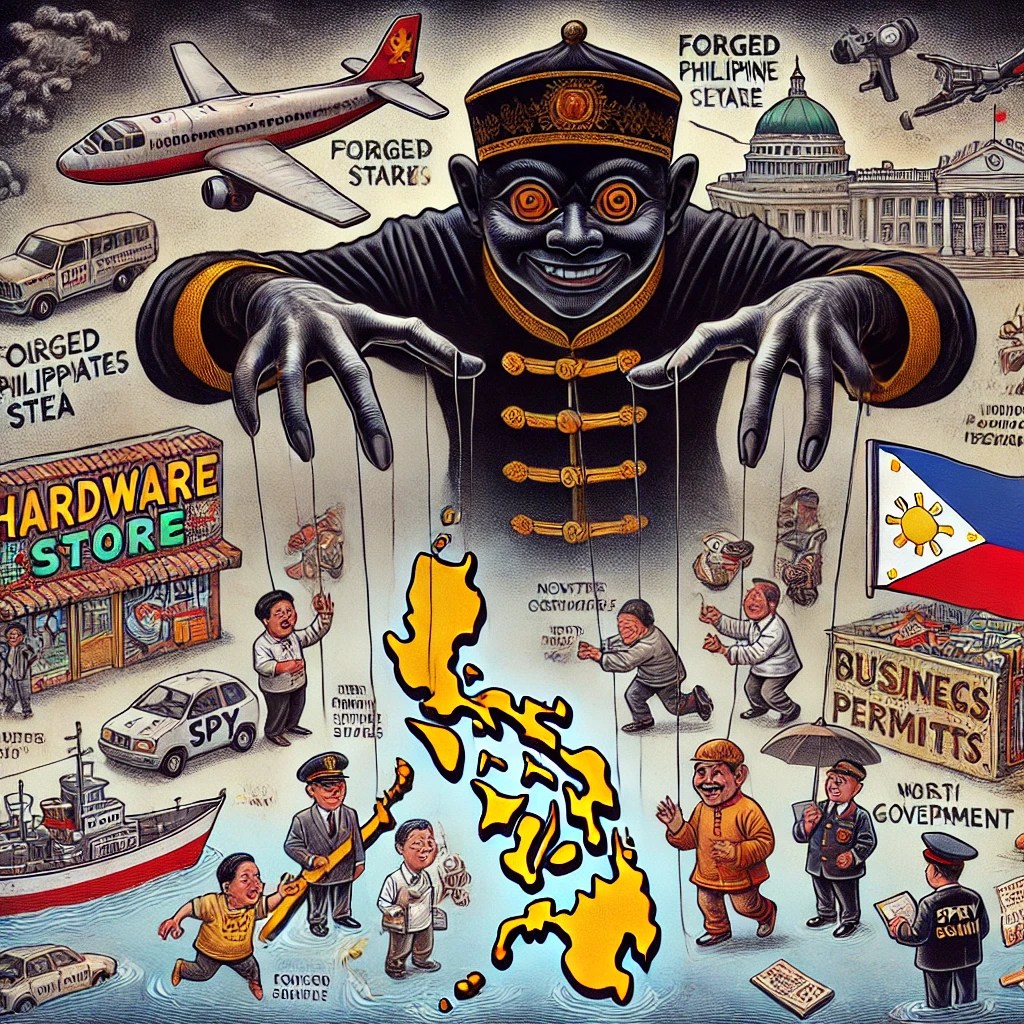
IN Digos City, a dusty hardware store hums with the clatter of nails and the whir of saws. Its “Filipino owner” is a name on a faded permit, a ghost conjured by a 50-year-old Chinese national named Bangdie Pan wielding forged birth certificates. Four days later, in the shadow of North Cotabato’s chemical vats, four more Chinese nationals—Zhongyi Tang, Tianpei Wu, Dezhen Liu, and Wang Lianxu—worked under the guise of a Filipina owner who never set foot in the plant. The real mastermind, employees whisper, sits in Manila, a Chinese puppeteer pulling strings from afar. This is not just fraud; it’s a silent invasion, unraveling in March 2025, as the Bureau of Immigration (BI) peeled back the layers of a scheme that threatens the very fabric of Philippine sovereignty.
The audacity is staggering. Foreign nationals, mostly Chinese, have slipped into Mindanao’s economic bloodstream, cloaking themselves in fake Filipino identities to set up businesses and employ illegal workers. The BI’s twin raids—March 20 in Davao del Sur and March 24 in North Cotabato—exposed a chilling sophistication: nonexistent owners, forged permits, and a paper trail of lies so convincing it fooled local regulators. Pan managed her hardware store with a work visa from a Pasig City company, yet operated far beyond its scope. In M’lang, Liu brandished a birth certificate claiming Filipino roots, a fiction undone by the plant’s own workers. These are not isolated missteps but symptoms of a systemic rot, one that Immigration Commissioner Joel Anthony Viado calls a “disturbing trend”—and he’s right to sound the alarm.
A Web of Deception Spanning Years
This isn’t a new story; it’s an old wound festering anew. Rewind to July 2024: the National Bureau of Investigation (NBI) in Davao unearthed nearly 200 falsified birth certificates issued to Chinese nationals by Santa Cruz’s civil registry between 2018 and 2019. Dig deeper, and the number balloons to 1,200 since 2016—a sixfold leap that stunned even seasoned investigators. These documents weren’t just paper; they were keys to privileges reserved for Filipinos: buying land, launching businesses, even seizing political power. Take Alice Guo, the former mayor of Bamban, Tarlac. Her Filipino identity was a mirage, shattered by her arrest in Indonesia in September 2024 and detention for crimes tied to the now-banned Philippine offshore gaming operators (Pogos). She’s a stark emblem of how deep this deception runs.
But the stakes climb higher. Viado’s warning—that these fake identities could mask espionage—casts a shadow over every forged certificate. In January 2025, the NBI nabbed five Chinese nationals in Palawan, caught monitoring Philippine Coast Guard and Navy resupply missions in the West Philippine Sea. A month later, two more Chinese, alongside three Filipinos, were arrested in Manila, their vehicles bristling with IMSI catchers—gadgets designed to intercept messages near the Armed Forces headquarters, the PNP, and Malacañang itself. These aren’t petty criminals; they’re operatives, and the BI’s Mindanao arrests hint at a nexus where commerce and covert agendas intertwine. The Pogo scandals, Guo’s rise, and now this—each thread pulls us toward a troubling question: how much of this is profit, and how much is something darker?
Viado Faces a Tide of Deception
Into this fog enters Joel Anthony Viado. Under his watch, the BI has wielded Australian-donated video spectral comparators—tools that sniffed out 241 fraudulent documents in 2023 alone. His March raids, executed with the precision of a military campaign, leaned on the Army’s 39th Infantry Battalion and PNP operatives to drag these impostors into the light. Viado’s insistence on stricter document controls is a clarion call, a plea to shore up a nation under siege. His leadership deserves applause—here’s a man who sees the invisible enemy and refuses to blink.
Yet, for all his valor, Viado battles a system riddled with cracks. Local civil registries, like Santa Cruz’s, churn out fake identities with alarming ease, their oversight as flimsy as the paper they stamp. Business licensing is a sieve—hardware stores and chemical plants spring up under ghost owners, unchecked by regulators asleep at the wheel. Corruption festers too; the BI’s “one-strike” policy against errant officials sounds tough, but its bite is questionable when 1,200 fake certificates slipped through over years. The Cybercrime Prevention Act of 2012 offers a legal net, yet its penalties—fines and jail terms—pale against a 119% surge in identity fraud in 2024, per Sumsub’s chilling tally. TransUnion pegs 8.7% of digital transactions as suspect in 2022, third worst globally, while 14,000 online fraud cases scarred 2023. The numbers scream what the raids whisper: the government’s response is a Band-Aid on a gaping wound.
A Call to Arms—Before It’s Too Late
This isn’t a crisis to mull over; it’s a fire to extinguish. Immediate steps beckon: mandate biometric verification for every business registration, cross-checked against immigration records—no more ghost owners slipping through. Audit every civil registry in high-risk zones like Santa Cruz, rooting out the complicit with surgical precision. But the horizon demands more. A national task force—fusing BI, NBI, and military intelligence—must hunt the fraud-espionage nexus, tracing every fake ID to its source. The Espionage Act, a relic of 1941, needs teeth—amend it with stiffer penalties to match the modern threat. And turn to the people: a whistleblower program, paired with CICC-style awareness campaigns, could transform citizens into sentinels against this creeping menace.
The contrast is stark. Viado’s BI storms a hardware store with forensic finesse, while 5 million Filipinos—4.5% of adults, per a 2022 FICO survey—reel from identity theft’s fallout. Raids net five in Mindanao, yet spies prowl Palawan and Manila with gadgets straight out of a Cold War playbook. A mayor ruled as an impostor; businesses thrive under false flags. The Philippines stands at a crossroads, its sovereignty bartered in backrooms and betrayed by bureaucracy. If Viado’s warnings go unheeded, if these gaps yawn wider, how many more fake Filipinos are hiding in plain sight—merchants by day, spies by night?
Sources hyperlinked: The Crime of Identity Theft in the Philippines, NBI arrests 5 suspected Chinese ‘spies’ in Palawan, Philippines arrests two more Chinese nationals over spying, Identity fraud cases in Philippines surged 119 per cent this year – study, Philippines: number of online fraud cases 2023, TransUnion Report, FICO Survey. Additional data drawn from BI and NBI reports as of March 29, 2025.

- ₱75 Million Heist: Cops Gone Full Bandit

- ₱6.7-Trillion Temptation: The Great Pork Zombie Revival and the “Collegial” Vote-Buying Circus

- ₱1.9 Billion for 382 Units and a Rooftop Pool: Poverty Solved, Next Problem Please

- ₱1.35 Trillion for Education: Bigger Budget, Same Old Thieves’ Banquet

- ₱1 Billion Congressional Seat? Sorry, Sold Out Na Raw — Si Bello Raw Ang Hindi Bumili

- “We Will Take Care of It”: Bersamin’s P52-Billion Love Letter to Corruption

- “Skewed Narrative”? More Like Skewered Taxpayers!

- “Scared to Sign Vouchers” Is Now Official GDP Policy – Welcome to the Philippines’ Permanent Paralysis Economy

- “Robbed by Restitution?” Curlee Discaya’s Tears Over Returning What He Never Earned

- “My Brother the President Is a Junkie”: A Marcos Family Reunion Special

- “Mapipilitan Akong Gawing Zero”: The Day Senator Rodante Marcoleta Confessed to Perjury on National Television and Thought We’d Clap for the Creativity

- “Just Following Orders” Is Dead: How the Hague Just Turned Tokhang’s Finest Into International Fugitives







 KWEBA ni BAROK
Leave a comment