
By Louis ‘Barok‘ C. Biraogo — April 3, 2025
IN THE Philippines, where politics is as much about rice as it is about rhetoric, President Ferdinand Marcos Jr. is learning a brutal lesson: approval ratings don’t just dip—they can crater. The latest Pahayag First Quarter Survey, conducted by PUBLiCUS Asia Inc. from March 15 to 20, 2025, and released just days ago on March 28, reveals a 14-point collapse in Marcos’s approval, from 33% to a mere 19%. His trust rating fares little better, plunging from 23% to 14%. Meanwhile, Vice President Sara Duterte is riding a wave of resurgence, her trust climbing 8 points to 39% and approval ticking up to 42%. These numbers aren’t just a snapshot—they’re a seismic shift, echoing the hunger pangs of a nation and the vendettas of its dynasties.
This isn’t a gentle slide like the 4% dip Marcos saw in 2023. A 14-point drop isn’t a slump—it’s a collapse reminiscent of his father’s final years, when Ferdinand Marcos Sr.’s grip loosened amid economic ruin and public fury. But history doesn’t repeat so neatly. Today’s Marcos faces a different beast: a fractured alliance with the Dutertes, a family whose populist fire still burns bright in the Filipino psyche, especially in Mindanao. These numbers reflect real hunger, not just discontent—and they signal a political reckoning that could reshape the 2025 midterms and the 2028 presidential race.
Dynasties at War: Decoding the Data’s Drama
The Philippines has long been a stage for dynastic drama, but the Marcos-Duterte saga is a masterclass in betrayal and backlash. Their 2022 alliance was a juggernaut, uniting the Marcos name’s technocratic sheen with the Dutertes’ iron-fisted appeal. Now, it’s a war zone. The Pahayag data lays bare the fallout: Marcos now trusts fewer Filipinos than trust him, while Duterte’s gains suggest she’s picking up the pieces. This mirrors global trends—think of Trump’s rural strongholds or Bolsonaro’s loyalists in Brazil—where populist roots outlast polished promises. Yet here, it’s uniquely Filipino: a feud fueled by regional pride, economic desperation, and the ghosts of martial law and drug wars.
Mindanao, the Duterte heartland, is the fault line. Marcos’s ratings there are abysmal, a backlash to his perceived elitism and the unraveling of a once-sacred pact. Historically, Philippine leaders who lose the south—like Joseph Estrada in 2001—struggle to hold the center. Marcos Sr. clung to power through force; his son, bound by democracy’s rules, has no such luxury.
What’s Fueling the Fire: Hunger, Feuds, and Spin
Economic Pain: Numbers don’t lie, but they don’t eat either. Inflation may have eased to 3.3% last year, yet rice prices still sting. Marcos, doubling as Agriculture Secretary, promised abundance but delivered scarcity. A jeepney driver in Manila might grumble, “Marcos swore rice would be cheaper, but my family eats less now.” Unemployment lingers, and wages stagnate—realities that hit harder than any GDP report. The survey’s timing, just before Holy Week, captures a public weary of empty plates and emptier assurances.
Political Fireworks: The Marcos-Duterte feud is more than a soap opera—it’s a power grab. The International Criminal Court’s probe into Rodrigo Duterte’s drug war has split them: Marcos wavers, Sara stands defiant. Her father’s threats of a comeback if she’s impeached rally their base, while Marcos’s ally, House Speaker Martin Romualdez, sees his own ratings tank. Mindanao’s rejection of Marcos isn’t just regional—it’s personal, a middle finger to a Manila-centric regime.
Narrative Wars: Marcos pitches competence—a technocrat in a polo shirt. Duterte sells strength—a no-nonsense heir to her father’s legacy. A Davao shopkeeper might beam, “Sara’s like Rodrigo—tough, not talk.” Her media game, from budget battles to a PHP 10-million book project, keeps her visible; Marcos’s stumbles drown in inflation headlines. In a nation where charisma often trumps policy, she’s winning the story.
Faces of the Fallout: Real Lives, Real Stakes
Behind the percentages are people. Imagine a fisherman in Cebu, his nets lighter as fuel costs soar, muttering, “Marcos talks big, but my kids skip meals.” Contrast that with a teacher in Davao, nodding approvingly at Sara’s grit: “She fights for us, not just herself.” These aren’t just anecdotes—they’re the pulse of a nation where trust hinges on who delivers, or at least seems to. The survey’s ±3% margin of error can’t mask the raw sentiment: Marcos is bleeding support, and Duterte is banking it.
The Ripple Effect: Midterms, Comebacks, and Chaos
Short-Term Stakes: The 2025 midterms loom, with 12 Senate seats up for grabs. Marcos’s slump could hobble his candidates—Imee Marcos, at 27% in prior polls, might falter if the family brand sours. Duterte’s camp, with Rodrigo (38%) and Bong Go (32%) in play, smells blood. A Senate tilt toward her allies could paralyze Marcos’s agenda, while congressional gains in Mindanao might cement her clout. These elections won’t just test popularity—they’ll redraw the battle lines.
Long-Term Shadows: Could this herald a Duterte comeback in 2028? Sara’s 39% trust rating towers over Marcos’s 14%—a launchpad for a presidential bid. Her father’s dynasty, once thought fading, roars back, much like Indonesia’s Suharto clan clawed relevance decades later. Marcos, term-limited, might pivot to populism—think subsidies or grand projects—but his elitist tag sticks. Globally, this fits a pattern: democratic backsliding thrives where dynasties feud, not fade. Southeast Asia watches, wary of another strongman turn.
Survival Guide: Bold Moves for a Fractured Nation
To Marcos: Face the economic pain head-on. Subsidize rice visibly—put your name on the bags if you must. Shed the jet-set image; a photo op in a flooded barangay beats a Davos speech.
To Duterte: Ride the trust wave, but don’t overplay the divisive card—Rodrigo’s playbook won’t age well forever. Build a national vision beyond Mindanao; a book’s fine, but policies stick.
To Voters: Beware one-family rule. Dynasties promise stability but often deliver vendettas—Marcos Sr.’s martial law and Duterte’s drug war prove it. Demand more than charisma; ask who fills your table, not just your TV screen.
The Final Gambit
The Philippines isn’t just choosing leaders—it’s choosing legacies. Marcos Jr.’s free fall isn’t fatal yet, but it’s a warning: power lost at the rice bowl rarely returns. Duterte’s rise isn’t assured, but it’s ominous—another dynasty poised to dominate. The question isn’t whether Sara will run in 2028—it’s whether Marcos can survive 2025. In a nation where politics is personal, the next meal might decide the next ruler.
Key citations: Pahayag Q1 2025 Survey (PUBLiCUS Asia Inc.), “Marcos’ trust rating plunges, VP Sara support rises” (Sunstar), “The Philippines’s two most powerful dynasties formed an alliance. Now they’re at war” (ABC News).

- ₱75 Million Heist: Cops Gone Full Bandit

- ₱6.7-Trillion Temptation: The Great Pork Zombie Revival and the “Collegial” Vote-Buying Circus

- ₱1.9 Billion for 382 Units and a Rooftop Pool: Poverty Solved, Next Problem Please

- ₱1.35 Trillion for Education: Bigger Budget, Same Old Thieves’ Banquet
- ₱1 Billion Congressional Seat? Sorry, Sold Out Na Raw — Si Bello Raw Ang Hindi Bumili

- “We Will Take Care of It”: Bersamin’s P52-Billion Love Letter to Corruption

- “Skewed Narrative”? More Like Skewered Taxpayers!

- “Scared to Sign Vouchers” Is Now Official GDP Policy – Welcome to the Philippines’ Permanent Paralysis Economy
- “Robbed by Restitution?” Curlee Discaya’s Tears Over Returning What He Never Earned

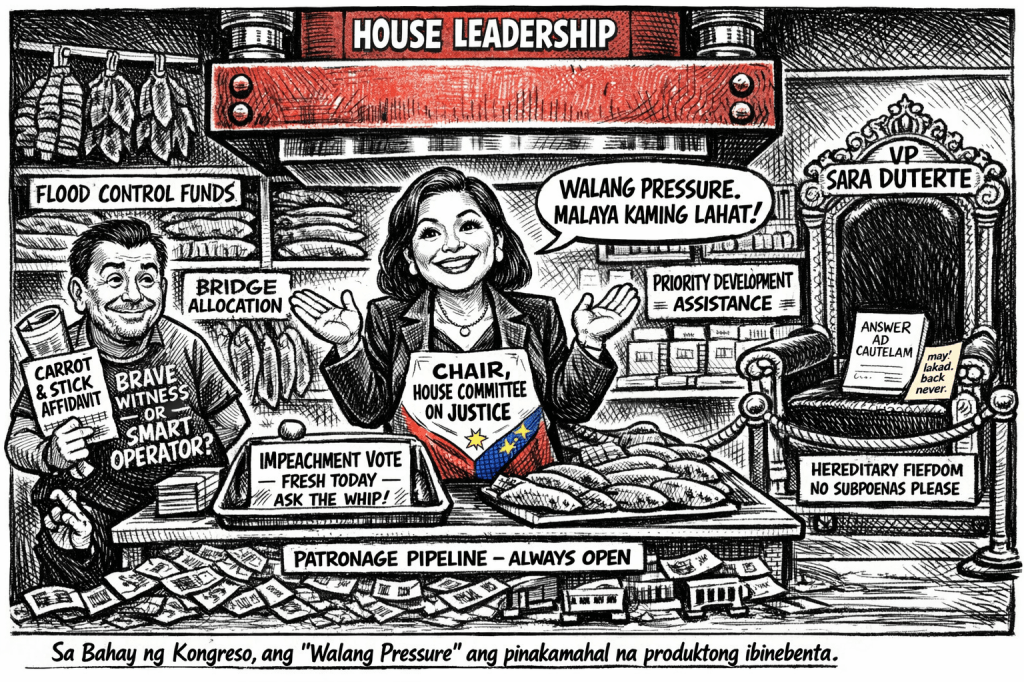
- “No Pressure” Luistro? The House Pork Bazaar Exposed
- “My Brother the President Is a Junkie”: A Marcos Family Reunion Special

- “Mapipilitan Akong Gawing Zero”: The Day Senator Rodante Marcoleta Confessed to Perjury on National Television and Thought We’d Clap for the Creativity




 KWEBA ni BAROK
Leave a comment