By Louis ‘Barok‘ C. Biraogo — April 9, 2025
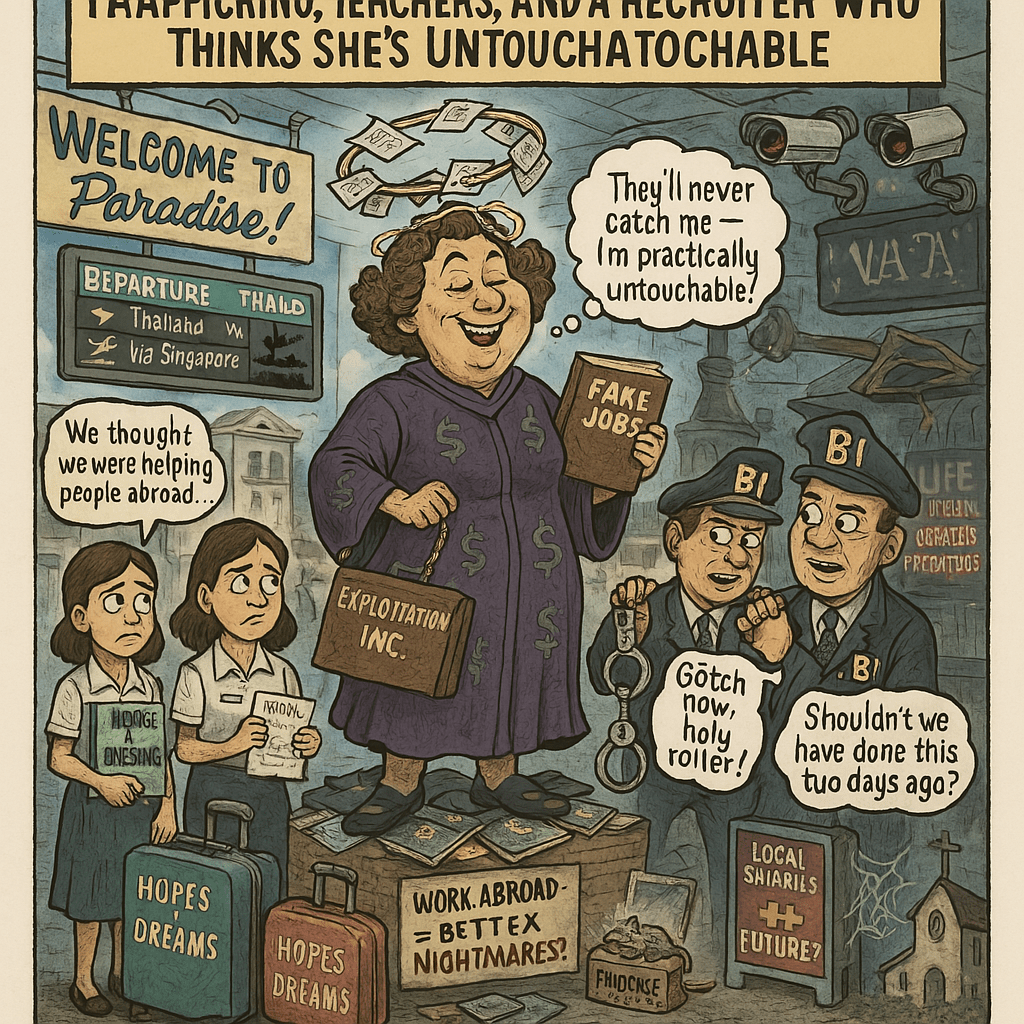
THE Bureau of Immigration (BI) nabbed three women at Ninoy Aquino International Airport on April 1, 2025, trying to jet off to Thailand via Singapore under the flimsy guise of “missionaries.” Spoiler: they weren’t spreading the gospel. Two confessed they’re licensed teachers roped into illegal gigs abroad by a recruiter posing as a holy roller. The BI’s calling it a “Bitbit scheme” classic—frequent flyer shepherds victims under fake pretenses. Cue the NBI swooping in on April 3 to cuff the ringleader. Let’s dissect this mess with a scalpel and a smirk.
Legal Showdown: Trafficking Slam Dunk or Recruitment Fumble?
Substantive Law: RA 9208/10364 vs. RA 8042—Pick Your Poison
This screams Republic Act No. 10364 (Expanded Anti-Trafficking Act) louder than a karaoke bar on payday. Section 4(a) nails “recruitment by deception” for exploitation—check. The recruiter spun a missionary yarn while funneling these women into illegal teaching gigs in Thailand. That’s not just bad faith; it’s a textbook trafficking play. Section 6(c) kicks it to qualified trafficking—life imprisonment, PHP 2-5 million fine—since it’s tied to illegal overseas employment. Contrast that with RA 8042 (Migrant Workers Act), which slaps illegal recruitment with 6-12 years for unauthorized job placement. The line? Trafficking demands exploitation intent; RA 8042 just needs a shady deal. Here, the “Bitbit” pattern and the recruiter’s ghosted prior group scream exploitation, not just a paperwork snafu.
Procedural Pitfalls: Hot Pursuit or Hot Mess?
The NBI’s April 3 arrest—two days post-interception—leans on Rule 113, Section 5(b) of the Rules of Criminal Procedure: warrantless arrest when a crime’s fresh and probable cause is solid. The BI’s tip-off plus DMW’s nod gave them ammo, but People v. Tudtud (G.R. No. 144037, 2003) warns that “hot pursuit” isn’t a two-day coffee break. The Supreme Court’s flexible on timing if evidence firms up fast, and inter-agency chatter likely saved this one. Still, a sharper BI-to-NBI handoff could’ve dodged due process gripes. Sloppy’s not illegal, but it’s a defense lawyer’s catnip.
Precedent Power Play: Casio Crushes Consent Excuses
People v. Casio (G.R. No. 211465, 2014) is our North Star: trafficking doesn’t care if victims said “yes” upfront—offender intent rules. These teachers thought they’d score legit jobs; the recruiter knew better. Their consent’s irrelevant when she’s plotting exploitation. The “Bitbit” MO—repeat trips, vanishing companions—cements her predatory vibe. Defense might cry “they wanted to go!” Casio says: tough luck.
Evidence Roulette: Trafficking Jackpot or Recruitment Cop-Out?
The evidence—dodgy docs, victim confessions, recruiter’s rap sheet—leans trafficking, but it’s not a slam dunk. RA 8042’s lighter burden (no exploitation proof needed) could tempt a lazy prosecutor. The “Bitbit” context and prior unreturned group are damning, but without hard proof of Thailand’s endgame (e.g., forced labor conditions), a slick attorney might downgrade this to illegal recruitment. Verdict: it’s trafficking if the DOJ’s got guts.
Agency Smackdown: BI’s Hero Moment or Snooze Fest?
BI’s Big Catch: Eagle Eyes, Amnesiac Brain
The BI deserves a polite golf clap for spotting this sham. Discrepancies in docs triggered a grilling that cracked the case—solid border cop stuff under CA 613 and RA 10364. But hold the confetti: this recruiter’s a frequent flyer who’s pulled this before, and her last group never came back. Where was the red flag then? Reactive wins don’t erase proactive flops. BI chief Viado’s “Bitbit” quip shows they know the game—why not stop her at the gate last time?
Inter-Agency Train Wreck: Two Days to Handcuffs?
BI to IACAT to DMW to NBI—sounds like a relay race with a dropped baton. Two days from bust to cuffs? In trafficking, that’s an eternity. RA 10364’s Section 20 birthed IACAT for seamless teamwork, yet this feels like a fax machine jam. IACAT’s 2023 SOPs demand swift reporting—enforce them with teeth, like a “one-strike” boot for dawdlers. Thailand’s conviction rate (80% per UNODC) mocks our bureaucratic shuffle.
Tech Flop: Where’s the 21st-Century Wake-Up Call?
No real-time alert flagged this recruiter’s pattern? Singapore’s ICA uses AI to sniff out risky travelers—Philippines, take notes. The BI’s stuck in 1990s clipboard mode while traffickers waltz through NAIA. Demand a budget line for data-driven profiling; the 2024 Trafficking Report (U.S. State Dept) hints they’ve got the will, just not the tech.
Resource Misfire: Outbound Obsession, Inbound Blind Spot
The BI’s outbound trafficking hawk-eye is cute, but inbound scams—like POGO slave hubs—flourish unchecked. The 2024 TIP Report calls out spotty screening of online victims. Audit the BI’s peso split: too much NAIA swagger, not enough inland grit. Shift funds to the Immigration Protection squad, stat.
Sociological Gut Punch: Why Are We Still Here?
Screwed by the System: Teachers as Trafficking Bait
These aren’t your typical desperate OFWs—they’re teachers, aged 23 and 25, with licenses gathering dust. Roast the system: stagnant wages (PHP 25,000/month per PSA), zero local jobs, and a government hooked on labor export (10% GDP from remittances). The state’s practically pimping out its grads—then acts shocked when traffickers swoop in.
Holy Hustle: Faith as a Trafficking Front
The recruiter’s “church founder” act weaponized Filipino faith—again. The 2023 pilgrimage scam (Philstar, April 17) pulled the same stunt: fake holy trips masking trafficking. How often? Too damn often. Churches need vetting—make faith groups register recruiters with the DILG or face fines. Trust’s a virtue; naiveté’s a liability.
Gender Trap: Filipinas in the Crosshairs
All women, all targeted. UNODC’s Global Report pegs females at 77% of labor trafficking victims—Filipinas top the list in Southeast Asia. Why? Patriarchy plus poverty: limited agency, max desperation. The “Bitbit” MO thrives on this, snagging women like clockwork (mb.com.ph, 2024). Fix the root, not just the branch.
X Marks the Mood: Trust Torched or Eyes Open?
Trending on X (April 2025): “Another fake missionary bust—churches or crooks?” Sentiment’s split—some cheer the BI, others smell a religious smear. One user quipped, “BI’s late, but better than never.” This could spark vigilance or cynicism. Either way, the recruiter’s arrest might juice faith in the state—unless they botch the trial.
Fix It or Flop: No More Excuses
Legal Overdrive: Courts on Speed, Agents on Alert
Fast-track trafficking courts—cases like this rot in backlog hell. Train BI agents on in flagrante delicto busts; they’re not just passport stampers. Push the DOJ to chase life sentences, not plea deals.
Agency Reckoning: Slackers Get the Spotlight
Public dashboard time: arrests vs. convictions, agency-by-agency. Lag on a case? Your logo’s red. BI, NBI, DMW—step up or get shamed. Fund AI profiling—Singapore’s laughing at our fax machines.
Societal Shake-Up: Smarter Kids, Tougher Laws
Schools and churches run anti-trafficking drills—teach kids and flocks to spot scams. Ban predatory job ads on TikTok and FB; make recruiters post bonds. Lawmakers, quit grandstanding—pass it.
Final Blow: Stop the Bleeding or Bleed Out
The Naia sting’s a win with an asterisk: trafficking’s busted, but the system’s still leaking. Legally, it’s RA 10364’s turf—exploitation’s the clincher, and Casio seals it. The BI’s sharp but sleepy; two days to arrest is a snooze fest when lives are on the line. Sociologically, it’s the Philippines’ sad remix: broke teachers, abused trust, and women as targets. Fix this with tech, teeth, and a middle finger to complacency—or watch the “Bitbit” crew dance through NAIA again. Thailand’s conviction rate’s mocking us. Your move, Manila.

- “Forthwith” to Farce: How the Senate is Killing Impeachment—And Why Enrile’s Right (Even If You Can’t Trust Him)

- “HINDI AKO NAG-RESIGN!”

- “I’m calling you from my new Globe SIM. Send load!”

- “Mahiya Naman Kayo!” Marcos’ Anti-Corruption Vow Faces a Flood of Doubt

- “Meow, I’m calling you from my new Globe SIM!”

- “No Special Jail for Crooks!” Boying Remulla Slams VIP Perks for Flood Scammers

- “PLUNDER IS OVERRATED”? TRY AGAIN — IT’S A CALCULATED KILL SHOT

- “Several Lifetimes,” Said Fajardo — Translation: “I’m Not Spending Even One More Day on This Circus”

- “Shimenet”: The Term That Broke the Internet and the Budget

- “We Did Not Yield”: Marcos’s Stand and the Soul of Filipino Sovereignty

- “We Gather Light to Scatter”: A Tribute to Edgardo Bautista Espiritu

- $150M for Kaufman to Spin a Sinking Narrative








 KWEBA ni BAROK
Leave a comment