
By Louis ‘Barok‘ C. Biraogo — April 10, 2025
Death has always been a political currency in the Philippines, but Rodrigo Duterte’s camp isn’t just spending it—they’re forging it into a weapon. The former president’s detention at The Hague, facing crimes against humanity for his brutal “war on drugs,” has cast a shadow over Manila that grows darker with each passing day. Now 79, frail yet defiant, Duterte sits in a cell, a fading strongman whose potential demise—whether by nature’s hand or a staged martyrdom—threatens to twist democracy into a dynastic melodrama, with his daughter Sara poised to seize the stage. This isn’t just a family saga; it’s a global crucible testing whether autocracy can wield grief as a battering ram to reclaim power.
Ghosts of Power: History’s Haunting Lessons
The Philippines knows death’s political alchemy all too well. In 1983, Ninoy Aquino’s assassination—gunned down on the tarmac—ignited a firestorm that toppled Ferdinand Marcos Sr. and birthed Cory Aquino’s presidency, a reluctant widow turned democratic icon. Her death in 2009, decades later, propelled her son Noynoy to Malacañang, a man with no prior ambition swept in on a tide of mourning. Even Fernando Poe Jr.’s quieter passing in 2004 fueled Grace Poe’s political ascent, a testament to how loss can linger as leverage.
But the Dutertes are playing a darker game—one more calculated, more chilling. Ninoy’s death was a spontaneous spark; Cory’s a natural crescendo of legacy. Duterte’s camp, by contrast, seems to be scripting a finale in real time. Salvador Panelo, his former legal consigliere, predicts a Sara presidency rising from her father’s grave, citing “massive protests” already swelling around his detention. Segundo Eclar Romero, in his piercing analysis, calls it a “premeditated transformation”—a deliberate bid to turn a strongman’s end into a coronation.
Is this grief—or a gambit? Unlike the Aquinos, whose martyrdoms were thrust upon them, the Dutertes appear to be architects of their own myth, chiseling a narrative of persecution into a crown for Sara. That premeditation makes it more dangerous: a democracy hijacked not by chaos, but by choreography.
Puppets and Pawns: The Game of Grief
The political chessboard is stark. Sara Duterte, once Vice President and Education Secretary, now stands impeached, her reputation battered by a scandal over P375 million in misused funds. Yet her popularity climbs—a phoenix rising from her father’s ashes. This is no accident. Her resignation, her Senate trial, her public vilification: each is recast as a chapter in a “victim-to-savior” epic.
Panelo lays it bare: the ICC case isn’t just about Rodrigo—it’s a strike at Sara, the “number one supporter” whose rivals fear her 2028 candidacy. By framing her as a persecuted daughter, her camp turns disgrace into destiny, betting that Filipino voters, ever swayed by emotion, will anoint her out of sympathy.
Across the board, Imee Marcos moves like a shadow. The President’s sister, once a loyal Marcos cog, now rallies with Duterte loyalists, her criticism of her brother sharpening. Is this a familial fracture—or a cold-eyed pivot? Imee’s alignment may be less about ideology than survival, a hedge against a Duterte resurgence that could render her brother irrelevant. The Marcos dynasty knows the game: their father’s ouster taught them that power bends to the mob’s mood. Imee’s dance with the Dutertes could be her insurance policy, ensuring she’s not left on the sidelines if Sara ascends.
And then there’s President Ferdinand “Bongbong” Marcos Jr., a cipher in this storm. His approval plummets as Sara’s rises, yet he remains eerily passive. The speed of Sara’s impeachment and Duterte’s handover to the ICC—acts executed under his watch—suggest either a hidden hand or a hollow one. Is this incompetence, letting allies dismantle his foes while he feigns detachment? Or a stratagem, weakening Sara just enough to cripple her 2028 run without staining his own hands? The ambiguity is maddening. Marcos isn’t just flirting with dynastic rule; he’s auctioning the Philippines’ future to the highest bidder—be it his sister, his rival, or his own inertia.
Democracy’s Death Knell: Ethics in Ashes
This weaponization of death cuts deeper than any ballot. When a strongman’s demise—or even the specter of it—can override institutions, democracy becomes a stage for melodrama, not a system of laws. The ICC, meant to uphold justice, risks becoming a prop in this theater, its verdict on Duterte less significant than the narrative his camp spins around it.
Sara’s potential presidency looms as a question mark: Is it a mere extension of her father’s iron fist, or a distinct peril—a populist phoenix with her own talons? The ethical rot is palpable: a nation’s grief, once a unifying force, is now a tool to bypass accountability, to sanctify a dynasty that thrives on blood and loyalty.
Global Gambles: A Nation in the Crosshairs
The stakes stretch far beyond Manila. China, reeling from economic tremors and regional pushback, salivates at the prospect of a Sara Duterte presidency. Her father’s coziness with Beijing—trading Philippine sovereignty for infrastructure crumbs—could resurface, unraveling the U.S.-Philippine security pact that Marcos Jr. has tightened. The South China Sea, already a tinderbox, could flare anew if Sara pivots eastward, offering Beijing a foothold to counter Washington’s influence.
The U.S., meanwhile, faces its own wild card: a Trump 2.0 administration. Donald Trump’s erratic orbit—sanctioning the ICC one day, dangling tariffs the next—could destabilize Manila further. If he opts for isolationism, the Philippines might be left adrift, prey to China’s ambitions. If he doubles down on hardline engagement, he could prop up Marcos—or Sara—as a client state, indifferent to their democratic sins so long as they toe his line. Either way, Duterte’s death could tip the scales, turning a domestic tragedy into a geopolitical tremor.
Battle Lines Drawn: A Fight for the Future
The Philippines teeters on a precipice, but it’s not too late to pull back. The government must act decisively: Marcos should demand transparency in Sara’s impeachment, ensuring it’s a legal reckoning, not a political hit. Civil society—church leaders, activists, students—must rally, not just to mourn or protest, but to dismantle the martyrdom machine, exposing its cynicism with facts and fury.
The ICC must expedite Duterte’s trial, stripping his camp of time to mythologize his fate. ASEAN, too often a bystander, should pressure Manila to uphold democratic norms, while the U.S. must wield its leverage—not with Trumpian caprice, but with a steady hand—backing institutions over personalities.
Media and voters hold the final key. Resist the siren song of grief. Demand evidence over emotion, platforms over tears. The Philippines has bled too long under dynasties masquerading as saviors. Let Duterte’s detention be a reckoning, not a resurrection. Because if death becomes the ultimate vote, democracy doesn’t just bend—it breaks.

- ₱75 Million Heist: Cops Gone Full Bandit

- ₱6.7-Trillion Temptation: The Great Pork Zombie Revival and the “Collegial” Vote-Buying Circus

- ₱1.9 Billion for 382 Units and a Rooftop Pool: Poverty Solved, Next Problem Please

- ₱1.35 Trillion for Education: Bigger Budget, Same Old Thieves’ Banquet
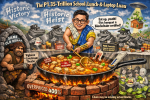
- ₱1 Billion Congressional Seat? Sorry, Sold Out Na Raw — Si Bello Raw Ang Hindi Bumili

- “We Will Take Care of It”: Bersamin’s P52-Billion Love Letter to Corruption
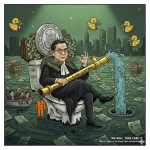
- “Skewed Narrative”? More Like Skewered Taxpayers!

- “Scared to Sign Vouchers” Is Now Official GDP Policy – Welcome to the Philippines’ Permanent Paralysis Economy
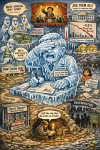
- “Robbed by Restitution?” Curlee Discaya’s Tears Over Returning What He Never Earned

- “My Brother the President Is a Junkie”: A Marcos Family Reunion Special

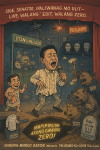
- “Mapipilitan Akong Gawing Zero”: The Day Senator Rodante Marcoleta Confessed to Perjury on National Television and Thought We’d Clap for the Creativity
- “Just Following Orders” Is Dead: How the Hague Just Turned Tokhang’s Finest Into International Fugitives

 KWEBA ni BAROK
Leave a comment