By Louis ‘Barok‘ C. Biraogo — April 12, 2025
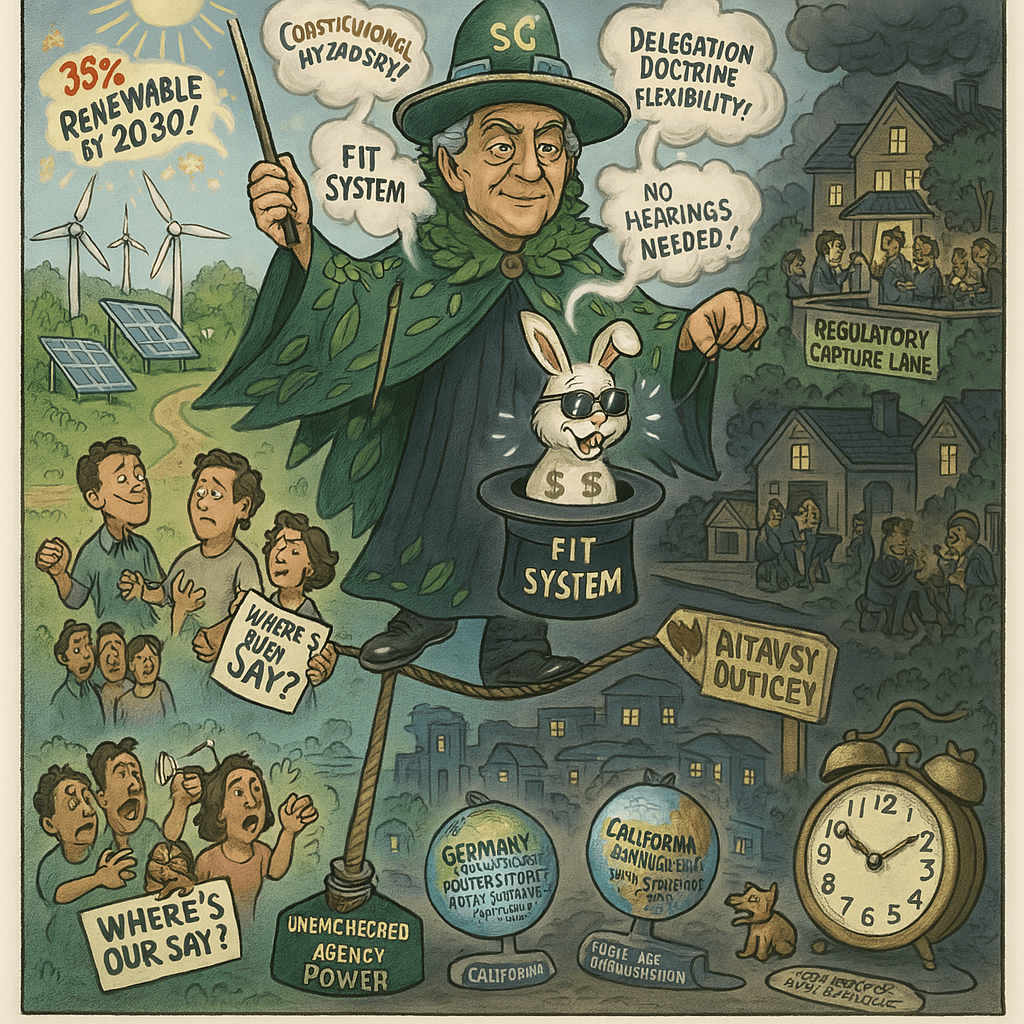
THE Philippine Supreme Court’s April 8, 2025, ruling in ERC/DOE/NREB v. Petitioners (G.R. No. [XXXXX]) is a thunderclap for renewable energy regulators—and a slap in the face to skeptics of unchecked agency power. In a sprawling 118-page decision by Senior Associate Justice Marvic Leonen, the Court upheld the Feed-In Tariff (FIT) System and Renewable Portfolio Standard (RPS) under Republic Act No. 9513, brushing off challenges to delegation, police power, and due process. It’s a green triumph on paper, but dig deeper: Did the Court bend constitutional rules to prop up a tariff scheme on shaky ground? And who’s stuck with the tab—consumers or common sense?
Bombshell Takeaways
- Delegation Gets a Pass: Leaning on Abakada Guro and Gerochi, the Court greenlights tariff-setting by the DOE, ERC, and NREB as “technical wizardry,” not legislative theft.
- Police Power Flex: Justice Lazaro-Javier calls the FIT Allowance a public welfare slam dunk—critics say it’s a fee in sheep’s clothing.
- Due Process? What Due Process?: Citing Tañada, the Court shrugs—newspaper ads suffice, no hearings required.
- Investors Cheer, Consumers Jeer: Renewable energy wins big, but the FIT Allowance sticks everyday Filipinos with the bill.
- Ethics Alarm Bells: NREB’s industry-stacked lineup raises regulatory capture red flags under RA 6713.
Digging Into the Dirt
Legal Lowdown: Where’s the Line?
Delegation Doctrine: Brain Trust or Blank Check?
Petitioners screamed that Sections 6 and 7 of RA 9513—birthplace of the RPS and FIT System—were fuzzy enough to gift the DOE, ERC, and NREB legislative superpowers. Article VI, Section 1 of the Constitution says Congress can’t pawn off its job unless the law’s “complete” and has an “intelligible principle” (Abakada Guro Party List v. Ermita, G.R. No. 168056, 2005). The Court countered: Section 2’s push for renewables and emissions cuts, plus guardrails like NREB’s RPS caps and ERC’s FIT oversight, check the boxes.
Legit, but shaky. Gerochi v. DOE (G.R. No. 159796, 2007) blessed ERC’s rate-setting under RA 9136 because energy’s too geeky for Congress to sweat. RA 9513’s leash looks tight—NREB and ERC can’t run wild—but “intelligible principle” here feels more like a vibe than a rule. Calling it “technical” opens a Pandora’s box: what can’t agencies do with a vague nod from lawmakers?
Police Power: Eco-Savior or Fee Grab?
Justice Lazaro-Javier’s concurrence paints the FIT Allowance—a consumer surcharge bankrolling renewables—as police power perfection under Article II, Section 9 (ecological balance, anyone?). The State can nudge private wallets for the greater good (NAPOCOR v. Province of Quezon, G.R. No. 171586, 2009). But RA 9513 doesn’t scream “collect in advance”—it’s silent. Compare White Light Corp. v. City of Manila (G.R. No. 122846, 2009), where a zoning rule stood because the law backed it explicitly.
This feels like a fee wearing a police power mask. Without a statutory bullhorn, the Court’s blessing risks turning public welfare into a free-for-all for rate hikes. Precedent alert: next time regulators want cash, they’ll just yell “green goals!”
Due Process: Shut Out or Shushed Up?
Petitioners raged that FIT Rules dropped without hearings. The Court yawned, citing Tañada v. Tuvera (G.R. No. L-63915, 1986)—two newspaper ads equal notice—and Smart Communications v. NTC (G.R. No. 151908, 2003), where quasi-legislative moves like rate-setting dodge the hearing hoopla. Chief Justice Gesmundo added: no “substantial burden,” no fuss.
Technically solid, but tone-deaf. The Administrative Code (EO 292), Book VII, Section 9 only demands hearings for heavy-hitting rules, not these “interpretive” ones. Still, energy bills sting every Juan and Maria—shouldn’t they get a say beyond a newsstand glance? This precedent could let agencies sidestep the public on anything with a price tag.
Cash & Consequences: Who Wins, Who Pays?
Investor Jackpot: Green Gains, Consumer Pains
Renewable investors are popping champagne. Section 7’s fixed tariffs and grid perks, plus FIT Allowance dough, slash risks for solar and wind gigs. The DOE’s 35% renewable goal by 2030—up from 22%—gets a turbo boost. But passing costs to consumers could ignite a revolt if bills soar without quick wins like lower outages. Long-term, this stability might snag foreign bucks—if ERC keeps FIT cash clean and clear.
Market Mayhem: Renewables Rule, Fossils Drool
Section 6’s RPS mandates tilt the board toward renewables, leaving coal and gas in the dust. Higher costs hit utilities, then ricochet to consumers via the FIT Allowance. It’s not fair—it’s intentional. Upside: cleaner air. Downside: a regressive burden slamming small fry harder than big polluters. RA 9513’s sledgehammer needs finesse.
Global Lessons: Germany’s EEG vs. California’s RPS
Germany’s Erneuerbare-Energien-Gesetz (EEG) birthed FITs, juicing renewables to 46% by 2023 via consumer fees—déjà vu, Philippines? Cost gripes forced tweaks like auctions. California’s RPS, eyeing 60% by 2030, bakes costs into utility rates, not a standalone charge, and bets big on grid upgrades. RA 9513’s 12-year tariff lock lacks their adaptability—Germany and California show flexibility beats stubbornness.
Ethics Exposed: Who’s Running This Show?
NREB’s Insider Game: Capture or Conspiracy?
Section 5 of RA 9513 loads NREB with industry heavyweights—producers, distributors, renewable tycoons. RA 6713, Section 7 frowns on conflicts, and this stinks of regulatory capture. If NREB’s setting tariffs to pad its pals’ pockets, consumers lose. The Court dodged this landmine—someone needs to defuse it.
Consumer Shafted: Fair Rates or Fat Cats?
The FIT Allowance’s flat hit screws low-income folks—think sari-sari stores vs. SM malls. Meralco v. Lualhati (G.R. No. 166769, 2006) demands “just and reasonable” rates; this feels like a subsidy for renewables on the backs of the broke. Civil Code Article 10 calls for good faith—where’s the justice in that?
Fix It or Flop: Bold Moves Ahead
- Rewrite RA 9513: Bolt public hearings onto Section 7 FIT tweaks. Open mics beat closed-door deals.
- Subsidize the Strapped: Funnel FIT Allowance cash into a “Green Equity Pool” for poor households—fairness isn’t optional.
- NREB Overhaul: Slash industry seats to 50%, add consumer voices. RA 6713 demands integrity, not cronyism.
- Loosen FIT Chains: Cut the 12-year tariff lock to 5-7 years with market-tied reviews—Germany’s EEG proves agility wins.
- Show the Money: ERC must post yearly FIT Allowance audits. Transparency kills corruption—let’s see the receipts.
Final Jab
The SC’s ruling hands renewables a legal lifeline, but it’s a high-wire act. It fortifies the FIT System and RPS with constitutional heft, yet leaves gaping wounds—delegation creep, consumer squeeze, and NREB’s insider vibe. The Philippines craves 35% renewable energy by 2030, but at this price? Lawmakers and regulators need to patch RA 9513 with grit and grace, or this green vision could curdle into a ratepayer revolt. Game on.
Disclaimer: This is legal jazz, not gospel. It’s all about interpretation, not absolutes. So, listen closely, but don’t take it as the final word.

- ₱75 Million Heist: Cops Gone Full Bandit

- ₱6.7-Trillion Temptation: The Great Pork Zombie Revival and the “Collegial” Vote-Buying Circus

- ₱1.9 Billion for 382 Units and a Rooftop Pool: Poverty Solved, Next Problem Please

- ₱1.35 Trillion for Education: Bigger Budget, Same Old Thieves’ Banquet

- ₱1 Billion Congressional Seat? Sorry, Sold Out Na Raw — Si Bello Raw Ang Hindi Bumili

- “We Will Take Care of It”: Bersamin’s P52-Billion Love Letter to Corruption

- “Skewed Narrative”? More Like Skewered Taxpayers!

- “Scared to Sign Vouchers” Is Now Official GDP Policy – Welcome to the Philippines’ Permanent Paralysis Economy

- “Robbed by Restitution?” Curlee Discaya’s Tears Over Returning What He Never Earned

- “No Pressure” Luistro? The House Pork Bazaar Exposed

- “My Brother the President Is a Junkie”: A Marcos Family Reunion Special

- “Mapipilitan Akong Gawing Zero”: The Day Senator Rodante Marcoleta Confessed to Perjury on National Television and Thought We’d Clap for the Creativity







 KWEBA ni BAROK
Leave a comment