
By Louis ‘Barok’ C Biraogo — April 15, 2025
THE Ninoy Aquino International Airport (NAIA) privatization drama has crash-landed in the Supreme Court, with a fierce petition accusing the Department of Transportation (DOTr) of piloting a $3-billion deal under the repealed Build-Operate-Transfer (BOT) Law (RA 6957). The petitioners—legal eagles like Joel Butuyan and Antonio La Viña—are gunning for a takedown, claiming the process flouts the new Public-Private Partnership (PPP) Code (RA 11966). The DOTr, flashing its Asian Development Bank (ADB) credentials, swears it’s cleared for takeoff. Strap in—this legal showdown could rewrite the flight plan for Philippine infrastructure deals.
BOT Law’s Zombie Runway: A Legal Crash Waiting to Happen?
The petition’s core grievance is a timeline that screams trouble. The NAIA PPP bidding launched in August 2023 under the BOT Law, with bids due December 27, 2023. But RA 11966, signed December 5 and effective December 23, 2023, scrapped RA 6957 faster than a red-eye flight. The petitioners argue that the DOTr’s decision to finalize bids under a dead law is legal malpractice. Section 35 of RA 11966 leaves no wiggle room: the BOT Law is history. So why was the DOTr still taxiing on its runway?
The DOTr’s “grandfathering” gambit—that bids started pre-PPP Code should coast under old rules—might stall in court. The Supreme Court (SC) rarely indulges retroactive leniency without clear statutory backing (Tavera-Luna v. Nable, G.R. No. 225442, 2020). Worse, the SC has a track record of grounding PPPs for mid-process fumbles (Kilosbayan v. Morato, G.R. No. 118910, 1995). The petitioners insist the DOTr should’ve rerouted to RA 11966’s stricter protocols—like public consultations and ironclad competitive bidding (Section 9)—once the new law hit. Ignoring that could crash the deal’s legitimacy.
Then there’s the petitioners’ audacious status quo ante plea, demanding NAIA’s operations revert to September 13, 2024, pre-NNIC control. Under Rule 58 of the Rules of Court, injunctions need a slam-dunk case: clear rights, irreparable harm, and urgency. The petitioners cry foul over procedural due process, spotlighting the Revised Administrative Order No. 1 (RAO1) rate hikes—some spiking over 1,000%—rolled out without proper stakeholder input. The SC might balk at rewinding a live deal, but if it sniffs a due process violation, the DOTr could face a bumpy landing.
SC’s Knack for Grounding Shady PPPs
The SC’s history with PPPs reads like a cautionary tale for the DOTr. In Agan v. PIATCO (G.R. No. 155001, 2003), the Court torpedoed the NAIA Terminal 3 deal for a rigged bidding process that stank of favoritism. Sound familiar? The petitioners here slam the NAIA deal’s warp-speed approval—12 months from pitch to contract—as a transparency casualty. RA 11966 mandates “full public disclosure” (Section 2) and competitive bidding (Section 9), hurdles the BOT Law barely glanced at. The DOTr’s ADB-backed swagger might dazzle financiers, but the SC doesn’t bow to glossy consultants when statutes are sidestepped (Kilosbayan, supra).
Ethics throw another wrench. The Code of Conduct and Ethical Standards for Public Officials (RA 6713) demands transparency (Section 4). The petitioners’ charge that RAO1’s rate hikes ignored airline protests—like those from the International Air Transport Association—paints the DOTr and Manila International Airport Authority (MIAA) as tone-deaf at best, conniving at worst. If the SC finds public input was steamrolled, the deal could be branded not just illegal but morally bankrupt.
BOT Law vs. PPP Code: A Legal Cage Match
To decode the chaos, here’s the BOT Law and PPP Code slugging it out:
| Aspect | BOT Law (RA 6957, as amended) | PPP Code (RA 11966) |
|---|---|---|
| Effective Date | Pre-December 23, 2023 | December 23, 2023 |
| Repeal Status | Obliterated by RA 11966 | Wipes out BOT Law |
| Bidding Process | Loose, per 2022 IRR | Brutally competitive (Section 9) |
| Public Consultation | Optional, agency’s call | Non-negotiable (Section 7) |
| Transparency | Bare-minimum disclosures | Total openness (Section 2) |
RA 11966’s muscle reflects a post-NAIA Terminal 3 world, hell-bent on accountability. The petitioners’ case—that the DOTr stuck to the BOT Law’s flimsy playbook post-repeal—gains traction, especially since RA 11966’s IRR only landed April 6, 2024, leaving the bidding in no-man’s-land.
DOTr’s ADB Ace vs. Petitioners’ Due Process Haymaker
The DOTr’s defense bets big on two cards: ADB’s seal of approval and the “substantial compliance” doctrine. The ADB’s expertise is no joke—it’s structured PPPs globally—but it’s not a legal forcefield. The SC has swatted down fancy credentials when laws are ignored (PIATCO, supra). The DOTr’s “properly bidded” claim leans on substantial compliance, where minor slip-ups don’t tank fairness (DMCI v. COMELEC, G.R. No. 216745, 2015). But bidding under a repealed law? That’s not a typo—it’s a deal-breaker.
The petitioners counter with a due process uppercut. They argue RA 11966’s competitive bidding and RAO1’s stakeholder input were bypassed, robbing airlines and travelers of a fair deal. The SC’s soft spot for rate-setting fairness (Meralco v. Energy Regulatory Board, G.R. No. 145399, 2002) bolsters their case, especially with airline groups’ ignored complaints. Still, their status quo ante push might overshoot—unraveling a live concession could spark operational havoc, and the SC often opts for pragmatism over purism.
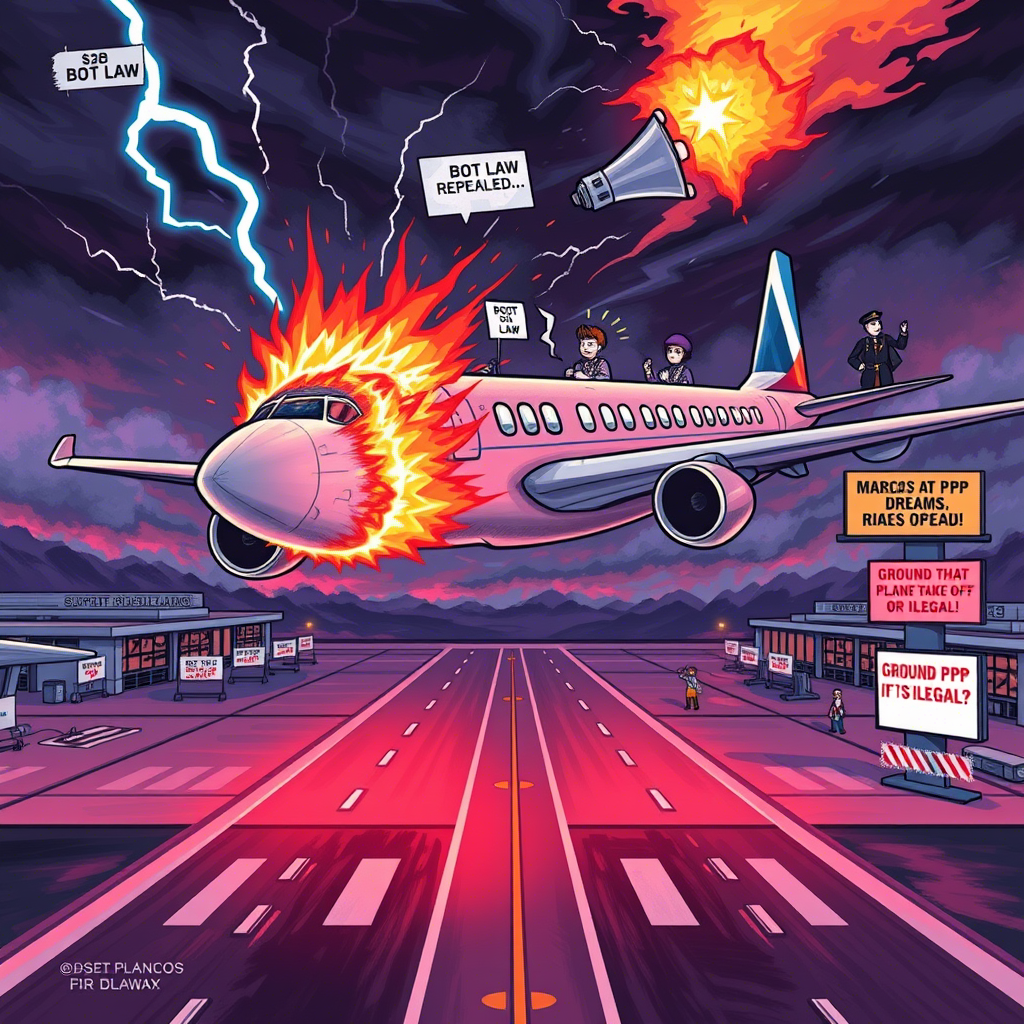
TRO Showdown: Ground the Deal or Keep Flying?
A temporary restraining order (TRO) under Rule 58 needs a trifecta: clear legal right, irreparable harm, and urgency. The petitioners nail the first—challenging a potentially void process is their constitutional turf. Irreparable harm is murkier: they cite sky-high fees and operational lock-in, but the DOTr argues delays gut public interest in a revamped NAIA. The SC’s PIATCO ruling prioritized public welfare over private gripes, hinting at reluctance to stall a P900-billion revenue engine.
Yet, a TRO could fly if the bidding’s legal cracks widen. Fee hikes and a flawed concession could haunt travelers long-term—harm the SC might deem outweighs a pause. NAIA’s dire state, though, tips the scales. It’s not just a punchline for “world’s worst airport” lists; it’s a choke point for growth. A TRO risks gridlock, but letting a shaky deal soar could cement a legal quagmire.
Ripple Effect: Will PPPs Crash in Legal No-Fly Zones?
This case could redefine how the Philippines navigates PPPs caught in legal turbulence. RA 11966 aimed to turbocharge infrastructure, but the DOTr’s fumble exposes a blind spot: no roadmap for projects straddling old and new laws. An SC smackdown would scream “no mercy” for regulatory dawdling, forcing agencies to pivot mid-flight. Upholding the DOTr might greenlight “grandfathering” dodges, eroding RA 11966’s transparency teeth. Either way, the Marcos administration’s PPP dreams—banking on private billions—face a stress test.
Final Approach: Clear for TRO or Full Speed Ahead?
The DOTr’s ADB flex is flashy, but the SC may ground it for procedural sloppiness. The petitioners’ case—that bidding under a repealed law post-December 23, 2023, defies RA 11966—has serious thrust. Undoing a signed deal, though, is no joyride; public need and sunk costs muddy the waters. The SC should greenlight a TRO to freeze fees and audit the bidding, but a status quo ante order feels like ejecting mid-flight. Lawmakers, take note: patch the PPP Code’s gaps, or more deals will hit turbulence.
NAIA’s fate isn’t just about runways—it’s a litmus test for blending speed with integrity. The SC’s ruling will decide if this deal soars or nosedives.
Key Sources:
- RA 11966, PPP Code
- RA 6957, BOT Law
- Tavera-Luna v. Nable, G.R. No. 225442, 2020
- Kilosbayan v. Morato, G.R. No. 118910, 1995
- Agan v. PIATCO, G.R. No. 155001, 2003
- DOTr Defense, GMA News
- Petition Details, Rappler
- RA 6713, Ethical Standards
Disclaimer: This is legal jazz, not gospel. It’s all about interpretation, not absolutes. So, listen closely, but don’t take it as the final word.

- “Forthwith” to Farce: How the Senate is Killing Impeachment—And Why Enrile’s Right (Even If You Can’t Trust Him)

- “HINDI AKO NAG-RESIGN!”

- “I’m calling you from my new Globe SIM. Send load!”

- “Mahiya Naman Kayo!” Marcos’ Anti-Corruption Vow Faces a Flood of Doubt

- “Meow, I’m calling you from my new Globe SIM!”

- “No Special Jail for Crooks!” Boying Remulla Slams VIP Perks for Flood Scammers

- “PLUNDER IS OVERRATED”? TRY AGAIN — IT’S A CALCULATED KILL SHOT

- “Several Lifetimes,” Said Fajardo — Translation: “I’m Not Spending Even One More Day on This Circus”

- “Shimenet”: The Term That Broke the Internet and the Budget

- “We Did Not Yield”: Marcos’s Stand and the Soul of Filipino Sovereignty

- “We Gather Light to Scatter”: A Tribute to Edgardo Bautista Espiritu

- $150M for Kaufman to Spin a Sinking Narrative




 KWEBA ni BAROK
Leave a comment