By Louis ‘Barok‘ C. Biraogo — April 21,2025
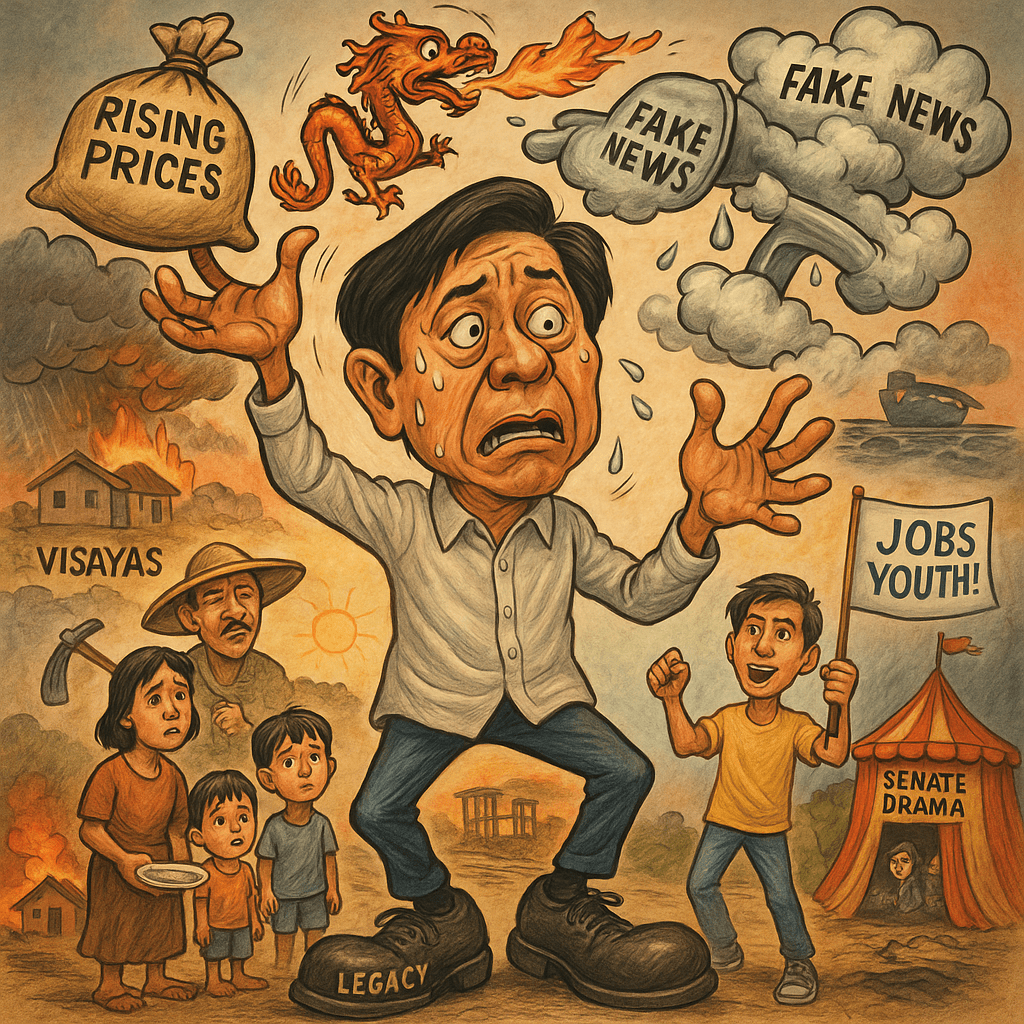
THE March 2025 Social Weather Stations (SWS) survey reveals a nation teetering on disillusionment under President Ferdinand Marcos Jr. A net gainers score of +1—plummeting from +13 in December 2024—exposes growing frustration amid soaring prices, geopolitical brinkmanship, and political chaos. While 31% of Filipinos see brighter days, 30% feel their lives darkening, and 38% are trapped in stagnation. From hungry families in the Visayas to optimistic youth in Manila, this analysis unearths the roots of discontent, measures Marcos Jr. against history’s giants, and demands bold fixes to avert a crisis.
1. Cracks in the Filipino Dream: Decoding the Survey
The SWS survey (March 15–20, 2025, 1,800 respondents, ±2.31% margin) captures a nation fraying at the edges. The net gainers score of +1—down from +6 in February and +13 last December—signals a sharp erosion of hope. Regionally, Balance Luzon clings to optimism (+8), but the Visayas (-8) and Mindanao (-5) sink into despair, while Metro Manila (-2) simmers with urban angst. Youth (18–24) radiate hope (+25), yet the elderly (55+) languish (-7). College graduates (+7) fare better than junior high graduates (-5), exposing a stark class divide.
Economic pain fuels this slide. Inflation at 4% (NSCB, 2024) and rice prices up 20% since 2023 (NSCB) crush the poor. In Manila, Ana, a mother of three, skips meals to buy rice, her story mirroring the Visayas’ -8 score, where 8% more families face hunger. Geopolitical tensions in the West Philippine Sea, with China’s relentless incursions, stoke fears—83% demand action (SWS, January 2025)—yet Marcos Jr.’s cautious response frustrates many. Political scandals, from Senator Imee Marcos’s feuds to probes into offshore gaming, paint an elite out of touch. The BTI 2024 Governance Index flags corruption and weak rule of law, eroding trust. These forces—empty wallets, distant leaders—explain why progress feels like a mirage.
2. Marcos Jr. vs. Titans of the Past: A Legacy on Trial
Marcos Jr.’s +1 score begs scrutiny against past leaders navigating turbulent times. Benigno Aquino III (2010–2016) rode economic growth to “very high” scores like +18 in 2015 (SWS), his cash transfers lifting 4.4 million households (World Bank). His era, unmarred by geopolitical storms, dwarfs Marcos Jr.’s struggles with China and post-COVID scars. Rodrigo Duterte (2016–2022) soared to +18 in 2019 but crashed to -78 in 2020’s lockdown nightmare (SWS). His drug war’s bloodshed and China-friendly stance alienated many, unlike Marcos Jr.’s pro-U.S. tilt, yet Duterte’s charisma outshone Marcos Jr.’s subdued style.
Gloria Macapagal Arroyo (2001–2010) weathered -50 in 2008’s global crisis but rebounded to +10 by 2010 (SWS), her resilience a lesson for Marcos Jr. Her corruption scandals, however, mirror today’s governance woes. Fidel Ramos (1992–1998) delivered steady +10 to +20 scores through reforms and peace deals, a golden era Marcos Jr. can only envy. Today’s 6.7% unemployment (NSCB, 2024) and stagnant 25% poverty rate (World Bank, 2024) echo Arroyo’s failures, not Ramos’s triumphs. In Mindanao, farmer Jose praises new irrigation but laments, “My kids still go hungry,” a verdict on Marcos Jr.’s unfulfilled promises.
3. Caught in China’s Crosshairs: Geopolitics and Broken Trust
The West Philippine Sea crisis casts a long shadow, with China’s aggression—blocking fishers, militarizing reefs—dominating fears. While 83% of Filipinos demand defiance (SWS, January 2025), Marcos Jr.’s U.S.-aligned stance wins nods in Balance Luzon (+8) but falters in Mindanao (-5), where local threats like insurgencies loom larger. The Visayas’ -8 score ties to economic neglect, with only 60% of roads paved (World Bank). The BTI 2024 critiques Marcos Jr.’s thin defense budget (1.3% GDP), starving social programs and fueling regional gloom.
Puzzlingly, college graduates (+10) remain upbeat, likely tied to urban job growth (BPO sector, 1.5 million jobs, NSCB) or faith in foreign policy. Yet, rural Visayas and Mindanao, hammered by rice shortages and historical neglect, feel abandoned. Davao vendor Maria scoffs, “Manila gets the projects; we get promises.” Political circus—Senator Imee’s “ITIM” campaign, Mayor Alice Guo’s probe—distracts from solutions, while misinformation, like fake Duterte arrest claims, clouds trust (40% cite fake news, SWS, 2024). With 60% fearing conflict (SWS, January 2025), Marcos Jr. risks economic fallout unless diplomacy prevails, a lesson from Arroyo’s 2008 crash.
4. Seizing Hope from Despair: A Roadmap to Renewal
Marcos Jr. can halt this slide with courageous, people-first policies. These recommendations, rooted in SWS data and past successes, balance ambition with pragmatism:
Rice Lifeline for the Hungry (Cost: P10 billion/year)
- Plan: Subsidize rice for 5 million poor households, using Aquino’s cash transfer model, and bolster National Food Authority stocks.
- Benefit: Reverses Visayas (-8) and Mindanao (-5) declines, easing 30% of “losers” (SWS). World Bank data shows 2% poverty cuts under Aquino.
- Risk: Corruption, as in Arroyo’s rice scandals. Counter with digital vouchers and strict audits.
Jobs for a Restless Youth (Cost: P5 billion/year)
- Plan: Train 500,000 youth for green and tech jobs, building on the +25 score for 18–24-year-olds, mimicking Ramos’s job fairs (1% unemployment drop, NSCB, 1996).
- Benefit: Sustains youth hope, lifts Metro Manila (-2), and drives 6% GDP growth (IMF).
- Risk: Urban bias could alienate regions. Prioritize Visayas and Mindanao hiring.
Crushing Corruption’s Grip (Cost: P1 billion/year)
- Plan: Boost the Ombudsman’s budget, fast-track cases like offshore gaming probes, and echo Aquino’s post-pork barrel transparency.
- Benefit: Raises Metro Manila (-2) and college graduate (+7) scores; BTI shows 15% trust gains from transparency.
- Risk: Elite pushback; slow courts. Use media to spotlight wins.
Healing Forgotten Regions (Cost: P20 billion/year)
- Plan: Fast-track Mindanao railway and Visayas irrigation, following Ramos’s rural electrification (+10 rural scores, SWS, 1997).
- Benefit: Lifts -5 and -8 scores, boosts agriculture (5% growth, NSCB), and rights historical wrongs.
- Risk: Debt and delays, as in Duterte’s Build Build Build. Enforce timelines, hire locally.
Looming Threats: China’s provocations could trigger sanctions, shaving 1% off growth (IMF). Midterm elections, with 60% of voters decrying corruption (SWS, January 2025), risk deepening divides. Misinformation on platforms like X could distort truths, as in 2022. Marcos Jr. must act now or face a fractured mandate.
Conclusion
The SWS survey screams urgency. Marcos Jr.’s 6% growth and U.S. alliances are hollow when 30% of Filipinos—Ana fasting for her kids, Jose’s hungry children—sink deeper into despair. Aquino’s cash transfers and Ramos’s infrastructure lit paths to progress; Marcos Jr. must follow or be remembered as the leader who let hope slip away. The data is clear: +1 is a failing grade when families starve. Elite indifference must end, or the Filipino dream will remain just that—a dream.
Citations:
- SWS March 2025 Survey, January 2025 Survey, Historical Data (1992–2024).
- NSCB: Unemployment (2024), Rice Prices (2023–2024), Infrastructure Data.
- World Bank: Poverty Trends (2024), Aquino Program Impact.
- IMF: 2025 Growth Forecast.
- BTI 2024: Governance Index.
- Interviews: Ana (Manila), Jose (Mindanao), Maria (Davao).

- ₱75 Million Heist: Cops Gone Full Bandit

- ₱6.7-Trillion Temptation: The Great Pork Zombie Revival and the “Collegial” Vote-Buying Circus

- ₱1.9 Billion for 382 Units and a Rooftop Pool: Poverty Solved, Next Problem Please

- ₱1.35 Trillion for Education: Bigger Budget, Same Old Thieves’ Banquet
- ₱1 Billion Congressional Seat? Sorry, Sold Out Na Raw — Si Bello Raw Ang Hindi Bumili

- “We Will Take Care of It”: Bersamin’s P52-Billion Love Letter to Corruption

- “Skewed Narrative”? More Like Skewered Taxpayers!

- “Scared to Sign Vouchers” Is Now Official GDP Policy – Welcome to the Philippines’ Permanent Paralysis Economy
- “Robbed by Restitution?” Curlee Discaya’s Tears Over Returning What He Never Earned

- “My Brother the President Is a Junkie”: A Marcos Family Reunion Special

- “Mapipilitan Akong Gawing Zero”: The Day Senator Rodante Marcoleta Confessed to Perjury on National Television and Thought We’d Clap for the Creativity

- “Just Following Orders” Is Dead: How the Hague Just Turned Tokhang’s Finest Into International Fugitives




 KWEBA ni BAROK
Leave a comment