
By Louis ‘Barok‘ C. Biraogo — April 26, 2025
IN A cramped shanty in Manila’s Tondo slum, Maria Santos, a 38-year-old mother of four, stares at a nearly empty rice sack. Last week, she skipped her hypertension medicine to buy a kilo of rice at ₱48, a choice that haunts her as her blood pressure spikes. “Rice is life here,” she whispers, “but it’s also what breaks us.”
Maria’s story is not unique in the Philippines, where rice is both a staple and a symbol of survival. On April 26, 2025, House Speaker Ferdinand Martin Romualdez proposed a radical shift: replace cash aid, or “ayuda,” with rice subsidies to sell the grain at ₱20 per kilogram, slashing market prices by more than half. It’s a promise that could transform lives like Maria’s—or, like trying to fix a broken levee during a monsoon, it could collapse under its own ambition.
The Hope: A Game-Changer for Food Security
Romualdez’s proposal, rooted in President Ferdinand Marcos Jr.’s campaign pledge, aims to deliver rice at ₱20 per kilo, a price unseen in decades. Pilot programs in Visayas and Camiguin offer a glimpse of its potential. In Camiguin, a mother named Lorna, who once rationed rice to feed her three children, now buys subsidized sacks at half price, thanks to a partnership between local government units (LGUs), the Department of Social Welfare and Development (DSWD), and retailers. “It’s not just rice,” Lorna says. “It’s dignity.”
The policy’s appeal lies in its directness. Cash aid, while flexible, has been plagued by misuse. In April 2020, Palayan City police arrested 10 people for gambling away their COVID-19 relief funds, a stark example of the “ayuda para sa tupada” (aid for cockfighting) scandals that have eroded trust. Romualdez argues that rice subsidies sidestep this, ensuring aid lands on dinner tables. With rice imports down 35% in early 2025 due to high domestic stocks, the government has the supply to make this work—at least for now.
Economists like Cielito Habito see potential in the model. “If executed well, it could stabilize food access for millions,” he says, noting that rice accounts for 20% of the average Filipino’s daily caloric intake. The Camiguin blueprint—where LGUs and retailers absorb price gaps—could cut through corruption that has long siphoned off aid. Romualdez’s call for LGUs to replicate this, backed by Congress’s pledge for 2026 budget funds, signals serious intent.
The Hazards: Lessons from a Leaky Past
Yet, the proposal is fraught with peril. A 2008 Asian Development Bank (ADB) study on earlier rice subsidies is a grim warning: 70% of subsidized rice leaked to non-poor households, while many poor families were excluded. The program’s cost—₱17 billion annually—was deemed unsustainable, with logistical snarls and corruption eating away benefits. “It’s like pouring water into a cracked bucket,” says economist Raul Fabella. “Good intentions don’t guarantee good outcomes.”
Scaling Camiguin’s success is no small feat. Camiguin, a small island province, benefits from tight community networks and motivated local leaders. Metro Manila, with its sprawling slums and bureaucratic inertia, is another beast. The Department of Agriculture’s Visayas pilot, running until December 2025, relies on Food Terminal Inc. and LGUs to cover the ₱28 per kilo price gap. Nationwide, this could cost billions, straining a budget already stretched by a growing deficit.
A farmer in Nueva Ecija, Juan Dela Cruz, worries about the ripple effects. “If subsidized rice floods the market, who buys my palay at fair prices?” he asks. The government’s January 2025 purchase of 284,810 metric tons of palay at ₱23-30 per kilo aims to cushion farmers, but long-term impacts remain unclear.
International lessons amplify the caution. Vietnam’s rice subsidy programs in the 2000s, meant to stabilize prices, led to market distortions and farmer discontent when cheap imports undercut local producers. India’s Public Distribution System (PDS), while feeding millions, loses 40% of its grain to theft and inefficiencies. The Philippines, with its weaker governance, risks similar pitfalls. “You can’t just throw rice at poverty,” says Fabella. “It’s a Band-Aid if the system underneath is rotten.”
The Political Calculus: Vision or Vote-Grab?
Romualdez’s proposal cannot be divorced from politics. With the May 2025 elections looming, critics like Senator Imee Marcos, the president’s sister, call it a populist ploy to bolster Marcos Jr.’s image. The timing—coinciding with a “working majority” push in the Senate—raises eyebrows. Is this Marcos Jr. delivering on his promise, or a stopgap to distract from a 22.4% poverty rate affecting 25.24 million Filipinos?
The contrast with cash aid programs like the 4Ps, praised by the World Bank for reducing poverty, is telling. Cash offers flexibility—Maria Santos could buy medicine and rice—but risks misuse. Rice subsidies, while targeted, assume food is every family’s top priority, ignoring diverse needs. The political allure is clear: cheap rice is a tangible win, unlike cash that vanishes into budgets or betting dens. Yet, as Vietnam’s failures show, short-term populism can backfire if farmers and markets suffer.
A Better Way: Dignity Through Choice
There’s a smarter path, one that marries the best of both worlds. Imagine a hybrid system: smartcards letting families choose rice at ₱20 per kilo or cash for emergencies. Brazil’s Bolsa Família, which pairs cash transfers with food vouchers, shows how this can work. It cuts poverty by 15% while giving families agency—because dignity means choice, not just handouts. The Philippines could pilot this in 2026, using DSWD’s Listahanan database to target the poorest and blockchain tech to track distribution, minimizing leaks.
Farmers must be protected too. Pair subsidies with input support—seeds, fertilizers, credit—to boost local production, reducing reliance on imports. India’s PDS, despite flaws, succeeds by procuring from local farmers, stabilizing their incomes. Transparency is non-negotiable: independent audits and public dashboards, like Brazil’s, could expose corruption before it festers.
This isn’t just about rice—it’s about whether the Philippines’ safety net catches families or lets them slip deeper into hunger. Maria Santos shouldn’t have to choose between medicine and a meal. Romualdez’s vision is bold, but boldness without rigor risks betrayal. Congress, LGUs, and Marcos Jr. must act not for votes, but for the 25 million still waiting for a full plate. The levee is cracking—fix it before the flood comes.
Sources:
- Philippine Daily Inquirer (April 26, 2025)
- Asian Development Bank (2008)
- World Socialist Web Site (March 21, 2025)
- World Bank (2019)
- Rice University (2024)

- “I Warned You in 2022!” — Sara’s Crystal Ball Meets Claire’s Nonfeasance Roast

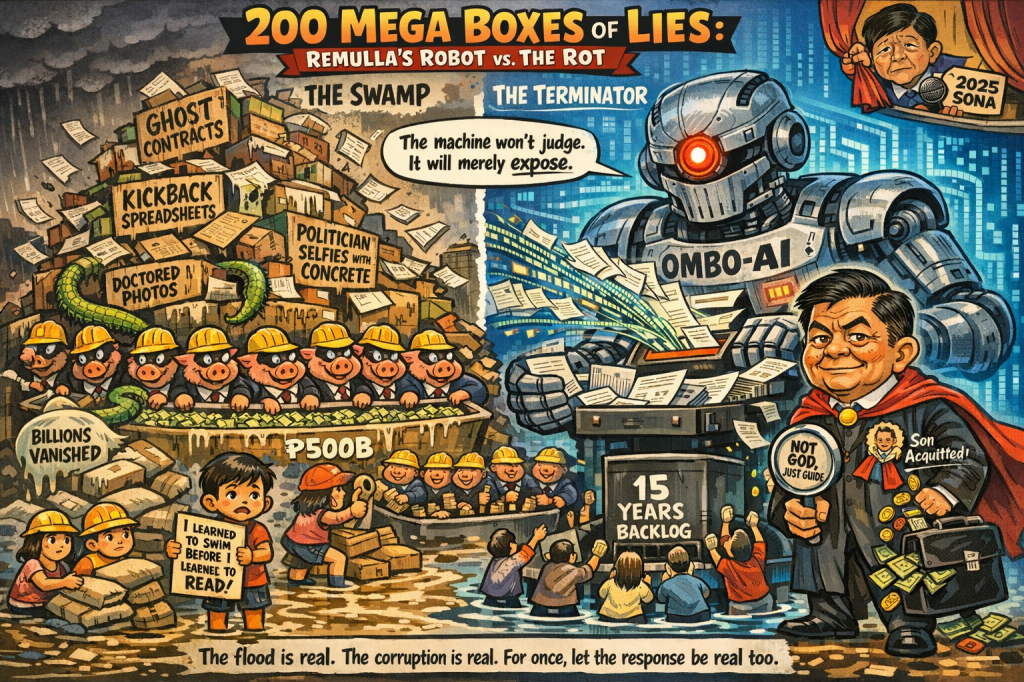
- 200 Mega Boxes of Lies: Remulla Unleashes AI to Sort the Swamp (Before It Swallows Us All)
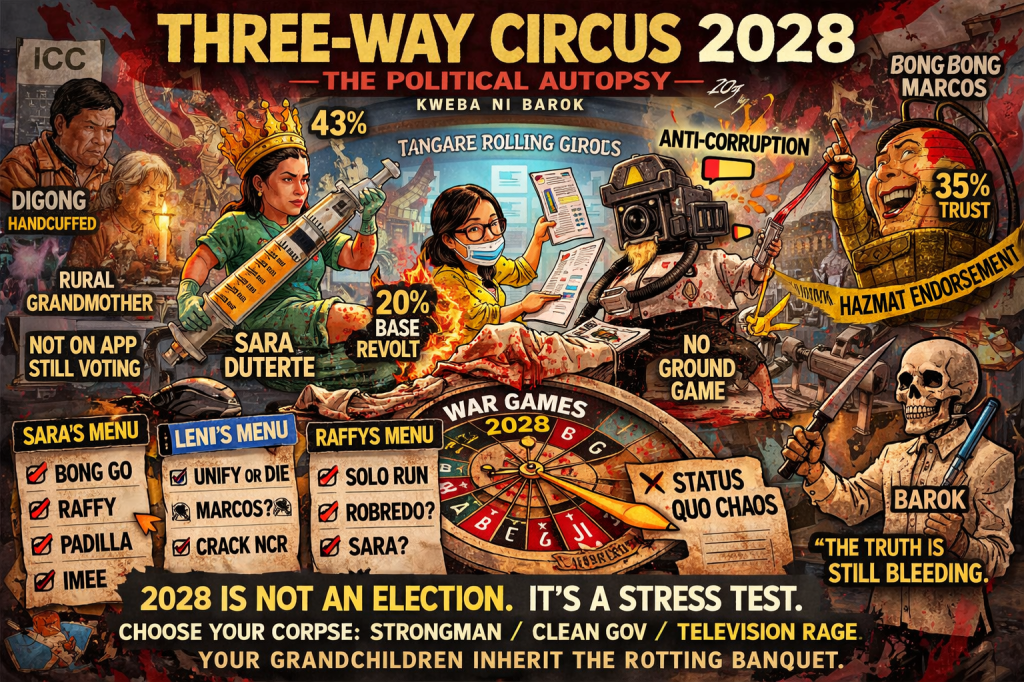
- Three-Way Circus 2028: Sara, Leni & Tulfo Walk Into a Poll…

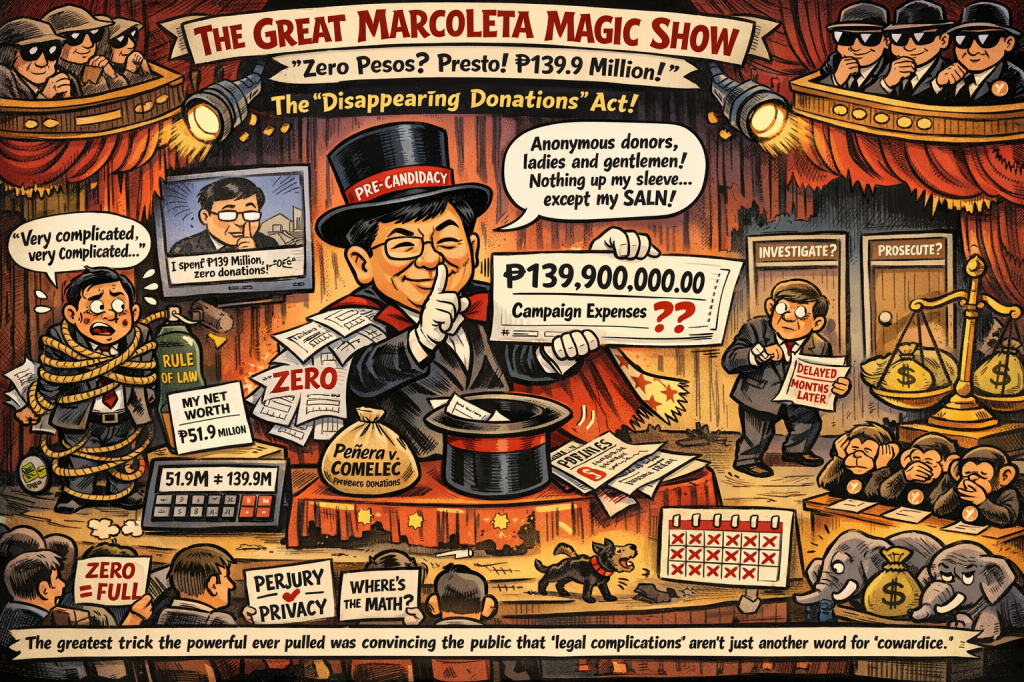
- Marcoleta’s Zero Donations Lie: How a Televised Confession Became “Legal Complications”
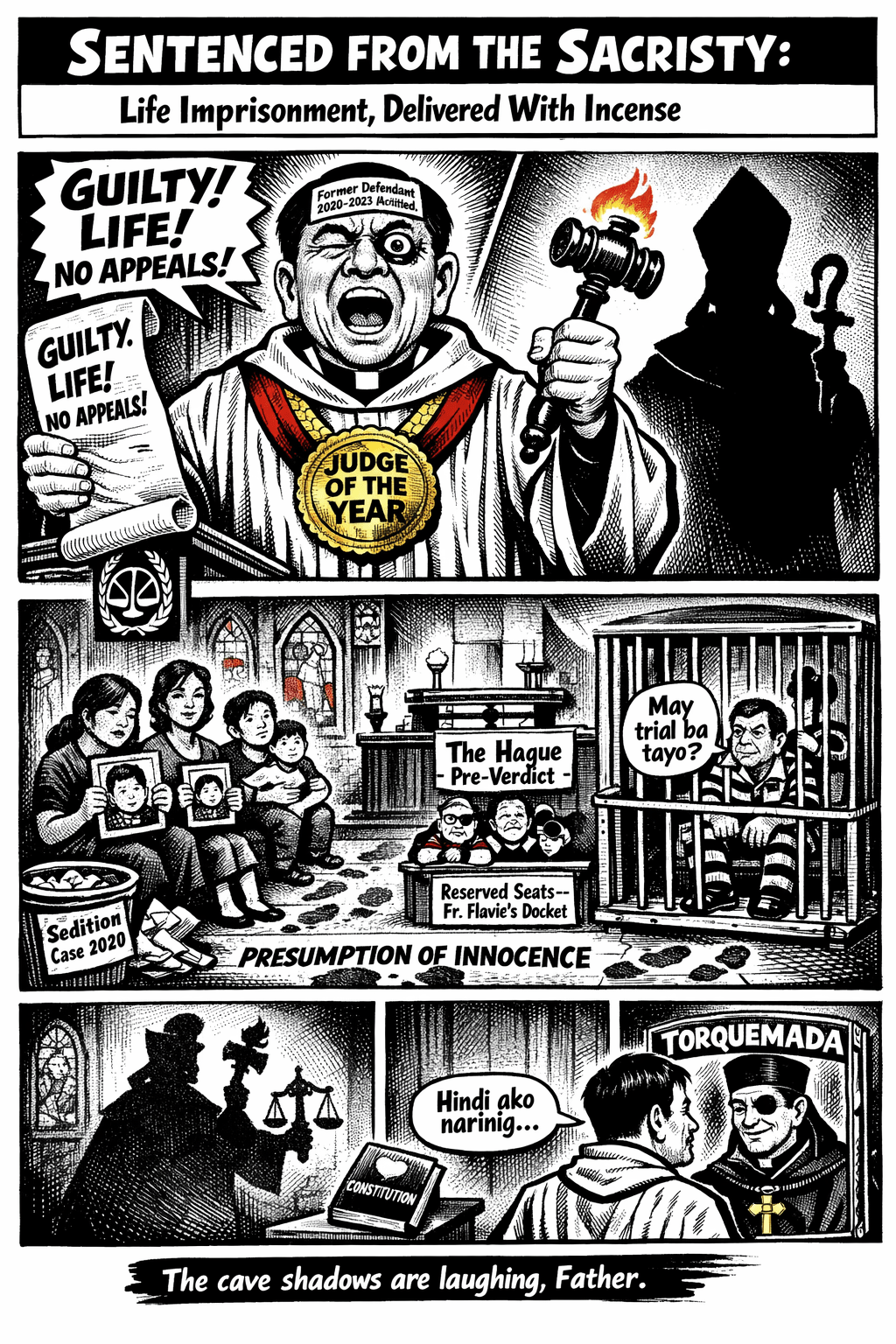
- Priest Sentences Duterte to Life – No Trial Needed
- Flood Control or Flood of Corruption? Marcos’ Infrastructure Probe Hits a Curious Pause
- Tau Gamma Phi: Where Brotherhood Means Beating You to Death and Blaming the Rogue Chapter

- Procurement Mafia’s Latest Hit Job: Why Herbosa Can’t Catch a Break
- Abra-Cadabra! 4.3 Million Poor Filipinos Just Vanished – Thanks, DHSUD Math

- Sara’s Magic Plane Fantasy vs. Marcos’ Bureaucratic Black Hole: Who Screws OFWs Worse?
- Sara’s Bagman Blows the Whistle – Then She Blows Perjury Smoke
- Bong Suntay’s Wet Dream Defense: How One Congressman Turned Impeachment into Pornhub Testimony


 KWEBA ni BAROK
Leave a comment