
By Louis ‘Barok‘ C. Biraogo — April 27, 2025
WHEN Ambassador Markus Lacanilao waltzed out of Senate custody after a mere 48 hours for dodging questions about Rodrigo Duterte’s ICC surrender, Senator Imee Marcos didn’t just cry foul—she detonated a political bombshell. Branding the detention a “favored” farce, Marcos accused Senate President Francis Escudero of bending rules for the elite, pointing to an 11-day delay and a cushy two-day penalty as proof of a rigged game. But is this a grotesque abuse of Senate power or a calculated political stunt? Section 18 of the Senate Rules of Procedure grants broad contempt powers, yet Lacanilao’s case—set against Duterte’s ICC drama and Marcos’s 2025 reelection hustle—exposes a Senate teetering on the edge of procedural chaos and elite bias. This Kweba ng Katarungan exposé rips into the legal, ethical, and political rot, demanding reforms to slam the door on arbitrary detentions and restore public faith.
Unpacking the Elite Escape: Context of a Controversy
The Scandal in Brief: Delay, Detention, and Drama
On April 10, 2025, the Senate Committee on Foreign Relations, led by Marcos, slapped Ambassador Markus Lacanilao with a contempt citation for “very misleading” answers about Duterte’s March 11 arrest and ICC transfer. Lacanilao, Special Envoy on Transnational Crimes, allegedly stonewalled on whether Duterte faced a competent judicial authority. Detained for two hours, he was released due to a procedural blunder: Marcos’s order lacked Escudero’s mandatory signature. Escudero issued a show-cause order on April 11, giving Lacanilao five days to explain. His April 15 response flopped, prompting a two-day detention order on April 21, which Lacanilao voluntarily served. Marcos erupted, arguing that Section 18 of the Senate Rules of Procedure Governing Inquiries in Aid of Legislation demands immediate, indefinite detention until contempt is purged, not a delayed slap on the wrist.
High-Stakes Power Play: Duterte, Elections, and Vendettas
This isn’t just about Senate rules—it’s a political cage match. Duterte’s ICC surrender for alleged drug war crimes is a national flashpoint, with Marcos, Duterte’s ally and sister of President Ferdinand Marcos Jr., wielding the issue to flex her tough-on-crime cred for her 2025 reelection bid. Escudero, a political heavyweight, is caught in the crossfire, balancing Senate credibility against Marcos’s accusations. His public jab at Marcos for “personal political objectives” (Rappler, April 2025) turns the heat up, painting the Senate as a battleground for egos rather than a bastion of justice. Lacanilao’s elite status and role in Duterte’s transfer fuel suspicions of favoritism, especially as the administration treads lightly around Duterte’s legacy.
Legal Dissection: Rules Bent, Rights Tested
Contempt Powers Run Amok: Senate Rules Under Fire
Section 18 of the Senate Rules of Procedure empowers committees to detain witnesses for “testifying falsely or evasively” until they comply or purge contempt. Marcos insisted Lacanilao’s detention should have been immediate and open-ended. But Supreme Court rulings draw a hard line. In Linconn Uy Ong v. Senate (2023), the Court struck down Ong’s contempt order for lacking a hearing, mandating due process and adherence to published rules. Balag v. Senate (2018) capped detention at the inquiry’s duration, banning indefinite holds as a liberty violation. Lacanilao’s case ticks the due process box with a show-cause order and a two-day limit, but the 11-day delay from citation to detention reeks of foot-dragging, clashing with Section 18’s urgency.
| Case | Contempt Trigger | Detention Length | Due Process? | Outcome |
|---|---|---|---|---|
| Lacanilao (2025) | Evasive testimony | 2 days | Yes (show-cause) | Released after compliance |
| Ong (2021) | False testimony | Indefinite (challenged) | No (no hearing) | SC nullified order |
| Balag (2017) | Refusal to answer | ~2 months | Partial | SC capped detention |
This table lays bare the Senate’s erratic contempt playbook. Lacanilao’s velvet-glove treatment contrasts with Ong’s and Balag’s harsher fates, hinting at rank or politics skewing justice.
Due Process or Elite Dodge?
Article III, Section 1 of the 1987 Constitution guarantees no deprivation of liberty without due process. Ong (2023) demands notice and a chance to respond before contempt sanctions. Escudero’s April 11 show-cause order and Lacanilao’s April 15 reply meet this threshold. Yet, the 11-day lag before the April 21 detention order—blamed on humanitarian grounds (Lacanilao’s grandfather’s wake) and an unsigned initial order—smells like a stall (GMA News, April 2025). Marcos’s point that Section 18 expects swift action holds water; the delay undermines the rule’s teeth and feeds favoritism fears.
Equal Protection or Elite Privilege?
Marcos’s charge that “ordinary people” get harsher treatment invokes the Constitution’s equal protection clause (Art. III, Sec. 1), alleging a double standard for elites like Lacanilao. She juxtaposed his two-day detention with Duterte’s rapid arrest (GMA News, April 2025). In Balag (2018), a fraternity leader endured months of detention, far outstripping Lacanilao’s penalty. But Balag lacked Lacanilao’s due process safeguards, muddying comparisons. Without a public ledger of contempt cases, Marcos’s favoritism claim—while compelling—lacks hard proof. Still, Lacanilao’s high rank and the Senate’s dubious process scream privilege.
Ethical and Political Takedown: Power Corrupts Procedure
Bias Bonanza: Elite Status as a Get-Out-of-Jail Card
The Code of Conduct for Public Officials (RA 6713) demands impartiality and bans favoritism. Lacanilao’s Malacañang-backed role as Special Envoy raises hackles. His voluntary compliance, brief detention, and Escudero’s “humanitarian” leniency—citing a family wake—smack of deference not extended to average Joes (Rappler, April 2025). While RA 6713 doesn’t bind Senate procedures, its ethos exposes the ethical rot of letting rank soften penalties. The Senate’s silence on why two days sufficed only deepens the stench of elite bias.
Senate’s Credibility Implosion: A Marcos-Escudero Cage Fight
Escudero’s claim that Marcos is milking the Senate for her 2025 campaign is a double-edged sword. Marcos’s fiery rhetoric and Duterte focus rally her base, but Escudero’s counterpunch—slamming her “petty” motives—turns the Senate into a soap opera (Rappler, April 2025). Procedural missteps (unsigned order, delayed detention) and Lacanilao’s light penalty erode trust, especially compared to cases like Ong’s Pharmally saga. The Senate’s legitimacy rests on transparent, consistent rules—not on who can yell louder in a public spat.
Battle Plan for Reform: Locking Down Senate Abuse
Lacanilao’s case is a wake-up call for a Senate drunk on its own power. These reforms are non-negotiable:
- Slam Shut Arbitrary Detentions: Amend Section 18 to cap contempt detentions (e.g., 48 hours for evasion, 7 days for refusal), per Balag (2018), to end whimsical durations.
- Force Pre-Detention Showdowns: Mandate hearings before contempt citations, as in Ong (2023), to cut delays like Lacanilao’s 11-day limbo.
- Expose Contempt Secrets: Launch a public database of contempt cases, logging reasons, durations, and outcomes to squash favoritism claims and enable scrutiny.
- Install a Contempt Cop: Create an independent Senate ethics panel to vet contempt orders, ensuring compliance with constitutional and procedural standards.
- Gag the Grandstanding: Enforce a 48-hour silence period on public statements about contempt cases to keep Marcos-Escudero-style brawls from hijacking justice.
Verdict: Senate’s Soft Justice Must End
Lacanilao’s 48-hour detention is no mere hiccup—it’s a glaring symptom of a Senate addicted to power and allergic to accountability. Escudero’s show-cause order and brief penalty nod to due process but drown in an 11-day delay and favoritism fumes. Marcos’s outrage, while partly election-driven, hits a nerve: the Senate’s contempt powers are a Wild West of elite privilege and procedural slop. Her clash with Escudero only buries the Senate deeper in a credibility grave. Without ironclad reforms—capped detentions, transparent logs, and a muzzle on political stunts—the Senate will remain a playground for power, not a pillar of justice. Above the Law demands a Senate that punishes with principle, not pandering.
Citations:
- Linconn Uy Ong v. Senate (2023)
- Balag v. Senate (2018)
- Senate Rules of Procedure Governing Inquiries in Aid of Legislation
- Code of Conduct for Public Officials (RA 6713)
- GMA News, “Imee slams Lacanilao’s ‘favored’ 2-day detention”
- Rappler, “Escudero tells off Imee Marcos”
- Politiko, “Imee Marcos’ 2025 run”

- “I Warned You in 2022!” — Sara’s Crystal Ball Meets Claire’s Nonfeasance Roast

- 200 Mega Boxes of Lies: Remulla Unleashes AI to Sort the Swamp (Before It Swallows Us All)

- Three-Way Circus 2028: Sara, Leni & Tulfo Walk Into a Poll…

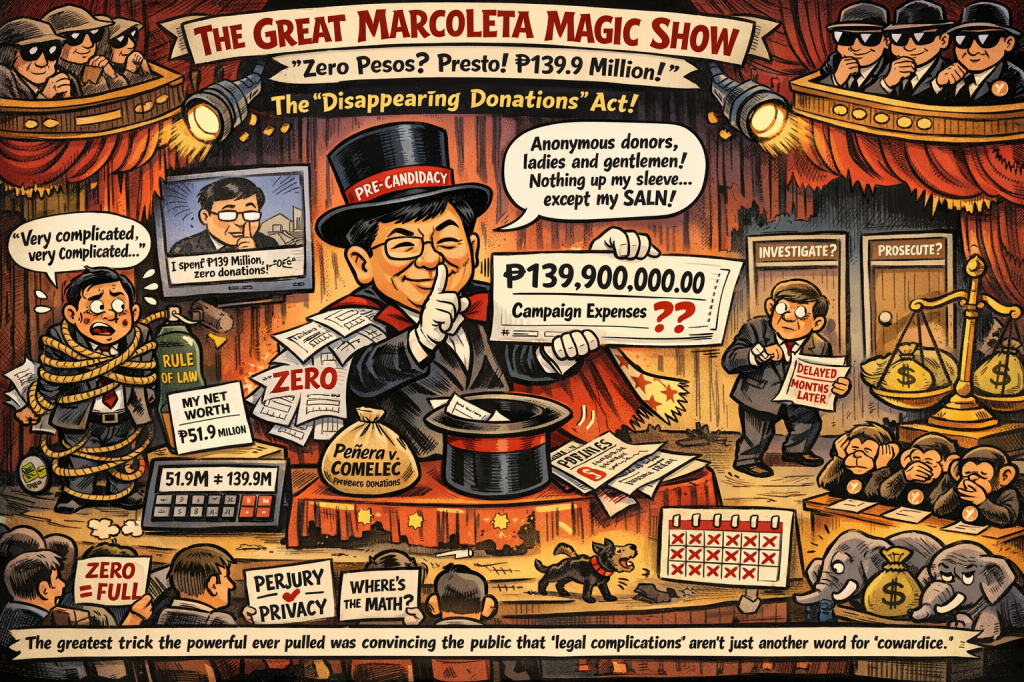
- Marcoleta’s Zero Donations Lie: How a Televised Confession Became “Legal Complications”

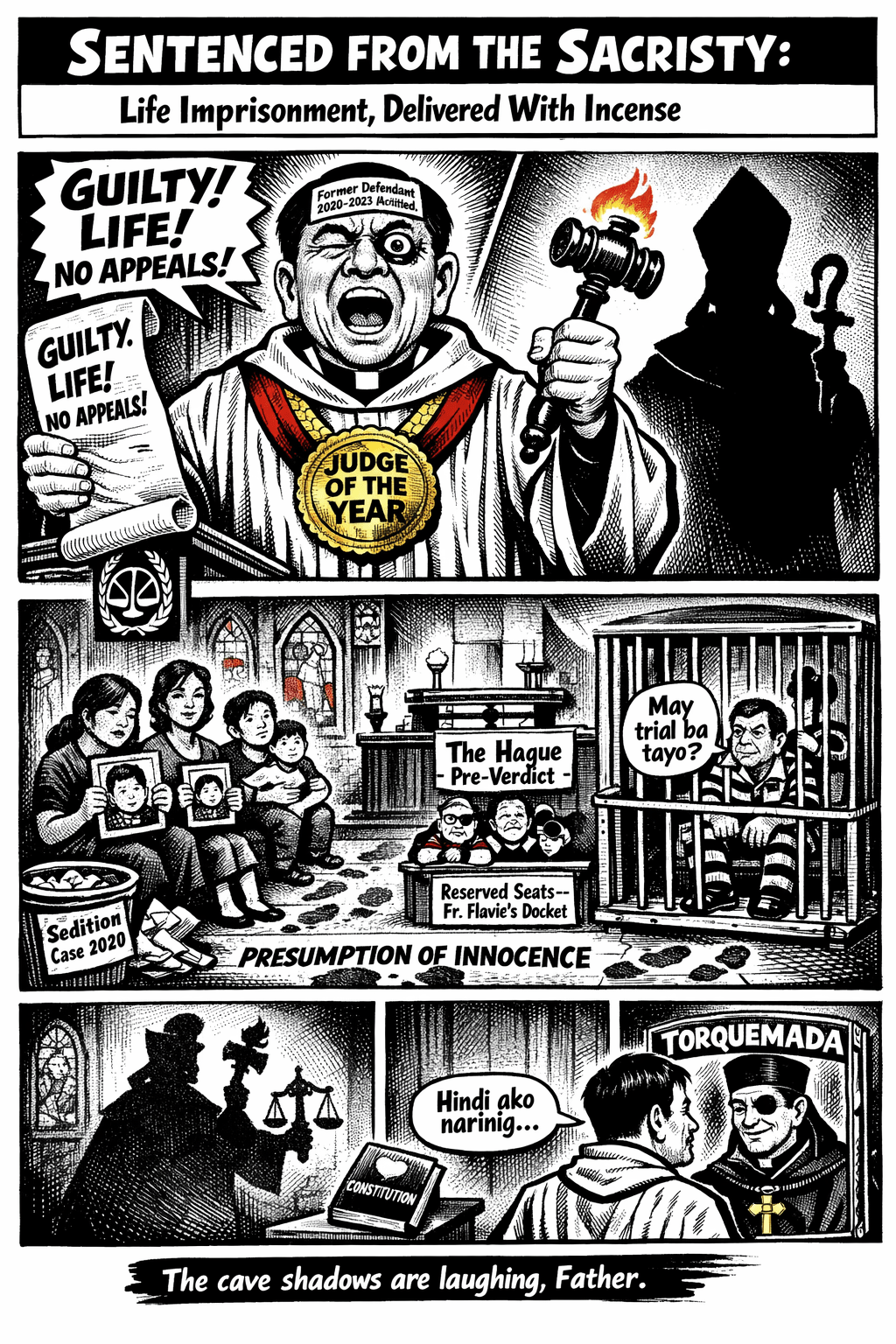
- Priest Sentences Duterte to Life – No Trial Needed

- Flood Control or Flood of Corruption? Marcos’ Infrastructure Probe Hits a Curious Pause

- Tau Gamma Phi: Where Brotherhood Means Beating You to Death and Blaming the Rogue Chapter

- Procurement Mafia’s Latest Hit Job: Why Herbosa Can’t Catch a Break

- Abra-Cadabra! 4.3 Million Poor Filipinos Just Vanished – Thanks, DHSUD Math

- Sara’s Magic Plane Fantasy vs. Marcos’ Bureaucratic Black Hole: Who Screws OFWs Worse?

- Sara’s Bagman Blows the Whistle – Then She Blows Perjury Smoke

- Bong Suntay’s Wet Dream Defense: How One Congressman Turned Impeachment into Pornhub Testimony






 KWEBA ni BAROK
Leave a comment