By Louis ‘Barok‘ C Biraogo — May 10, 2025
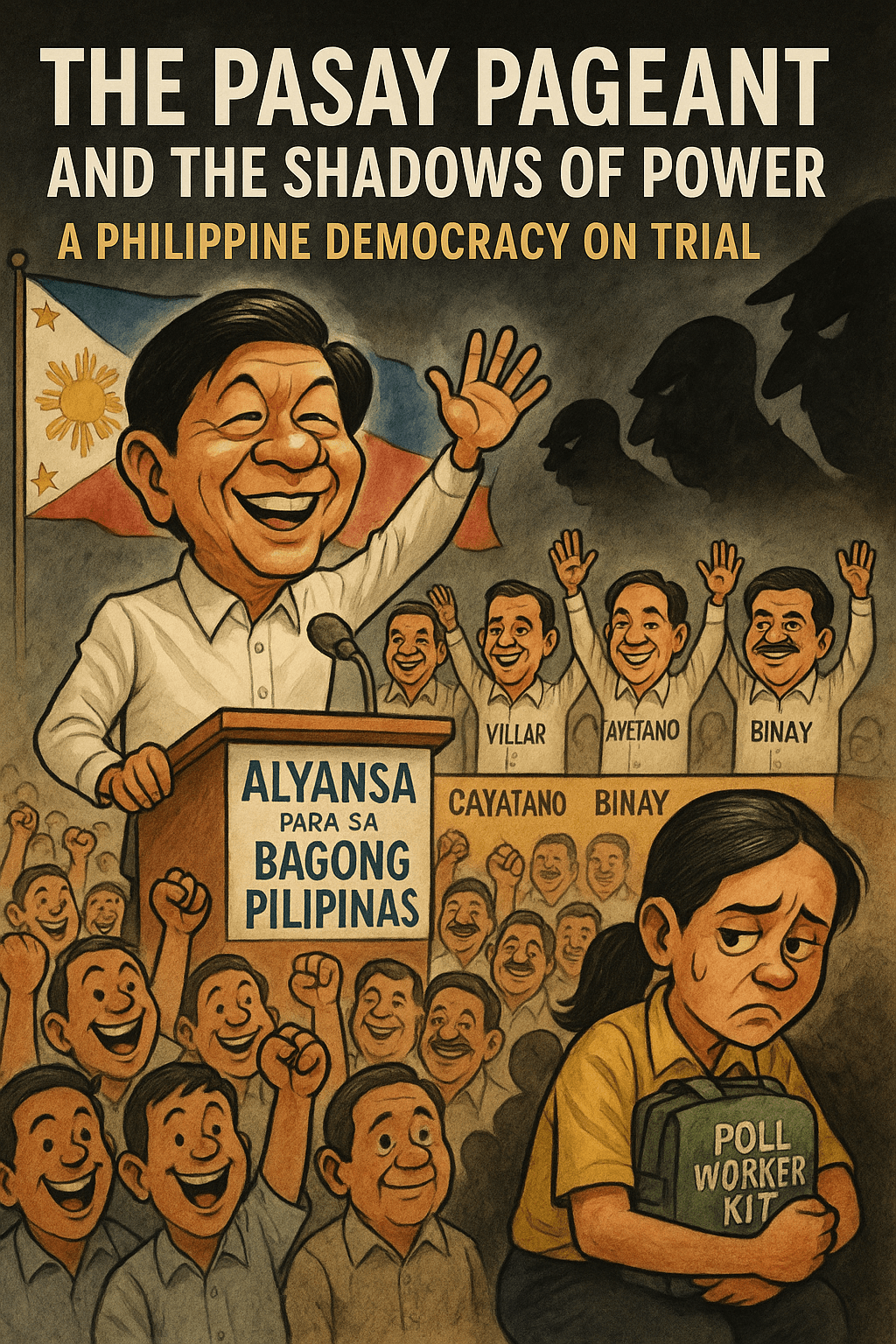
IN Pasay City’s gleaming Philippine International Convention Center, President Ferdinand Marcos Jr. orchestrates a dazzling spectacle on September 26, 2024, unveiling the Alyansa para sa Bagong Pilipinas senatorial slate—a cavalcade of dynastic titans like Villar, Cayetano, and Binay, cloaked in promises of a “New Philippines.” The crowd’s roars mask an undercurrent of unease. Four days from the May 12, 2025, midterm elections, a Sorsogon teacher, clutching her poll worker kit, braces for 182,359 voters crossing turbulent seas. On X, a fisherman’s viral lament cuts through the pomp: “Kung sino pa ang may apelyido, sila pa ang mananalo.” The OCTA Research survey—projecting eight Alyansa candidates to “win big”—is no mere forecast. It’s a flare illuminating a democracy caught between dynastic dominance and a restless, fractured public.
As a journalist who’s walked Davao City’s coastal barangays and Tondo’s slums, I see beyond the numbers—Bong Go at 56.8%, Erwin Tulfo at 52.7%—to the human stakes. This isn’t just an election; it’s a referendum on whether the Philippines can escape its oligarchic orbit. With the rigor of a truth-seeker and the moral clarity of one who’s witnessed power’s toll, I’ll unmask the subtext, interrogate the controversies, and challenge the narratives shaping this pivotal moment.
Dynasties’ Iron Grip: A Mandate or a Masquerade?
The Alyansa slate is a roll call of political aristocracy: Cayetano, Villar, Binay, Revilla, Lapid, with “outsiders” like Tulfo, Pacquiao, and Sotto wielding media empires or populist fame. The OCTA Tugon ng Masa survey, conducted April 20–24, 2025, projects eight Alyansa candidates in the “Magic 12,” with Go (56.8%) and Tulfo (52.7%) leading by wide margins. Pulse Asia and SWS mirror this, with nine Alyansa bets dominating. This looks like a resounding mandate for Marcos’ “Bagong Pilipinas.” But look closer, and it’s a mirage.
These victories stem not from visionary platforms but from a patronage machine perfected over decades. Alyansa’s campaign, laser-focused on vote-rich provinces like Bulacan (2 million voters) and Batangas, thrives on local warlords and Marcos’ star power. In Cavite, Governor Juanito Victor Remulla distributes “Alyansa kits” to barangay captains, cementing loyalty through favors. This isn’t democracy’s heartbeat—it’s the rhythm of a system where dynasties bank on name recall and resources. Pulse Asia’s April 2025 poll shows 27% of Filipinos have a “complete senatorial slate,” but many, like a Quezon City jeepney driver I met, vote for “kung sino ang kilala,” resigned to a dynastic menu.
Yet, a paradox pulses: Alyansa’s populist allure is real. Erwin Tulfo’s 52.7% draws from his radio show’s raw connection to the masa, railing against corruption. Manny Pacquiao’s 29.1% rides his rags-to-riches saga, a beacon for the urban poor. In a nation where 50% of families rated themselves poor in OCTA’s 2022 survey, these candidates aren’t just dynasts—they’re symbols of aspiration. Voters yearn for change but cling to the familiar, fueling Alyansa’s relentless march.
PrimeWater’s Taint and Imee’s Betrayal: Scandal or Smoke and Mirrors?
Two controversies threaten Alyansa’s polished facade: the PrimeWater probe and Senator Imee Marcos’ defection. Both expose power’s fault lines, but are they cries for justice or political sleight-of-hand?
PrimeWater’s Muddy Depths
President Marcos’ probe into PrimeWater Infrastructure Corp., the Villar family’s water utility, followed years of consumer outrage—exorbitant bills, unreliable supply. Camille Villar, at 31.9% and wobbling on the Magic 12’s edge, is caught in the crosshairs, not just as a candidate but as a dynastic emblem. Vice President Sara Duterte, backing Villar, called the probe a political hit, retaliation for her support of Imee Marcos. In San Jose del Monte, Bulacan, residents’ #VillarOut campaign on X amplifies their fury over PrimeWater’s failures. Yet, Alyansa’s Toby Tiangco insists Villar is “one of us,” and Marcos pledges a “fair” investigation. This reeks of theater—a gambit to polish Marcos’ reformist image without jettisoning a key ally. Villar’s middle-class urban voters may brush it off, but Bicol fisherfolk I spoke to see it as proof: “Ang mayaman, laging protektado.”
Imee’s Dynastic Defection
Imee Marcos’ absence from the Pasay convention was a calculated slap. Her shift to the Duterte camp, after decrying her brother’s role in Rodrigo Duterte’s arrest, marks a dynastic rift. At 28.9%, she lags outside the Magic 12, her April 14 campaign video with Duterte—a plea for “neglected issues”—failing to spark. X posts jeer her as “loyalty’s orphan,” caught between clans. This isn’t principle; it’s a Marcos scion hedging bets in a Marcos-Duterte feud. The winners? The dynasties, whose dramas keep voters hooked, sidelining issues like land reform or wage stagnation.
Both controversies serve Marcos. The PrimeWater probe lets him play populist while shielding Villar’s bid. Imee’s defection sidelines a rival within his clan, tightening his grip on Alyansa. The human toll is stark: while elites bicker, Bulacan’s slum-dwellers, reliant on PrimeWater’s erratic service, remain voiceless, their anger a mere echo in the polls.
Keyboard Warriors or Voices of Defiance?
Malacañang’s call to shun “keyboard warriors” who “sell their dignity” by spreading fake news lands like a grenade in a nation where 70% of adults use social media daily. Undersecretary Claire Castro’s warning, days before the election, paints online critics as traitors, possibly pawns of foreign powers like China. Is this a shield for sovereignty or a bludgeon against dissent?
The subtext screams: Alyansa fears the digital frontier. X posts show surging support for opposition candidates like Bam Aquino (31.4%, 9th–18th) and Kiko Pangilinan (26.3%, 11th–21st), fueled by the “Pink” movement’s grassroots fire. A Quezon City youth activist I met, sharing infographics on Marcos’ flood control failures, isn’t a “keyboard warrior” but a citizen demanding truth. By branding such voices disloyal, Malacañang risks alienating urban youth—33% of whom, per a Philstar poll, back progressives like France Castro over Alyansa’s dynasts. The Chinese interference claims, raised in Quezon rallies, lack evidence in reports, suggesting a ploy to stoke nationalism and dodge domestic woes like inflation, cited by 60% of voters as their top issue in a Nerve survey.
This narrative could backfire. The Matnog teacher, scrolling X during a break, told me, “Kung fake news ang issue, bakit hindi nila sagutin ang totoo?” Malacañang’s rhetoric may galvanize the opposition, turning the 9th–12th spot toss-up between Aquino and Willie Revillame (30.4%) into a battle over free speech.
A Marcos Senate: Progress or Patronage?
An Alyansa sweep, as OCTA predicts, could deliver Marcos’ agenda—charter change, infrastructure, West Philippine Sea defenses. But the shadow looms: a Senate of allies risks entrenching cronyism, with dynasts like Villar and Cayetano prioritizing family empires over public good. If the PrimeWater probe fades post-election, it’ll confirm suspicions that accountability is a campaign prop.
The opposition, already splintered, stares at extinction. Bam Aquino’s fragile 31.4% and Pangilinan’s 26.3% signal a liberal camp buckling under Alyansa’s juggernaut. College students, favoring progressives like Heidi Mendoza (38.95% in a Philstar poll), may rally, but their 10% of the electorate pales against rural voters swayed by patronage. A Davao fisherman, voting for Bong Go, said, “Siya ang nagbigay ng bangka namin.” This transactional loyalty, not ideology, powers Alyansa.
The human cost cuts deep. Rural fisherfolk, battered by typhoons and Chinese incursions, need a Senate fighting for their livelihoods, not one mired in dynastic spats. Urban poor mothers, queuing for subsidized rice, deserve policies tackling inflation, not photo-ops. A Marcos-dominated Senate might bring stability, but at the cost of a system where, as a Tondo vendor told me, “Ang boto ko, parang pambayad utang.”
The Faces Behind the Figures
OCTA’s 1,200 respondents aren’t numbers—they’re a nation wrestling with hope and despair. In Bicol’s ports, 94,543 travelers brave rough seas to vote, driven by duty. In Manila’s slums, a mother of three picks Tulfo because “he talks like us.” In Diliman, a student posts on X, “Bam Aquino gets it—education, not dynasties.” These voices, often silenced, expose the gulf between elite politics and grassroots realities. Pulse Asia’s 38% with a full slate splits between pragmatists backing dynasts and idealists rooting for Aquino.
The 10th–12th spot race—Aquino vs. Revillame, Pacquiao vs. Imee Marcos—crackles with suspense. Will urban youth and the “Pink” movement lift Aquino? Or will Revillame’s TV charisma sway rural voters? Alyansa’s slight decline, within the margin of error, hints at volatility. Rodante Marcoleta’s 9-point leap to 27.8% proves late surges are real. With 1.16 million sea travelers and 2 million Bulacan voters in play, these final days could rewrite the script.
History’s Haunting Warning
Alyansa’s looming landslide isn’t a victory—it’s a symptom of a democracy where dynasties outshine ideas. The PrimeWater probe and Imee’s defection are sideshows to the core issue: a system elevating names over needs. Malacañang’s “keyboard warriors” jab betrays fear of the public it claims to champion. An Alyansa Senate may cement Marcos’ power, but at what price? Cronyism, unchecked, breeds rot, as history—from Marcos Sr.’s regime to Arroyo’s scandals—teaches us.
The voters, from Matnog’s ports to Tondo’s alleys, deserve more than a dynastic ballot. They need a Senate that hears their pleas for jobs, security, and dignity. As May 12 nears, one question sears: If democracy is just picking the least tarnished name, can the Philippines truly call itself “Bagong”? The answer lies not in polls, but in a nation’s courage to demand better—starting now.
Sources:
- OCTA Research Tugon ng Masa survey, April 20–24, 2025
- Pulse Asia survey, April 20–24, 2025
- SWS survey, May 2–6, 2025
- Philstar reports
- Philippine Ports Authority passenger data
- Nerve survey on voter concerns
- PrimeWater Infrastructure Corp.
- Datareportal: Philippines Digital 2025

- “Forthwith” to Farce: How the Senate is Killing Impeachment—And Why Enrile’s Right (Even If You Can’t Trust Him)

- “HINDI AKO NAG-RESIGN!”

- “I’m calling you from my new Globe SIM. Send load!”

- “Mahiya Naman Kayo!” Marcos’ Anti-Corruption Vow Faces a Flood of Doubt

- “Meow, I’m calling you from my new Globe SIM!”

- “No Special Jail for Crooks!” Boying Remulla Slams VIP Perks for Flood Scammers

- “PLUNDER IS OVERRATED”? TRY AGAIN — IT’S A CALCULATED KILL SHOT

- “Several Lifetimes,” Said Fajardo — Translation: “I’m Not Spending Even One More Day on This Circus”

- “Shimenet”: The Term That Broke the Internet and the Budget

- “We Did Not Yield”: Marcos’s Stand and the Soul of Filipino Sovereignty

- “We Gather Light to Scatter”: A Tribute to Edgardo Bautista Espiritu

- $150M for Kaufman to Spin a Sinking Narrative








 KWEBA ni BAROK
Leave a comment