By Louis ‘Barok‘ C. Biraogo — May 15, 2025
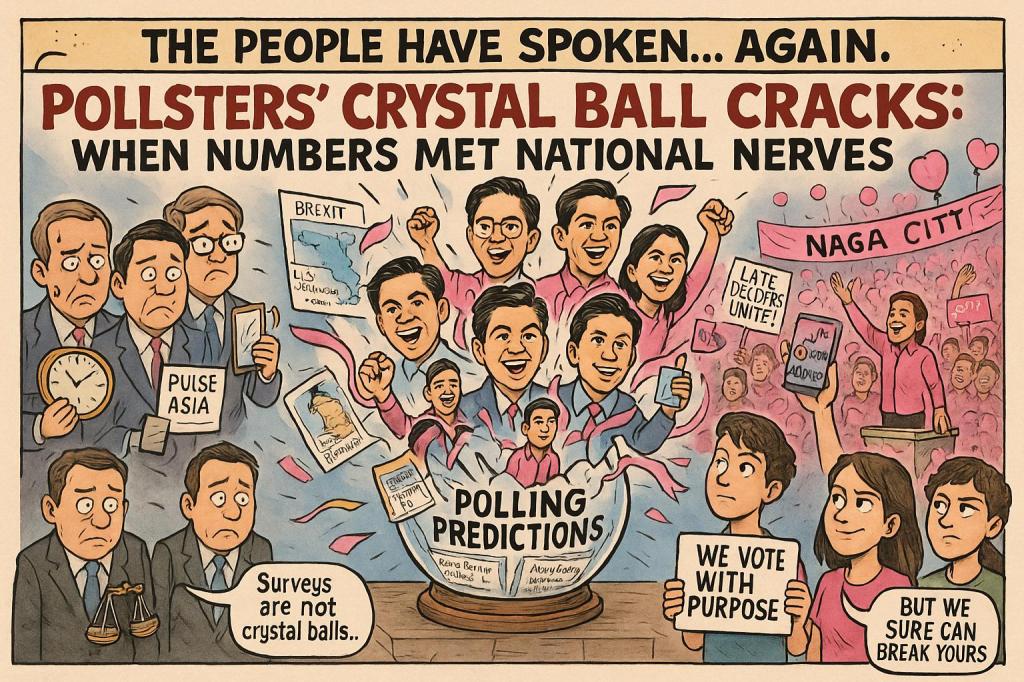
HOW did the Philippines’ most respected polling institutions get it so catastrophically wrong? On May 12, 2025, that question thundered through political circles as Francis Pangilinan—a candidate barely registering in pre-election surveys—clinched 5th place with a stunning 14.5 million votes. Meanwhile, projected frontrunners Bong Revilla and Abby Binay found themselves unceremoniously ejected from the “Magic 12.” From the victory podium in Naga City, newly elected Mayor Leni Robredo’s declaration echoed like a verdict:
“The movement is strong. The people did not lose hope after the 2022 debacle.”
The Senate election results weren’t just surprising—they had shattered the very foundation of Philippine electoral forecasting.
The 2025 midterm elections, with 68 million voters choosing 12 senators, exposed a polling crisis that echoes global flops—think Brexit’s 2016 blindside or the U.S. Midwest’s 2020 miscalculations. By dissecting the root failures, political undercurrents, and trust-shattering fallout, we reveal not just where polls derailed but how to steer them back on track. This is a story of missed surges, defiant voters, and a democracy demanding better.

1. Polling’s Fatal Flaws: Why Surveys Crashed
Timing Tumbles: Missing the Last-Minute Tsunami
The first fissure in the polling framework was timing. OCTA’s Ranjit Rye, in a frank interview with The STAR, admitted their final survey, conducted April 20–24, missed the 18–19% of voters who decide in the final week. Pulse Asia’s Ronald Holmes, speaking to ABS-CBN News, echoed this, noting their April survey ended three weeks before May 12. This gap was catastrophic. Bam Aquino, stuck at 11th–18th in Pulse Asia’s rankings, and Francis Pangilinan, barely registering, rode a late wave fueled by a frenzied Naga City rally with Robredo on May 10 Rappler. By election day, Aquino topped 23 provinces, Pangilinan ranked in the top six in 23 others, and both surfed a tide polls never saw.
Methodological Misfires: Blind to Youth and Faith
Sampling flaws deepened the disaster. Millennials and Gen Z, now over 60% of the electorate PhilSTAR Life, crave accountability and reform—hallmarks of Aquino’s education platform and Pangilinan’s food security push. Yet, as Holmes told the Inquirer, Pulse Asia’s sampling doesn’t stratify by age, likely undercounting these voters while overrepresenting older, establishment-leaning ones. The Iglesia ni Cristo’s (INC) late endorsements of Aquino and Marcoleta, a Duterte ally, threw another curveball Rappler. Marcoleta’s Mindanao strongholds—Davao del Sur, Misamis Oriental—catapulted him into the Magic 12, a surge national polls missed.
Strategic Voting’s Stealth Strike
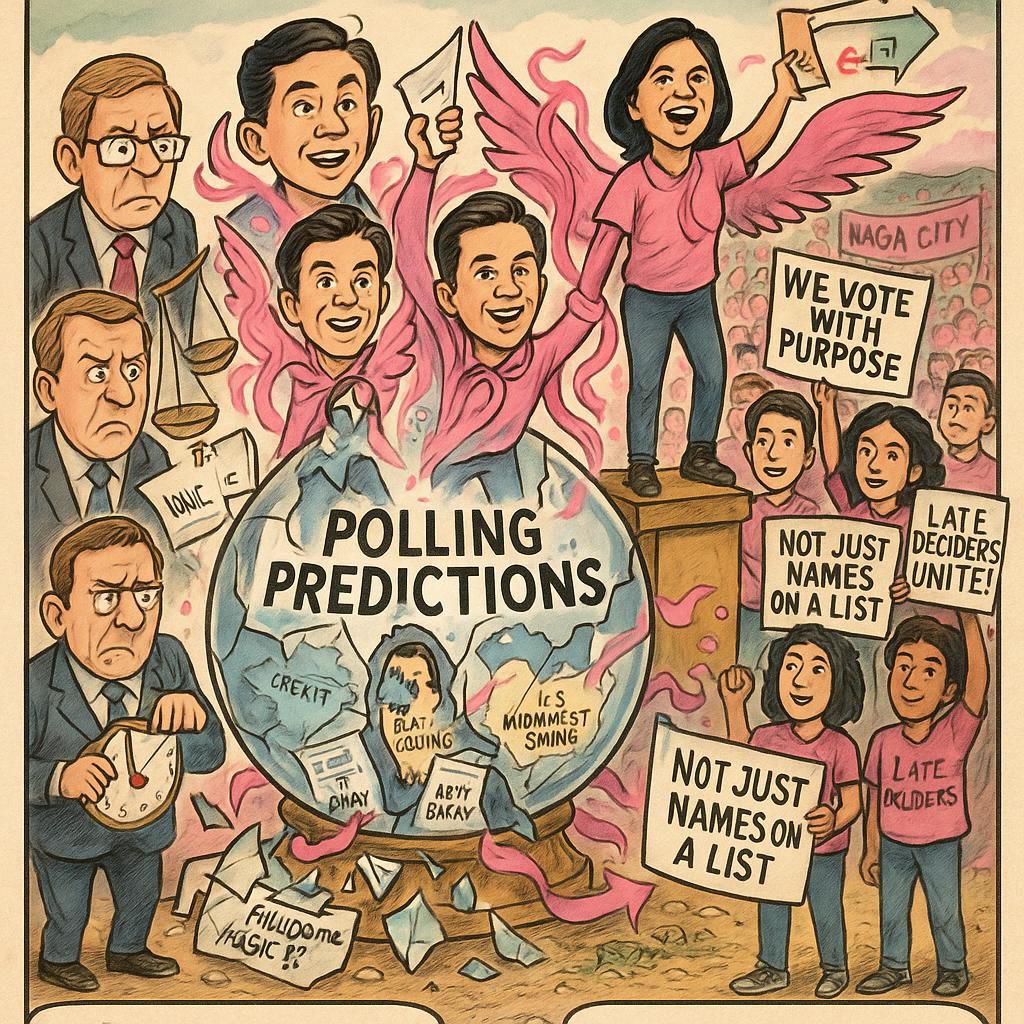
Then there’s strategic voting. Pulse Asia’s April survey showed only 27% of voters had picked all 12 candidates, down from prior months Rappler. Campaigns like Robredo’s “pink” slate, urging voters to back fewer candidates, concentrated votes for Aquino and Pangilinan while siphoning support from administration bets. This tactic, invisible to polls, reveals a fatal flaw: surveys assume uniform voting, but Filipinos wield their ballots like scalpels.
Globally, these errors aren’t new. In 2016, U.K. polls misjudged Brexit’s rural fervor BBC. In 2020, U.S. surveys overstated Biden’s Midwest margins NYT. The Philippines’ unique cocktail of late deciders, religious clout, and fragmented politics demands nimbler polling.
2. The People’s Pulse: A Youth-Led Rebellion
Opposition’s Resurgence: Robredo’s Legacy Reignites

Aquino and Pangilinan’s triumph wasn’t just a polling flub; it was a rebuke of the Marcos administration’s wobbling dominance. Stratbase’s Dindo Manhit captures it: “Their resurgence carries a powerful message—a renewed demand for accountability, human rights, and reform-oriented leadership” Rappler. Aquino’s push for free education, building on his 2017 Tertiary Education Act, and Pangilinan’s agricultural reforms spoke to voters grappling with inflation and hunger. Their platforms, Manhit says, “struck a deep chord.”
This was no fresh uprising but a phoenix rising from Robredo’s 2022 campaign, which, though defeated, rallied 15 million voters. Her “pink” coalition, bruised but resilient, regrouped for 2025, channeling frustration into votes. Robredo’s euphoric reaction in Naga reflected a grassroots swell, amplified by millennials and Gen Z, who, per PhilSTAR, now dominate and demand leaders free of dynastic stains. X posts, like those from @ElectionWatchPH, blasted poll inaccuracies while cheering the “Kiko-Bam” upset.
Administration’s Stumble: Misreading the Youth
Meanwhile, the administration’s Alyansa slate faltered. Rye, expecting eight to nine winners, was stunned when Revilla and Binay missed the Magic 12 Rappler. Rappler’s Rear View nails the misstep: “The surveys gave the administration a false sense of security.” Marcos’ sagging trust ratings and Alyansa’s lackluster campaign alienated younger voters. Revilla, a showbiz relic, and Binay, a dynastic heir, couldn’t match the youth’s hunger for substance. Marcos’ rift with sister Imee’s campaign only worsened the rout.
3. Trust Torched: The Polling Credibility Crisis
Public Backlash: A “False Sense of Security”
The polling fiasco has ignited a trust crisis. Rappler’s charge that surveys lulled the administration into complacency resonates with voters now doubting pollsters’ integrity *Rappler*. On X, users like @MiningMiranda skewered Pulse Asia, noting only 56% of candidates were correctly ranked. Holmes, under fire, vowed to GMA News a methodological overhaul, especially for capturing the “millennial/Gen Z” vote. Rye, more reflective, said, “Surveys are not a crystal ball,” but promised tweaks GMA News.
Future Stakes: A Democracy at Risk
This isn’t academic. Distrust in polls could erode democratic discourse. If voters scoff at surveys, candidates may double down on disinformation or patronage—already plagues in Philippine politics. The 2022 election, where Marcos Jr.’s landslide aligned with polls but stoked skepticism among Robredo’s base, is a cautionary tale. Globally, polling failures have fueled populist cynicism, from Trump’s 2016 upset to France’s 2022 election misses *Le Monde*. The Philippines’ vibrant but fragile democracy can’t afford this slide.
4. Charting the Fix: A New Polling Blueprint
The 2025 midterms demand a polling reset. First, slash survey timelines. Polling within a week of election day, as EU firms do, could catch late deciders, though Holmes cited budget hurdles. Second, embrace granular tracking. Age- and region-stratified sampling, like U.S. pollsters adopted post-2020, would mirror the youth-driven electorate Pew Research. Third, leverage real-time data. Social media sentiment or rolling polls, used in EU elections, could spot last-minute swings. Finally, transparency is key. Pollsters must, like Pew, candidly report limitations to rebuild trust.
For voters, the takeaway is stark: polls are glimpses, not gospel. Aquino and Pangilinan’s victory, forged in grassroots grit and Robredo’s unyielding hope, proves Filipinos can rewrite the script. As a young Naga voter, clutching a pink ribbon, told me, “We voted for leaders who listen, not just names on a list.” That’s a clarion call pollsters—and politicians—must heed.
Table: Survey vs. Reality in the 2025 Midterms
| Candidate | Survey Rank (OCTA/Pulse Asia, April 2025) | Actual Rank (May 12, 2025) | Notes |
|---|---|---|---|
| Bam Aquino | 9th–18th / 11th–18th | 2nd (19.9M votes) | INC endorsement, NCR/Central Luzon strength. |
| Francis Pangilinan | Bottom / Low ranking | 5th (14.5M votes) | Southern Luzon surge, opposition momentum. |
| Rodante Marcoleta | Bottom / Low ranking | Upper Magic 12 | INC, Duterte support, Mindanao base. |
| Bong Revilla | Expected Magic 12 / High ranking | Missed Magic 12 | Lost youth vote, no late endorsements. |
| Abby Binay | Expected Magic 12 / High ranking | Missed Magic 12 | Dynastic fatigue, internal tensions. |
Source: Rappler Election Results, PhilSTAR Life.
This column draws on reporting from Rappler, PhilSTAR, and Stratbase, with vote totals from the Commission on Elections Media Server as of May 12, 2025.

- ₱75 Million Heist: Cops Gone Full Bandit

- ₱6.7-Trillion Temptation: The Great Pork Zombie Revival and the “Collegial” Vote-Buying Circus

- ₱1.9 Billion for 382 Units and a Rooftop Pool: Poverty Solved, Next Problem Please

- ₱1.35 Trillion for Education: Bigger Budget, Same Old Thieves’ Banquet

- ₱1 Billion Congressional Seat? Sorry, Sold Out Na Raw — Si Bello Raw Ang Hindi Bumili

- “We Will Take Care of It”: Bersamin’s P52-Billion Love Letter to Corruption

- “Skewed Narrative”? More Like Skewered Taxpayers!

- “Scared to Sign Vouchers” Is Now Official GDP Policy – Welcome to the Philippines’ Permanent Paralysis Economy
- “Robbed by Restitution?” Curlee Discaya’s Tears Over Returning What He Never Earned

- “No Pressure” Luistro? The House Pork Bazaar Exposed
- “My Brother the President Is a Junkie”: A Marcos Family Reunion Special

- “Mapipilitan Akong Gawing Zero”: The Day Senator Rodante Marcoleta Confessed to Perjury on National Television and Thought We’d Clap for the Creativity



 KWEBA ni BAROK
Leave a comment