
By Louis ‘Barok‘ C. Biraogo — May 20, 2015
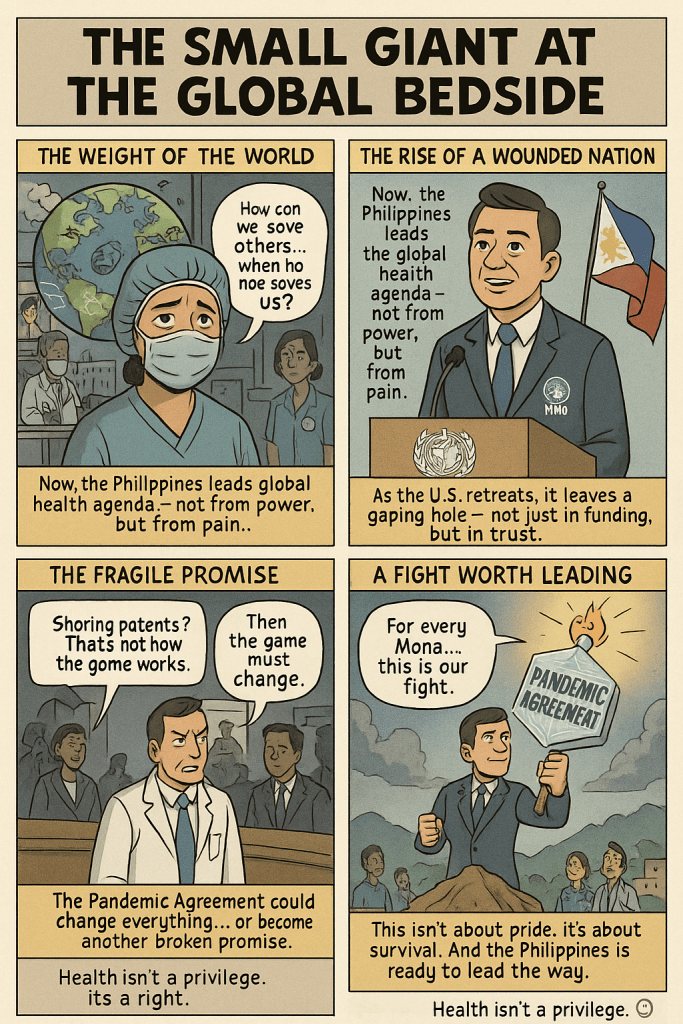
IN A cramped Manila hospital in 2020, Nurse Mona Santos worked 18-hour shifts, her face bruised from a too-tight mask, tending to COVID-19 patients while fearing for her own children. She wasn’t alone: Filipino health workers, often underpaid and overworked, became the backbone of a nation battered by a global crisis that exposed stark inequities in healthcare access. Today, as the Philippines, under Health Secretary Teodoro “Ted” Herbosa, assumes the presidency of the 78th World Health Assembly (WHA78), Mona’s story embodies the moral weight of this historic moment. For the first time since the World Health Organization’s founding in 1948, a developing nation scarred by pandemic inequity is steering the global health agenda. Yet, the irony stings: as the Philippines rises, the United States retreats, leaving a fractured world to grapple with health equity amid geopolitical storms.
A Historic Leap for a Wounded Nation
The Philippines’ ascent to the WHA78 presidency is a triumph of resilience over adversity. A nation of 120 million, still grappling with the wounds of COVID-19, now leads the world’s highest health policy body. This isn’t just symbolic—it’s a chance to reshape global health for the vulnerable. But the shadow of the U.S. withdrawal looms large. The world’s largest economy, once a cornerstone of WHO funding, has abandoned ship, leaving a 22% hole in the organization’s budget. For a country like the Philippines, where rural clinics often lack basic supplies, this vacuum is both a challenge and an opportunity to lead where giants have faltered.
Navigating a Global Health Minefield
The U.S. Abandons Ship
The U.S. withdrawal from WHO, formalized by President Donald Trump’s January 2025 executive order, is a gut punch to global health. Contributing 22% of WHO’s mandatory funds, the U.S. was a linchpin in programs that battle diseases from Ebola to tuberculosis. Its exit, driven by criticisms of WHO’s COVID-19 response, risks what Dr. Daniele Fallin of Emory calls a “strategic mistake” that could unleash public health disasters. For the Philippines, this means leading a weakened WHO, where every dollar and decision counts twice as much.
The Pandemic Agreement: Equity or Empty Promises?
The Pandemic Agreement, set for adoption at WHA78, is a beacon of hope—or a diplomatic mirage. Crafted over three years, it aims to ensure equitable access to vaccines, diagnostics, and therapeutics, addressing the vaccine hoarding that left nations like the Philippines scrambling during COVID-19. But debates over intellectual property and technology transfers threaten to derail it. Can Herbosa, a trauma surgeon turned diplomat, broker a deal that forces wealthier nations to share? Without U.S. muscle, the agreement risks becoming a feel-good document with no teeth.
“One World for Health”: Slogan or Sham?
WHA78’s theme, “One World for Health,” rings hollow against the backdrop of global inequity. During COVID-19, rich nations secured 70% of vaccine doses, while the Philippines and others begged for scraps. The result? Over 60,000 Filipino deaths and a healthcare system pushed to the brink. Herbosa must transform this rhetoric into reality, ensuring the Pandemic Agreement delivers tools—not just promises—to nations on the margins.
The Philippines’ High-Stakes Balancing Act
Herbosa’s leadership is a masterclass in diplomacy. His eight-pillar health plan, targeting immunization and digital health, shows ambition. His meetings with WHO’s Tedros and nations like Singapore signal Manila’s rising global clout. Yet, the tightrope is precarious. At home, 26.7% of children under five are stunted, and HIV cases have spiked 400% in a decade. Leading WHA78 risks pulling focus from these crises. If Herbosa’s global role doesn’t deliver resources—through WHO aid or bilateral deals—this presidency could be dismissed as a hollow victory for Filipinos like Nurse Mona, who need more than symbolic wins.
Call to Action: Seize the Moment, Demand Accountability
For the Philippines: Turn Symbolism into Substance
Herbosa must use his WHA78 pulpit to demand ironclad commitments. The Pandemic Agreement’s “common but differentiated responsibilities” clause is his weapon—rich nations must fund and share vaccine patents, or the next pandemic will repeat past failures. He should rally ASEAN and mid-sized powers to amplify the Global South’s voice, pushing WHO to prioritize local vaccine production. At home, Herbosa must secure WHO technical aid for disease surveillance and lobby for EU-ASEAN health funding to strengthen rural clinics.
For the U.S. and Allies: Don’t Cede the Field
The U.S. may have quit WHO, but it can’t quit global health. Redirecting funds through NGOs or bilateral deals—like those that bolstered the Philippines’ COVID-19 response—can fill gaps without empowering China’s growing influence. The EU and ASEAN must step up, treating health as security. A $500 million EU-ASEAN fund for pandemic early-warning systems, coordinated through the Philippines’ WHA role, would be a bold start. Health isn’t charity; it’s survival.
For WHO: Rebuild Trust, Empower the Underdogs
WHO’s post-COVID trust deficit demands a transparency overhaul. Publish detailed budgets and program outcomes to silence critics. Empower nations like the Philippines to lead, not just chair meetings. Give Herbosa’s team real authority to shape the Pandemic Agreement’s rollout, prioritizing local manufacturing in the Global South. A WHO that listens to Manila as much as Geneva will be stronger for it.
The Heart of the Fight: Filipino Heroes
Filipino health workers like Mona Santos are the soul of this story. During COVID-19, they risked their lives, often without proper gear, earning less than their counterparts in nations now hoarding resources. Their sacrifices give the Philippines the moral authority to demand equity—not as a supplicant, but as a leader. Herbosa, a doctor who’s seen the chaos of trauma wards, knows this. His leadership must honor these workers by securing global commitments that translate to better hospitals, fair wages, and vaccines for the next crisis.
Health isn’t a privilege; it’s a right. The world’s poorest nations, led by the Philippines, are done waiting for the richest to act. As WHA78 unfolds, Herbosa has a chance to make history—not just for Manila, but for a world where no nurse, no patient, is left behind.
Key Citations
- Philippines Takes WHA Presidency
- US Funding Role in WHO
- US Withdrawal Increases Public Health Risks
- WHO Member States Conclude Pandemic Agreement
- Pandemic Agreement Negotiation Challenges
- Pandemic Agreement Analysis
- Philippines COVID-19 Response Support

- ₱75 Million Heist: Cops Gone Full Bandit

- ₱6.7-Trillion Temptation: The Great Pork Zombie Revival and the “Collegial” Vote-Buying Circus

- ₱1.9 Billion for 382 Units and a Rooftop Pool: Poverty Solved, Next Problem Please

- ₱1.35 Trillion for Education: Bigger Budget, Same Old Thieves’ Banquet
- ₱1 Billion Congressional Seat? Sorry, Sold Out Na Raw — Si Bello Raw Ang Hindi Bumili

- “We Will Take Care of It”: Bersamin’s P52-Billion Love Letter to Corruption
- “Skewed Narrative”? More Like Skewered Taxpayers!

- “Scared to Sign Vouchers” Is Now Official GDP Policy – Welcome to the Philippines’ Permanent Paralysis Economy
- “Robbed by Restitution?” Curlee Discaya’s Tears Over Returning What He Never Earned
- “My Brother the President Is a Junkie”: A Marcos Family Reunion Special

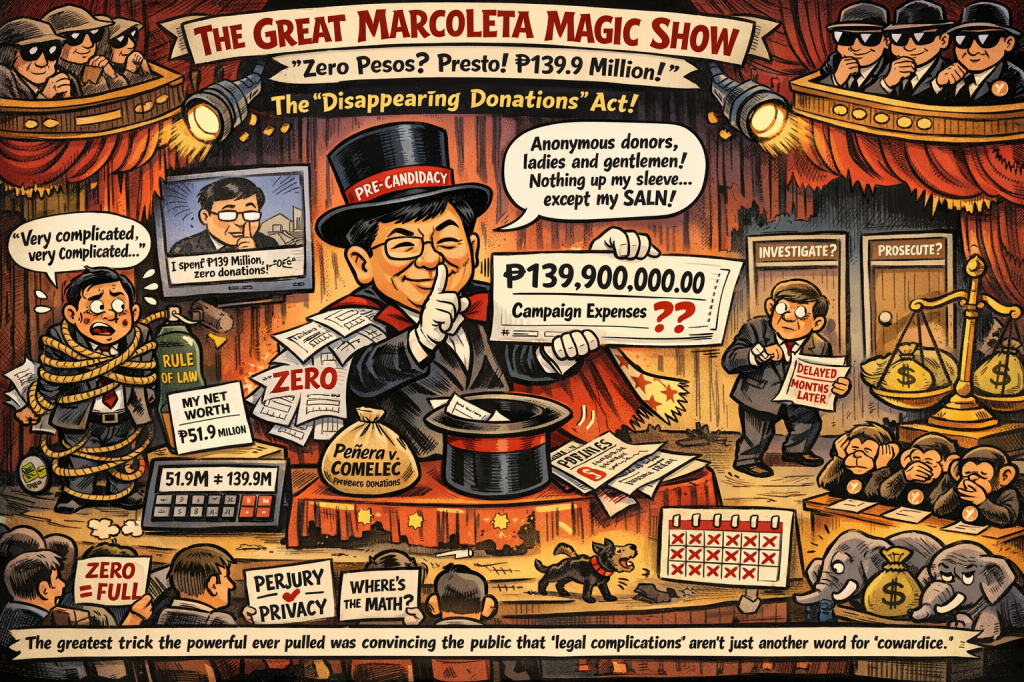
- “Mapipilitan Akong Gawing Zero”: The Day Senator Rodante Marcoleta Confessed to Perjury on National Television and Thought We’d Clap for the Creativity
- “Just Following Orders” Is Dead: How the Hague Just Turned Tokhang’s Finest Into International Fugitives

 KWEBA ni BAROK
Leave a comment