By Louis ‘Barok‘ C. Biraogo — May 20, 2025
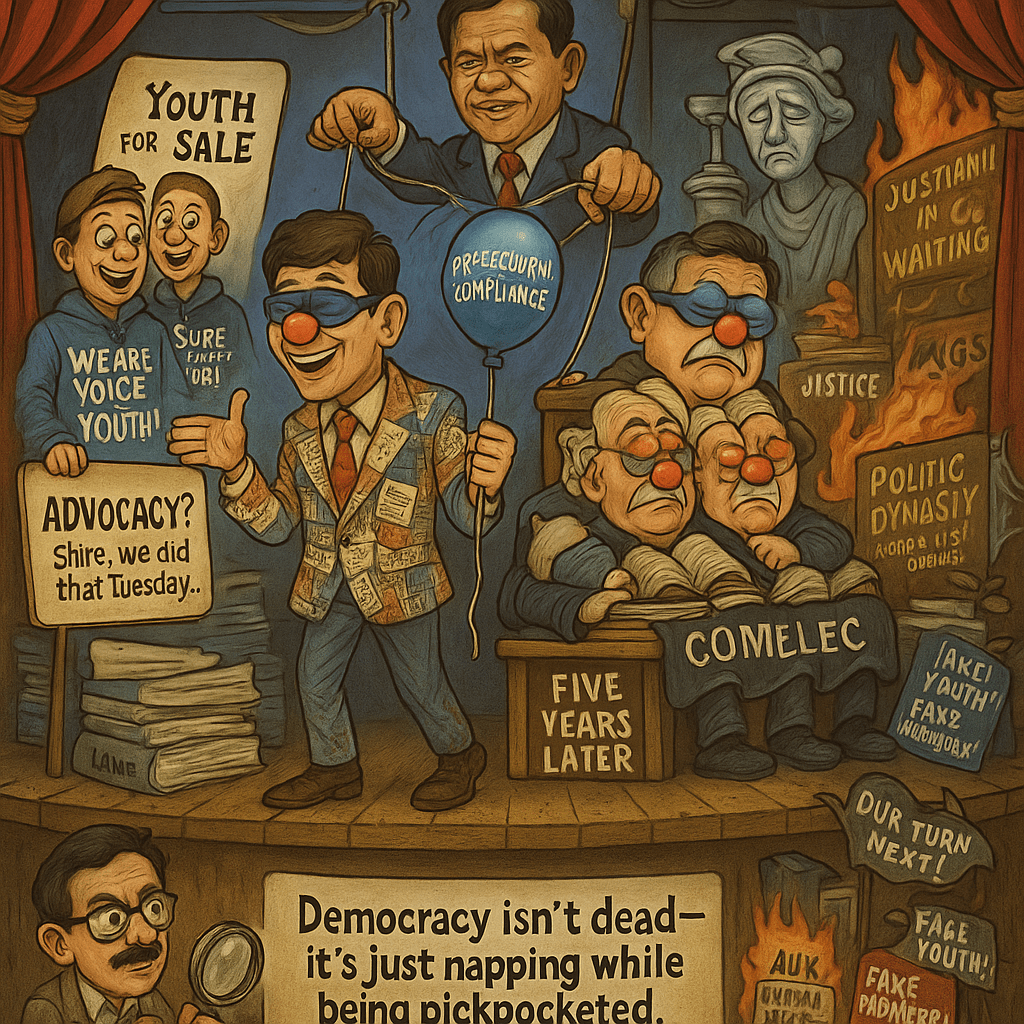
The Duterte Youth party-list saga is a festering wound on the Philippine electoral system, with the Commission on Elections (Comelec) playing the role of an indifferent bystander. A five-year-old petition to void their registration for flagrant procedural violations and blatant misrepresentation languishes unresolved, yet Comelec barrels toward a May 29, 2025, proclamation that could cement this travesty. This isn’t just bureaucratic inertia—it’s a betrayal of the party-list system’s constitutional promise. With Kweba ng Katarungan’s signature skepticism, we dissect the legal quagmire, shred Duterte Youth’s flimsy defenses, expose Comelec’s systemic rot, and demand reforms to salvage democracy’s battered integrity.
1. Unmasking Procedural Perfidy: Comelec’s Dereliction of Duty
The 2019 petition by Kabataan Tayo ang Pag-asa youth leaders, revived in March 2025, accuses Duterte Youth of sidestepping mandatory procedural and substantive requirements. Here’s the legal carnage:
- Constitutional and Statutory Evisceration:
- 1987 Constitution, Art. VI, Sec. 5: Enshrines a party-list system for marginalized sectors, with Republic Act No. 7941 (Party-List System Act) demanding under Section 5 that registration petitions be published in two national newspapers and subjected to public hearings. Petitioners allege Duterte Youth dodged these, rendering their registration void from the start. BANAT v. Comelec (G.R. No. 179271, 2009) hammers home that such procedural lapses are fatal.
- RA 7941, Sec. 6: Bars registration for groups misrepresenting their sector. Duterte Youth’s alleged use of overaged nominees violates Sec. 9’s 25–30 age cap for youth groups. Atong Paglaum v. Comelec (G.R. No. 203766, 2013) insists nominees must authentically represent their sector with a proven advocacy track record—standards Duterte Youth reportedly flunks.
- Comelec Resolution No. 9366: Reinforces publication and hearing mandates for transparency. The petitioners’ claim of non-compliance aligns with Ang Bagong Bayani-OFW v. Comelec (G.R. No. 147571, 2001), which nullified registrations for similar procedural sins.
- Procedural Law: Grave Abuse of Discretion:
- Comelec’s five-year inaction, stalling since the December 2019 hearing where Duterte Youth failed to appear, screams grave abuse of discretion under Rule 65, Rules of Court. This allows certiorari petitions when a body acts capriciously, a threshold crossed by Comelec’s refusal to resolve despite clear mandates.
- Ethical Collapse:
- RA 6713, Sec. 4 demands transparency and responsiveness from public officials. Comelec’s delay violates this and Art. XI, Sec. 1 of the Constitution, which holds officials accountable for betraying public trust. The Code of Judicial Conduct for quasi-judicial bodies mandates promptness, yet this case festers, mocking electoral integrity.
The petition’s legal foundation is ironclad, grounded in constitutional mandates, statutory requirements, and Supreme Court precedents. Comelec’s failure to act before Duterte Youth’s 2019 and looming 2025 proclamations is a procedural and ethical disaster.
2. Shredding Duterte Youth’s Desperate Defenses: A Legal House of Cards
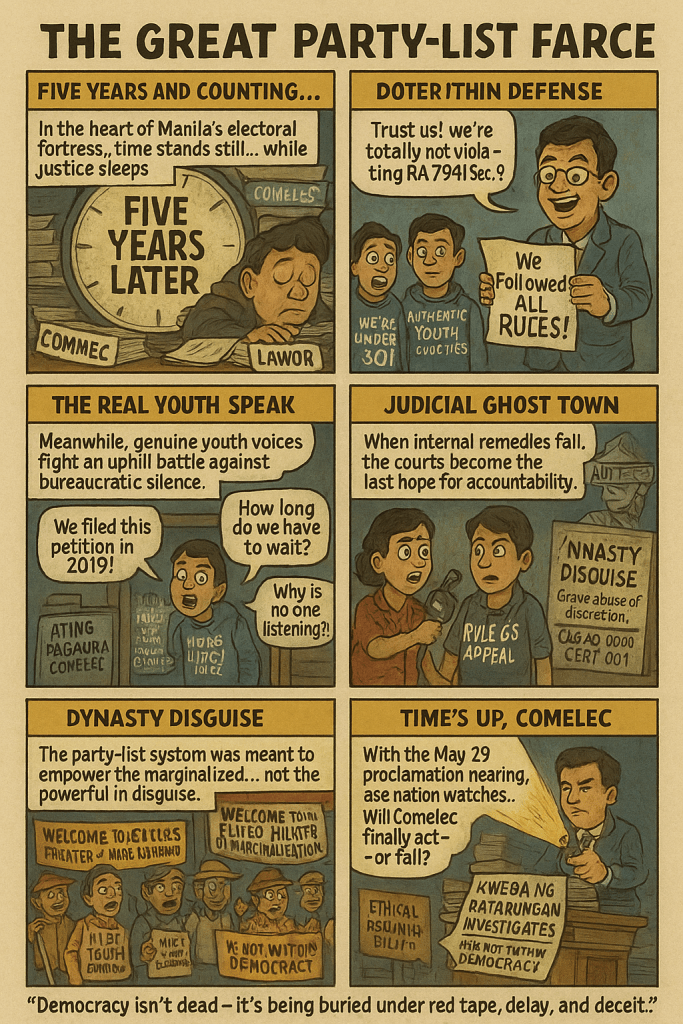
Duterte Youth will likely cobble together defenses to cling to their congressional seats, but each collapses under scrutiny. Below, we dismantle their arguments:
| Defense | Duterte Youth’s Claim | Rebuttal |
|---|---|---|
| Procedural Compliance | Argue they met RA 7941, Sec. 5 and Comelec Resolution No. 9366 requirements, or that minor lapses (e.g., skipped publication) don’t void registration, citing Penera v. Comelec (G.R. No. 181613, 2009). | Penera dealt with candidate filings, not party-list registrations, where BANAT demands strict adherence. Publication and hearings are non-negotiable under RA 7941 and Resolution No. 9366. Ang Bagong Bayani voids non-compliant registrations outright. |
| Laches Doctrine | Claim the 2019 petition is barred by laches due to a five-year delay, citing Regalado v. Go (G.R. No. 167988, 2007), bolstered by their 2019 election win. | Tijam v. Sibonghanoy (G.R. No. L-21450, 1968) exempts public-interest cases like elections from laches. The March 2025 revival shows petitioner diligence, and ongoing registration defects negate delay arguments. |
| Nominee Qualifications | Assert nominees meet RA 7941, Sec. 9’s 25–30 age requirement and represent youth, per Atong Paglaum’s advocacy track record test. | Nominees over 30 violate Sec. 9. Atong Paglaum demands authentic sectoral ties, not superficial claims. Evidence of political ties to Duterte or lack of youth advocacy undermines their case. |
| Comelec’s Discretion | Argue Comelec’s authority under Art. IX-C, Sec. 2(5) and RA 7941, Sec. 6 validates their registration, absent clear abuse. | Rule 65 permits review for arbitrary acts. Granting registration without publication/hearing is capricious, violating BANAT’s rigor. Comelec’s delay further erodes this defense. |
Duterte Youth’s arguments lean on technicalities and Comelec’s discretion, but the petition’s robust grounding in law and precedent—BANAT, Atong Paglaum, Ang Bagong Bayani—exposes their weakness. Their 2019 win doesn’t sanitize a potentially void registration; it amplifies the injustice.
3. Systemic Rot Exposed: Comelec’s Betrayal of Democratic Ideals
Comelec’s mishandling of this case isn’t just incompetence—it’s a systemic failure that threatens the party-list system and public trust:
- Comelec’s Catastrophic Inaction:
- The five-year delay, with no progress since the December 2019 hearing, constitutes grave abuse of discretion under Rule 65 and neglect of duty under Art. XI, Sec. 1. RA 6713, Sec. 4 demands transparency, yet Comelec’s silence, as noted in Rappler, suggests political complicity. The Code of Judicial Conduct mandates promptness for quasi-judicial bodies, making Comelec’s inaction indefensible.
- Party-List System Hijacked:
- Duterte Youth’s ties to former President Rodrigo Duterte, as flagged in GMA News, flout RA 7941’s anti-dynasty ethos. BANAT warned against elite capture of the party-list system, a concern echoed in Democratic Erosion. Allowing a politically connected group to masquerade as a youth advocate perverts the system’s purpose.
- Public Trust Torched:
- Comelec’s failure to resolve the petition before Duterte Youth’s 2019 and potential 2025 proclamations violates RA 6713, Sec. 4’s transparency mandate. Lawyer Emil Marañon III’s plea for resolution, per PNA, highlights eroding confidence in Comelec as a neutral arbiter.
4. Blueprint for Redemption: Urgent Reforms to Save the System
To halt this democratic decay, immediate and structural fixes are non-negotiable:
- Comelec’s Last Chance:
- Resolve the 2019 petition before the May 29, 2025, proclamation. If Duterte Youth’s registration is void, suspend their proclamation, as urged by Marañon, per Rule 116, Sec. 1 on prejudicial questions.
- Legislative Overhaul:
- Amend RA 7941 to enforce strict timelines for publication, hearings, and petition resolutions, with penalties for Comelec’s inaction to align with RA 6713. Codify Atong Paglaum’s genuine representation test and ban dynasty-linked groups explicitly.
- Judicial Hammer:
- If Comelec dithers, petitioners must file a certiorari petition under Rule 65 with the Supreme Court, leveraging BANAT and Ang Bagong Bayani to void Duterte Youth’s registration for procedural and substantive failures.
- Systemic Safeguards:
- Create an independent oversight body to monitor Comelec’s party-list processes, ensuring compliance with RA 6713 and Comelec Resolution No. 9366. This could restore public trust and prevent future fiascos.
Judgment Day: Comelec Faces Its Defining Moment
The Duterte Youth controversy is a screaming indictment of Comelec’s failure to uphold the party-list system’s constitutional mandate under Art. VI, Sec. 5. The petition’s legal merits—bolstered by BANAT, Atong Paglaum, and Ang Bagong Bayani—expose procedural and ethical breaches that demand resolution. Duterte Youth’s defenses are a weak smokescreen, undone by clear legal standards. Comelec’s inaction hands political elites a blank check to exploit the system, torching public trust. With the May 29 proclamation ticking closer, Comelec must act decisively—or the courts must intervene. The party-list system’s soul, and Philippine democracy’s credibility, are on the line.
Key Citations:
- 1987 Constitution
- RA 7941
- RA 6713
- BANAT v. Comelec
- Atong Paglaum v. Comelec
- Ang Bagong Bayani v. Comelec
- Penera v. Comelec
- Tijam v. Sibonghanoy
- Rappler
- PNA
- GMA News
- Democratic Erosion
Disclaimer: This is legal jazz, not gospel. It’s all about interpretation, not absolutes. So, listen closely, but don’t take it as the final word.

- ₱75 Million Heist: Cops Gone Full Bandit

- ₱6.7-Trillion Temptation: The Great Pork Zombie Revival and the “Collegial” Vote-Buying Circus

- ₱1.9 Billion for 382 Units and a Rooftop Pool: Poverty Solved, Next Problem Please

- ₱1.35 Trillion for Education: Bigger Budget, Same Old Thieves’ Banquet

- ₱1 Billion Congressional Seat? Sorry, Sold Out Na Raw — Si Bello Raw Ang Hindi Bumili

- “We Will Take Care of It”: Bersamin’s P52-Billion Love Letter to Corruption

- “Skewed Narrative”? More Like Skewered Taxpayers!

- “Scared to Sign Vouchers” Is Now Official GDP Policy – Welcome to the Philippines’ Permanent Paralysis Economy

- “Robbed by Restitution?” Curlee Discaya’s Tears Over Returning What He Never Earned

- “My Brother the President Is a Junkie”: A Marcos Family Reunion Special

- “Mapipilitan Akong Gawing Zero”: The Day Senator Rodante Marcoleta Confessed to Perjury on National Television and Thought We’d Clap for the Creativity

- “Just Following Orders” Is Dead: How the Hague Just Turned Tokhang’s Finest Into International Fugitives








 KWEBA ni BAROK
Leave a comment