By Louis ‘Barok‘ C. Biraogo — May 25, 2025
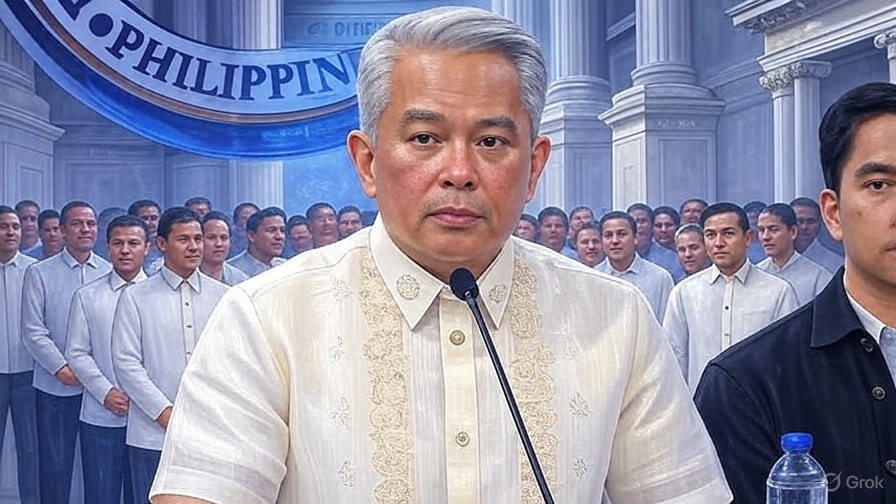
WHEN a Cavite mayor sounded the alarm last year about a kidnapping ring tied to an illegal Philippine Offshore Gaming Operator (POGO), Secretary Jonvic Remulla didn’t hesitate. Within 48 hours, he mobilized a raid on the Island Cove compound in his home province, shutting down a hub linked to human trafficking and scams. This wasn’t just a bold move—it was a signal that the Department of the Interior and Local Government (DILG), under Remulla’s leadership, could act decisively to protect Filipinos. As President Ferdinand Marcos Jr. navigates a critical Cabinet reshuffle, he faces a pivotal choice: retain Remulla to maintain momentum or risk disruption by replacing him. For the sake of the Philippines’ stability and Marcos’ own reform agenda, Remulla must stay.
The DILG is no ordinary agency. It oversees 81 provinces, 146 cities, and over 1,400 municipalities, alongside the Philippine National Police (PNP) and the Bureau of Jail Management and Penology. Its mandate—ensuring public safety, local governance, and accountability—is the backbone of a functioning state. Remulla, appointed in October 2024, brings a rare asset to this role: nearly three decades of governance experience as Cavite’s governor, where he transformed the province into a model of efficiency, earning ISO 9001:2008 certification, a first for any Philippine province. His tenure saw Cavite become a business-friendly hub, with home ownership rates soaring and infrastructure costs slashed—covered courts dropped from P7.5 million to P3.5 million, classrooms from P750,000 to P190,000. This track record isn’t just a résumé; it’s proof of a leader who can deliver.
Remulla’s short stint at DILG already shows results. His aggressive push to shut down POGOs by December 2024 aligns with Marcos’ anti-corruption stance. The Island Cove raid, despite his family’s past ownership of the land, was a deliberate act to preempt accusations of bias. Remulla even offered a P10 million reward for evidence of his family’s current involvement, a bold move to silence skeptics. His PNP reforms are equally promising, aiming to trim a bloated hierarchy of 153 generals to under 100 and prioritize merit-based promotions over political patronage. These steps aren’t flashy, but they’re foundational, addressing systemic rot that has plagued the police for decades.
Yet, no leader is flawless, and Remulla has his critics. Some point to his family’s historical ties to the Island Cove property as a stain, raising questions about impartiality. Others argue he hasn’t tackled high-profile issues like jail overcrowding or LGU inefficiencies with enough urgency. These are fair critiques, but they reflect the constraints of a seven-month tenure, not a lack of capability. Jail conditions, for instance, are a decades-old problem requiring long-term investment, not quick fixes. Remulla’s focus on POGOs and PNP restructuring shows he’s prioritizing battles he can win now while laying groundwork for broader change. His critics also overlook his loyalty: when Marcos called for courtesy resignations after the 2025 midterm election losses, Remulla promptly complied, stating, “I serve at the pleasure of the President.” This isn’t the act of a political opportunist but of a public servant committed to the administration’s goals.
President Marcos stands at a crossroads. The midterm setback, with only half his senatorial slate elected, has sparked a “recalibration” to restore public trust. Business groups, wary of disruption, have urged retaining competent officials like Remulla, whose steady hand at DILG ensures policy continuity. The Manila Times praised him as serving “admirably,” a sentiment echoed by local leaders who value his governance expertise. Replacing him now, especially mid-POGO crackdown, risks signaling to Filipinos and investors alike that Marcos is wavering on his anti-corruption pledge. The optics of dismissing a secretary who raided a POGO hub in his own backyard—despite personal scrutiny—could undermine the administration’s credibility.
Marcos’ priorities—accountability, stability, and public trust—align with Remulla’s strengths. His resignation submission wasn’t a sign of weakness but a gesture of accountability, allowing Marcos to evaluate his performance without forcing a public showdown. Stakeholders, from senators to business leaders, have backed the revamp but cautioned against sweeping changes that could derail progress. Senator JV Ejercito’s call to remove only those who “wasted the President’s goodwill” doesn’t apply to Remulla, whose actions show commitment, not complacency.
To address criticisms and maximize Remulla’s impact, Marcos should take two concrete steps. First, direct Remulla to release a public 100-day plan tackling jail overcrowding and LGU transparency, with clear metrics—such as reducing jail occupancy by 10% or mandating online budget disclosures for all LGUs. This would counter perceptions of inertia and give Filipinos a tangible way to track progress. Second, appoint an independent monitor to oversee POGO enforcement, ensuring raids and closures are above reproach. Such a move would dispel doubts about Remulla’s impartiality and reinforce Marcos’ commitment to rooting out corruption.
The Philippines is at a fragile moment. Public frustration, evident in the midterms, demands leaders who act, not just promise. Remulla’s record isn’t perfect, but perfection isn’t the standard—progress is. His raid on Island Cove, his push for a leaner PNP, and his decades of proven governance show a leader who owns his flaws and delivers results. In Cavite, he turned skepticism into trust by building homes, schools, and a future for thousands. At DILG, he’s begun the same hard work, tackling POGOs and police reform with resolve.
Mr. President, leadership isn’t about chasing applause; it’s about backing those who get the job done. Jonvic Remulla has shown he can act decisively, govern effectively, and serve loyally. In a nation weary of broken promises, his actions—not his pedigree—are his strongest credential. Keep him, and let him finish what he started.

- ₱75 Million Heist: Cops Gone Full Bandit

- ₱6.7-Trillion Temptation: The Great Pork Zombie Revival and the “Collegial” Vote-Buying Circus

- ₱1.9 Billion for 382 Units and a Rooftop Pool: Poverty Solved, Next Problem Please

- ₱1.35 Trillion for Education: Bigger Budget, Same Old Thieves’ Banquet

- ₱1 Billion Congressional Seat? Sorry, Sold Out Na Raw — Si Bello Raw Ang Hindi Bumili

- “We Will Take Care of It”: Bersamin’s P52-Billion Love Letter to Corruption

- “Skewed Narrative”? More Like Skewered Taxpayers!

- “Scared to Sign Vouchers” Is Now Official GDP Policy – Welcome to the Philippines’ Permanent Paralysis Economy

- “Robbed by Restitution?” Curlee Discaya’s Tears Over Returning What He Never Earned

- “My Brother the President Is a Junkie”: A Marcos Family Reunion Special

- “Mapipilitan Akong Gawing Zero”: The Day Senator Rodante Marcoleta Confessed to Perjury on National Television and Thought We’d Clap for the Creativity

- “Just Following Orders” Is Dead: How the Hague Just Turned Tokhang’s Finest Into International Fugitives







 KWEBA ni BAROK
Leave a comment