By Louis ‘Barok‘ C. Biraogo — May 26, 2025
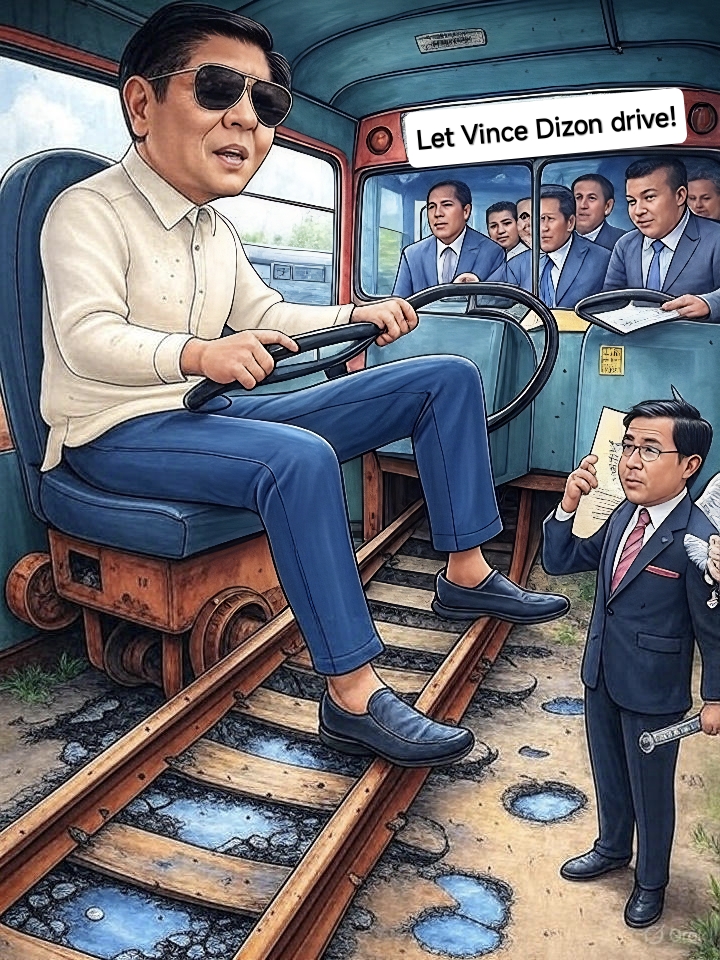
NOT long ago, no one in government dared admit it. The trains stalled, the buses overflowed, and the silence from the top was deafening. Then one transport chief stepped forward, called it broken, and started fixing it. President Marcos, this is the kind of courage your reset desperately needs.
Transportation Secretary Vince Dizon, in his short tenure since February, has exposed the deep rot in the Department of Transportation (DOTr) and delivered rare wins for Filipinos weary of a chaotic commute and deadly roads. Retaining him isn’t just practical—it’s a moral imperative for a nation that loses thousands to preventable road accidents each year.
The political reset you’ve initiated is understandable. The midterms have shifted the landscape, and your call for courtesy resignations signals a commitment to accountability. But in a sector as critical as transportation—where 69 flagship infrastructure projects under your “Build Better More” program hang in the balance—stability matters.
Dizon inherited a system plagued by corruption and neglect: a Land Transportation Office (LTO) mired in fraudulent licensing schemes, a toll system that ignored the poor, and roads where safety was an afterthought. In 2023 alone, the Philippine National Police reported over 12,000 road crash deaths—a grim statistic that reflects years of systemic failure. Families like that of Lily Castro, a mother in Quezon City who lost her teenage son to a reckless bus driver in 2024, are desperate for change. Dizon’s early moves show he’s listening.
Contrast the inertia of past leadership with Dizon’s proactive reforms. On his first day, he suspended the “No RFID, No Entry” policy, calling it “anti-poor” and ensuring cash-dependent motorists weren’t left stranded. He rode the EDSA Bus Carousel himself, experiencing the daily grind of commuters to identify pain points—a hands-on approach that earned praise from groups like the Move As One Coalition for prioritizing vulnerable road users.
When he challenged the LTO to deliver license plates within 72 hours, he tackled a backlog that had long symbolized bureaucratic dysfunction. And when he linked his courtesy resignation to anti-corruption efforts, he signaled a willingness to root out fixers and fake licenses—a culture of “lokohan” that has cost lives.
Dizon’s strengths go beyond these swift actions. His leadership is battle-tested: as head of the Bases Conversion and Development Authority (BCDA), he drove public-private partnerships (PPPs) that delivered projects like New Clark City Phase 1A, remitting P17.8 billion to the government from 2017 to 2021. That expertise is critical for your administration’s infrastructure ambitions, from the Cebu Bus Rapid Transit to regional airport upgrades.
Lawmakers like Senator Grace Poe and House Deputy Majority Leader Franz Pumaren have endorsed his appointment, citing his ability to fast-track reforms. Dizon’s vision aligns seamlessly with your goal of stronger connectivity—he’s already planning to extend train hours and privatize airports to boost tourism, moves that could transform how Filipinos travel.
Of course, Dizon’s tenure isn’t without controversy. Critics point to graft allegations from his BCDA days, tied to an P11-billion deal for the New Clark sports hub in 2019. Transport group Piston has also accused him of human rights violations, alleging displacement of Aeta communities during that project. These are serious claims, but they remain unproven after years of investigation.
More importantly, Dizon’s current actions—cracking down on fake licenses and penalizing reckless bus companies—show a commitment to transparency and accountability that counters his past image. His suspension of the RFID policy, while criticized as inconsistent, reflects responsiveness to public outcry, not indecision. In a country where commuters have long felt ignored, that adaptability is a virtue.
Retaining Dizon aligns with your “bold reset” narrative. He embodies the accountability you seek: he submitted his resignation promptly, tying it to your call for a results-first government. But replacing him now risks derailing critical projects and undermining public trust in road safety efforts.
The DOTr’s 69 ongoing projects, including the Metro Manila Subway and North-South Commuter Railway, are already plagued by right-of-way issues—disruption at the top could delay them further, leaving commuters like Lily Castro waiting longer for safer roads.
I urge you to keep Dizon and give him a strengthened mandate to deepen his reforms.
- Standardize driver testing by outsourcing to private entities, curbing the corruption that lets unqualified drivers onto our roads.
- Enforce speed limiters on public utility vehicles—a proven way to reduce accidents.
- Institutionalize road safety education in schools, ensuring future generations grow up valuing lives over haste.
- Shield the DOTr from political interference, allowing Dizon’s team to focus on policy continuity rather than palace intrigue.
President Marcos, the Filipino people need a transportation system that works—one that doesn’t claim lives or dignity. Vince Dizon has shown he can deliver that vision. Don’t let a procedural reshuffle stop him now. Retain him, empower him, and let him build the safer, more connected Philippines you’ve promised.

- “Forthwith” to Farce: How the Senate is Killing Impeachment—And Why Enrile’s Right (Even If You Can’t Trust Him)

- “HINDI AKO NAG-RESIGN!”

- “I’m calling you from my new Globe SIM. Send load!”

- “Mahiya Naman Kayo!” Marcos’ Anti-Corruption Vow Faces a Flood of Doubt

- “Meow, I’m calling you from my new Globe SIM!”

- “No Special Jail for Crooks!” Boying Remulla Slams VIP Perks for Flood Scammers

- “PLUNDER IS OVERRATED”? TRY AGAIN — IT’S A CALCULATED KILL SHOT

- “Several Lifetimes,” Said Fajardo — Translation: “I’m Not Spending Even One More Day on This Circus”

- “Shimenet”: The Term That Broke the Internet and the Budget
- “We Did Not Yield”: Marcos’s Stand and the Soul of Filipino Sovereignty

- “We Gather Light to Scatter”: A Tribute to Edgardo Bautista Espiritu

- $150M for Kaufman to Spin a Sinking Narrative




 KWEBA ni BAROK
Leave a comment