By Louis ‘Barok‘ C. Biraogo — June 7, 2025
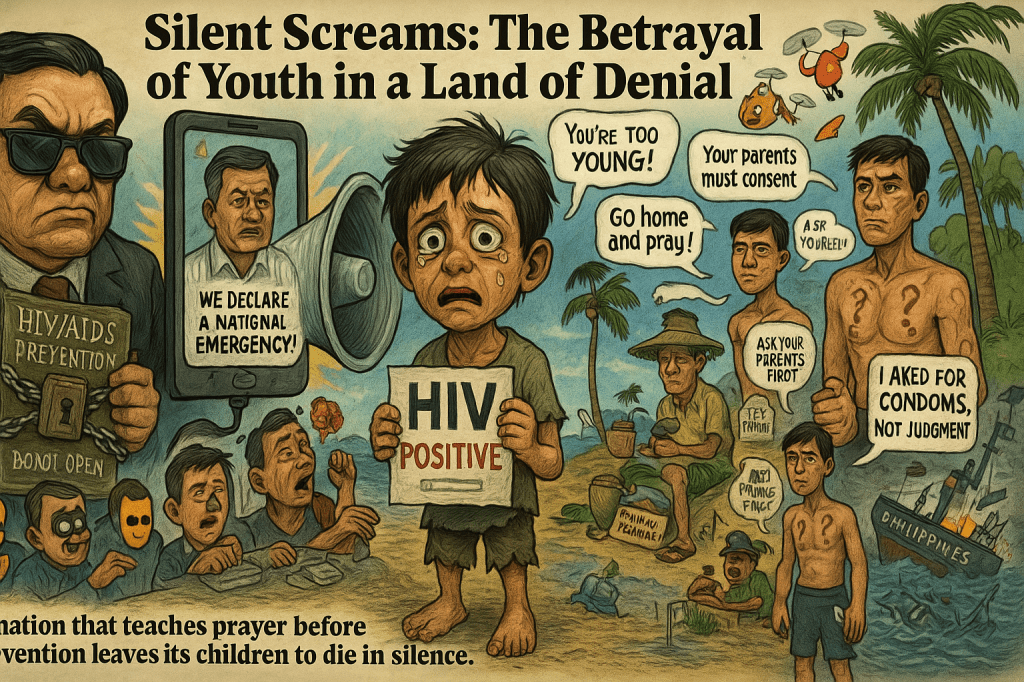
IN THE lush province of Palawan, a 12-year-old child—barely old enough to grasp life’s complexities—received a diagnosis that should jolt us awake: HIV. This isn’t a lone tragedy but a screaming symptom of collapse, as the Philippines reels from a 500% surge in HIV cases among youth, ages 15 to 25. The Department of Health (DOH) tallies 5,101 new infections in Q1 2025—57 cases daily—crowning the nation the grim leader in new infections across the Western Pacific. This isn’t just a health crisis; it’s a moral catastrophe, a betrayal of a generation by systems sworn to shield them. Why does a 12-year-old in Palawan know less about HIV than a lab monkey? The answer: a toxic brew of stigma, ignorance, and neglect we can’t ignore.
Shocking Numbers, Shameful Failures: The Crisis Unveiled
The stats are staggering. From 3,409 cases in Q1 2024, new infections soared to 5,101 in 2025, a 500% leap signaling an epidemic unleashed. The DOH counts 148,831 people living with HIV, but with only 55% diagnosed, per DOH reports, the real toll festers unseen. Youth comprise 33% of cases, often from unprotected sex, yet a mere 2% grasp the risks—a damning verdict on education. The Philippines outpaces the Western Pacific in new cases, per WHO data, while Thailand boasts 90% condom use via bold government action, per UNDP insights. Here, we’ve abandoned our young to myths and judgment.
Core failures burn bright. Sex education is a phantom—DepEd’s 2016 HIV curriculum rots, unimplemented, leaving 98% of youth cases tied to sex, per Sage Journals. Stigma stings: health workers shame teens seeking condoms, sneering, “Where will you use them? Why do you need them?” as Kael Mata, an HIV-positive organizer, revealed. Local government units (LGUs) dodge duty, with rural Palawan lacking testing hubs. Dating apps like Grindr and Tinder take blame for easy sex, but the true villain is apathy: no condoms, no PrEP, no knowledge. A 12-year-old’s diagnosis isn’t chance—it’s a distress call from a sinking nation.
“Throughout the Philippines, the total number of HIV cases among the youth are 33%. If they go to a health center [and] they ask if they can ask for condoms, the response would be questions: where will you use them? Why do you need them?”
—Kael Mata, HIV-Positive Community Organizer
Voices of the Forsaken: Humanizing a Heartbreaking Collapse
Meet Kael Mata, a courageous beacon in this chaos. He exposes youth turned away from clinics, shamed for seeking safety. “If this will be declared as a national emergency, LGUs will be obligated to make comprehensive programs,” Mata begs, a cry for accountability, per GMA News. In Manila, testing and antiretroviral therapy (ART) are free, yet rural poor in Palawan face judgment or nothing. Poverty ignites this crisis—transactional sex festers where hunger gnaws, especially among the marginalized. LGBTQ+ youth, notably men who have sex with men (MSM), shoulder 70% of cases, shunned by a hostile society, per Brown University’s Public Health Journal. Rural healthcare deserts deepen the wound: no clinics, no hope.
The toll cuts deep. Poor families lose wages to illness, unable to reach urban hubs. Stigma isolates—MSM and sex workers face rejection from kin, jobs, even doctors. A 12-year-old in Palawan, likely exposed through desperation or ignorance, mirrors this collapse. Why are we shocked when poverty drives risk, and no safety net catches them?
Too Little, Too Late? Government’s Feeble Wake-Up Call
Health Secretary Teodoro Herbosa earns praise for raising the flag. “We have a 500% increase in HIV cases among ages 15 to 25,” he warned on Facebook, pushing a national emergency, per PNA. “The whole of society and the whole of government can help us in this campaign to lower the number of new cases.” His urgency sparks hope. But why did a 500% spike jolt action? The DOH knew trends for years—98% of youth cases from sex, 55% diagnosis rates shouting neglect—yet dawdled.
“It is better if we would have a declaration of national public health emergency for HIV because the whole of society and the whole of government can help us in this campaign to lower the number of new cases of HIV.”
—Health Secretary Teodoro Herbosa
An emergency could compel LGUs to fund programs, a vital move if enforced, not symbolic. Will it be a headline stunt or a true shift? Free testing and ART for minors sans parental consent, plus PhilHealth’s HIV package, nudge progress, per GMA News. But PrEP and condoms stay urban luxuries—rural youth are exposed. DepEd’s 2016 curriculum, meant to teach prevention, lies buried. Why? Red tape? Moralizing? The lag is a scandal; Herbosa’s call, though crucial, feels like a patch on a shattered system.
Fight or Fail: Bold Steps to Rescue the Vulnerable
This demands fierce action. Now, mandate 24/7 HIV testing in schools, colleges, and dating apps—Grindr and Tinder must flash pop-ups for free tests and condoms. Roll out mobile clinics to rural provinces, staffed by trained peers, not sanctimonious officials. Youth like Kael Mata must lead, piercing stigma. Subsidize PrEP, flood condoms to bars, campuses, slums—make them judgment-free.
Long-term, pass the stalled Comprehensive Sex Education Act, with LGBTQ+-inclusive HIV lessons to equip kids before age 12. Punish healthcare stigma—yank licenses from workers shaming condom-seekers. Thailand’s 90% condom rate, born of government distribution and education, dazzles, per UNDP. Why not us? UNAIDS can aid, but the Philippines must fight. A whole-of-society surge—government, schools, communities, apps—can halt this.
Rally or Ruin: Saving a Generation on the Brink
The Philippines teeters on disaster. Unchecked, 400,000 could face HIV, a generation lost to a preventable plague. A 55% diagnosis rate betrays trust, 2% risk awareness mocks care. A 12-year-old in Palawan shouldn’t battle a virus because we failed to teach, shield, or act. This isn’t about numbers—it’s about saving a generation. Kael Mata’s plea, Secretary Herbosa’s alarm, and the marginalized’s cries demand we rise. Pass laws, fund clinics, teach kids, end shame. The youth of the Philippines deserve more than a nation that turns away.
Key References
- DOH Reports 500% Increase in HIV Cases Among Youth – GMA News article detailing the 500% surge and DOH response.
- Philippines Faces Alarming Rise in HIV Infections – DW report on the rising HIV cases and challenges.
- Exploring the HIV Epidemic in the Philippines – Sage Journals analysis of access and diagnosis gaps.
- HIV in the Philippines: A Persisting Public Health Crisis – Brown University journal on stigma’s role.
- On Building HIV and Health Literacy Among the Young Key Population – UNDP blog on the need for education.
- HIV and AIDS | Situation of Children Philippines – Report on youth and children’s vulnerability.
- DOH Recommends Declaring HIV a Nat’l Public Health Emergency – PNA article on DOH’s emergency proposal.

- ₱75 Million Heist: Cops Gone Full Bandit

- ₱6.7-Trillion Temptation: The Great Pork Zombie Revival and the “Collegial” Vote-Buying Circus

- ₱1.9 Billion for 382 Units and a Rooftop Pool: Poverty Solved, Next Problem Please

- ₱1.35 Trillion for Education: Bigger Budget, Same Old Thieves’ Banquet

- ₱1 Billion Congressional Seat? Sorry, Sold Out Na Raw — Si Bello Raw Ang Hindi Bumili

- “We Will Take Care of It”: Bersamin’s P52-Billion Love Letter to Corruption

- “Skewed Narrative”? More Like Skewered Taxpayers!

- “Scared to Sign Vouchers” Is Now Official GDP Policy – Welcome to the Philippines’ Permanent Paralysis Economy
- “Robbed by Restitution?” Curlee Discaya’s Tears Over Returning What He Never Earned
- “My Brother the President Is a Junkie”: A Marcos Family Reunion Special

- “Mapipilitan Akong Gawing Zero”: The Day Senator Rodante Marcoleta Confessed to Perjury on National Television and Thought We’d Clap for the Creativity
- “Just Following Orders” Is Dead: How the Hague Just Turned Tokhang’s Finest Into International Fugitives

 KWEBA ni BAROK
Leave a comment