
By Louis ‘Barok‘ C. Biraogo — June 20, 2025
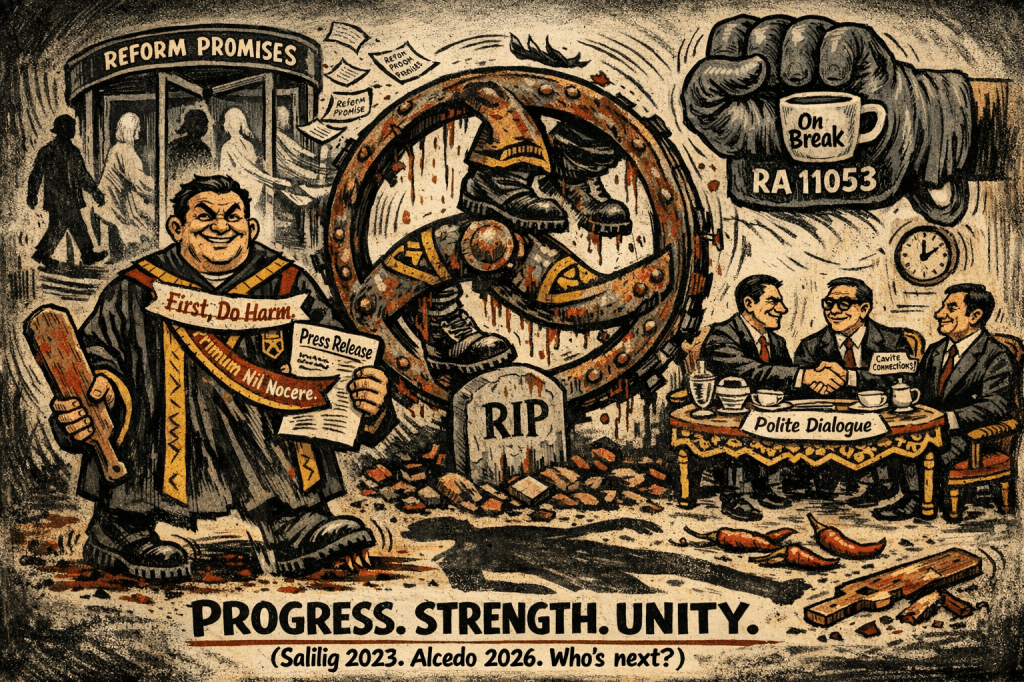
THE stench of impunity hangs heavy over the Philippine Senate. As Vice President Sara Duterte’s impeachment trial lurches forward with all the urgency of a siesta, Senate President Francis “Chiz” Escudero presides over what youth activists rightly call a “kangaroo court”—a theater of the absurd where constitutional duty is sacrificed at the altar of political expediency .
1. The Core Controversy: Dereliction or Due Process?
SPARK, a youth collective, has plastered Manila’s Taft Avenue with posters accusing Escudero of “dereliction of constitutional duty” for allowing the Senate to remand Duterte’s impeachment articles back to the House—a move that delayed the trial by months . Their outrage is justified:
- Procedural Juggling: The Senate’s 18-5 vote to return the articles on June 10, 2025, under the guise of “clarifying constitutionality,” reeks of obstruction. The Constitution mandates trials to proceed “forthwith” once initiated . Escudero’s defense—that this ensures due process—rings hollow when Duterte’s allies dominate the Senate .
- Kangaroo Court Allegations: SPARK’s claim that Escudero is running a sham process gains credence when senators allied with Duterte dismiss evidence of her alleged ₱612M confidential fund misuse and assassination threats against President Marcos . Escudero’s refusal to recuse himself, citing “voluntary” precedent, ignores the glaring conflict of interest .
Barok’s Razor: “Escudero drapes his maneuvers in procedural finery, but the Filipino poor see through the facade: justice delayed is justice denied, especially when the accused is a political heavyweight.”
2. SPARK’s Crusade: Idealism vs. Institutional Rot
For SPARK:
- Evidence of Bias: The Senate’s foot-dragging—adjourning for months after receiving the House’s February 5 impeachment—mirrors past efforts to shield allies (see: Estrada’s aborted trial) . Escudero’s history of defending Arroyo in 2005 underscores his partisan flexibility .
- Youth Mobilization: SPARK’s flyers and protests channel the moral urgency of EDSA, but Manila’s power brokers dismiss them as “noise” . Their demand—Escudero’s resignation—is less about legal technicalities than reclaiming democracy from elites.
Against SPARK:
- Constitutional Gray Zones: Escudero insists the Senate retains autonomy to interpret impeachment rules, citing the “one impeachment per year” clause . But this legalism crumbles when juxtaposed with Duterte’s alleged crimes—graft, assassination plots, and extrajudicial killings .
- Political Naiveté?: Critics argue SPARK’s tactics (posters, hashtags) are futile against a system rigged for the powerful. Yet their movement—like #HijaAko in 2020—exposes generational fissures in a nation weary of dynastic impunity .
3. The Human Toll: Democracy’s Collateral Damage
- For the Poor: Duterte’s alleged ₱612M fund diversion could have built 200 rural clinics or fed 1 million families. Every day of delay deprives marginalized Filipinos of restitution .
- For Democracy: The Senate’s remand gambit sets a perilous precedent—future impeachments may be derailed by procedural loopholes, eroding the last check on executive abuse .
- For Youth Activism: SPARK’s campaign, though quixotic, is a litmus test. If Escudero’s Senate brushes them aside, it signals that Philippine institutions no longer answer to the people .
4. Barok’s Call to Arms
The question isn’t whether SPARK’s demands are idealistic, but whether Escudero’s Senate has abdicated its duty to be more than a rubber stamp for the powerful. History will judge this moment harshly if the impeachment trial dissolves into farce—another chapter in the Philippines’ tragic saga of elite impunity.
The Line in the Sand: “Escudero may cling to procedural fig leaves, but the Filipino people—especially those who cannot afford justice to be postponed—deserve a Senate that fears the constitution more than it fears Sara Duterte.”
Key References
- Youth group calls on Chiz to step down from Senate impeachment court
- Impeachment of Sara Duterte
- 1987 Constitution of the Republic of the Philippines – Article XI
- Escudero: Only SC can tell if impeachment articles’ return is unconstitutional
- Escudero: House can’t refuse to accept Senate remand of impeachment case
- Escudero: Disagree with impeachment court’s actions? Bring it to SC | ABS-CBN News
- House prosecutor to resign: Escudero: What defiance?
- Escudero cold to Tolentino’s proposal to finish Sara Duterte impeachment trial in 19 days
- Escudero: Recusal of senators from impeachment trial ‘voluntary’ | GMA News Online
- The Philippine Senate returns Sara Duterte impeachment proceedings
- Impeachment in the Philippines – Wikipedia
- After debates, Escudero resigns to take oath to lead Sara Duterte trial
- ESCUDERO: BIASED, MUST INHIBIT NOW! | X post by @SparkKabataan





 KWEBA ni BAROK
Leave a comment