By Louis ‘Barok‘ C. Biraogo — July 1, 2025
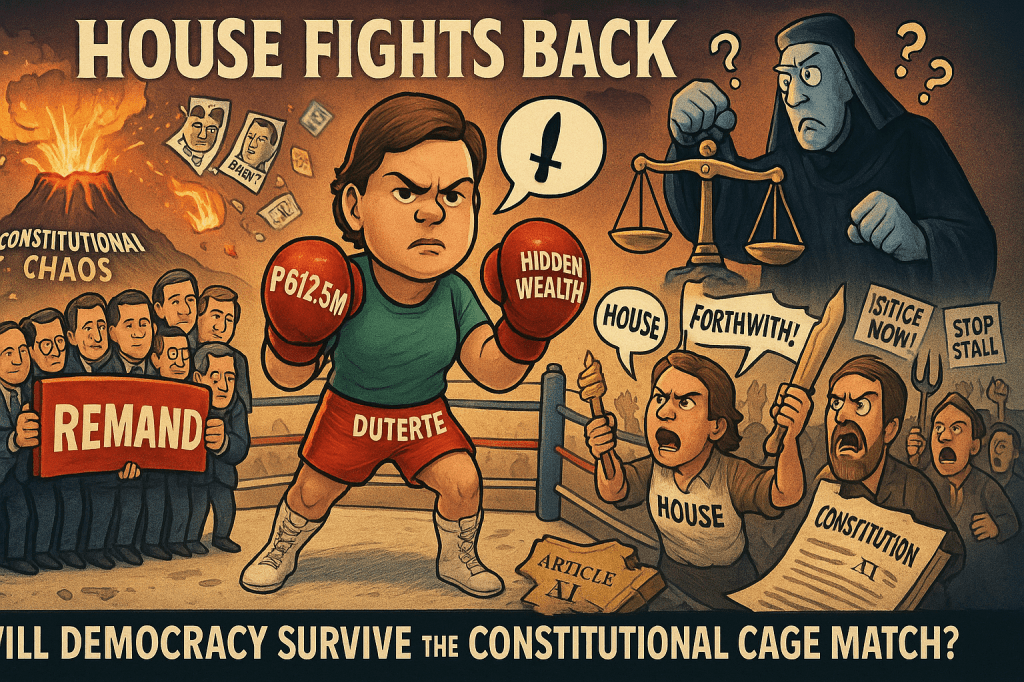
THE impeachment of Vice President Sara Duterte is a political volcano erupting in Manila, spewing constitutional chaos and dynastic warfare. The Senate’s brazen June 10, 2025, remand order—halting the trial before it begins—reeks of obstruction in a velvet glove. With the House ready to storm the Supreme Court, the stakes couldn’t be higher: ₱612.5 million in questionable funds, a chilling assassination threat, and whispers of hidden wealth. Is this a quest for justice or a Marcos-Duterte blood feud dressed in legal robes? Below, we shred the constitutional quagmire, gut the allegations, and predict the fallout of this high-octane drama.
1. Constitutional Chaos: Is the Senate Sabotaging the Rule of Law?
The Senate’s remand order is a constitutional middle finger. Let’s dissect the legal carnage.
Defying “Forthwith”: Senate’s Trial-Dodging Gambit
Article XI, Section 3(4) of the 1987 Constitution doesn’t mince words: the Senate shall forthwith proceed to trial once the House delivers impeachment articles. Yet, on June 10, 2025, an 18-5 Senate vote remanded the case, citing House certification and the 20th Congress transition (INQUIRER.net). This isn’t procedure—it’s procrastination. Former Justice Adolfo Azcuna calls it a violation of the Senate’s duty to try the case, not nitpick House paperwork (East Asia Forum). By stalling, the Senate risks torching impeachment’s role as a check on power.
One-Year Bar: Duterte’s Get-Out-of-Jail-Free Card?
Duterte’s defense brandishes Article XI, Section 3(5), which forbids multiple impeachment attempts in a year. Four complaints—three in December 2024 (unreferred) and one in February 2025 (endorsed by 215 lawmakers)—are at issue. Duterte claims all four count, voiding the February complaint. The House, leaning on Francisco Jr. v. House (G.R. No. 160261, 2003), argues only referred complaints trigger the bar, making the February filing valid. The Senate’s embrace of this technicality reeks of a shield for Duterte, sidestepping the trial’s substance.
Supreme Court Showdown: Can Justices Force the Senate’s Hand?
If the Senate kills the case, the House vows certiorari (to void the remand) and mandamus (to compel trial). Article VIII, Section 1 empowers the Supreme Court to curb grave abuse of discretion. Gutierrez v. House (G.R. No. 193459, 2011) shows the Court’s wariness of meddling in political processes, but the Senate’s remand arguably defies Article XI’s mandate. Intervention is legally justified, yet the Court’s political question doctrine fetish could keep it on the sidelines, letting the Senate play judge and jury.
2. Explosive Charges: Is Duterte a Corrupt Threat or a Misunderstood Maverick?
The impeachment articles hurl three bombs at Duterte: corruption, assassination threats, and hidden wealth. Let’s detonate each.
Confidential Funds Fiasco: ₱612.5M in Smoke?
The Commission on Audit (COA) red-flagged ₱612.5 million in Duterte’s confidential funds, including ₱73 million disallowed in 2022 and receipts tied to fictitious names. These fuel charges of technical malversation (Article 220, Revised Penal Code) and Anti-Graft violations (RA 3019). Malversation demands proof of misapplied funds—COA’s findings scream suspicion, but Duterte insists the disallowances are appealable and she never saw the fake receipts. RA 3019 requires corrupt intent; fictitious names suggest fraud, but pinning it on Duterte herself is the House’s hurdle. The stench of mismanagement lingers, but is it enough for conviction?
Assassination Threat: Treasonous Tirade or Dark Humor?
Duterte’s November 2024 bombshell—threatening to order the deaths of Marcos, his wife, and Speaker Romualdez if she were killed—set Manila ablaze (Al Jazeera). The House calls this a culpable violation of the Constitution and betrayal of trust, invoking In Re: Laureta (1987) on officials’ ethical duties. Duterte’s claim of “contextual misunderstanding” is laughably thin—a vice president’s public threat destabilizes governance. Proving intent to incite is tough, but the statement’s recklessness alone could justify impeachment for grossly immoral conduct.
Hidden Wealth: SALN Lies or Political Smears?
Allegations of SALN discrepancies and unreported accounts with Rodrigo Duterte trigger RA 6713 (Code of Conduct) and Ombudsman v. Valera (2009), which punished nondisclosure. Trillanes’ exposé, backed by ex-Deputy Ombudsman Carandang, alleges inconsistencies, but Duterte calls it hearsay. RA 6713 demands transparency; any proven omission could nail her for betrayal of trust. Yet, the House’s reliance on unverified claims and Duterte’s secretive counteraffidavit—filed with the Ombudsman but hidden—muddy the waters. Why the secrecy if she’s clean?
3. Supreme Court Roulette: Will Justices Save or Sink Democracy?
The House’s threat to drag the Senate’s dismissal to the Supreme Court sets up a constitutional cliffhanger. Here are the stakes.
Scenario 1: Court Backs Senate’s Stall—Impeachment’s Death Knell?
If the Court upholds the remand, it greenlights Senate obstruction, letting it dodge trials on procedural pretexts. This guts Article XI, turning impeachment into a political pawn. Duterte walks free, her 2028 bid intact, while public trust in accountability craters. Gutierrez v. House’s restraint looms, but endorsing this delay risks a legacy of judicial cowardice.
Scenario 2: Court Orders Trial—A Marcos-Duterte Armageddon?
Nullifying the remand and forcing a trial could spark a constitutional war. The Senate’s pro-Duterte majority (18-5 on remand) might balk, citing its autonomy. Gutierrez v. House cautions against judicial overreach, but the Senate’s defiance of “forthwith” invites intervention. A trial risks conviction (16 votes needed) or acquittal (9 votes suffice), reshaping the political chessboard (GMA News). Conviction bans Duterte from office (Article XI, Section 3(7)); acquittal crowns her a survivor.
Scenario 3: Court Ducks—Political Question or Moral Cop-Out?
Dismissing the House’s petition as a political question reinforces Senate control but screams impunity. Francisco Jr. v. House and Gutierrez show the Court’s aversion to meddling, but sidestepping here lets the Senate bury grave charges. Duterte’s 2028 path widens, and public faith in justice—already battered by Corona and Sereno—takes another hit.
4. Political Powder Keg: Marcos vs. Duterte, Democracy in the Crossfire
This isn’t just an impeachment—it’s a dynastic cage match with seismic stakes.
Branch War: Will Marcos and Duterte Blow Up Separation of Powers?
The Senate’s stonewalling, backed by Duterte allies, pits a Marcos-aligned House against a pro-Duterte Senate. A Supreme Court order for trial could provoke Senate defiance, paralyzing governance like the 2001 Estrada crisis. The Court’s tightrope—balancing intervention with restraint—will define inter-branch relations for years.
2028 Showdown: Duterte’s Throne or Exile?
Conviction bars Duterte from public office, torching her 2028 presidential dreams and boosting Marcos’ allies. Acquittal or dismissal paints her as a victim, fueling her base. The UniTeam’s 2022 collapse—culminating in Duterte’s cabinet exit and public slams on Marcos—makes this a referendum on their feud. Protesters outside the Senate demand justice ([Protesters rally in numbers at Senate over Duterte trial delay]), signaling voter stakes.
Public Trust: Another Weaponized Witch Hunt?
The Corona (2012) and Sereno (2018) impeachments left scars of politicization. Duterte’s case, with its procedural dodges and secret counteraffidavit, risks joining that ignoble list. If seen as Marcos’ vendetta, it could alienate voters and destabilize institutions. Transparency is the antidote—why hide the counteraffidavit?
5. Battle Plan: Stop the Circus, Save the Constitution
This crisis demands guts, not gamesmanship:
- Senate: Quit Stalling, Face the Charges
The Senate’s remand is a betrayal of Article XI. It must hold a trial—acquittal or conviction—to honor its oath. Delays only fuel public cynicism. - Supreme Court: Draw the Line
If petitioned, the Court must rule decisively on the remand and one-year bar, clarifying impeachment rules. Francisco and Gutierrez offer precedent—use it to stop Senate abuse without overstepping. - Ombudsman: Open the Books
Duterte’s hidden counteraffidavit mocks transparency. The Ombudsman must release it, balancing due process with public right to know. Secrecy shields the guilty, not the innocent.
Final Verdict: A Nation Teetering on the Edge
Sara Duterte’s impeachment is a crucible for Philippine democracy. Will the Senate incinerate the Constitution to protect its darling? Will the Supreme Court wield its gavel or hide behind political platitudes? Charges of corruption, threats, and hidden wealth demand a trial, not a technical knockout. As the Marcos-Duterte feud fuels this inferno, the nation holds its breath.
Conviction could redraw the political map; acquittal might crown Duterte queen of 2028. But if transparency and constitutional duty falter, this saga will etch another scar on a democracy already bleeding from weaponized justice.
Key Citations:
- 1987 Constitution, Article XI, Sections 3(4)-(6)
- Francisco Jr. v. House, G.R. No. 160261 (2003)
- Gutierrez v. House, G.R. No. 193459 (2011)
- In Re: Laureta (1987)
- Ombudsman v. Valera (2008)
- RA 3019
- RA 6713
- Article 217 (RPC)
- Article 220 (RPC)
- UP Law Impeachment Primer, Feb 7, 2025
- INQUIRER.net, 2025: LIVE UPDATES: Senate sends back impeachment articles to House
- East Asia Forum, 2025: Duterte’s impeachment and the spectacle of Philippine politics
- Al Jazeera, Nov 23, 2024
- GMA News, 2025: How senatorial elections might affect Sara Duterte impeachment trial
- GMA News, 2025: Impeachment Explainer
- ABS-CBN News, June 10, 2025
Disclaimer: This is legal jazz, not gospel. It’s all about interpretation, not absolutes. So, listen closely, but don’t take it as the final word.

- “Forthwith” to Farce: How the Senate is Killing Impeachment—And Why Enrile’s Right (Even If You Can’t Trust Him)

- “HINDI AKO NAG-RESIGN!”

- “I’m calling you from my new Globe SIM. Send load!”

- “Mahiya Naman Kayo!” Marcos’ Anti-Corruption Vow Faces a Flood of Doubt

- “Meow, I’m calling you from my new Globe SIM!”

- “No Special Jail for Crooks!” Boying Remulla Slams VIP Perks for Flood Scammers

- “PLUNDER IS OVERRATED”? TRY AGAIN — IT’S A CALCULATED KILL SHOT

- “Several Lifetimes,” Said Fajardo — Translation: “I’m Not Spending Even One More Day on This Circus”

- “Shimenet”: The Term That Broke the Internet and the Budget

- “We Did Not Yield”: Marcos’s Stand and the Soul of Filipino Sovereignty

- “We Gather Light to Scatter”: A Tribute to Edgardo Bautista Espiritu

- $150M for Kaufman to Spin a Sinking Narrative





 KWEBA ni BAROK
Leave a comment