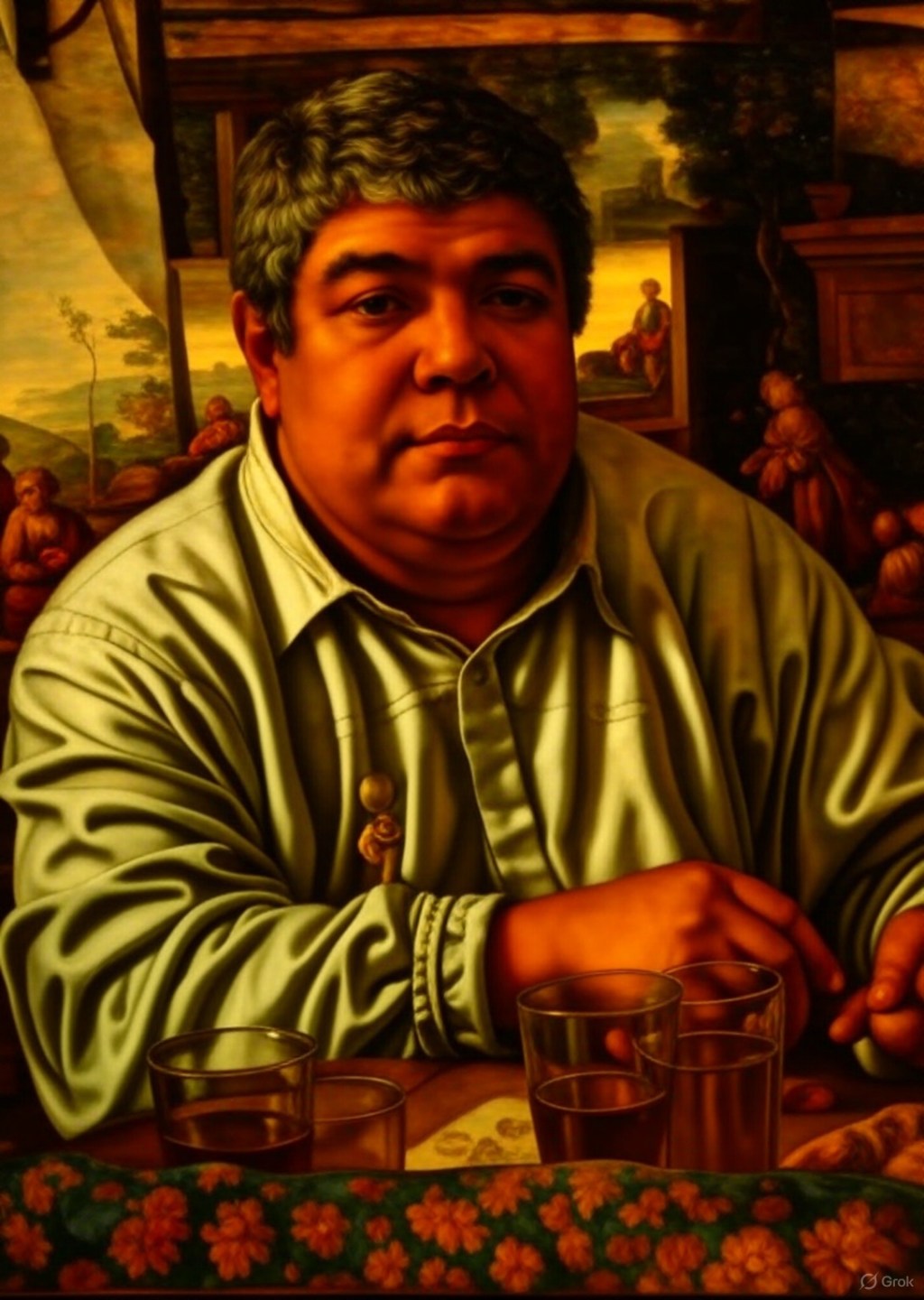
By Louis ‘Barok‘ C. Biraogo — July 6, 2025
IN THE quiet hum of a Manila evening, where the air carries the scent of jasmine and the distant clatter of jeepneys, I imagine Victor Avecilla at his desk in the National Labor Relations Commission, a solitary figure under the flicker of fluorescent light. The year is 2021, and he is Presiding Commissioner, his pen poised over a labor dispute, each word a careful calibration of justice. Yet, in the margins of his notes, there lingers the ghost of a younger Victor—the student who, in the 1980s, stormed the gates of the Supreme Court to challenge a tuition hike at the University of the Philippines. That fire, kindled in Diliman’s sunlit corridors, has never dimmed. To his Upsilon Sigma Phi brothers, he is Chito, a name that echoes with the warmth of brotherhood, carrying the weight of their shared motto: We Gather Light to Scatter.
Victor, you are no mere jurist, scholar, or scribe—you are a radiant figure, a man who gathers light to scatter it, embodying the highest ideals of UP and Upsilon Sigma Phi.
Your story begins in the hallowed halls of UP’s College of Mass Communication, where the crackle of broadcast reels mingled with the dreams of a young man hungry for truth. You were not content to merely speak into microphones; you sought to amplify justice itself. From Broadcast Communication to the rigorous chambers of the UP College of Law, your path was a Cervantean quest—tilting at windmills of inequity, armed with a Juris Doctor and an unyielding moral compass. That 1980s challenge to the tuition increase was no youthful lark but a manifesto: education, you declared, is a right, not a privilege to be priced out of reach. It was the first spark of a fire that would define you—a scholar’s fire, fierce and unquenchable, lighting the way from Diliman to the nation’s highest courts.
As Presiding Commissioner of the NLRC’s Third Division, you became a jurist of rare balance, wielding the scales of labor law with both precision and humanity. For 35 years, you honed your craft—from legal assistant in the Court of Appeals to the Supreme Court’s marble halls, then to the gritty realities of Pantranco North Express. At the NLRC, you faced the weight of a thousand disputes—workers, local and overseas, their hopes and grievances laid bare before you. Each decision was a tightrope walk between statute and soul, a synthesis of intellect and empathy. You did not merely rule; you restored dignity, ensuring that the law served the laborer as much as the ledger. In this, you echoed the Upsilonian motto: We Gather Light to Scatter—light as fairness, scattered across the lives you touched.
Yet your voice found its sharpest edge in the pages of the Daily Tribune. Your columns were not mere op-eds but dispatches from the frontlines of democracy, each sentence a salvo against complacency. In “Mocha Uson and the Comelec hollowminds” (October 7, 2019), you skewered the “asinine antics” of a public figure with a wit that cut like a katana: “The electorate deserves better than hollowminds who think governance is a popularity contest.” In “Another alien troublemaker deported” (March 20, 2021), you championed sovereignty with a clarity that stirred the patriot’s heart. These were not just words but lanterns, illuminating the shadows of a nation grappling with its own ideals. Your typewriter’s clatter in the newsroom became a rhythm of resistance, a reminder that the pen, in the right hands, is mightier than any sword.
In the classrooms of UP’s College of Mass Communication, you were no less a warrior. Since 1992, you have shaped minds as an assistant professor, your lectures on Media History, Ethics, and Law a masterclass in marrying doctrine with street-smart wisdom. Students speak of you with a mix of awe and amusement—your sarcasm, a scalpel slicing through apathy; your side stories, rich with the musty scent of Plaridel Journal archives, weaving law into life. “Filter his tangents,” they advise on Reddit, “but listen closely—he knows his stuff.” Your exams, one a 100-item gauntlet due post-Christmas, demanded rigor; your insistence on attendance and attitude forged engagement. You were not just teaching media law; you were sculpting citizens, each lesson a brick in the edifice of a freer, fairer press. Your articles in Plaridel Journal—“Additional Jurisprudence on Media Freedom,” “Recent Decisions of the Supreme Court Relevant to Media Freedom”—stand as scholarly beacons, guiding the next generation through the labyrinth of liberty.
And then there is Upsilon Sigma Phi, the fraternity that breathes life into the ancient covenant of brotherhood, making brothers of strangers and legends of men, older than the nation itself. As a member of Batch ’79, you joined a lineage of luminaries—Ferdinand E. Marcos Sr.,Ninoy Aquino, Doy Laurel,, men whose names are etched in history’s stone. Your essays, like “The Upsilon Promenade in Diliman” and “Remembering Salvador ‘Doy’ Laurel,” are love letters to this tradition, their prose blooming like the pink roses of Upsilon’s crest. You wrote of the Promenade not as a mere walkway but as a path of memory, where footsteps echo with courage, loyalty, and excellence. The fraternity’s motto—We Gather Light to Scatter—is no abstract ideal for you; it is the refrain of your life, sung in every verdict, every column, every lecture. Even as Upsilon faced shadows—hazing scandals, political strife—you stood as a keeper of its light, your writings a testament to its enduring call to service.
On July 6, 2025, as you mark your birthday and step into retirement, we stand at a hinge between past and future. The UP Carillon still tolls, its bells a gift from your Upsilonian forebears; the Promenade still stretches across Diliman, its stones worn by the dreams of countless students.
Chito, today we scatter the light you’ve gathered.
You are no Don Quixote, tilting at impossible dreams; you are a knight of the real, your lance forged in principle, your shield adorned with the cardinal red, honorable blue, and gold of Upsilon. Retirement is not an end but a new chapter, where the scholar’s fire, the jurist’s balance, the advocate’s ink, the professor’s legacy, and the Upsilonian spirit converge in a magnum opus yet unwritten.
Your lessons outlast the bell, your light outshines the dusk.
Here’s to you, Chito—a toast under the golden light of a Manila evening, to a life that burns bright and scatters still.

- ₱75 Million Heist: Cops Gone Full Bandit

- ₱6.7-Trillion Temptation: The Great Pork Zombie Revival and the “Collegial” Vote-Buying Circus

- ₱1.9 Billion for 382 Units and a Rooftop Pool: Poverty Solved, Next Problem Please

- ₱1.35 Trillion for Education: Bigger Budget, Same Old Thieves’ Banquet
- ₱1 Billion Congressional Seat? Sorry, Sold Out Na Raw — Si Bello Raw Ang Hindi Bumili

- “We Will Take Care of It”: Bersamin’s P52-Billion Love Letter to Corruption
- “Skewed Narrative”? More Like Skewered Taxpayers!

- “Scared to Sign Vouchers” Is Now Official GDP Policy – Welcome to the Philippines’ Permanent Paralysis Economy
- “Robbed by Restitution?” Curlee Discaya’s Tears Over Returning What He Never Earned

- “My Brother the President Is a Junkie”: A Marcos Family Reunion Special

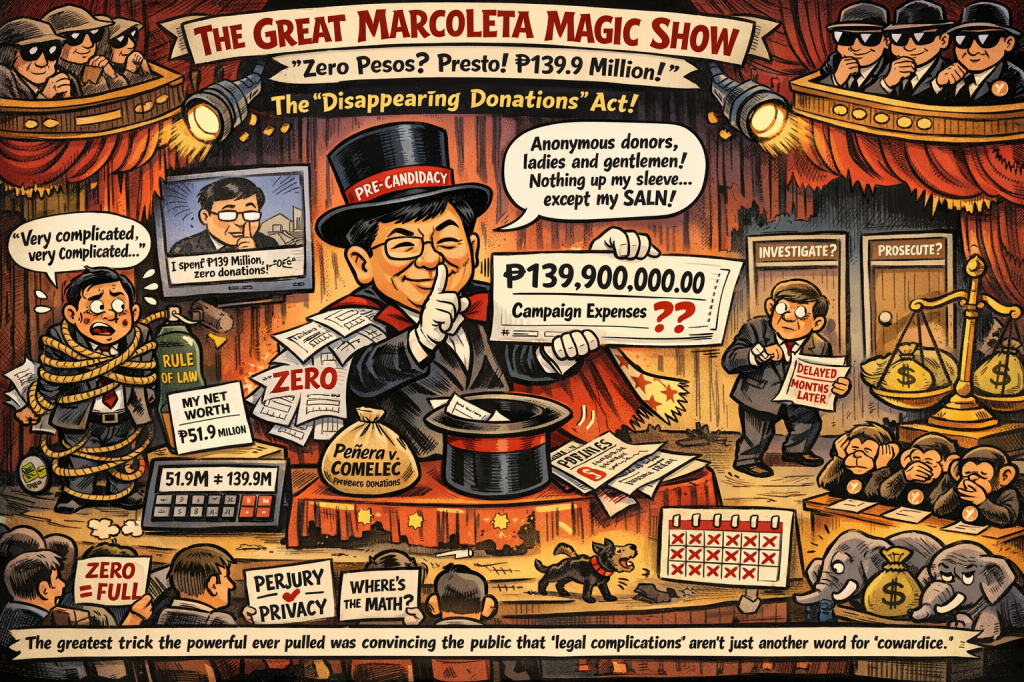
- “Mapipilitan Akong Gawing Zero”: The Day Senator Rodante Marcoleta Confessed to Perjury on National Television and Thought We’d Clap for the Creativity

- “Just Following Orders” Is Dead: How the Hague Just Turned Tokhang’s Finest Into International Fugitives



 KWEBA ni BAROK
Leave a comment