By Louis ‘Barok‘ Cm Biraogo — July 12, 2025
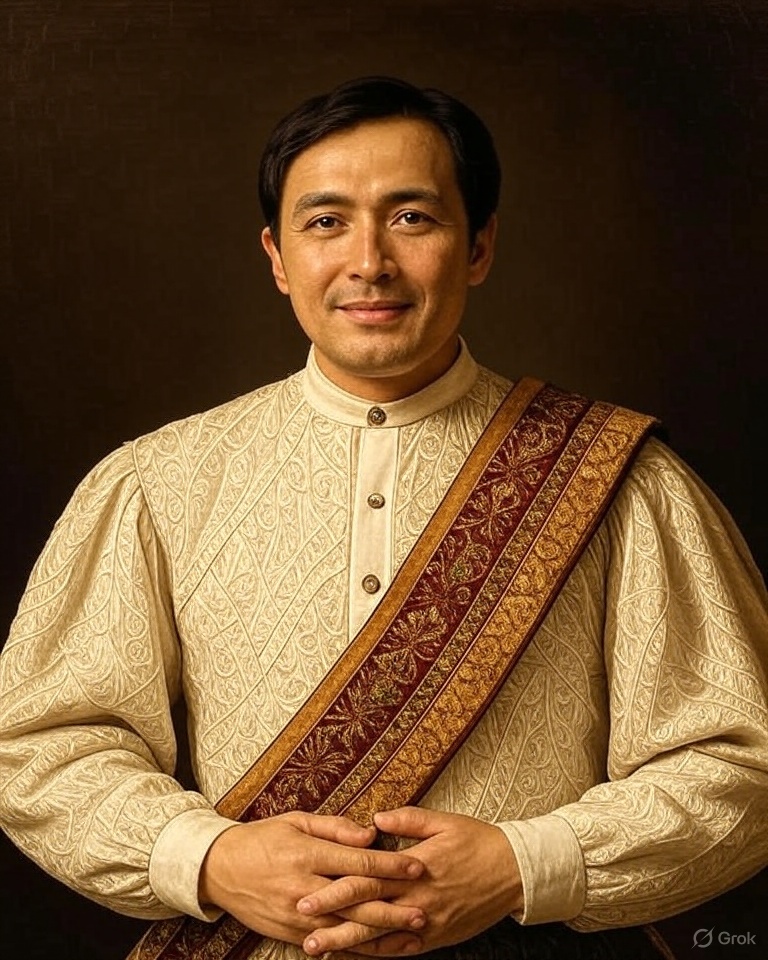
THERE are lives that unfold like a sonata—measured, elegant, predictable in their rise and fall. Then there are those like Alfred Vargas’s—lives symphonic in complexity, swelling with ambition, staccatoed by struggle, yet always returning to a theme of radical, radiant compassion.
To speak of Alfred, scholar, legislator, and man of hearth and heart, is to traverse not merely a résumé of accomplishments but to enter a narrative of becoming. One cannot look upon his journey—from the bright stages of Encantadia to the somber halls of Congress, from the whispered pledges of Upsilon Sigma Phi to the public clarion call for “kindness in planning”—without sensing a unifying force threading through: a ceaseless, often aching desire to serve a country he both loves and interrogates.
At the University of the Philippines Diliman, where he emerged valedictorian of the School of Urban and Regional Planning, Vargas stood before a crowd not to bask in intellectual triumph but to make a singular, moral plea: build cities with kindness. Not simply with steel and zoning codes, but with humility, with an ear tuned to the voiceless, with eyes unafraid to meet the pain of those left behind. “This graduation,” he said, voice resolute yet tender, “is meaningless if we choose indifference over kindness.” And in that moment, one saw not a politician reciting platitudes, but a man drawing from the marrow of lived experience, offering an ethical blueprint for the nation.
Here, the scholar fused with the statesman. His words were not abstractions—they were born of legislative labor. Seventeen Republic Acts carry his imprimatur: the Rare Diseases Act, a balm for those orphaned by biology; the Universal Access to Quality Tertiary Education Act, a ladder built for dreamers; the National Integrated Cancer Control Act, a hymn of solidarity for the afflicted. These are not the inert lines of bureaucratic code, but living declarations that dignity belongs to all—especially the fragile, the forgotten.
And yet, in truth’s light, even the noblest narratives cast shadow.
There was February 2025—an unguarded moment in the furnace of electoral combat, when the voice that once summoned kindness turned barbed, mocking rivals with intemperate flourish. Social media flared. Outrage surged. Dissonance rang loud: how could the architect of compassion stoop to cruelty? But here, again, Vargas the human—not the symbol—emerged. Public life is not lived on the tranquil plains of certainty, but on jagged ridges where idealism scrapes against survival. The paradox of Alfred Vargas is not his failure to be kind always—it is his stubborn, unrelenting return to kindness, even after falling from its grace.
He has never claimed sainthood. But he has, repeatedly, reclaimed sincerity.
Such complexity is not foreign to the brotherhood he calls home. As a proud son of Upsilon Sigma Phi—the oldest Greek-letter fraternity in Asia—Vargas was shaped by an enduring creed: “We gather light to scatter.” Within that circle of equals, he embraced the sacred labor of self-refinement—not to craft a flawless man, but to continually forge a better one, especially in moments of failure. In Upsilon’s storied tradition of service and sacrifice, Alfred discovered not a fraternity of privilege, but one anchored in purpose—a place where ideals are not worn like medals but lived, tested, and renewed.
And yet, even the loftiest architecture crumbles without a cornerstone. His is found in the gentle arms of Yasmine Espiritu, his wife, whose quiet strength steadied him through the unspoken terrors of high-risk pregnancies and the sleepless watch of parenting. In Alexandra Milan, Aryana Cassandra, Alfredo Cristiano IV, and Aurora Sofia, Vargas finds not merely the future he legislates for—but the present he fiercely protects. His devotion to family is not a refuge from politics, but its moral compass.
One imagines him late at night, pen in hand, a map of Quezon City spread before him—not as a politician charting districts, but as a father envisioning a city his children might inherit. In such moments, governance becomes prayer.
And that, perhaps, is Alfred Vargas’s enduring gift: the radical belief that cities, laws, and systems—these cold infrastructures—can be vessels of love. He calls us to recalibrate our metrics of success: from profit to people, from conquest to care, from power to principle.
His journey is still unfolding. He walks not unblemished, but undeterred.
Let us then not remember him as merely a man who spoke of kindness, but as one who struggled, wrestled, and ultimately chose it—even when it was inconvenient, even when he himself had briefly lost its voice. In his own words: “Nothing is impossible and everything is achievable when we spread kindness.”
Let that be not only his legacy—but our mandate.
For in a world seduced by cynicism and splintered by self-interest, Alfred Vargas stands, imperfectly but resolutely, as a compass pointing toward a more compassionate future. Let us follow where he dares to lead.

- “Forthwith” to Farce: How the Senate is Killing Impeachment—And Why Enrile’s Right (Even If You Can’t Trust Him)
- “HINDI AKO NAG-RESIGN!”

- “I’m calling you from my new Globe SIM. Send load!”

- “Mahiya Naman Kayo!” Marcos’ Anti-Corruption Vow Faces a Flood of Doubt

- “Meow, I’m calling you from my new Globe SIM!”

- “No Special Jail for Crooks!” Boying Remulla Slams VIP Perks for Flood Scammers

- “PLUNDER IS OVERRATED”? TRY AGAIN — IT’S A CALCULATED KILL SHOT

- “Several Lifetimes,” Said Fajardo — Translation: “I’m Not Spending Even One More Day on This Circus”

- “Shimenet”: The Term That Broke the Internet and the Budget
- “We Did Not Yield”: Marcos’s Stand and the Soul of Filipino Sovereignty

- “We Gather Light to Scatter”: A Tribute to Edgardo Bautista Espiritu

- $150M for Kaufman to Spin a Sinking Narrative





 KWEBA ni BAROK
Leave a comment