By Louis ‘Barok‘ C. Biraogo — July 16, 2025
Sizzling Scandal Unveiled
Did Ethics Force the Exit, or Is It a Strategic Bailout?
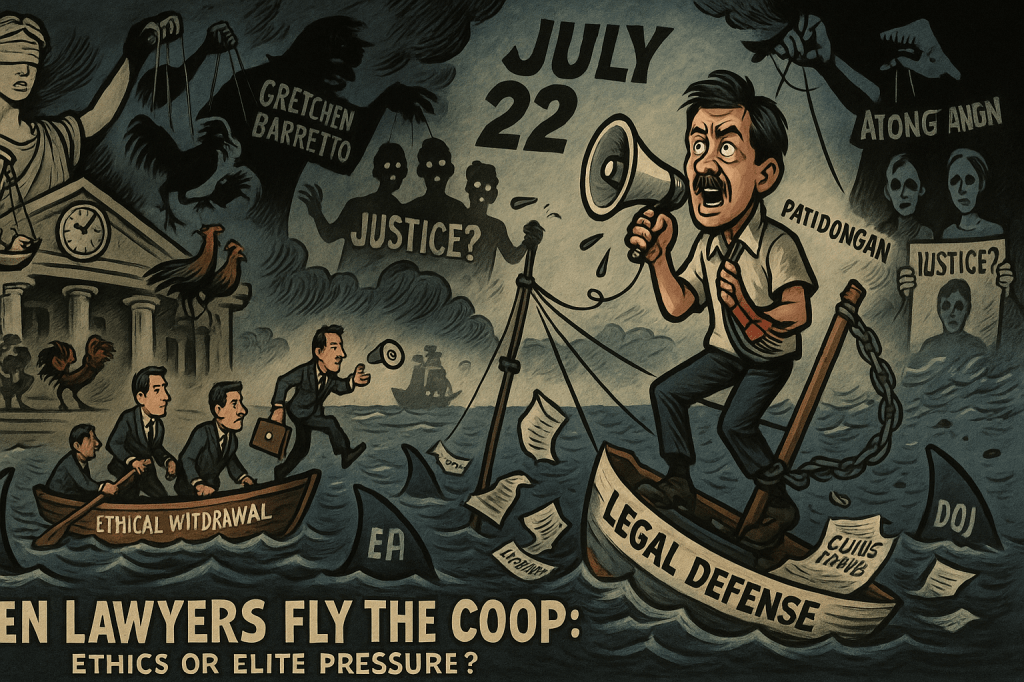
The abrupt withdrawal of Julie “Dondon” Patidongan’s legal counsel in the missing sabungeros case screams of deeper motives, but is it a justified retreat or a calculated dodge? Patidongan’s explosive public accusations against cockfighting kingpin Atong Ang and actress Gretchen Barretto may have shattered attorney-client privilege under Rule 130, §21(b) of the Revised Rules of Court, which shields confidential communications made for legal advice (Baker McKenzie, Attorney-Client Privilege in the Philippines). His statements, reported by Rappler (Atong Ang Complaint), could have compromised the defense strategy, prompting the firm to jump ship, as seen in Alawi v. Alawi, where public disclosure waived privilege.
Yet, the law firm’s decision to keep representing the five co-accused while ditching Patidongan raises a glaring red flag. Canon 15 of the Code of Professional Responsibility demands unwavering loyalty, and Rule 15.03 bans conflicting representations without consent. Dropping only Patidongan hints at a conflict—his claims may implicate others, jeopardizing their defense (Respicio & Co., Attorney Withdrawal). Is this a principled stand or a slick move to isolate a rogue client? With the July 22 hearing looming, the timing reeks of tactical sabotage.
Unmasking the Hidden Agenda
Power Plays by Elites?
Patidongan’s bombshell accusations against Atong Ang and Gretchen Barretto, detailed in Manila Times (Whistleblower Challenges Ang), fuel suspicions of external pressure. The case’s links to police officers and a retired judge amplify the possibility that powerful figures leaned on the firm to cut ties, dodging reputational or legal fallout.
DOJ’s Cunning Game Plan?
The DOJ’s plan to unveil two new witnesses on July 22, as reported by Tribune (Law Firm Drops Dondon), could be disrupted by Patidongan’s lack of counsel. This weakens his ability to counter fresh testimony, and the DOJ’s demand for formal affidavits suggests a ploy to discredit his public claims, exploiting his legal limbo.
Cashing Out or Saving Face?
The firm may be shielding itself from the backlash of representing a client who’s publicly imploding. Patidongan’s unverified claims, like alleging over 100 sabungeros were dumped in Taal Lake (GMA News, Complaint vs. Cops), risk tarnishing the firm’s prestige. Withdrawal protects their brand while abandoning a client turned liability.
Fallout That Shakes the Scales of Justice
Constitutional Crisis: Right to Counsel at Risk
The withdrawal threatens Patidongan’s constitutional right to counsel under Article III, §14(2) of the 1987 Constitution. People v. Santocildes, Jr. (G.R. No. 109445, December 21, 1994) warns that denying competent counsel violates due process. With the hearing days away, Patidongan’s defense is in jeopardy without immediate replacement.
Trial Stalled in Its Tracks
The court may appoint a counsel de oficio under Rule 116, §6 of the Rules of Court, but onboarding new counsel risks delaying the DOJ’s timeline, as seen in People v. Tac-an (A.M. No. RTJ-99-1477, 2000). This undermines the “speedy disposition” required by OCA v. Bustamante (A.M. No. MTJ-12-1806, 2014).
Evidence Turned Weapon
Patidongan’s public statements may now be admissible against him, as privilege is waived when confidentiality is breached (Regala v. Sandiganbayan (G.R. No. 105939,1996)). This could bolster the prosecution’s case, especially if his disclosures contradict his defense.
Supreme Court Throws Down the Gavel
Backing the Bailout
Orcino v. Gaspar (A.C. No. 3773, September 24, 1997) supports withdrawal when a client’s misconduct, like public disclosures, undermines representation. Patidongan’s actions likely forced the firm to protect its ethical duties.
Slamming the Desertion
People v. Santocildes, Jr. (G.R. No. 109445, December 21, 1994) condemns abandonment without safeguarding the client’s rights. The firm’s sudden exit, without ensuring substitute counsel, risks leaving Patidongan defenseless, violating due process.
Justice Delayed, Justice Denied
OCA v. Bustamante stresses speedy case resolution. The withdrawal threatens delays, eroding public trust in a case that’s already a national lightning rod.
Battle Plan to Save Justice
- Court’s Power Move: Appoint a counsel de oficio immediately to ensure Patidongan’s representation by July 22, thwarting delay tactics (Rule 115, ROC).
- IBP’s Watchdog Duty: Probe the law firm for potential breaches of Rule 1.16 (ethical withdrawal) and Rule 15.03 (conflict of interest), ensuring accountability.
- Media’s Truth Hunt: Demand transparency on whether the DOJ or figures like Atong Ang pressured the withdrawal. Scrutinize the firm’s ties to co-accused (Rappler, Patidongan Complaint).
Final Call to Arms
This isn’t just a legal hiccup—it’s a potential miscarriage of justice. Patidongan’s lawyers didn’t just walk away; they left him stranded in a high-stakes case that’s already a powder keg. The courts, the IBP, and the media must step up: ensure representation, probe the firm’s motives, and expose any hidden hands. Will the legal system rise to protect the missing sabungeros’ families, or let this slide into the shadows of power and privilege? Demand answers—justice can’t wait.
Key Citations
- Statutes and Rules:
- Article III, §14(2), 1987 Philippine Constitution: Right to counsel.
- Rule 130, §21(b), Revised Rules of Court: Attorney-client privilege.
- Rule 115, §7, Revised Rules of Court: Counsel de oficio.
- Canon 15, Code of Professional Responsibility: Duty of loyalty.
- Rule 15.03, Code of Professional Responsibility: Conflict of interest.
- Rule 1.16, Code of Professional Responsibility: Ethical withdrawal.
- Jurisprudence:
- Regala v. Sandiganbayan (G.R. No. 105939,1996): Privilege waiver.
- People v. Tac-an (A.M. No. RTJ-99-1477, 2000): Trial delays.
- Orcino v. Gaspar (A.C. No. 3773, September 24, 1997): Withdrawal for misconduct.
- People v. Santocildes, Jr. (G.R. No. 109445, December 21, 1994): Safeguarding right to counsel and client rights.
- OCA v. Bustamante (A.M. No. MTJ-12-1806, 2014):
- Office of the Court Administrator v. Judge Borromeo R. Bustamante (A.M. No. MTJ-12-1806, November 28, 2012): Speedy disposition.
- News and Legal Sources:
- Rappler: Atong Ang Complaint, Patidongan Complaint.
- Manila Times: Whistleblower Challenges Ang.
- Tribune: Law Firm Drops Dondon.
- GMA News: Complaint vs. Cops.
- Baker McKenzie: Attorney-Client Privilege.
- Respicio & Co.: Attorney Withdrawal.
Disclaimer: This is legal jazz, not gospel. It’s all about interpretation, not absolutes. So, listen closely, but don’t take it as the final word.

- ₱75 Million Heist: Cops Gone Full Bandit

- ₱6.7-Trillion Temptation: The Great Pork Zombie Revival and the “Collegial” Vote-Buying Circus

- ₱1.9 Billion for 382 Units and a Rooftop Pool: Poverty Solved, Next Problem Please

- ₱1.35 Trillion for Education: Bigger Budget, Same Old Thieves’ Banquet

- ₱1 Billion Congressional Seat? Sorry, Sold Out Na Raw — Si Bello Raw Ang Hindi Bumili

- “We Will Take Care of It”: Bersamin’s P52-Billion Love Letter to Corruption

- “Skewed Narrative”? More Like Skewered Taxpayers!

- “Scared to Sign Vouchers” Is Now Official GDP Policy – Welcome to the Philippines’ Permanent Paralysis Economy

- “Robbed by Restitution?” Curlee Discaya’s Tears Over Returning What He Never Earned

- “My Brother the President Is a Junkie”: A Marcos Family Reunion Special

- “Mapipilitan Akong Gawing Zero”: The Day Senator Rodante Marcoleta Confessed to Perjury on National Television and Thought We’d Clap for the Creativity

- “Just Following Orders” Is Dead: How the Hague Just Turned Tokhang’s Finest Into International Fugitives





 KWEBA ni BAROK
Leave a comment