By Louis ‘Barok’ C Biraogo — August 4, 2025
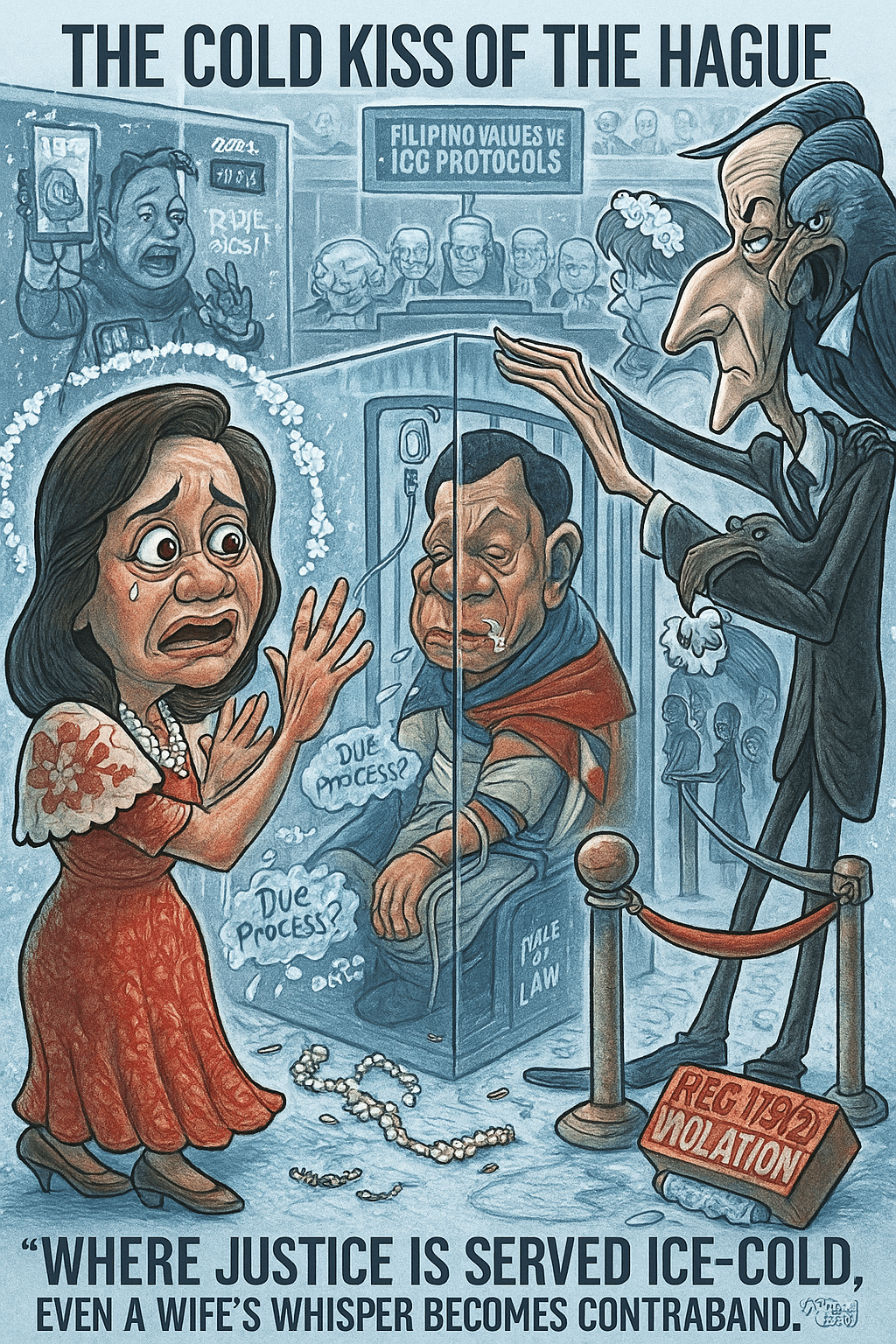
IN THE cold corridors of The Hague, where the International Criminal Court (ICC) seeks justice for alleged crimes against humanity, a deeply human drama threatens to unravel a high-stakes case. Honeylet Avanceña, common-law spouse of former Philippine President Rodrigo Duterte, has been barred from visiting him, accused of violating ICC rules by discussing his case during a July 19 phone call. The decision, rooted in Regulation 179(2), has sparked outrage, with Avanceña alleging a power grab by Duterte’s lead counsel, Nicholas Kaufman. Kaufman insists he’s protecting the case’s integrity, but the opaque ban and public infighting expose a collision of rigid legalism, Filipino family values, and political maneuvering. This saga risks fracturing Duterte’s defense and undermining the ICC’s credibility in a culturally charged trial.
1. Unmasking the Heart of the Scandal
The ICC’s decision to bar Avanceña pivots on a single, shadowy phone call, allegedly breaching Regulation 179(2), which forbids detainees from discussing case details with non-legal parties. If true, the ban is a justified shield against leaks or witness tampering in a case alleging thousands of extrajudicial killings. But the ICC’s refusal to release the call’s transcript or specifics casts a long shadow. Without evidence, the decision feels like a bureaucratic overreach, fueling Avanceña’s claim that Kaufman orchestrated her exclusion to tighten his grip on Duterte’s defense. Is this a legitimate safeguard or a veiled power struggle?
Avanceña’s defense is rooted in her role as Duterte’s spouse and emotional anchor. In Filipino culture, family is a sacred lifeline, especially for a detained patriarch facing health struggles. She argues her visits are therapeutic, vital to Duterte’s ability to endure trial. Kaufman, however, prioritizes legal precision. A veteran of high-profile cases, he knows that even a spouse’s careless words could unravel attorney-client privilege or arm prosecutors. His stance is defensible, but dismissing Avanceña’s concerns as “emotional distress” risks alienating a key ally and painting the ICC as deaf to cultural nuances.
2. Clash of Titans: Avanceña vs. Kaufman
Avanceña’s Cry for Justice
Avanceña’s grievances resonate deeply. She hasn’t been formally charged or shown evidence of her alleged violation, a clear due-process lapse. Her suspicion that Kaufman, as both counsel and gatekeeper, is sidelining her to control Duterte’s strategy carries weight in a case where trust is fragile. The gendered optics sting: a woman, labeled emotional, is shut out by a male lawyer wielding institutional power. In the Philippines, where family is paramount, her plea—”Would Kaufman tolerate this if roles were reversed?”—strikes a chord, framing the ICC as insensitive to Filipino values.
Avanceña’s Vulnerabilities
Yet Avanceña’s position isn’t unassailable. If she discussed case details, even unintentionally, the ban aligns with ICC rules to prevent leaks or coaching. Prosecutors could exploit any slip to portray Duterte as manipulative, weakening his defense. Kaufman’s framing of her as “emotionally distressed” may undermine her credibility, especially if rival factions—like fugitive Harry Roque—are stoking her mistrust. Her public outbursts risk turning a private grievance into a legal liability.
Kaufman’s Ethical Stand
Kaufman’s defense is rooted in duty. As lead counsel, he must safeguard attorney-client privilege and prevent unauthorized disclosures that could derail a case of this magnitude. With limited visiting slots, prioritizing legal personnel over family is a pragmatic choice. His denial of personal animus and dismissal of Roque as “irrelevant” signal a focus on strategy over drama. His track record—representing figures like Jean-Pierre Bemba—lends credibility to his disciplined approach.
Kaufman’s Blind Spots
But Kaufman’s fortress has cracks. His refusal to share evidence of the July 19 call breeds suspicion, bolstering Avanceña’s narrative of exclusion. By centralizing control, he risks alienating Duterte’s family and supporters, who see him as a foreign lawyer imposing alien rules. Dismissing Roque ignores the fugitive’s sway among Duterte’s nationalist base, a misstep that could amplify backlash. The gendered subtext of his “emotional distress” label paints him as dismissive, blurring the line between legal counsel and overbearing gatekeeper.
3. Roots of the Firestorm
Cultural Collision
The controversy lays bare a structural clash: the ICC’s rigid rules versus Filipino kinship norms. Regulation 179(2) prioritizes case security over family ties, a principle at odds with a culture where spouses are expected to stand unwaveringly by their partners. The ICC’s one-size-fits-all approach struggles to accommodate this, risking accusations of cultural arrogance.
Political Powder Keg
Philippine politics fuels the flames. Harry Roque, a fugitive facing human trafficking charges, exploits Avanceña’s exclusion to attack Kaufman, casting himself as Duterte’s loyal defender. Pro-Duterte vloggers, thriving on monetized drama, amplify the spat, turning family pain into a spectacle. This circus distracts from the case’s core—justice for alleged victims—while feeding narratives of Duterte as a victim of foreign overreach.
Emotional Fault Lines
Duterte’s detention and health struggles place crushing pressure on Avanceña, whose distress is both human and strategic. Her mistrust of Kaufman reflects a deeper fear: a family severed when an ailing patriarch needs them most. This psychological strain drives missteps, as her public statements risk escalating a personal wound into a legal quagmire.
4. Ripple Effects on Duterte’s Fate
Legal Perils
The ban could haunt the defense. If Duterte claims ineffective counsel, arguing Kaufman’s gatekeeping deprived him of family support critical to decision-making, judges may probe the defense’s unity. If prosecutors obtain evidence from Avanceña’s alleged call, admissibility disputes could delay or complicate proceedings. The controversy introduces legal uncertainty, potentially tainting evidence or fairness perceptions.
Narrative Fallout
Public infighting casts Duterte as either a scheming mastermind or an isolated figure unable to control his team. Both images could sway judges, who may question the defense’s credibility, or the Philippine public, where Vice President Sara Duterte could rally nationalist sentiment against the ICC. The Marcos administration might exploit the discord to erode Duterte’s political legacy, reshaping domestic dynamics.
Setting a Precedent
This saga may force ICC reforms. The Registrar could clarify detainee-family communication protocols, balancing security with compassion. Future defense teams may demand explicit rules on legal “inner circles,” reducing ambiguity that fuels disputes. The case could redefine how the ICC navigates culturally sensitive trials.
5. Charting a Path Forward
For the ICC: Humanity Over Bureaucracy
The ICC must temper security with empathy. Regulation 179(2) is essential, but its enforcement should not alienate families or ignore cultural contexts. Sharing redacted evidence of violations would build trust. Allowing supervised family visits could preserve detainee well-being without risking case integrity.
For Kaufman: Transparency and Inclusion
Kaufman must shed light on the July 19 call, sharing redacted details to counter accusations of overreach. Integrating Avanceña through monitored visits could bolster Duterte’s morale and unify the defense. Engaging Duterte’s family diplomatically, rather than dismissing their influence, is critical in a collectivist culture.
For Philippine Stakeholders: Rise Above the Drama
Pro-Duterte vloggers must stop exploiting family pain for profit. Political actors like Sara Duterte should prioritize legal merits over nationalist posturing. The case’s gravity—justice for thousands of alleged victims—demands focus, not spectacle.
6. Answering the Core Questions
- Genuine Breach or Power Struggle? Likely both. A procedural violation may have occurred, but the lack of transparency and Kaufman’s control suggest a battle for influence. Avanceña’s exclusion feels less like justice and more like a lawyer consolidating power, even if strategically motivated.
- Judges’ Perception of Defense Cohesion? The cracks are glaring. A defense mired in public spats risks appearing chaotic, potentially weakening arguments on jurisdiction or evidence. Kaufman’s inability to unify Duterte’s household could signal broader disarray.
- ICC’s Capacity for Culturally Charged Cases? The ICC’s rigid rules, while necessary, falter in culturally nuanced cases. Barring a spouse without clear evidence fuels perceptions of Western bias, especially in a trial as politically charged as Duterte’s. The court must adapt to maintain legitimacy.
7. The Human Toll
This is not just a legal skirmish; it’s a family fractured when an ailing patriarch needs them most. The ICC’s pursuit of justice for alleged victims of Duterte’s drug war is noble, but its heavy-handed ban risks alienating the very communities it seeks to serve. Kaufman’s legal fortress may protect the case, but it isolates a spouse crying out for her partner. The judges will see a defense in disarray, and the Philippine public may see a martyr. Unless the ICC, Kaufman, and Philippine stakeholders bridge this divide, the quest for accountability could be overshadowed by a preventable human tragedy.
Key Citations
- Philstar.com: Honeylet Barred from Visiting Duterte – Primary news report detailing Avanceña’s exclusion and the controversy.
- Tribune.net.ph, August 2, 2025: Kaufman Calls Roque an ‘Irrelevancy’ – Provides Kaufman’s perspective and background on team dynamics.
- International Criminal Court: Regulations of the Registry – Official ICC document outlining Regulation 179(2) on detainee communications.
- International Criminal Court: Regulations of the Registry – Official ICC document outlining Regulation 179(2) on detainee communications.
- International Criminal Court: Situation in the Philippines – Official ICC update on Duterte’s case and arrest.
- Tribune.net.ph: Duterte’s ICC Defense: Who is Nicholas Kaufman? – Background on Kaufman’s legal expertise.

 KWEBA ni BAROK
Leave a comment