By Louis ‘Barok‘ C Biraogo — August 5, 2025
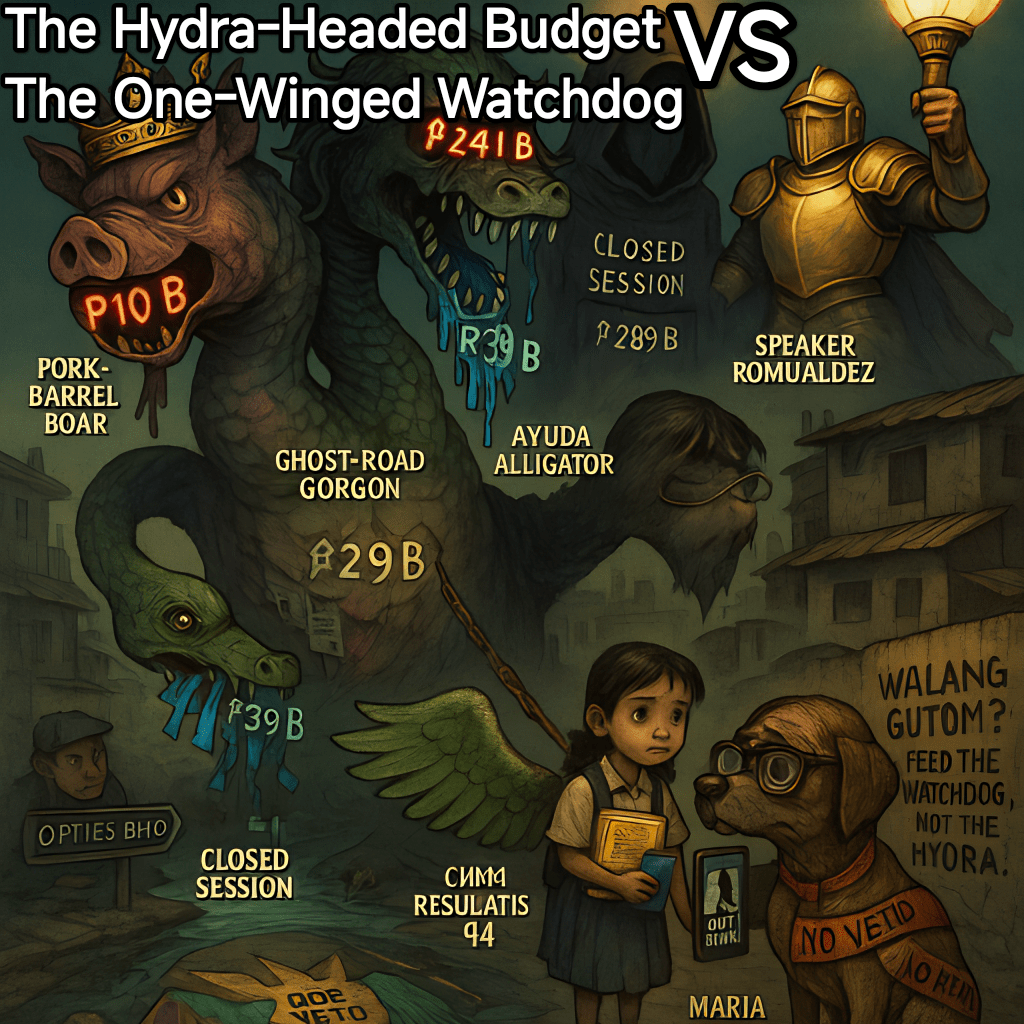
IN Manila, where jeepneys rumble and urban slums whisper tales of despair, a seismic battle for governance unfolds. House Speaker Martin Romualdez’s resolution to open Philippine budget deliberations to civil society watchdogs is a bold strike against a national scourge: graft. From the P10 billion pork barrel scam of 2013 to the 2025 budget’s P241 billion in questionable insertions, corruption has bled the nation dry. Romualdez’s House Resolution 94, filed July 31, 2025, could either gut the heart of cronyism or stage a dazzling act in the Philippines’ political theater. The prize? Ensuring public funds build schools and hospitals, not the fortunes of the powerful.
The High-Stakes War on Graft
Romualdez’s House Resolution 94 invites accredited civil society organizations (CSOs) to observe budget deliberations—from House committee hearings to the shadowy bicameral conference sessions where billions are reshuffled. This is a radical break from the Philippines’ “pork barrel” legacy, where the Priority Development Assistance Fund (PDAF) fueled patronage until the Supreme Court struck it down in 2013.
Yet, the rot persists: the 2025 budget saw P142.72 billion in alleged insertions, including P39 billion for Romualdez’s “Ayuda sa Kapos ang Kita” program, slammed as an election ploy. The Commission on Audit (COA) has exposed misspent funds—like P73 million in disallowed Vice Presidential confidential funds in 2022—revealing a system where transparency is democracy’s clogged plumbing. This reform could clear the pipes, but only if it’s more than a hollow gesture.
Clashing Voices: Hope vs. Cynicism
The Crusaders’ Cry
Anti-corruption advocates, including groups like Transparency International Philippines, praise House Resolution 94 for its potential to pierce the veil of budget secrecy. “Corruption thrives in opacity,” notes director Cleo Calimbahin, referencing past impunity in Philippine governance. The 2025 budget’s P363.24 billion in unprogrammed funds, marred by allegations of blank line items, underscores the need for reform. For marginalized communities, the stakes are transformative: transparent budgets could ensure funds reach the 12 million families under programs like Walang Gutom, not ghost projects.
In Tondo’s slums, organizer Liza Santos dreams: “If watchdogs stop ghost roads, my kids might get textbooks.”
CSOs could help ensure the P306.1 billion health budget and P209.9 billion for social welfare reach programs like Walang Gutom, serving millions of poor families, rather than phantom projects like the P241 billion in 2025 insertions. The Philippines’ 75/100 score in the 2023 Open Budget Survey provides a strong transparency foundation—if CSOs gain meaningful access beyond mere observation.
The Skeptics’ Scorn
Critics see a mirage. “This is optics, not power,” warns analyst Ronald Llamas, noting CSOs are non-voting observers, sidelined in a game ruled by dynasties. The accreditation process, controlled by Romualdez’s House Committee on Appropriations, could exclude grassroots groups, favoring urban NGOs or co-opted allies—past “red-tagging” of CSOs proves the risk.
Crucially, bicameral conference voting sessions, where P289 billion was shifted to public works in 2025, remain closed to observers. Former Budget Secretary Butch Abad cautions, “Transparency without teeth is just a show.” The danger? CSOs watch a scripted drama while deals are cut backstage.
SWOT: A Reform Under Fire
Strengths: Shattering the Veil
The resolution is a symbolic battering ram, cracking open budget secrecy. Transparency advocates like Calimbahin call it “the first step to dismantling budget rackets,” aligning with the 1987 Constitution’s participation mandate. By inviting CSOs to monitor hearings and bicameral talks, it could deter the P241 billion insertions that marred 2025. With Romualdez’s 34% approval rating in June 2025, public trust could rebound if budgets are debated in the open.
Weaknesses: Toothless Watchdogs
The reform’s fatal flaw is its lack of bite. CSOs can observe but not vote, and their exclusion from bicameral voting sessions—where billions are finalized—leaves a gaping hole. Accreditation, set by Romualdez’s allies, risks sidelining rural or radical CSOs. Logistical burdens, like managing livestreams and matrices, could delay the 2026 budget cycle. Without power, watchdogs are reduced to barking at shadows.
Opportunities: A Regional Beacon
This could ignite a Southeast Asian transparency wave. Indonesia’s open budgeting, led by groups like Seknas FITRA, cut graft by 20% in five years. The Philippines, with its Open Government Partnership membership, could pioneer participatory budgeting, shifting funds from Manila’s pork to rural needs like irrigation. Livestreamed talks could galvanize digital-savvy youth, reshaping governance.
Threats: Sabotage by Political Elites
Entrenched political elites could undermine the resolution by co-opting civil society organizations (CSOs) to legitimize their agendas. With historical precedents of “red-tagging” dissenting CSOs, powerful figures might pressure or fund compliant NGOs to act as token watchdogs, diluting scrutiny.
If accreditation, controlled by the House Committee on Appropriations, excludes rural or grassroots groups, urban bias will deepen, sidelining provinces like Leyte, where only 12% of infrastructure funds reached rural projects in 2025.
Should transparency measures falter, as seen in past rollbacks like the post-2013 PDAF resurgence, the reform risks collapsing into performative optics, leaving Filipinos’ trust in governance—already at a low 34% approval for congressional leadership in June 2025—further eroded.
Faces of the Fight: Human Stakes
Maria, a 42-year-old mother in Manila’s Payatas slum, pins her hopes on a budget that prioritizes her children’s education over “ghost roads.” “If watchdogs block graft in 2026,” she says, “my kids might get classrooms with roofs.” CSOs could ensure the P306.1 billion health budget or P209.9 billion for social welfare reaches her, not cronies.
But in Leyte, Mayor Juanito Cruz seethes: “Without rural CSOs, Manila’s elites will still decide our fate.” His province, starved for funds, risks being ignored if urban NGOs dominate. The resolution’s success hinges on amplifying Maria’s dreams and Juanito’s demands.
Barok’s Battle Cry
Romualdez’s intent is a spark, but it’s not yet a blaze. To forge a true revolution, he must fortify the resolution: live-stream bicameral voting sessions to expose every deal; create a citizen oversight panel with veto power over suspicious line items, inspired by Indonesia’s FITRA model; and ensure accreditation uplifts rural voices over Manila’s NGO elite. The Philippines could lead a regional transparency surge—or sink back into patronage’s shadows. Transparency isn’t about sunlight—it’s about whose shadows get burned away.
Key Citations
- House Resolution 94 Announcement – Details Romualdez’s resolution to open budget deliberations to CSOs.
- 2013 PDAF Scandal Ruling – Supreme Court decision declaring pork barrel funds unconstitutional.
- 2025 Budget Insertions – Reports on P142.72 billion in questionable budget insertions.
- COA 2022 VP Fund Disallowances – Audit findings on misused confidential funds.
- 2023 Open Budget Survey – Philippines’ fiscal transparency ranking.
- Official Gazette Budget Figures – Health and social welfare budget allocations.
- Philippine News Agency on Livestreaming – Details on bicameral session transparency measures.
- Transparency International Philippines – Anti-corruption advocacy context.
- Seknas FITRA Indonesia – Model for participatory budgeting.
- Open Government Partnership – Philippines’ transparency commitments.


 KWEBA ni BAROK
Leave a comment