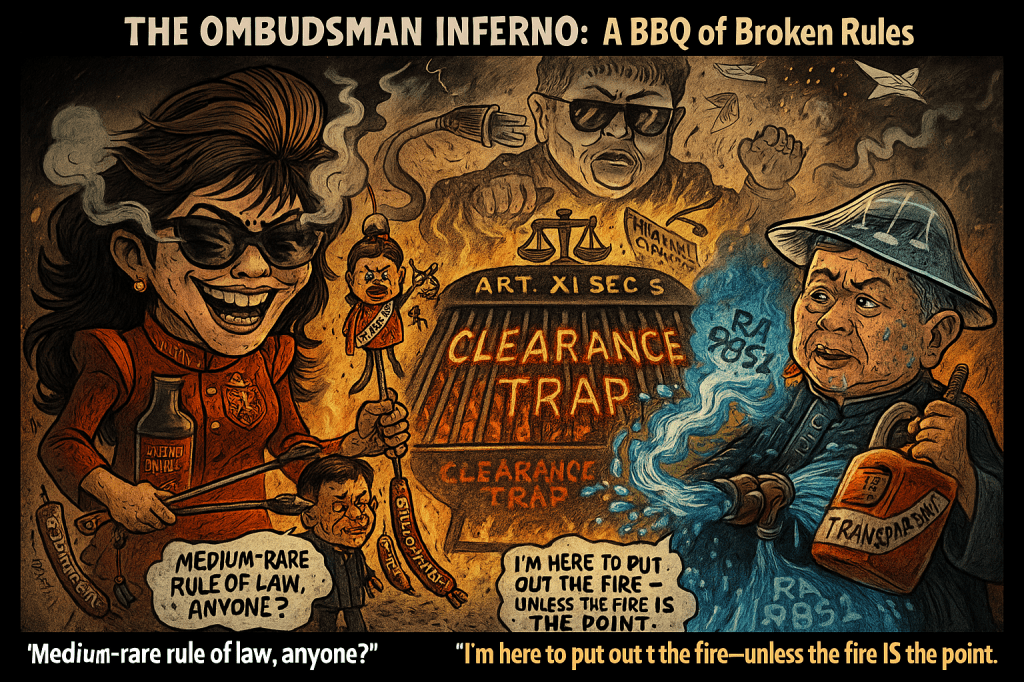
Lawfare’s Furnace: When Rules Become Weapons
By Louis ‘Barok‘ C. Biraogo — September 4, 2025
THE Philippine Ombudsman’s office, constitutionally anointed as the “protector of the people,” is now a political slaughterhouse. The vacancy left by Samuel Martires in July 2025 has sparked a vicious showdown between Senator Imee Marcos and Justice Secretary Jesus Crispin “Boying” Remulla, a proxy war for the Marcos-Duterte feud that could rig the 2028 presidential race. Imee Marcos, wielding complaints like a loaded weapon, vows to torpedo Remulla’s nomination, branding it “Plan C” to jail Vice President Sara Duterte and crush her candidacy. Remulla, armed with reformist bravado and legal defenses, fights to claim the post, promising to dismantle Martires’ secretive legacy. This isn’t just a nomination brawl—it’s a constitutional crisis teetering on the brink of lawfare, where the rule of law hangs by a thread. Below, we explore the tangled web of legal and political events, take a closer look at Senator Imee Marcos’ less-than-consistent positions, and acknowledge Remulla’s nomination as a somewhat flawed but apparently essential move to address the Ombudsman’s current challenges.
The Legal Arena: Rules as Weapons, Laws as Shields
The 1987 Philippine Constitution mandates the Ombudsman’s independence, integrity, and impartiality (Art. XI, Sec. 5), tasking the Judicial and Bar Council (JBC) with vetting nominees for presidential appointment (Art. VIII, Sec. 8(5)). The Ombudsman Act of 1989 (RA 6770) sets strict qualifications: natural-born citizen, at least 40, with 10 years of judicial or legal practice, and no candidacy for public office (Sec. 5).
The JBC’s Rule 2020-01, Sec. 5 is merciless—nominees with pending criminal or administrative cases are disqualified, requiring an Ombudsman clearance to prove a clean slate. The Code of Conduct for Public Officials (RA 6713) demands transparency (Sec. 8, SALN disclosure), while RA 9851 (Philippine Act on Crimes Against International Humanitarian Law) underpins Remulla’s controversial arrest of Rodrigo Duterte (Sec. 17).
Supreme Court precedents, like Jardeleza v. Sereno (G.R. No. 213181, 2014), insist on due process in JBC evaluations, and Biraogo v. Philippine Truth Commission (G.R. No. 192935, 2010) warns against politically targeted investigations. These laws and rulings frame a high-stakes legal duel where rules are both armor and ammunition.
Shredding Imee Marcos: A Dynasty’s Desperate Ploy Masquerading as Virtue
Imee Marcos’ crusade is a masterclass in hypocrisy. Her core argument leans on JBC Rule 2020-01, insisting Remulla’s pending graft and misconduct complaints—filed by her over Duterte’s March 2025 arrest—disqualify him outright. She cloaks this in rule of law piety, citing the Ombudsman’s constitutional mandate for impartiality (Art. XI, Sec. 5).
But let’s rip off the mask: Marcos isn’t defending institutions; she’s fortifying the Duterte dynasty’s 2028 fortress. Her complaints, lodged under RA 6770, Sec. 13(1), allege Remulla’s “usurpation” and “arbitrary detention” for ordering Duterte’s arrest under RA 9851. These scream lawfare—strategic filings to paralyze a rival. The Marcos family’s rap sheet, littered with unresolved ill-gotten wealth cases, makes her moral grandstanding laughably hollow.
In Jardeleza v. Sereno (G.R. No. 213181, 2014), the Supreme Court mandated due process before disqualifying nominees based on unproven allegations. Imee Marcos’ refusal to expedite her complaints’ resolution betrays her intent: delay, not justice, flouting the speedy disposition guarantee (Art. III, Sec. 16).
Her conflict-of-interest jab—that Remulla’s Justice Secretary role taints his JBC candidacy—has some bite under RA 6713, Sec. 4 (justness and sincerity). But it’s a flimsy pretext for her real panic: a Remulla-led Ombudsman probing Duterte allies. Her “Plan C” narrative, accusing Remulla of orchestrating Sara Duterte’s downfall, is political melodrama, not legal reasoning (Philstar, Sept. 3, 2025).
By weaponizing complaints, Marcos risks turning the Ombudsman into a political piñata, betraying the independence she claims to champion.
Her tactics mirror the lawfare condemned in analyses of contested spaces in illiberal Philippine politics, such as Regilme’s Contested spaces of illiberal and authoritarian politics (2021) or Thompson’s The Philippines: From ‘People Power’ to Democratic Backsliding (2023), where legal tools are twisted for partisan gain.
Championing Boying Remulla: The Reformer the Ombudsman Desperately Needs
Boying Remulla isn’t perfect, but he’s the antidote to a broken Ombudsman. His qualifications under RA 6770, Sec. 5 are ironclad: a seasoned lawyer, Justice Secretary, and architect of Duterte’s arrest. His defense—that the arrest was lawful under RA 9851, Sec. 17 (jurisdiction over international crimes)—stands firm, as the law empowers Philippine authorities to act.
Imee Marcos’ complaints, unproven and pending, don’t equate to guilt. The Supreme Court in Cagang v. Sandiganbayan (G.R. No. 206438, 2018) upheld the presumption of innocence, warning against premature penalties. Barring Remulla risks a heckler’s veto, where any rival can derail a nomination with a complaint.
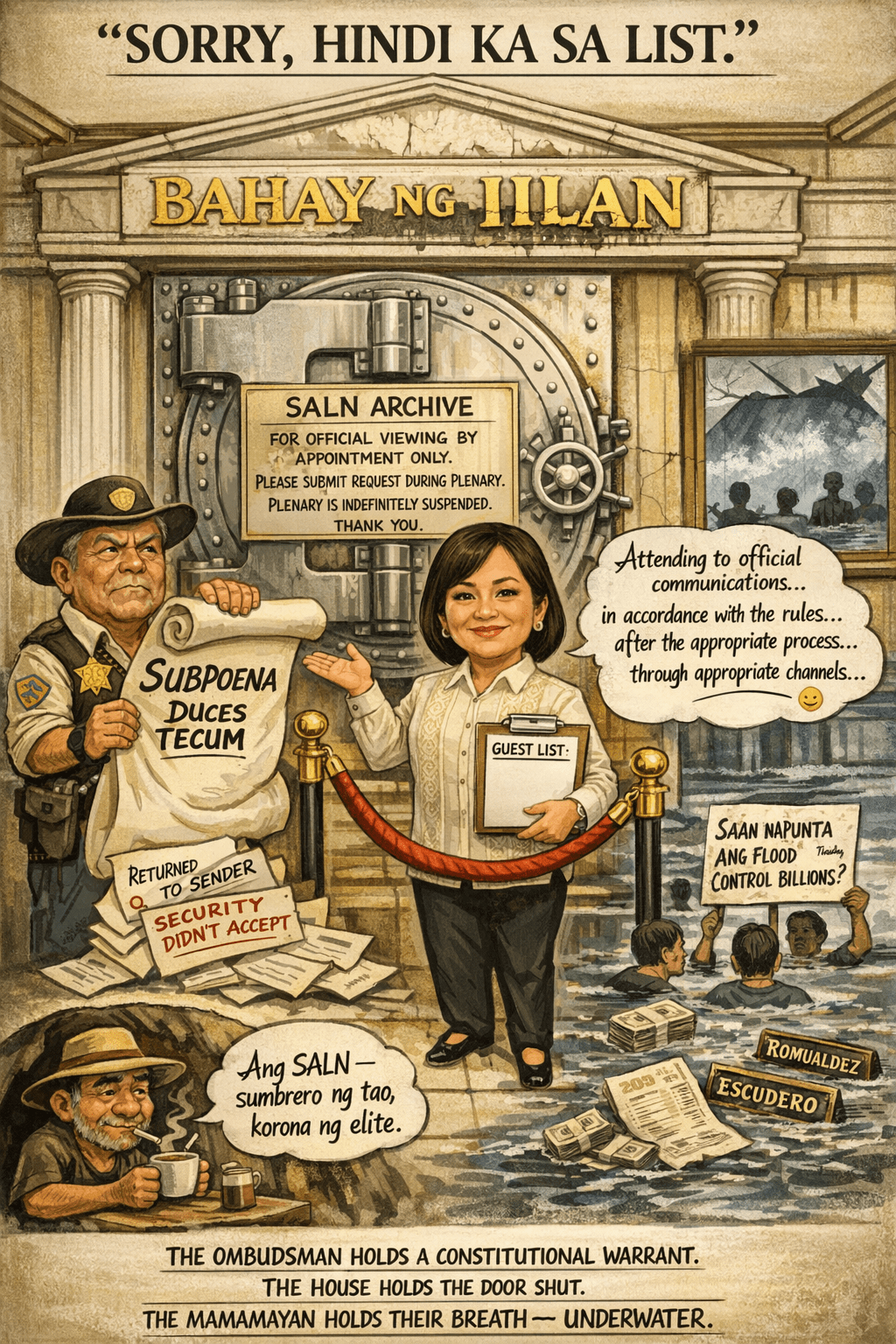
Remulla’s reform agenda is his trump card. He vows to reverse Martires’ Ombudsman Memorandum Circular No. 1 (2021), which barricaded SALNs behind bureaucratic walls, flouting RA 6713, Sec. 8‘s transparency mandate. Martires’ tenure—slammed for shielding Duterte cronies in the Pharmally scandal—gutted the Ombudsman’s credibility.
Remulla’s push for open SALNs with safeguards aligns with Art. XI, Sec. 17, restoring public accountability (Constitution). Critics cry bias, citing his Marcos administration ties, but his recusal from JBC deliberations defuses conflict-of-interest concerns under the Code of Judicial Conduct, Canon 2. The appearance of impropriety argument, while valid, is dwarfed by the urgent need for reform to rebuild trust.
Ethical & Legal Arguments Comparison
| Category | For Remulla’s Nomination | Against Remulla’s Nomination |
|---|---|---|
| Legal Basis | Presumption of innocence (Cagang v. Sandiganbayan); RA 9851 justifies Duterte arrest; JBC due process (Jardeleza v. Sereno). | JBC Rule 2020-01, Sec. 5 disqualifies pending cases; RA 6770, Sec. 2 demands impartiality. |
| Ethical Merit | SALN transparency aligns with RA 6713, Sec. 8; recusal addresses Canon 2 concerns. | Conflict of interest as Justice Secretary (RA 6713, Sec. 4); risk of politicized prosecutions. |
| Political Impact | Reforms restore public trust; counters Martires’ secretive legacy. | Risks lawfare against Duterte, eroding neutrality (Biraogo v. Philippine Truth Commission). |
The Clearance Trap: A Safeguard or a Sabotage Tool?
The Ombudsman clearance requirement is a double-edged blade. Supporters argue it ensures integrity, barring nominees with ethical shadows (JBC No. 2020-01, Rule 4, Section 5). The Judicial and Bar Council’s disqualification of Silvestre Bello III in 2018 upheld this principle, invoking Rule 4, Section 5, which bars candidates with pending criminal or administrative cases—underscoring the Ombudsman’s role as a beacon of probity.
But its rigidity invites abuse. A single complaint—however baseless—can stall a nomination, as Marcos’ tactics prove. This risks turning clearance into a political weapon, undermining the independence mandated by RA 6770, Sec. 2. The Constitution doesn’t explicitly require clearance (Art. XI, Sec. 9), suggesting JBC discretion could allow merit-based exceptions, as in Jardeleza. Without reform, the rule becomes a chokepoint for lawfare, not a guarantor of ethics.
Battle Tactics: Legal Jousting and Political Power Plays
Remulla’s War Plan:
- Expedite Resolution: File a motion with the Ombudsman for swift complaint dismissal, citing Art. III, Sec. 16 (speedy disposition) and Cagang v. Sandiganbayan. A clean clearance obliterates Marcos’ objections.
- JBC Advocacy: Argue “pending cases” require probable cause, not mere fact-finding, leveraging Jardeleza‘s due process standard.
- Public Narrative: Amplify SALN reform through media, framing himself as a transparency champion to sway JBC and public opinion.
- SC Petition: If blocked, seek certiorari under Rule 65, alleging JBC grave abuse of discretion (Jardeleza v. Sereno).
Imee Marcos’ Sabotage Strategy:
- Delay Tactics: Urge the Ombudsman to prolong investigations, ensuring Remulla lacks clearance by JBC deadlines (JBC Rule 2020-01).
- Public Shaming: Amplify “Plan C” via press briefings, rallying Duterte loyalists to pressure the JBC (Philstar, Sept. 3, 2025).
- Ethics Barrage: File more complaints under RA 6713 or RA 3019 (Anti-Graft Law), reinforcing ineligibility.
- SC Challenge: If Remulla is shortlisted, petition the Supreme Court for violating JBC rules, citing RA 6770, Sec. 14 (SC jurisdiction).
Institutional Bloodbath: A Nation’s Trust at Stake
This clash threatens to eviscerate public faith in the Ombudsman and JBC. If Remulla is appointed despite pending cases, it signals rules bend for the elite, echoing warnings in Is There Judicial Independence in Duterte’s Philippines? (2023). If Marcos blocks him through delays, it confirms the Ombudsman as a political pawn, violating RA 6770, Sec. 2.
Filipinos, battered by scandals like Pharmally, face a crisis of confidence in accountability mechanisms, undermining RA 6713‘s public interest mandate. The rule of law hangs in the balance: strict JBC adherence could bolster institutional credibility, but abuse risks cementing lawfare as a norm, as highlighted in analyses of The Philippines’ Democratic ‘Backsliding’ in the Time of Duterte (updated for 2025). The 2028 election looms, with this fight setting a dangerous precedent for dynastic manipulation of legal processes.
Charting the Escape: Saving the Ombudsman from Political Ruin
- JBC Reform: Enforce Rule 2020-01 but require probable cause for disqualification, per Jardeleza. Publish transparent criteria to curb abuse.
- Ombudsman Action: Expedite Remulla’s case resolution under RA 6770, Sec. 13(1), ensuring no political delays.
- Supreme Court Vigilance: Assert judicial review (RA 6770, Sec. 14) to check JBC or Ombudsman overreach, reinforcing Biraogo‘s equal protection principle.
- Civil Society Push: Demand SALN transparency and monitor JBC proceedings, holding Marcos and Remulla accountable beyond factional lines.
- Congressional Fix: Amend JBC rules to limit clearance abuse, balancing integrity with fairness, and strengthen RA 6770 oversight to shield the Ombudsman from politics.
The Verdict: A Democracy on Trial
The Marcos-Remulla war is a make-or-break moment for Philippine democracy. Remulla, despite imperfections, offers a lifeline to restore the Ombudsman’s credibility through transparency and reform. Imee Marcos’ opposition, draped in legalism, is a cynical gambit to shield allies, betraying the rule of law she invokes. The JBC and Supreme Court must navigate this political minefield with unwavering fidelity to the 1987 Constitution, ensuring the Ombudsman remains a protector, not a pawn. Failure risks plunging the Philippines into dynastic lawfare, where institutions serve power, not people. The nation holds its breath, and the outcome will reverberate far beyond 2025.
Key Citations
Constitutional Provisions:
- 1987 Philippine Constitution, Art. VIII, Sec. 8(5)
- 1987 Philippine Constitution, Art. XI, Sec. 5
- 1987 Philippine Constitution, Art. XI, Sec. 17
- 1987 Philippine Constitution, Art. III, Sec. 16
Republic Acts:
- RA 6770 (Ombudsman Act of 1989), Sec. 5
- RA 6770 (Ombudsman Act of 1989), Sec. 13(1)
- RA 6770 (Ombudsman Act of 1989), Sec. 14
- RA 6713 (Code of Conduct for Public Officials), Sec. 4
- RA 6713 (Code of Conduct for Public Officials), Sec. 8
- RA 9851 (Philippine Act on Crimes Against International Humanitarian Law), Sec. 17
- RA 3019 (Anti-Graft and Corrupt Practices Act)
JBC Rules:
- JBC Rule 2020-01, Sec. 5 (PDF)
Supreme Court Cases:
- Jardeleza v. Sereno (G.R. No. 213181, 2014)
- Cagang v. Sandiganbayan (G.R. No. 206438, 2018)
- Biraogo v. Philippine Truth Commission (G.R. No. 192935, 2010)
- SC Affirms Dismissal (G.R. No. 237530, 2018)
News Sources:

- “Forthwith” to Farce: How the Senate is Killing Impeachment—And Why Enrile’s Right (Even If You Can’t Trust Him)

- “HINDI AKO NAG-RESIGN!”

- “I’m calling you from my new Globe SIM. Send load!”

- “Mahiya Naman Kayo!” Marcos’ Anti-Corruption Vow Faces a Flood of Doubt

- “Meow, I’m calling you from my new Globe SIM!”

- “No Special Jail for Crooks!” Boying Remulla Slams VIP Perks for Flood Scammers

- “PLUNDER IS OVERRATED”? TRY AGAIN — IT’S A CALCULATED KILL SHOT

- “Several Lifetimes,” Said Fajardo — Translation: “I’m Not Spending Even One More Day on This Circus”

- “Shimenet”: The Term That Broke the Internet and the Budget

- “We Did Not Yield”: Marcos’s Stand and the Soul of Filipino Sovereignty

- “We Gather Light to Scatter”: A Tribute to Edgardo Bautista Espiritu

- $150M for Kaufman to Spin a Sinking Narrative


 KWEBA ni BAROK
Leave a comment