
When Constitutional Tweaks and Polls Rewrite Democracy’s Script
By Louis ‘Barok‘ C. Biraogo — September 5, 2025
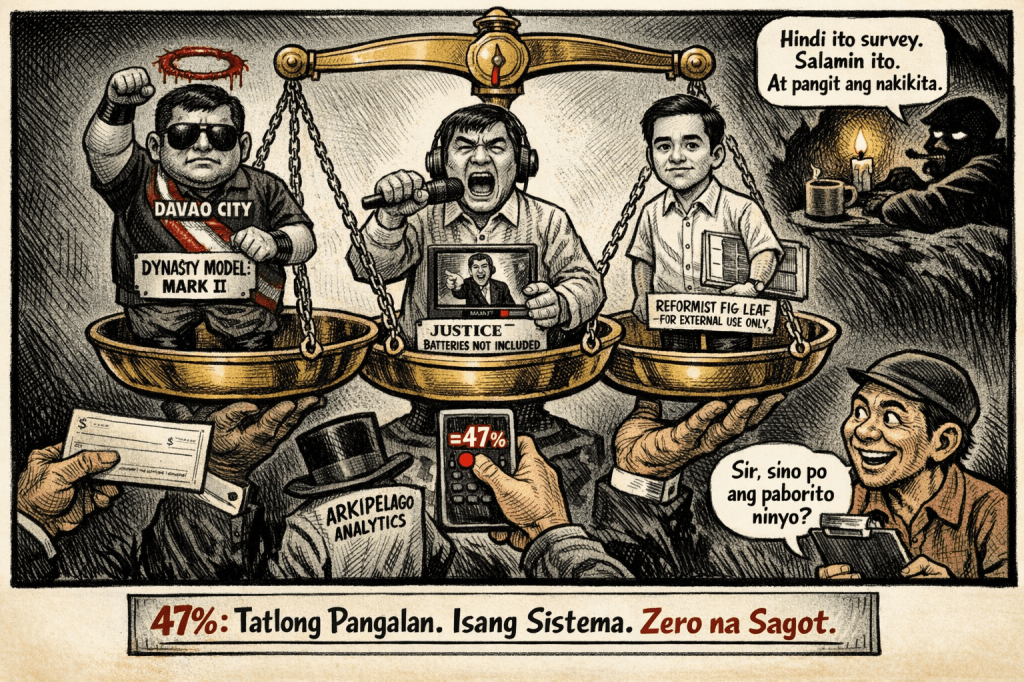
AH, THE Philippines, where the political calendar spins not around elections or crises but the grand theater of “survey season”—that magical moment when elites and their pollsters conjure hypothetical matchups to dazzle the masses while governance gathers dust. It’s September 2025, and the Tangere survey drops like a well-timed bombshell, pitting Pasig’s boyish mayor, Vico Sotto, against Vice President Sara Duterte in a 2028 presidential fantasy league. What a shock that a mobile-app poll, uncommissioned and oh-so-independent, somehow spotlights a young reformist just as his uncle, Senator Tito Sotto, pushes to tweak the Constitution for his benefit. One might almost suspect this was scripted in some air-conditioned Manila think tank, far from the floodwaters lapping at the feet of the poor.
The supreme irony? Vico Sotto, anti-dynasty poster child, owes his hypothetical shot at the presidency to a constitutional amendment peddled by his own family’s dynasty. Senator Tito Sotto, a political fossil whose clan has been in power longer than some voters have been alive, wants to lower the presidential age limit from 40 to 35. Vico, a spry 38 in 2028, would suddenly qualify. It’s as if the scriptwriters of this national soap opera cast the rebel son as the hero, courtesy of the very patriarchs he’s supposedly fighting. Reform? No, it’s dynastic musical chairs, with rules rewritten mid-game to keep the family in the spotlight. The Tangere survey breathlessly reports Vico could tie Sara at 34–36% in this alternate universe, pulling votes from her base and even siphoning nearly half of Leni Robredo’s loyalists. Ninety percent of Robredo’s supporters would follow her endorsement like devoted pilgrims to the polls. How convenient for a narrative that reduces a principled titan like Robredo to a mere “kingmaker” button on the opposition’s remote control.
Picture Aling Maria, a vendor in her 50s, hands calloused from hawking fish in Tondo’s markets, her battered smartphone a lifeline for family chats and the occasional TikTok scroll. She’s no stranger to the grind: dodging typhoon floods, scraping by on remittances, navigating a bureaucracy as leaky as the dikes Vico was recently photographed inspecting in Pasig. Aling Maria craves leaders who fix potholes, not poll numbers. Yet here comes this Tangere survey, beamed to her feed via some algorithm, whispering that maybe, just maybe, Vico could upend the Dutertes. Does it spark hope? Or deepen her despair, knowing it’s built on a Sotto clan sleight-of-hand? She’s bombarded by propaganda—Duterte diehards decrying a “demolition job,” reformists hailing generational change—while her reality unfolds in the grim “what-is” of 2025: confidential funds vanishing into Sara’s coffers amid corruption whispers, families displaced by floods no photo-op can mend. This cynical game of if-only polls doesn’t empower Aling Maria; it infantilizes her, turning her into a spectator in a circus where dynasties are the elephants and pollsters the clowns.
The methodology? A digital house of mirrors. Tangere’s 1,400 respondents, sampled via a mobile app with a ±2.57% margin of error, sounds rigorous enough for a TED Talk. But polling a nation through smartphones, as if the 40 million Filipinos without reliable internet don’t exist, is urban bias on steroids. It skews toward tech-savvy youth in Metro Manila and Cebu—Vico’s adoring base—while sidelining the rural heartland where Sara’s grip on Mindanao and the Visayas holds firm. Affiliated with ESOMAR? Sure, but that veneer of credibility can’t mask the exclusion of the offline poor, whose voices drown in the pings of elite notifications. What does it say about a political class so out of touch they think democracy can be crowdsourced like a Grab ride? It’s not just statistically suspect; it’s a symptom of a deeper rot.
And the media’s glee in crowning Robredo a “kingmaker”? Sarcasm alert: Nothing screams “empowered electorate” like reducing voters to drones programmed to follow a 90% loyalty rate. This isn’t analysis; it’s infantilization, sidelining a woman who built a movement on anti-corruption and human rights into a prop for the Sotto-Duterte showdown. What does it reveal about the Filipino body politic? We’re still playing the same game: dynasty versus dynasty, reformist in name only, while the real stakes—floods swallowing homes, confidential funds fueling scandals, an economy limping under inflation—get buried under 2028’s what-ifs.
This isn’t harmless theater; it’s a distraction machine grinding away at a democracy creaking under entrenched power. While pollsters dream up generational showdowns, Aling Maria wades through literal and figurative floods, her hopes manipulated like data points. The irony? Even as the survey taps a genuine thirst for fresh faces—75% of those under 48 back the age amendment—it’s propped up by dynastic tinkering. Tito Sotto’s proposal isn’t youth empowerment; it’s a potential Trojan horse for greener heirs, like Sandro Marcos, waiting in the wings.
In the end, this farce—amended constitutions, biased apps, dynastic jockeying—exposes a democracy less a robust tree and more a hollowed trunk, beautiful from afar but rotten within. Is there hope in the public’s yearning for leaders like Vico, a sign that Aling Maria might yet demand better? Or is it another expertly manipulated mirage, ensuring elites keep dancing while the rest of us pay the piper? I’ve seen enough crises globally to know change doesn’t come from polls or amendments. It comes from people like Aling Maria refusing to be pawns. In the Philippines today, that refusal feels like a weary, distant dream.
Key Citations
- Tangere Survey Results (Manila Times, September 1, 2025): Reports Vico Sotto as a potential challenger to Sara Duterte in 2028, with details on methodology and findings.
- Tangere’s Methodology and Affiliations: Tangere’s mobile-app polling is affiliated with ESOMAR and MOReS, though criticized for urban bias.
- Duterte’s Confidential Funds Controversy: Allegations of misuse tied to Sara Duterte’s office, fueling public distrust.
- Sotto’s Flood Response Visibility: Vico Sotto’s public image bolstered by flood control efforts in Pasig, influencing survey appeal.

- ₱75 Million Heist: Cops Gone Full Bandit

- ₱6.7-Trillion Temptation: The Great Pork Zombie Revival and the “Collegial” Vote-Buying Circus

- ₱1.9 Billion for 382 Units and a Rooftop Pool: Poverty Solved, Next Problem Please

- ₱1.35 Trillion for Education: Bigger Budget, Same Old Thieves’ Banquet

- ₱1 Billion Congressional Seat? Sorry, Sold Out Na Raw — Si Bello Raw Ang Hindi Bumili

- “We Will Take Care of It”: Bersamin’s P52-Billion Love Letter to Corruption

- “Skewed Narrative”? More Like Skewered Taxpayers!

- “Scared to Sign Vouchers” Is Now Official GDP Policy – Welcome to the Philippines’ Permanent Paralysis Economy

- “Robbed by Restitution?” Curlee Discaya’s Tears Over Returning What He Never Earned

- “No Pressure” Luistro? The House Pork Bazaar Exposed
- “My Brother the President Is a Junkie”: A Marcos Family Reunion Special

- “Mapipilitan Akong Gawing Zero”: The Day Senator Rodante Marcoleta Confessed to Perjury on National Television and Thought We’d Clap for the Creativity



 KWEBA ni BAROK
Leave a comment