
From Viral Tips to Verified Traps: How Citizen Sleuths Are Reeling In the Usual Suspects
By Louis ‘Barok‘ C. Biraogo — December 14 ,2025
MGA ka-kweba, at the Kweba ni Barok, we always keep a close eye on promises that could change the game. On December 9, 2025, at the Marco Polo Hotel in Pasig, Ombudsman Jesus Crispin “Boying” Remulla delivered a keynote speech at the 2025 National Anti-Corruption Summit. He declared that the fight against corruption is now a “shared duty of an entire nation”—no longer the sole burden of one office. Crowdsourcing is positioned as a new “evidence-gathering tool.” And by February 2026, the Ombudsman aims to go “fully digital”: tamper-proof networks, AI-supported verification, integrated systems—to strengthen those paper trails where corruption has long hidden.
Intriguing, isn’t it? Like the opening chapter of a long-awaited investigation: a determined Ombudsman stepping up to modernize the system and invite citizens into the process. The question on everyone’s mind: Can this bold vision deliver the accountability we’ve been waiting for?

The Vision and the Opportunity
Remulla’s message is clear and ambitious: “This is government and citizens fighting corruption together.” It opens the door to broader participation in oversight. Appointed in October 2025 after Samuel Martires’ term, Remulla brings his experience as former Justice Secretary to the role. He has emphasized urgency and modernization, signaling a shift toward a more proactive Ombudsman.
The idea of “shared national responsibility” could mark a turning point—if properly implemented, it has the potential to harness public vigilance in ways previous administrations have not fully explored.
Tools for Greater Accountability?
First, crowdsourcing. Remulla states, “Crowdsourcing is no longer noise; it is now an evidence-gathering tool.” The intent is to turn public tips into actionable leads, supplementing formal investigations. Legally, this must stay within bounds: under the Rules of Court and Republic Act No. 6770 (Ombudsman Act of 1989), evidence remains subject to verification, probable cause, and due process. Done right—with strong filters and safeguards—this could empower citizens without compromising fairness.
Second, digitalization and AI. “Corruption thrives where data is weak and paper trails disappear,” Remulla notes. Modernization is long overdue. A secure digital infrastructure could speed up case processing, reduce manipulation risks, and improve transparency. Challenges remain—cybersecurity, the digital divide, and budget constraints—but the push toward integrated systems and AI-assisted verification represents a serious effort to bring the Ombudsman into the 21st century.
The Flood Control Case: An Early Test
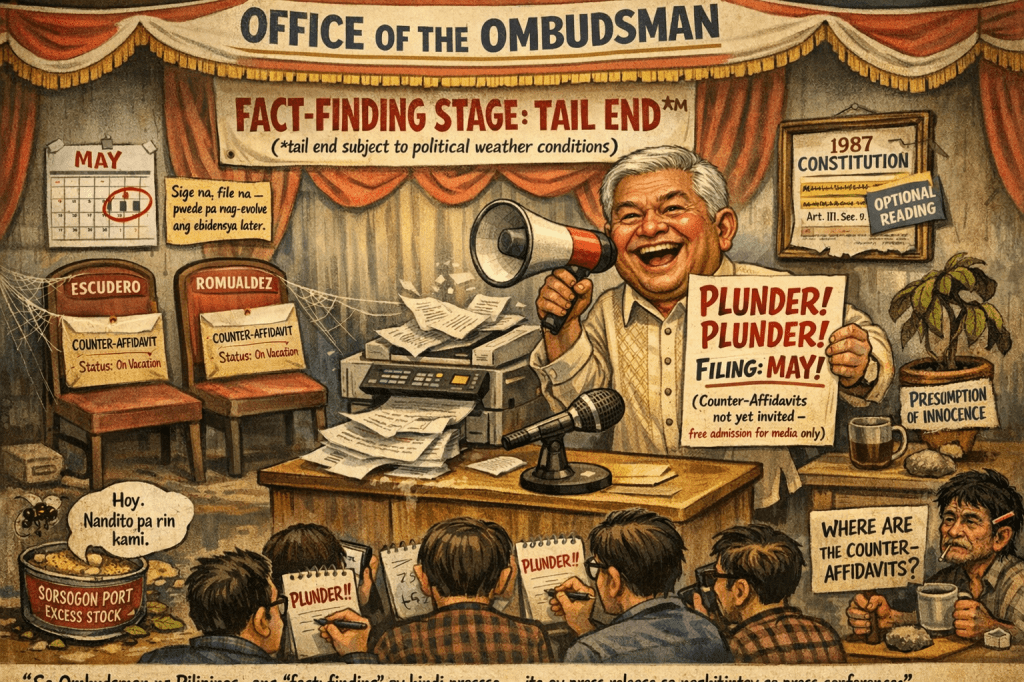
The ongoing flood control probe serves as a key measure of Remulla’s approach. The Ombudsman has moved decisively: travel bans on dozens of individuals, impending arrest warrants, and cases building against several senators and former lawmakers linked to alleged anomalies. As of December 14, 2025, cases against senators tied to the scandal may be filed as early as next week, with possible arrest warrants in the next two weeks. The office is also building cases against figures like Senator Francis Escudero and former Senator Nancy Binay, and former Senator Bong Revilla could face arrest before Christmas. Additionally, more assets linked to the scandal have been frozen, totaling P13 billion to date. To handle the expected influx of cases, the Ombudsman plans to hire 100 new lawyers in 2026.
This aggressive pace suggests a commitment to tackling high-profile graft, regardless of political stature. While some cases may take longer due to evidentiary requirements, the overall momentum indicates the office is prioritizing results over delay.
Building Credibility Through Action
Remulla has pledged that the Ombudsman “will refuse to be a reference of politics” and that “corruption wins when the government slows down.” His background in the Department of Justice gives him insight into systemic issues, and his current role offers the independence guaranteed by the 1987 Constitution (Article XI) to address them.
Public trust will ultimately depend on outcomes—consistent application of the law, successful prosecutions, and visible reforms.
Future Scenarios: Progress or Setbacks?
By February 2026—the target for initial digital reforms—we’ll have clearer metrics:
- Success: Faster case resolutions, convictions in major scandals based on solid evidence, a secure crowdsourcing platform that generates reliable leads, and gradual improvement in the Philippines’ global corruption rankings.
- Challenges ahead: Implementation hurdles, resource limitations, and the need for careful safeguards to prevent misuse.
If executed well, this could lay the foundation for a stronger, more responsive anti-corruption framework—one that truly involves the nation in holding power to account.
A Watchful Encouragement to Ombudsman Remulla
Boying, you’ve set a high bar: shared responsibility, digital transformation, and relentless pace. The nation is watching closely. Your legacy will be shaped by how these promises translate into fair, effective, and impartial action—especially in the complex cases already underway.
Prove that the Ombudsman can lead this cleanup with integrity and results. The big fish are indeed flopping; now let’s see them properly landed.
At Kweba ni Barok, we remain cautiously optimistic: real change or just another chapter? The next moves will tell.
— Barok
Key Citations
- Pulta, Benjamin. “Ombudsman: Fight vs. Corruption a Shared Responsibility.” Philippine News Agency, 9 Dec. 2025.
- Republic Act No. 6770: An Act Providing for the Functional and Structural Organization of the Office of the Ombudsman, and for Other Purposes. Congress of the Philippines, 17 Nov. 1989, Official Gazette of the Republic of the Philippines..
- The 1987 Constitution of the Republic of the Philippines – Article XI: Accountability of Public Officers. Official Gazette of the Republic of the Philippines.
- Revised Rules on Evidence (Rules 128-134, Rules of Court). Supreme Court of the Philippines, as amended per resolution adopted on 14 Mar. 1989, LawPhil.
- “Forthwith” to Farce: How the Senate is Killing Impeachment—And Why Enrile’s Right (Even If You Can’t Trust Him)
- “HINDI AKO NAG-RESIGN!”

- “I’m calling you from my new Globe SIM. Send load!”

- “Mahiya Naman Kayo!” Marcos’ Anti-Corruption Vow Faces a Flood of Doubt

- “Meow, I’m calling you from my new Globe SIM!”

- “No Special Jail for Crooks!” Boying Remulla Slams VIP Perks for Flood Scammers

- “PLUNDER IS OVERRATED”? TRY AGAIN — IT’S A CALCULATED KILL SHOT

- “Several Lifetimes,” Said Fajardo — Translation: “I’m Not Spending Even One More Day on This Circus”

- “Shimenet”: The Term That Broke the Internet and the Budget

- “We Did Not Yield”: Marcos’s Stand and the Soul of Filipino Sovereignty

- “We Gather Light to Scatter”: A Tribute to Edgardo Bautista Espiritu

- $150M for Kaufman to Spin a Sinking Narrative

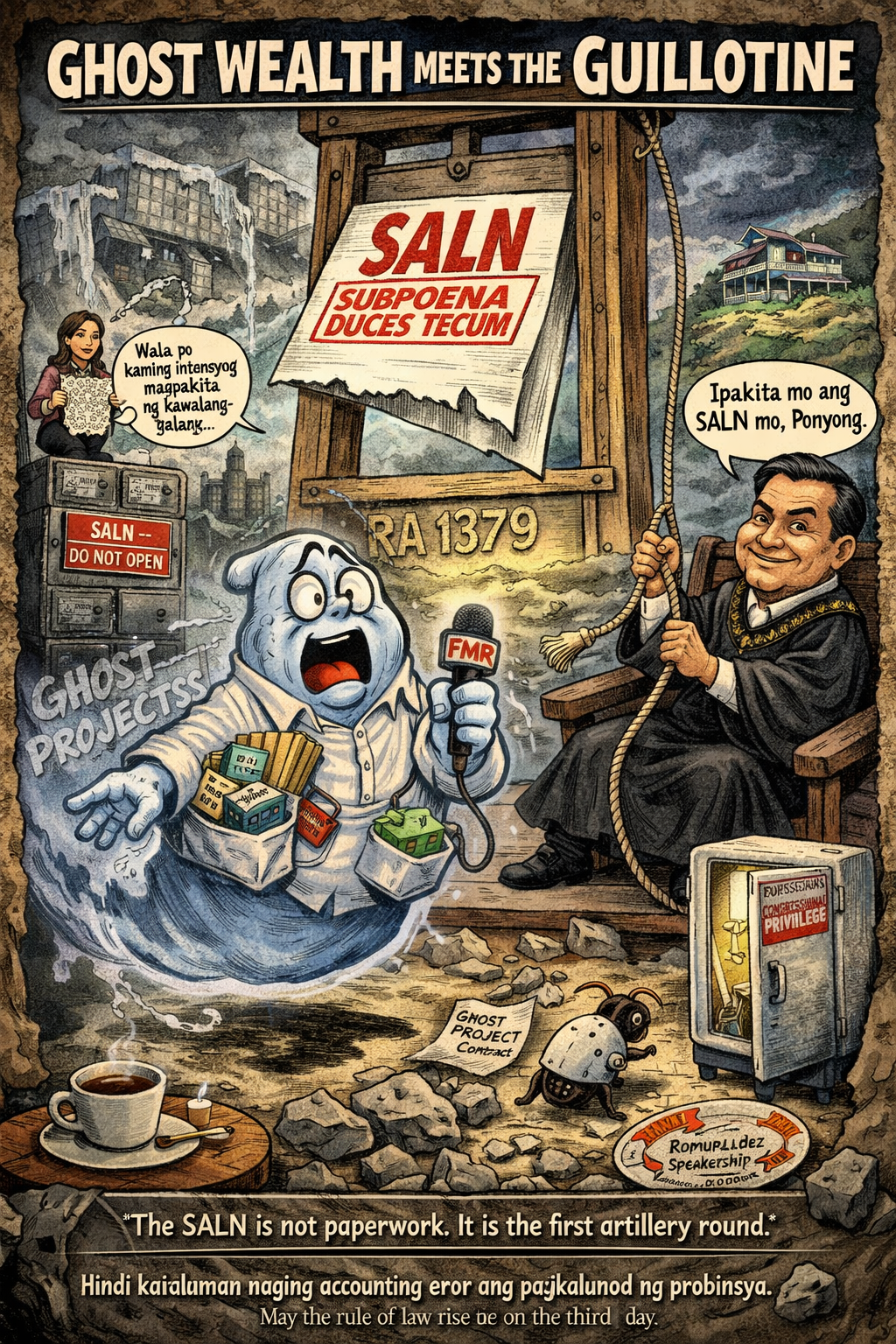
 KWEBA ni BAROK
Leave a comment