
Atong Ang: From Gambling Tycoon to Government-Designated Piñata in One Interview
By Louis ‘Barok‘ C. Biraogo — December 22, 2025
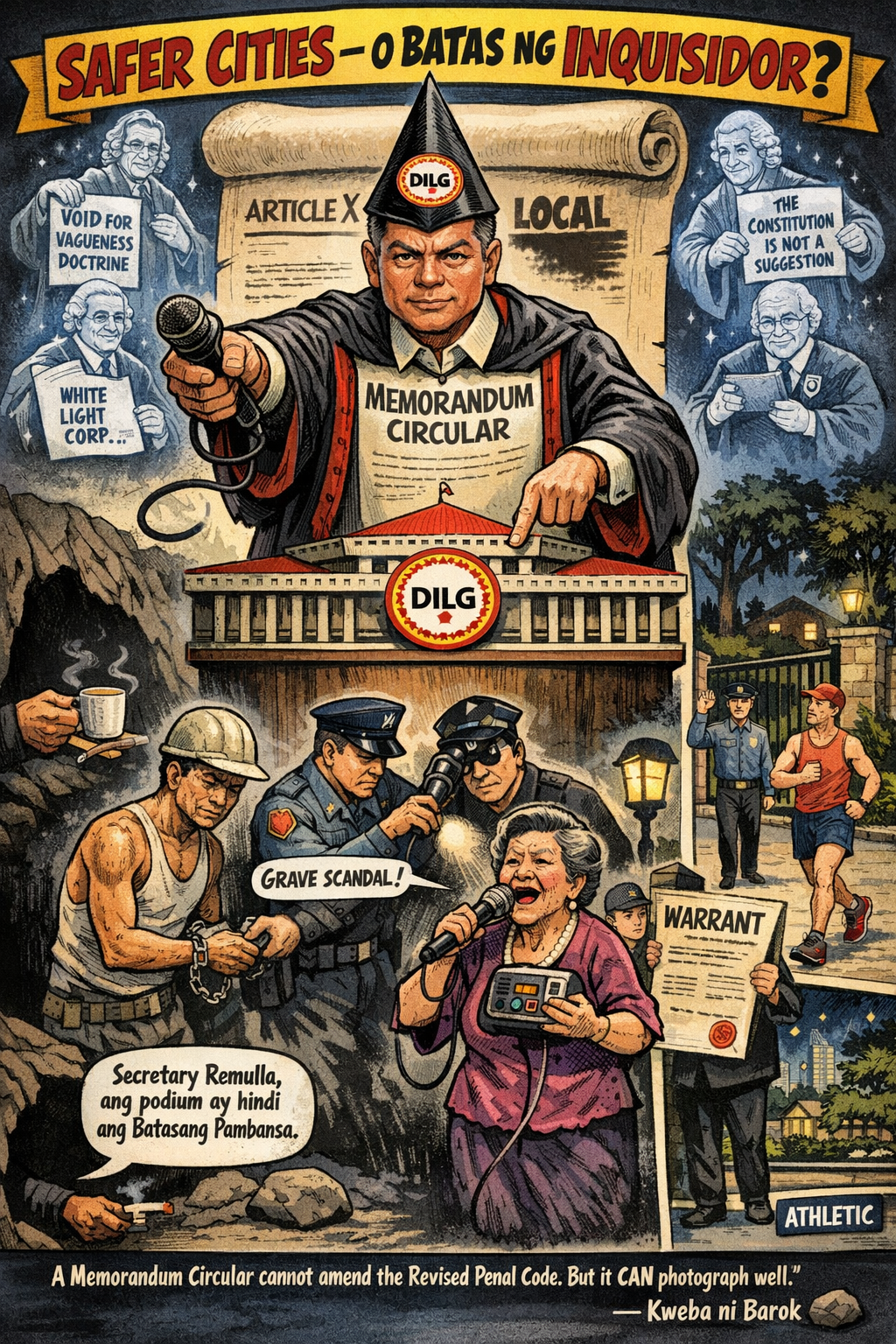
MGA ka-kweba, welcome back to the cave, where the powerful come to squirm under the harsh light of truth, law, and a healthy dose of satire. Today, we dissect the latest circus act from the Department of the Interior and Local Government (DILG): Secretary Jonvic Remulla branding businessman Charlie “Atong” Ang as “armed and dangerous”, implying that any future arrest “will be different.” All this before a single court has issued a warrant. Brilliant strategy, Mr. Secretary—or is it just another episode of executive macho posturing gone rogue?
Enter Atty. Gabriel Villareal, Ang’s counsel, who fired back calling it “reckless,” “irresponsible,” a “publicity stunt,” and—drumroll—tantamount to a shoot-to-kill order. He even invoked the ghost of Tokhang, warning that if anything happens to his client, the blood is on the statement-makers’ hands (Inquirer, 20 Dec. 2025). Dramatic? Absolutely. Effective? We’ll get to that.
This isn’t just a spat between a cabinet secretary and a defense lawyer. It’s a full-blown clash between executive overreach and defensive lawyering in a case already dripping with intrigue: the disappearances of dozens of sabungeros, allegedly abducted, strangled, and dumped in Taal Lake on Ang’s orders—claims he denies, based on a revived investigation fueled by state witness Julie “Dondon” Patidongan.
Let’s eviscerate this mess, layer by layer, with the Constitution as our scalpel.

The Core Clash: Tough Talk vs. Indignant Rebuttal
Remulla drops the “armed and dangerous” bomb in an interview, signaling to the Philippine National Police (PNP) (under his watch) that serving a potential warrant on Ang won’t be your standard knock-and-invite-to-the-station affair. No warrant yet, mind you—just a Department of Justice (DOJ) recommendation to file 26 counts of kidnapping against Ang and 21 others, including 15 cops.
Villareal counters swiftly: This is prejudgment, life-endangering rhetoric, possibly meant to bully courts into fast-tracking the case. Ang, he insists, is still in the Philippines, cooperating fully—proof of sincerity, unless the government prefers fugitives.
Framed plainly: Remulla flexes executive muscle to project control over a explosive case involving police complicity and a gambling tycoon. Villareal plays the constitutional martyr, shielding his client from what he paints as state-sanctioned peril. One side waves the flag of public safety; the other, the shield of due process. Both are maneuvering for narrative dominance—and both deserve a merciless thrashing.
Legal and Ethical Evisceration: Where Both Sides Bleed
Start with Remulla. Mr. Secretary, have you read the 1987 Constitution of the Republic of the Philippines lately? Article III, Section 14 enshrines the presumption of innocence—a bedrock principle that doesn’t evaporate because a suspect is rich, connected, or allegedly tied to gruesome disappearances. By publicly tagging Ang “armed and dangerous” pre-warrant, you’ve effectively prejudged him guilty and dangerous enough to justify escalated force.
This flirts dangerously with violating due process and the sub judice principle, which cautions officials against comments that could prejudice ongoing or impending proceedings. Supreme Court jurisprudence warns against such pronouncements—public officials must restrain themselves to avoid influencing judges or poisoning public perception.
And let’s not ignore the Tokhang echo. In a country where “nanlaban” once became a euphemism for extrajudicial endings, signaling a “different” arrest method to your police force risks being interpreted downstairs as license for lethal preemptiveness. Does this breach Republic Act No. 6713 (Code of Conduct and Ethical Standards for Public Officials and Employees), demanding justness, sincerity, and respect for rights? At minimum, it’s ethically tone-deaf; at worst, administrative misconduct worthy of Ombudsman scrutiny.
Now, Villareal—don’t think you escape the blade. Your righteous fury is textbook defense lawyering: highlight cooperation, invoke constitutional rights, shift blame to government overreach. But is this genuine zeal for due process, or a calculated smokescreen for a client already “convicted” in the court of public opinion?
The Tokhang analogy packs a punch—potent in evoking national trauma—but is it fair, or just hyperbolic grandstanding? Remulla’s words are reckless, yes, but equating them outright to Duterte-era kill orders stretches into theater. It risks diluting real warnings about state abuse while positioning Ang as a victim—a tough sell when the allegations involve mass abductions and lake-dumped bodies.
Both of you are playing to galleries: Remulla to grieving families and a crime-weary public; Villareal to human rights advocates and procedural purists. Neither fully clean.
Motivational Forensics: What’s Really Driving This Charade?
Remulla: Is this tough-guy routine about genuine public safety in a case with alleged police hit squads? Or political theater—projecting “strongman” resolve to revive a dormant scandal, rally support for the administration, and pressure courts/prosecutors into alignment? In a high-stakes probe touching gambling empires and cop complicity, signaling firmness pre-empts accusations of weakness against the powerful.
Villareal (and by extension, Ang): Pure client protection, or narrative management for a man whose wealth and connections make him an easy villain? By crying prejudgment and danger, you lay groundwork for future motions—quash charges due to prejudicial publicity, seek protective orders, or argue tainted trial atmosphere. Smart lawyering, but it smells of delaying tactics for a client facing overwhelming state witnesses.
Strategic Calculus: Wins, Losses, and Self-Inflicted Wounds
For Remulla: Gains a “decisive leader” image, prepares police tactically, reassures sabungero families that justice is coming hard and fast. Risks? Massive—legal backlash for due process violations, human rights scrutiny (domestic and international), and if any arrest goes south, direct liability for escalating rhetoric.
For Villareal/Ang: Wins sympathy as the prejudged underdog, procedural leverage (motions to dismiss on prejudice grounds), and time—Ang remains free, cooperating on his terms. Risks appearing obstructionist, alienating public sentiment already baying for accountability in a grisly case, and undermining if evidence proves ironclad.
Broader Scandal Anatomy: The Missing Sabungeros Rot at the Core
Zoom out, and this spat is just frosting on a festering cake. Over 30 cockfighting enthusiasts vanished since 2021, allegedly snatched for “cheating” in e-sabong circles, killed on Ang’s supposed orders by cops, bodies sunk in Taal Lake. The case languished until 2025’s “revival” via Patidongan’s revelations—raising eyebrows about witness credibility and timing.
Impacts ripple: The gaming industry (e-sabong’s murky world) faces upheaval if a titan like Ang falls, potentially reshaping power vacuums. Public trust in law enforcement erodes further with indicted cops. And the Philippines’ human rights reputation? Already battered, now risked by rhetoric evoking past excesses.
Consequences and Recommendations: Time to Stop the Bleeding
Fallout could be severe: Prejudicial statements poisoning the well for a fair trial, grounds for defense motions to suppress or change venue. If force escalates fatally, lawsuits, investigations, international condemnation. Sanctions on Remulla? Possible, if framed as misconduct.
Recommendations, sharp and specific:
- The Ombudsman must probe Jonvic Remulla’s conduct for violations of RA 6713 and ethical standards—public officials aren’t above restraint.
- Courts should consider a gag order on all parties, restricting extrajudicial commentary to preserve trial integrity.
- Prioritize evidence over rhetoric: Let prosecutors file, judges issue warrants, police execute lawfully—no “different” methods unless judicially sanctioned.
- Full transparency on the Taal Lake searches and witness protections—families deserve closure, not political football.
In the end, this controversy exposes the eternal Philippine tension: justice delayed, then rushed with reckless abandon. We champion the rule of law not for the powerful or the popular, but because it’s the only bulwark against chaos. Demand transparency, enforce accountability, and let the unwavering rule of law prevail—not the loudest mouth in Malacañang’s orbit.
Hanggang sa susunod na kwebanata, mga kaibigan. Stay vigilant.
—Barok
Key Citations
- Salcedo, Mary Joy, “Atong Ang’s Lawyer Hits DILG Chief’s ‘Uncalled For’ Remarks.” Philippine Daily Inquirer, 20 Dec. 2025. Accessed 21 Dec. 2025.
- The Constitution of the Republic of the Philippines. Official Gazette of the Republic of the Philippines, 1987.
- Republic Act No. 6713. Code of Conduct and Ethical Standards for Public Officials and Employees. Official Gazette of the Republic of the Philippines, 20 Feb. 1989.
- ₱75 Million Heist: Cops Gone Full Bandit

- ₱6.7-Trillion Temptation: The Great Pork Zombie Revival and the “Collegial” Vote-Buying Circus

- ₱1.9 Billion for 382 Units and a Rooftop Pool: Poverty Solved, Next Problem Please

- ₱1.35 Trillion for Education: Bigger Budget, Same Old Thieves’ Banquet

- ₱1 Billion Congressional Seat? Sorry, Sold Out Na Raw — Si Bello Raw Ang Hindi Bumili

- “We Will Take Care of It”: Bersamin’s P52-Billion Love Letter to Corruption
- “Skewed Narrative”? More Like Skewered Taxpayers!

- “Scared to Sign Vouchers” Is Now Official GDP Policy – Welcome to the Philippines’ Permanent Paralysis Economy
- “Robbed by Restitution?” Curlee Discaya’s Tears Over Returning What He Never Earned
- “No Pressure” Luistro? The House Pork Bazaar Exposed
- “My Brother the President Is a Junkie”: A Marcos Family Reunion Special

- “Mapipilitan Akong Gawing Zero”: The Day Senator Rodante Marcoleta Confessed to Perjury on National Television and Thought We’d Clap for the Creativity


 KWEBA ni BAROK
Leave a comment