
In the Crosshairs of Envy: How Dare a Secretary Communicate Without Bureaucratic Approval?
By Louis ‘Barok‘ C. Biraogo — December 25, 2025
MGA ka-kweba, gather close—feel the warmth of the Christmas fire. What we have here isn’t just another bureaucratic squabble—it’s a full-blown ambush on the front lines of public health. On this eve of Christmas 2025, while most Filipinos prepare for Noche Buena, a shadowy cabal of “concerned health personnel” and self-appointed “good governance watchdogs” has unleashed yet another complaint against Health Secretary Teodoro “Ted” Herbosa, along with his steadfast lieutenants, Assistant Secretary Albert Domingo and Director Kristina Marasigan.
The alleged “crime”? Daring to host a radio program—PINASigla—that disseminates life-saving health information to millions, funded by a ₱98 million contract awarded to Philippine Collective Media Corp. (PCMC). Yes, you read that right: in the age of TikTok misinformation and lingering post-pandemic fears, these complainants want to crucify public servants for… communicating directly with the people.
Let’s dissect this farce with the scalpel it deserves.
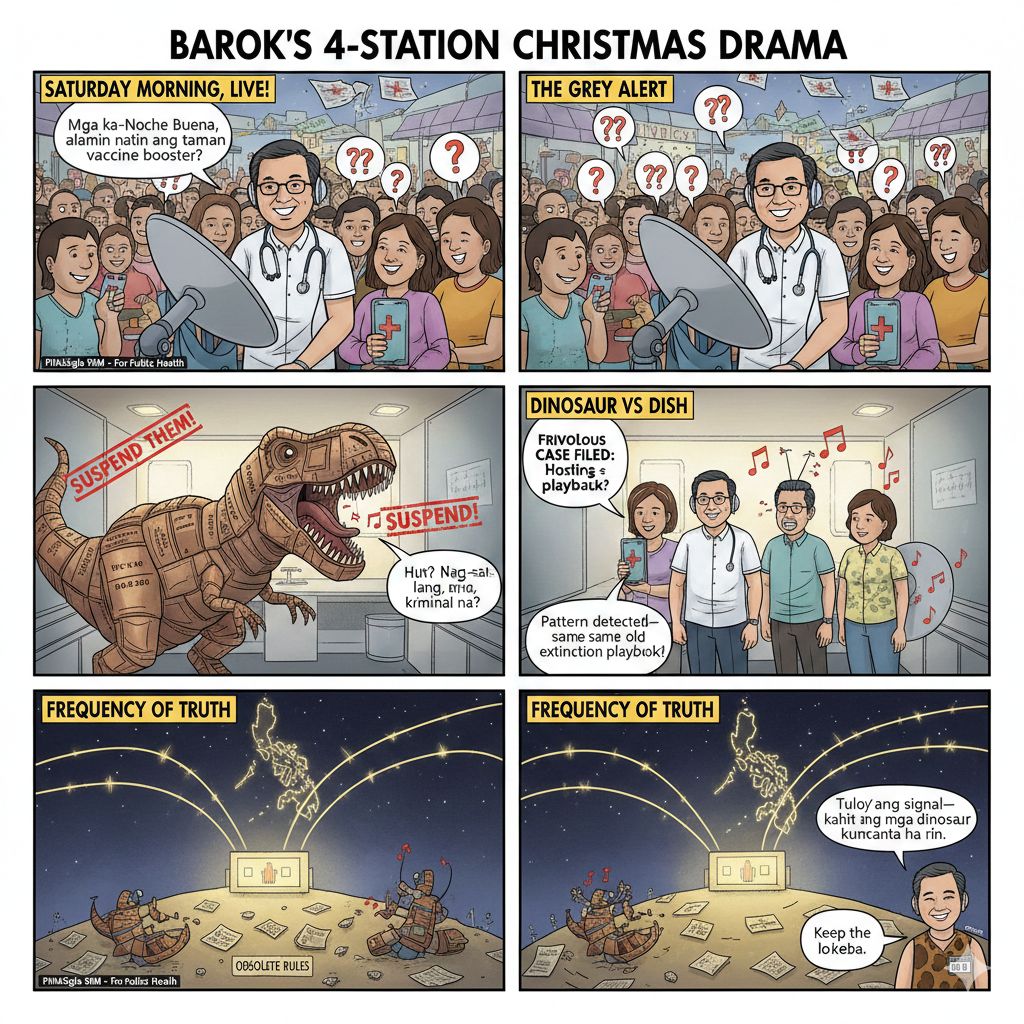
The “Scandal”: A Manufactured Crisis in a Digital Age
Picture this: a Health Secretary who doesn’t hide behind press releases but steps up to the microphone every Saturday morning to educate Filipinos on disease prevention, healthy living, and cutting through the fog of fake news. Herbosa, Domingo, and Marasigan aren’t moonlighting as DJs for kicks—they’re fulfilling the Department of Health (DOH)‘s core mandate: health promotion in the most accessible medium possible.
Yet the complainants—hiding behind groups like Concerned DOH Personnel, Alliance for Clean and Transparent Government, and Health Workers for Change Movement—cry “conflict of interest!” and “self-promotion!” They invoke archaic interpretations of Republic Act 6713 (Code of Conduct and Ethical Standards for Public Officials and Employees) and Republic Act 3019 (Anti-Graft and Corrupt Practices Act), as if hosting an unpaid public service segment equates to pocketing bribes.
Rhetorical question: Since when did reaching the masses through radio become a graft case? In a post-pandemic world where misinformation kills faster than viruses, is the real crime not communicating enough—or communicating too effectively?
This isn’t a scandal; it’s a manufactured crisis by obstructionists clinging to dusty rulebooks while the DOH innovates. Herbosa and his team are modern warriors, leveraging media savvy to save lives. The complainants? They’re the dinosaurs demanding we return to pamphlets and press conferences that nobody reads or watches.
Dual Dissection: Heroes vs. Saboteurs
For Herbosa, Domingo, and Marasigan: Celebrate them! These are proactive public servants who understand that in 2025, a Health Secretary must be a communicator-in-chief. The ₱98 million contract? A strategic investment in public health infrastructure—media placements and co-produced programs to broadcast reliable information across platforms. Procurement laws followed? Check. No personal compensation for hosting? Check. Pure public service? Absolutely.
Domingo himself calls it out: a “pattern of repeated filing of frivolous complaints.” Herbosa defends it eloquently: “DOH delivers transparent and reliable health information through… many media channels,” all compliant with laws and ethics. In an era of health crises, direct engagement builds trust and saves lives. This isn’t self-promotion; it’s leadership.
Against the Complainants: Sus, the legalistic nitpicking! They wail about “manifest partiality” and “evident bad faith,” even dragging in Marasigan’s husband (an executive at a content provider) as if family ties alone prove corruption. (Conveniently ignoring that PCMC followed proper bidding.) They demand preventive suspension, dismissal, lifetime bans—as if silencing DOH leaders would somehow promote “transparency.”
Who benefits from less communication? Certainly not the public drowning in misinformation. These watchdogs aren’t guarding governance; they’re envious bureaucrats or politically-motivated hatchet men seeking to cripple effective leadership. Their real goal: halt dynamic health messaging and drag the DOH back into irrelevance. Performative activism at its finest—filing anonymous complaints while hiding their own motives.
The Ecosystem of Intrigue: Whispers of Deeper Vendettas
Peel back the layers, and the plot thickens. Domingo mentions a “pattern of repeated filing”—Herbosa has faced multiple complaints this year alone, from unliquidated funds to personnel reshuffles. Coincidence? Hardly.
Then there’s PCMC, linked to powerful political families. Legislative scrutiny on DOH “ghost centers” and vaccines adds pressure. Are these complaints weaponized tools in intra-health sector vendettas or broader political wars? Disgruntled insiders jealous of Herbosa’s visibility? Or pawns in a game to distract from real issues?
The intrigue runs deep: anonymous filers fearing “reprisal,” yet bold enough to demand lifetime bans. Smells like coordinated sabotage.
Motivations Unveiled
Herbosa’s Side: Pure public service. Modernizing the DOH, reaching Filipinos directly, combating misinformation head-on. Visionary leadership in a crisis-prone nation.
Complainants’ Side: Envy of dynamic leaders? Careerist grudges against innovators? Or political maneuvering—perhaps tied to rival factions unhappy with Herbosa’s alliances or effectiveness? These “watchdogs” crave relevance through scandal, not solutions.
Pathways Ahead: Victory for the Visionaries
For Herbosa: Aggressive fightback—media blitz to expose motives, galvanize public support, dominate legal proceedings with ironclad evidence of compliance. This “scandal” could backfire spectacularly, rallying Filipinos behind a Secretary who actually talks to them.
For Complainants: A perilous road. Risk exposure as frivolous filers wasting resources. Public backlash for endangering health campaigns. Their case likely crumbles under scrutiny—no personal gain, full compliance proven.
Prosecution Theater and Just Resolution
The Office of the Ombudsman path? Slow, ponderous theater where preventive suspension would hand victory to disease and disinformation. Tragic if imposed—lives lost while leaders are sidelined.
The only just outcome: Swift dismissal. Followed by public commendation for the DOH’s innovative outreach. Anything less rewards saboteurs.
Broader Impacts: A Deadly Chill
Warn the nation: If we punish officials for direct communication, we invite silence. Misinformation thrives, trust erodes—not from “self-promotion,” but from shadowy complainants undermining transparent leaders. The real erosion of trust? Anonymous attacks that prioritize nitpicking over lives.
We demand transparency—from the complainants! Who funds them? Who are their backers? Accountability for frivolous cases wasting state resources and endangering public health.
Bold Call to Action
Empower officials to wield media boldly. Launch investigations into these serial complainants. Reaffirm the mandate for innovative, proactive public service.
Herbosa isn’t a villain—he’s a visionary persecuted by relics. This farce threatens our health security. Stand with the communicators, not the obstructors.
Dismiss the complaints. Commend the DOH. Save lives.
- —Barok, from the depths of the cave where truth still hides from the mob of “concerned” cowards.
Key Citations
- Republic Act No. 3019, Anti-Graft and Corrupt Practices Act. Official Gazette of the Republic of the Philippines, 17 Aug. 1960.
- Republic Act No. 6713, Code of Conduct and Ethical Standards for Public Officials and Employees. Official Gazette of the Republic of the Philippines, 20 Feb. 1989.
- Republic Act No. 6770, The Ombudsman Act of 1989. Official Gazette of the Republic of the Philippines, 17 Nov. 1989.
- Ramos, Mariejo. “Herbosa, 2 Other Health Officials Face Admin, Criminal Complaints over Radio Anchor Duties.” Philippine Daily Inquirer, 23 Dec. 2025.
- ₱75 Million Heist: Cops Gone Full Bandit

- ₱6.7-Trillion Temptation: The Great Pork Zombie Revival and the “Collegial” Vote-Buying Circus

- ₱1.9 Billion for 382 Units and a Rooftop Pool: Poverty Solved, Next Problem Please

- ₱1.35 Trillion for Education: Bigger Budget, Same Old Thieves’ Banquet

- ₱1 Billion Congressional Seat? Sorry, Sold Out Na Raw — Si Bello Raw Ang Hindi Bumili

- “We Will Take Care of It”: Bersamin’s P52-Billion Love Letter to Corruption

- “Skewed Narrative”? More Like Skewered Taxpayers!

- “Scared to Sign Vouchers” Is Now Official GDP Policy – Welcome to the Philippines’ Permanent Paralysis Economy
- “Robbed by Restitution?” Curlee Discaya’s Tears Over Returning What He Never Earned

- “No Pressure” Luistro? The House Pork Bazaar Exposed
- “My Brother the President Is a Junkie”: A Marcos Family Reunion Special

- “Mapipilitan Akong Gawing Zero”: The Day Senator Rodante Marcoleta Confessed to Perjury on National Television and Thought We’d Clap for the Creativity


 KWEBA ni BAROK
Leave a comment