-3% and Sinking: Bongbong’s Trust Rating Takes a Permanent Swim with the Ghost Projects
By Louis ‘Barok‘ C. Biraogo — December 28, 2025
IN THE hushed corridors of Malacañang, where the triumphant laughter of the “UniTeam” once echoed, only the faint whispers of fear and betrayal now linger. The word rupture has not yet been uttered officially, but the air is thick with the scent of political blood.
The latest Social Weather Stations survey—conducted from November 24-30, 2025—is not merely a collection of numbers. It is an autopsy report on a ruling coalition that is slowly dying.
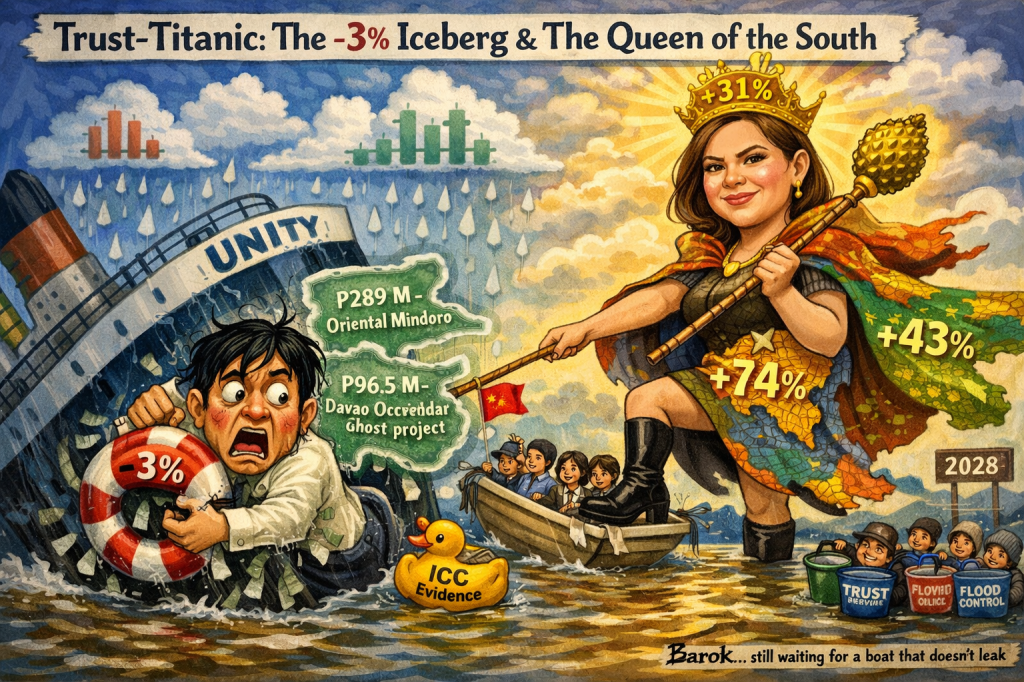
President Ferdinand “Bongbong” Marcos Jr. has plunged to a net trust rating of -3%.
Vice President Sara Duterte has risen to +31%.
This is no accident. This is the people’s verdict on a system rotten from within.
The Sensation Before the Numbers
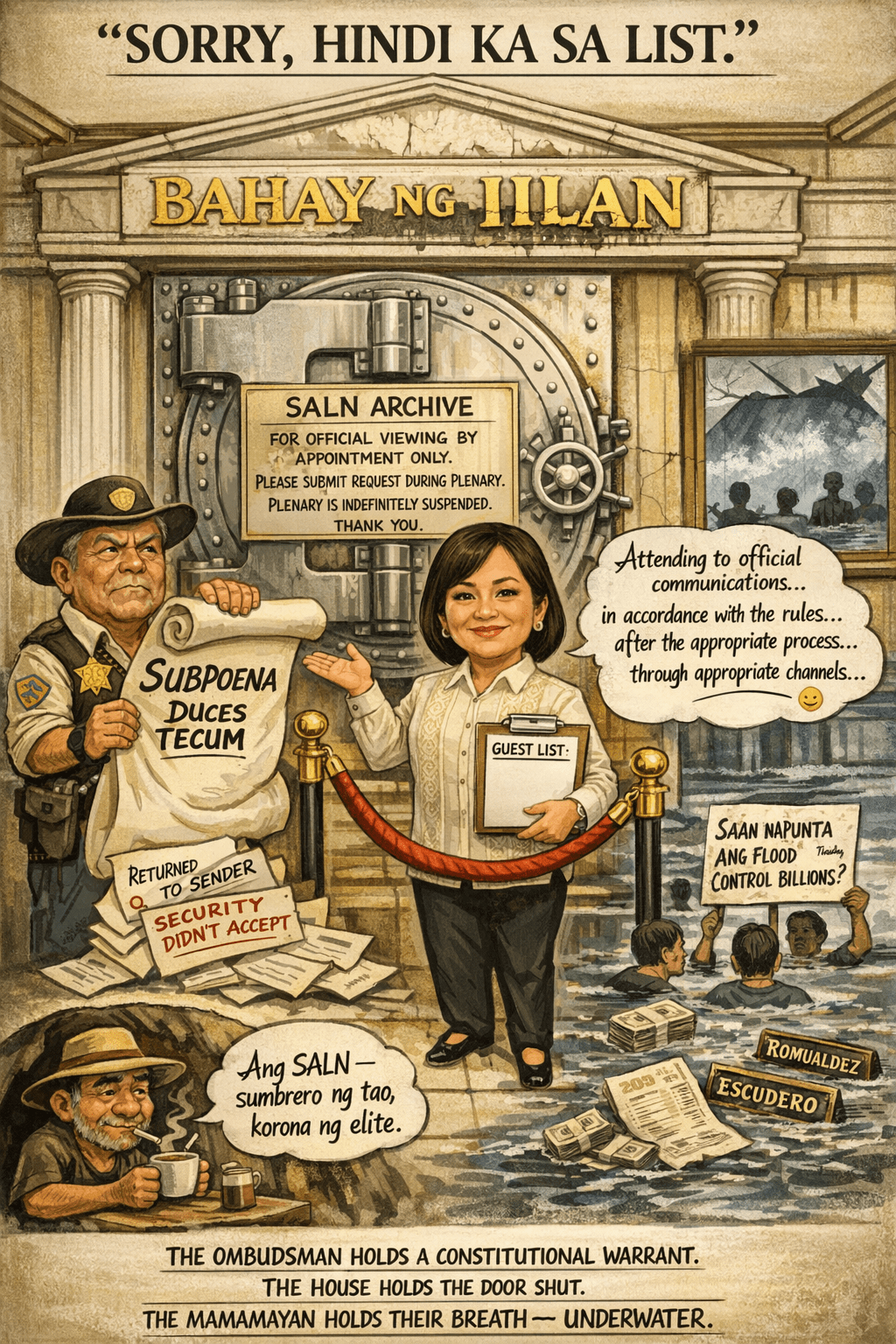
Let us not begin with the figures. Let us begin with the pain felt by ordinary Filipinos every time floodwaters rise on streets, in homes, in lives. While the nation drowns, the money meant for flood control projects vanishes into the pockets of a few.
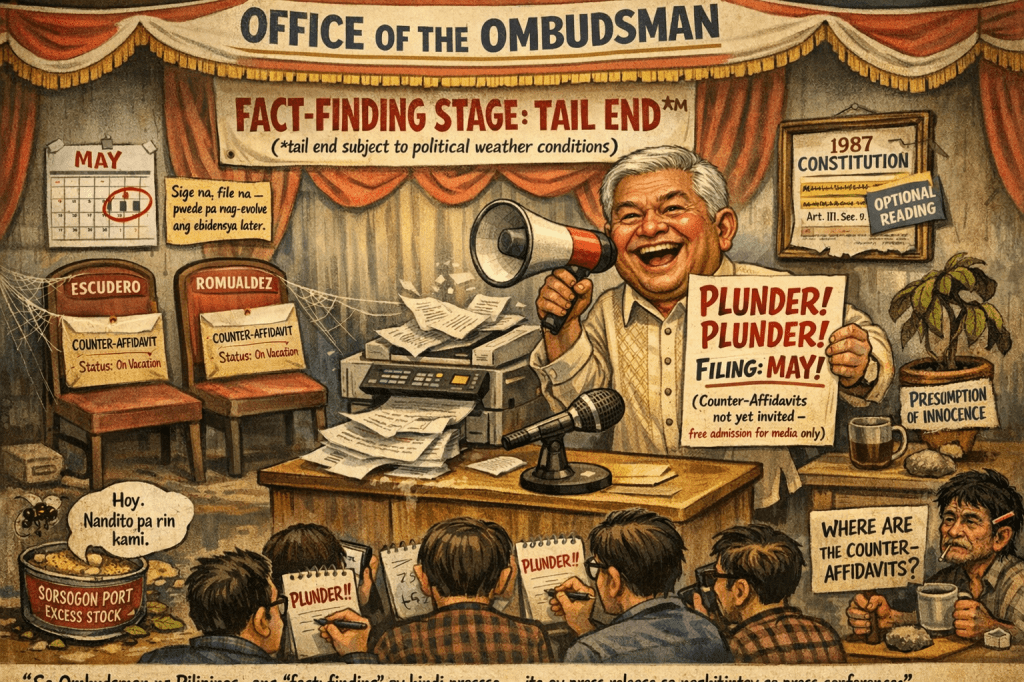
From the P289-million substandard dike in Oriental Mindoro to the P96.5-million “ghost” project in Davao Occidental, the cases filed by the Ombudsman are not just legal documents—they are damning evidence of a government that has failed in its most basic duty: to protect citizens from preventable disasters.
Reading the Map of Trust
Marcos’s fall is not sudden. From +7% in October, it dropped to -3%—with 38% expressing “much trust” against 41% saying “little trust.”
But the real story lies in the geographic fracture:
- Balance Luzon: +18% (his shrinking stronghold)
- Mindanao: -37%
- Visayas: -7%
- NCR: -8%
In contrast, Sara Duterte dominates:
- Mindanao: +74%
- Visayas: +43%
- Balance Luzon: +12%
- NCR: +2% (her weakest, yet still positive)
Her 56% “much trust” is not mere personal popularity—it is a calculated distance from the Palace’s controversies while remaining inside the coalition.
On poll integrity: Yes, it was commissioned by Stratbase and carries margins of error (±3% nationally, ±6% regionally). Critics claim bias. Yet this trend is not isolated—it converges with other surveys and, more importantly, with the sentiment we hear on the streets, on social media, in protests. It is not perfect science, but it is a mirror of a mood that can no longer be denied.
The Political Theater: Shakespeare in the Tropics
This drama is not petty gossip. It is a Shakespearean tragedy stained with Filipino blood.
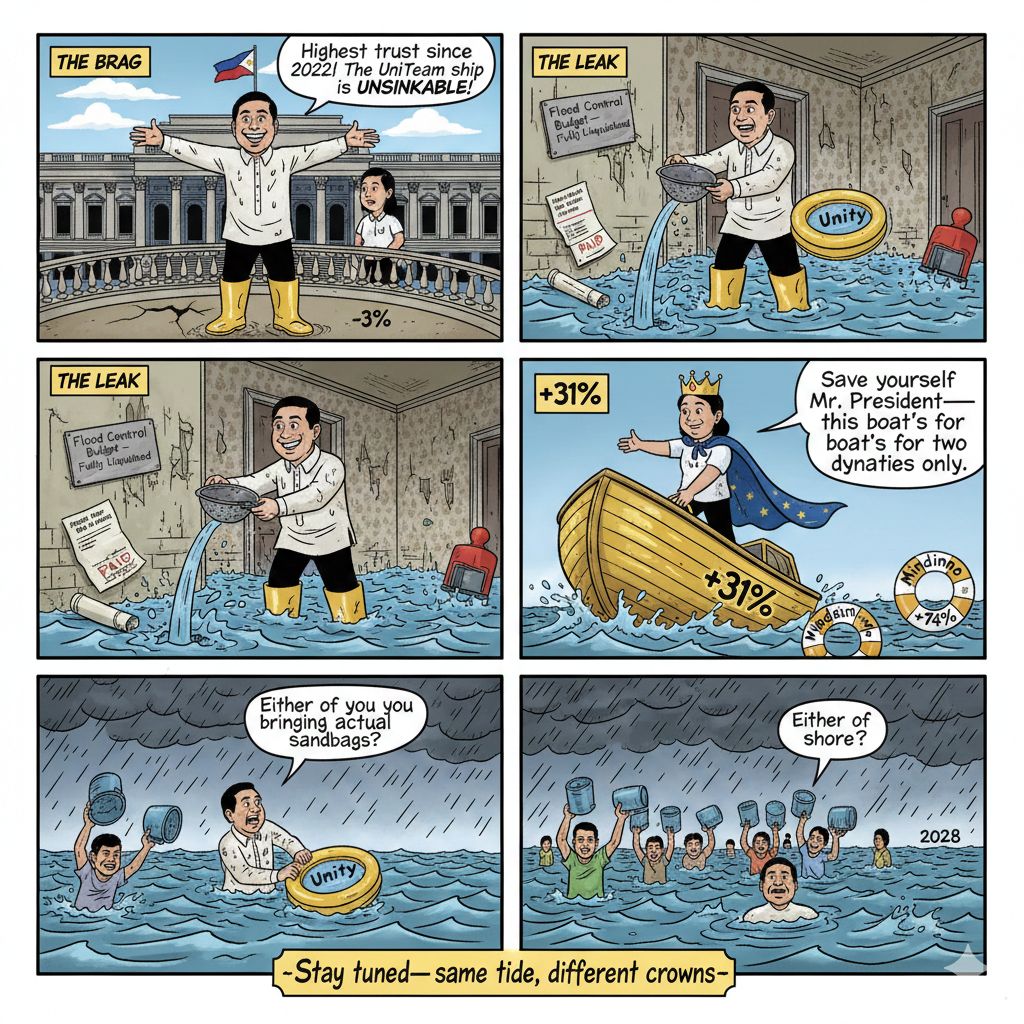
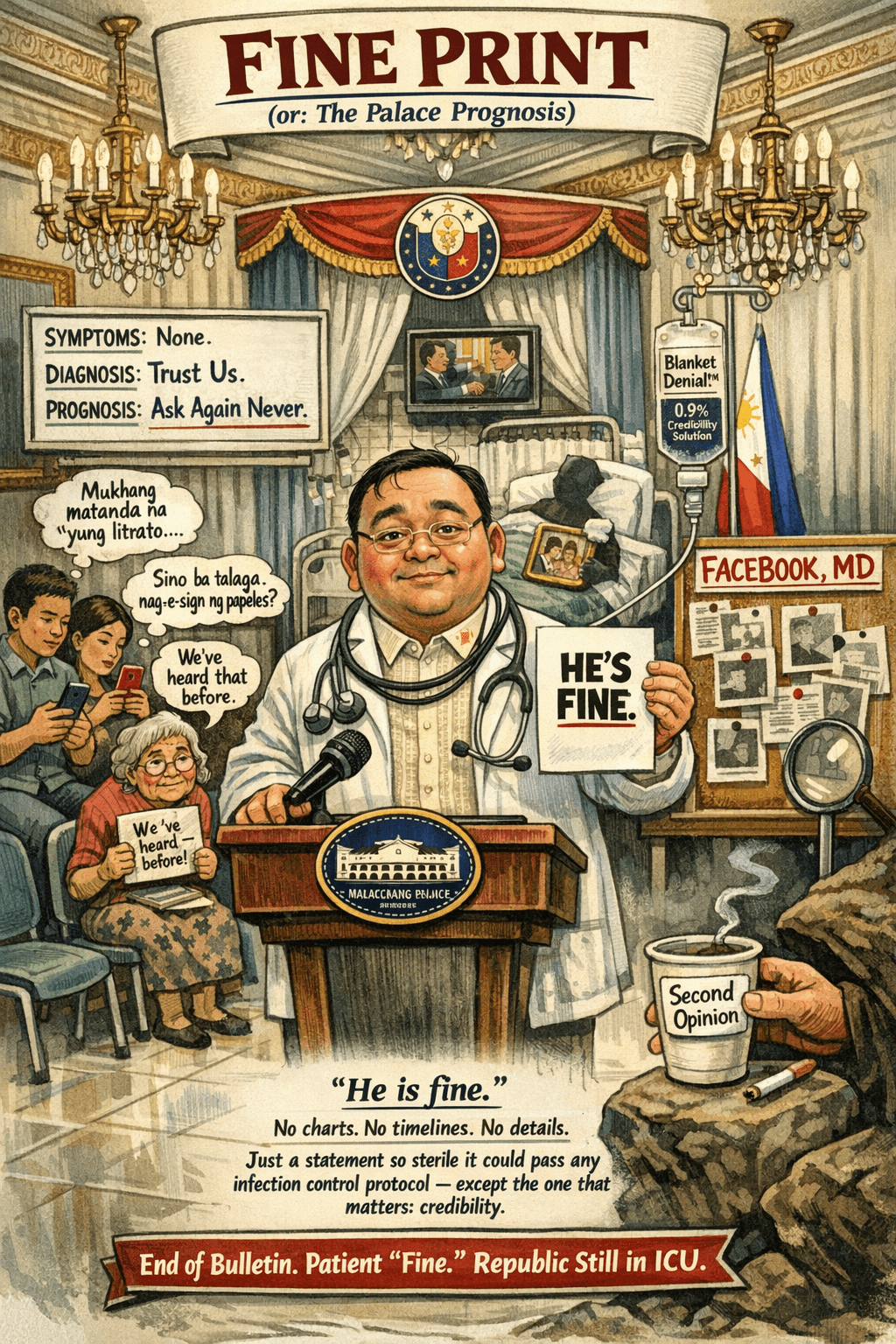
Marcos continues to sell “Unity,” but how can an administration be united when its president is net-negative in trust? The Palace’s defensive posture—“not a crisis, merely a warning”—is a refusal to face reality: the narrative of moral authority has collapsed.
Cabinet resignations, the confidential funds controversy, the ICC shadow over the Duterte family—all have become ammunition for an opposition operating from within the coalition itself.
Sara Duterte, meanwhile, is the primary beneficiary—and a masterfully calculated one. She is not personally implicated in the flood scandals, and her distance from executive responsibility has become a decisive advantage. She is the heir apparent who can now dictate terms—an asset that has become Marcos’s greatest liability, especially in the critical regions of Mindanao and the Visayas come 2028.
This rift is epic: two dynasties that were allies in 2022 now vie for legacy. Marcos pushes a pro-West, reformist image; Sara carries the shadow of her father—the ICC warrant, pro-China leanings, the tough-on-crime appeal. The intrigues—impeachment threats, budget wars, family feuds—are not mere rumors; they are symptoms of a coalition rotting from the inside.
The Future: 2028 Has Already Begun
If these trends hold, Sara Duterte is the undeniable frontrunner—the most electorally viable national figure based on trust and geography.
Possible scenarios include:
- Managed Succession — Marcos quietly accepts Sara as successor
- Competitive Coexistence — Parallel political machines while the coalition remains formally intact
- Soft Rupture — Strategic distancing that leads to policy paralysis
Elite loyalties will shift. Bureaucratic inertia may still prop up Marcos for a recovery—but it requires tangible wins: convictions in corruption cases, economic gains, visible reforms. So far, none are in sight.
Yet the true cost is not in 2028 ballots. It is in what is being sacrificed now: growing public cynicism, diversion from real crises—poverty, climate disasters, education, health.
Final Challenge
In the end, this is not about who wins this dynastic game. It is about us.
We must demand substance—genuine public service and nation-building not centered on family or personal legacy.
Based on the current calculus of trust and geography, Sara Duterte emerges as the most viable candidate for 2028. This is not an endorsement. It is a cold assessment of the political terrain revealed by this survey.
But the question we must leave with every reader:
In this endless cycle of rivalry, betrayal, and rehabilitation—who is truly serving the nation?
Or have we become trapped in a democracy that has become nothing more than a circus for a handful of families?
The future of the Philippines does not rest with Marcos or Duterte.
It rests with us—if we awaken and demand more.
- — Barok, still waiting for the “Bagong Pilipinas” that isn’t drowning in floodwater and excuses

 KWEBA ni BAROK
Leave a comment