
Appoint Your Own Investigators—Because Trust Is Overrated
By Louis ‘Barok‘ C. Biraogo — December 29, 2025
HMMN, the holidays. Families gather. Children laugh. And in the Philippines, the floods come—again.
Billions poured into “flood control,” yet Metro Manila drowns like clockwork. Ghost projects. Substandard dikes. A cozy club of contractors cornering contracts worth hundreds of billions. Who exposed this mess? None other than President Ferdinand Marcos Jr., in his grand State of the Nation spectacle.
Brave, right?
Until you watch the follow-through.
1. The Shell Game of Commissions: Now You See It, Now You Don’t
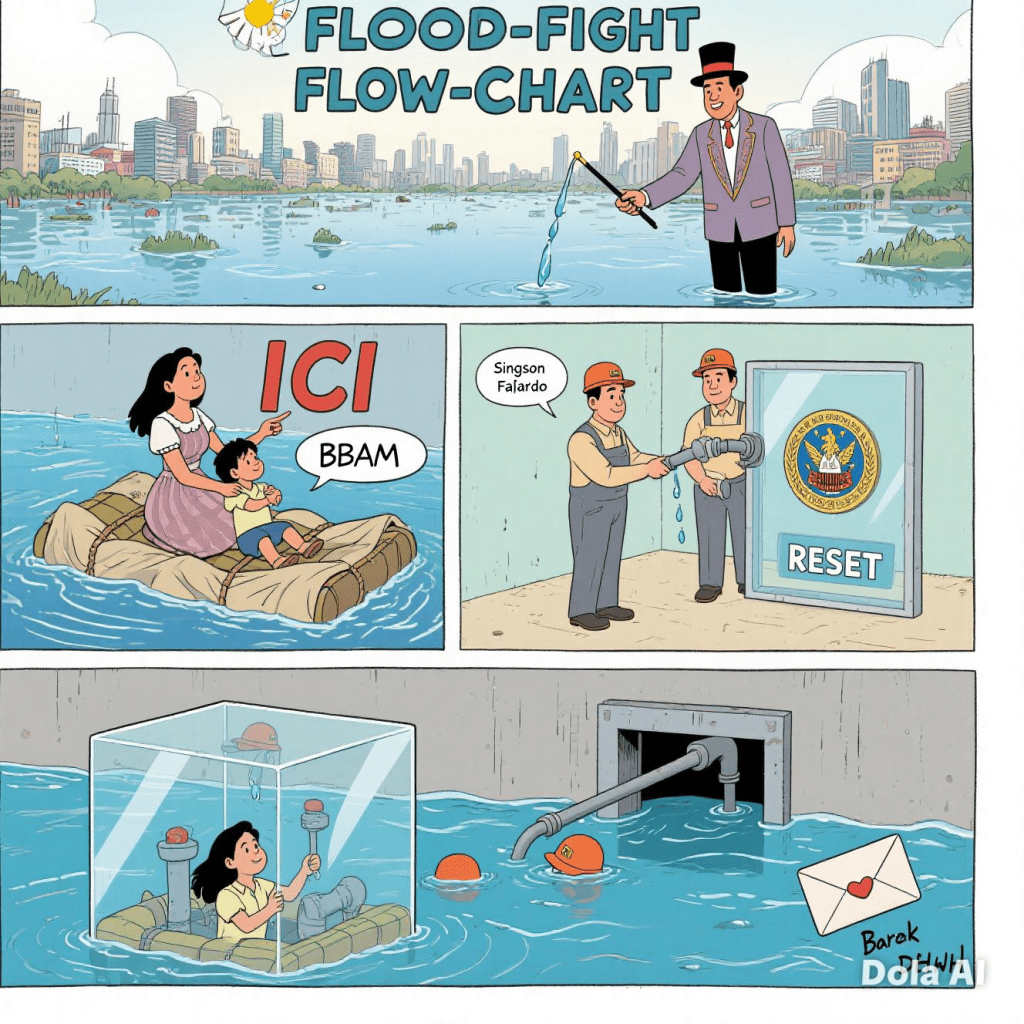
Remember the Independent Commission for Infrastructure (ICI)? Born in September via Executive Order 94. Hailed as the sword that would finally cut through a decade of infrastructure rot.
Three commissioners. One special adviser. Then—poof—two commissioners resign (former DPWH Secretary Rogelio Singson and SGV partner Rossana Fajardo). The adviser had already bolted earlier.
Malacañang’s response? A casual shrug.
They’ve “completed their tasks,” says Presidential Communications Secretary Dave Gomez. How terribly convenient.
Appointing replacements? Not a priority. No—the President’s focus is now rushing Senate Bill 1512 to create the Independent People’s Commission (IPC). A permanent body with real teeth: contempt powers, license cancellations, witness protection.
Sounds progressive.
Until you ask: Why abandon the ICI mid-probe?
Chairman Andres Reyes insists they’re wrapping up, handing recommendations to the Ombudsman. But lawmakers call it a “lost cause.” Akbayan Rep. Perci Cendaña labels the wind-down “one of the greatest tragedies”—no big names jailed, just promises evaporating into the humid air.
This isn’t reform. This is a classic shell game.
Shuffle the commissions. Reset the clock. Dilute the heat. The ICI was getting uncomfortable—prioritizing 80 projects tied to contractors Marcos himself flagged, validating hundreds of ghosts. Better to pivot to a shiny new IPC, where the serious investigation can start… sometime later.
Delay disguised as institutionalization. Brilliant misdirection—if you’re protecting someone.
2. The Central Conflict: Who Guards the Guardian?
At the scandal’s rotten core lies a glaring conflict of interest.
Critics whisper—sometimes shout—that Marcos himself, or his closest allies, are “persons of interest.” His cousin, former Speaker Martin Romualdez. Allies like fugitive ex-Rep. Zaldy Co, lobbing accusations from abroad. Projects that ballooned under this administration’s watch. Kickbacks alleged in the billions.
The arguments against Marcos are damning:
- He appoints the investigators.
- Even under the IPC bill, the President picks the members.
- If allies are implicated, he essentially chooses who probes them.
- Public trust? Polls show only about 32% believe he’ll resolve this.
The administration’s defense? Marcos initiated the probe. He exposed the rot in his SONA. Referred cases to the independent Ombudsman. The IPC adds civil society and private-sector checks. It’s a legislative process, open to debate.
Credible?
Hardly.
Creating a body you control to investigate scandals touching your circle isn’t impartiality—it’s sophisticated damage control.
The Ombudsman and Department of Justice already exist as constitutional watchdogs. Why invent another layer if not to muddy jurisdictional waters, overlap mandates, and slow the real hunt?
3. The “Big Fish” Diversion: Tough Talk, Minnow Catches
Marcos thundered: Suspects would spend “Christmas in jail.” No merry holidays for the corrupt. Dozens, he vowed in November. Many by December.
Reality check:
A few contractors—like Sarah Discaya—locked up. Lower-level DPWH engineers. Assets frozen. Cases filed against 100+, whispers of 1,200 potential charges.
But the big fish? Still swimming freely.
No high-profile politicians behind bars. Romualdez denies involvement and quietly steps aside. Co hides abroad, flinging grenades. The ICI wraps without delivering the promised feast.
The pivot to IPC? Perfect smokescreen.
Talk permanent powers while the temporary body fizzles. Protects the coalition. Buys time. Ensures any fracture comes too late—or never.
Who pays the real price?
The families wading through waist-deep water. Homes lost. Lives risked. While the elite play musical commissions.
4. Systemic Rot, Mock Reform: Enough Theater
This isn’t just about a few bad apples. It’s the entire barrel—rotten.
Weak institutions. An under-resourced, often politicized Ombudsman. A DOJ tangled in executive strings. Procurement laws riddled with loopholes big enough for floodwaters to rush through.
Creating yet another commission is, at best, an admission that existing ones have failed.
But without fixing the roots—stricter conflict-of-interest laws, genuine independence, zero presidential appointments in probes touching allies—it’s nothing but political theater.
We demand better. Now.
- Immediately and robustly implement the constitutional mandates of the Ombudsman and Department of Justice. Fund them. Free them. Let them bite.
- Enact genuine reforms: ironclad conflict-of-interest prohibitions, crystal-clear institutional boundaries, absolute transparency on every contract and audit.
- Choose systemic overhaul over endless layers of presidentially appointed commissions.
Citizens, rise.
Report if the platforms are real. Protest when they’re not. Demand accountability, not illusions.
Because while Malacañang shuffles shells, the waters rise.
And the Filipino people drown in betrayal.
In the end, this scandal isn’t about floods. It’s about governance adrift—promises hollow, trust eroded, impunity triumphant. Until we force real change, the big fish will keep feasting. And we will keep paying the bill.
Kung ang solusyon sa korapsyon ay bagong komisyon na appointee pa rin ng Palasyo, eh di wow. Salamat sa panibagong ilusyon, mga boss.
– Barok
Source:
- Flores, Helen. “Marcos Seeks Passage of Bill Creating Independent People’ Commission.” One News PH, 28 Dec. 2025. Accessed 29 Dec. 2025.
- “Forthwith” to Farce: How the Senate is Killing Impeachment—And Why Enrile’s Right (Even If You Can’t Trust Him)

- “HINDI AKO NAG-RESIGN!”

- “I’m calling you from my new Globe SIM. Send load!”

- “Mahiya Naman Kayo!” Marcos’ Anti-Corruption Vow Faces a Flood of Doubt

- “Meow, I’m calling you from my new Globe SIM!”

- “No Special Jail for Crooks!” Boying Remulla Slams VIP Perks for Flood Scammers

- “PLUNDER IS OVERRATED”? TRY AGAIN — IT’S A CALCULATED KILL SHOT

- “Several Lifetimes,” Said Fajardo — Translation: “I’m Not Spending Even One More Day on This Circus”

- “Shimenet”: The Term That Broke the Internet and the Budget

- “We Did Not Yield”: Marcos’s Stand and the Soul of Filipino Sovereignty

- “We Gather Light to Scatter”: A Tribute to Edgardo Bautista Espiritu

- $150M for Kaufman to Spin a Sinking Narrative





 KWEBA ni BAROK
Leave a comment