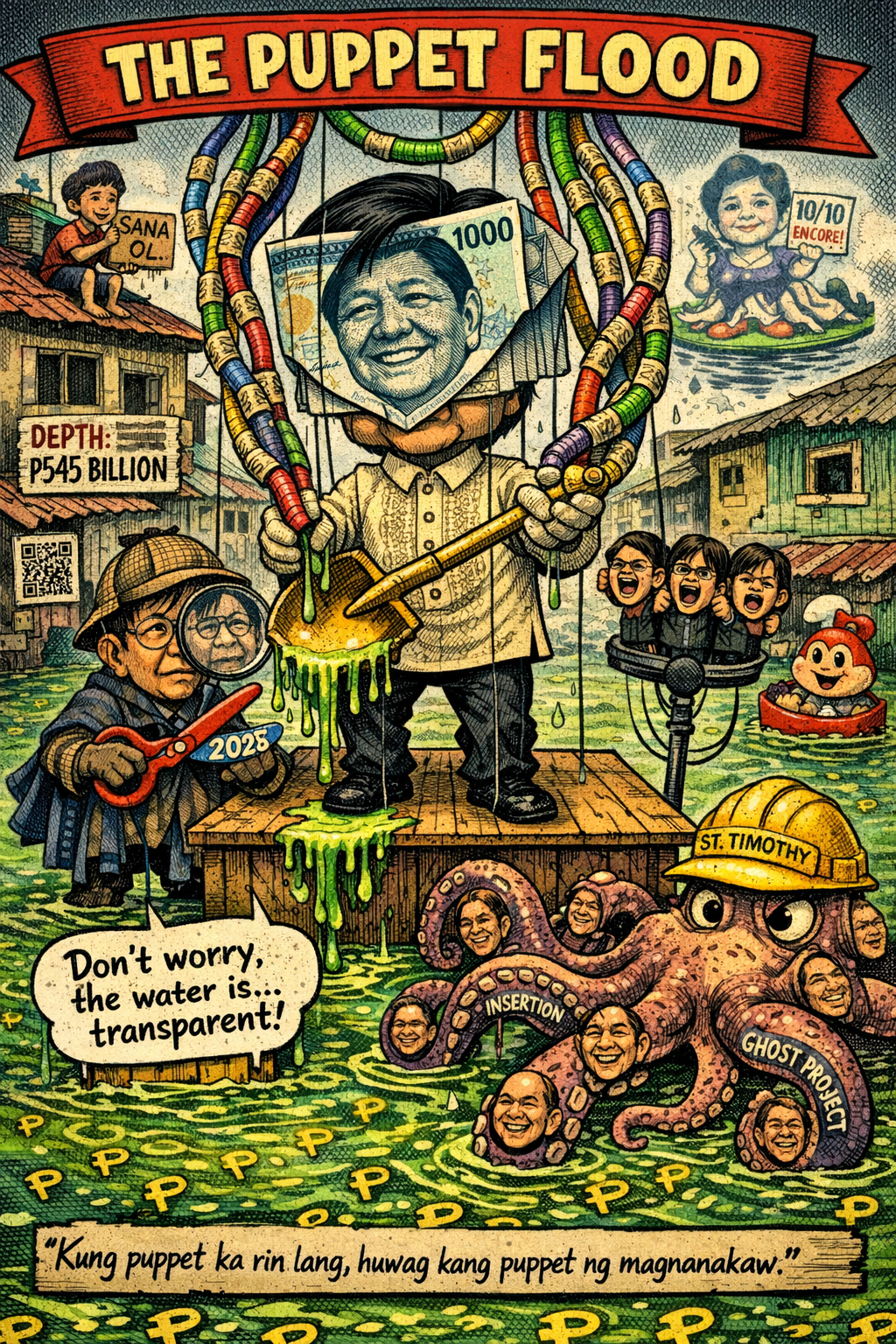
Corruption’s Curtain Call: Will Ping Pull the Strings or Join the Puppet Parade?
By Louis ‘Barok‘ C. Biraogo — January 6, 2026
IN THE shadowed corridors of Malacañang, where the ghosts of dictators past whisper warnings to their heirs, a new act in the Philippines’ endless tragedy unfolds. President Ferdinand Marcos Jr., the son who promised to bury the sins of his father, now finds himself cast as both hero and suspect in a corruption saga that has drowned billions in flood control funds while leaving communities to drown in actual floods. It’s a plot twist worthy of a Manila noir thriller: the man who unveiled the rot now stands accused of nurturing it. As the Makabayan bloc fires its salvo, urging Senator Panfilo “Ping” Lacson to drag the president into the Senate’s Blue Ribbon spotlight, we must peel back the layers of this farce—not with the gentle touch of a diplomat, but with the scalpel of truth, exposing the pulsating corruption beneath. For in a nation where typhoons rage and politicians pilfer, the real storm is the betrayal of the people, and the suspense lies in whether accountability will ever break through the deluge of denials.
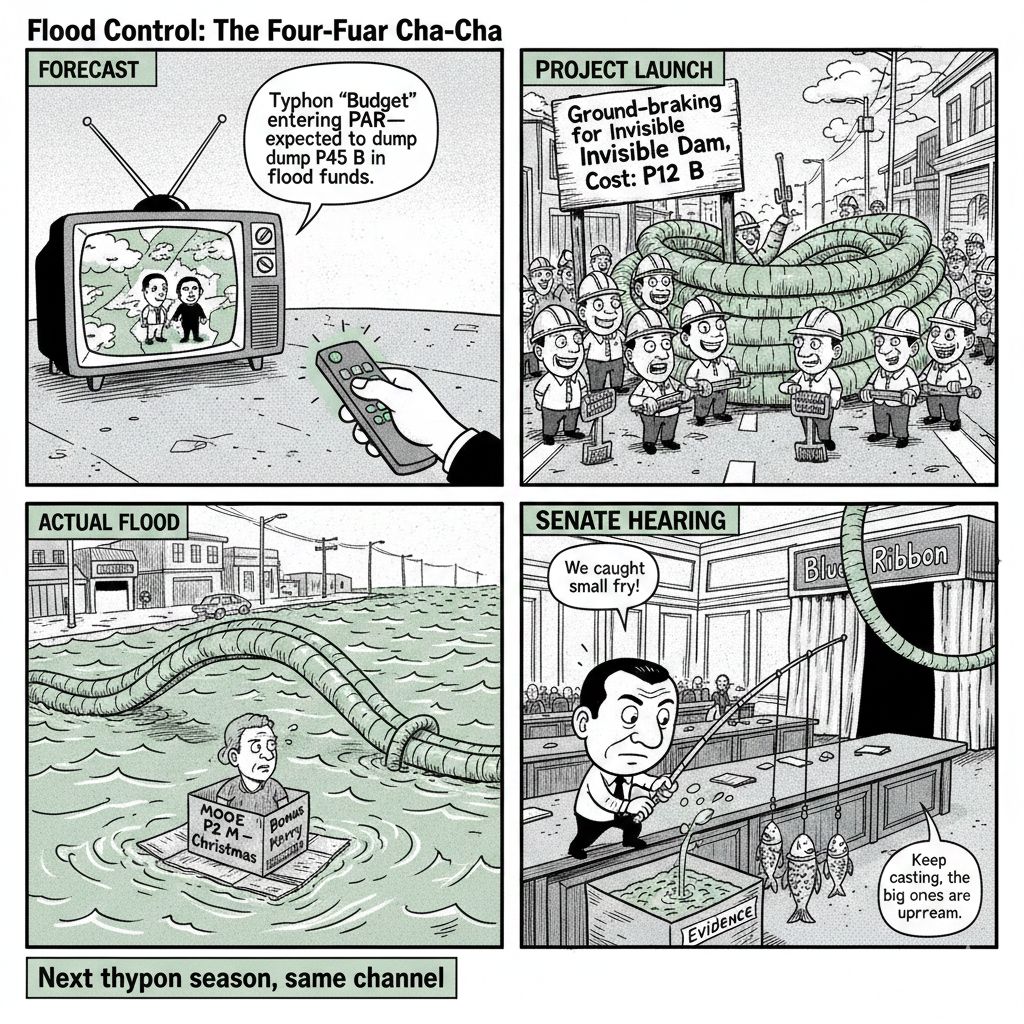
The Cast and Their Motives: Heroes, Villains, or Mere Opportunists?
- The Makabayan Bloc: That perennial chorus of dissent from the House’s leftist fringes—ACT Teachers’ Antonio Tinio, Gabriela’s Sarah Jane Elago, and Kabataan’s Renee Louise Co. Their January 4 call to probe Marcos isn’t just a press release; it’s a gauntlet thrown at the feet of power, demanding that the president not be “shielded from scrutiny” or “prematurely absolved” in the flood control bribery scheme. On the surface, it’s a principled stand: after all, why stop at mid-level DPWH officials when the scandal’s tentacles reach toward budget insertions approved under Marcos’ watch, potentially benefiting allies like former Ako Bicol Rep. Zaldy Co? But peel deeper, and the timing reeks of calculation. This bloc, ever the opposition’s firebrands, has historically railed against the Marcos regime, and with 2028 elections looming like a gathering cyclone, their demand feels less like a quest for justice and more like a bid to inflame public outrage. Is it valid? Absolutely, given the P545 billion poured into flood projects since 2022, only to yield ghost dams and substandard dikes that failed spectacularly in typhoons. Yet it’s suspiciously selective, amplifying whispers of high-level complicity without the sworn evidence that could turn rhetoric into reckoning. In this thriller, they’re the agitators stirring the pot, but one wonders if they’re cooking up reform or just another round of partisan theater.
- Senator Panfilo “Ping” Lacson: The grizzled investigator with a reputation as the nation’s stubborn gadfly, now chairing the Blue Ribbon Committee. His Friday vow to “step up his campaign” against corruption in 2026 sounds like the clarion call of a crusader, especially after ratifying a budget riddled with opacity. Lacson has commended whistleblowers like Batangas Rep. Leandro Leviste for resisting bribes and exposed how only 40% of flood funds actually build anything. But contrast this fiery rhetoric with the committee’s plodding pace: hearings dragged through 2025, netting arrests of “small fry” like contractors and lower officials, yet no decisive blows against the “big fish.” Is Lacson the cautious institutionalist, insisting on “evidentiary standards” to avoid witch hunts, or a potential 2028 presidential aspirant burnishing his anti-graft badge while shielding the powerful with procedural shields? His walkouts and probes have history, but critics whisper that his focus on formalities dilutes momentum, turning what could be a purge into a pageant. In this drama, Ping is the detective who promises to crack the case, but we’re left suspensefully wondering if he’ll follow the clues all the way to the palace gates—or conveniently lose the trail.
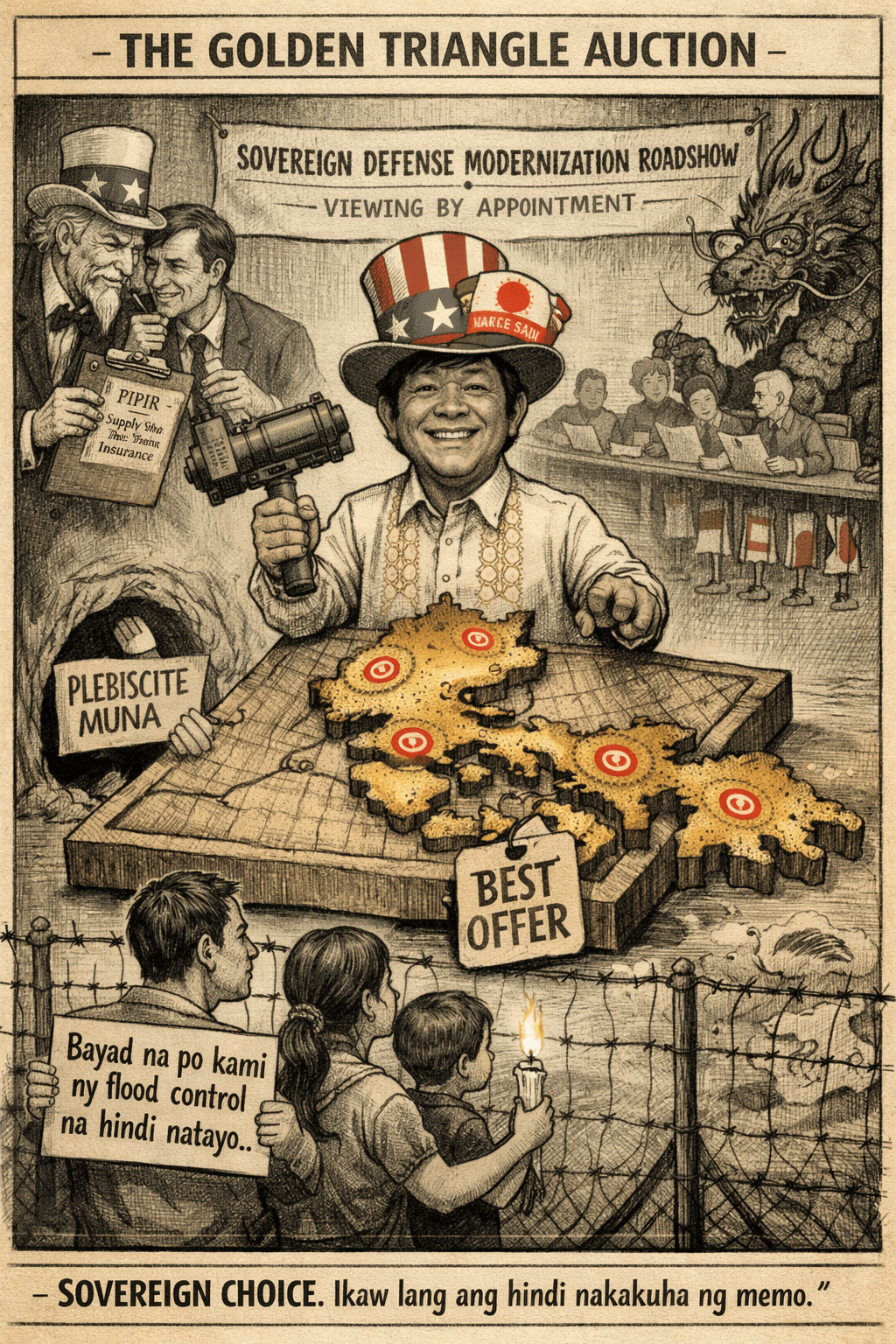
- President Ferdinand Marcos Jr.: The protagonist-antagonist himself: the architect of exposure who now risks being ensnared by his own revelations. In his 2025 SONA, he dramatically unveiled the anomalies, vowing jail time and freezing P6.3 billion in assets. It’s a paradox straight out of irony’s playbook: the man who created the Independent Commission for Infrastructure (ICI) to probe the mess now faces calls to be investigated by it—or worse, by Lacson’s committee. Can the exposer be the culprit? Defenders argue it’s absurd; why blow the whistle on your own scheme? Yet the rot he uncovered—P100 billion funneled to just 15 contractors, many linked to political dynasties—bloomed under his administration, with budget insertions ballooning to P722 billion in 2025. His presidency, meant to redeem the family name, is now defined by this scandal, a satirical echo of his father’s plunderous legacy. Marcos insists on cooperation, but the human cost—floods ravaging indigent communities because funds vanished into kickbacks—demands we interrogate: is he the reformer, or the inheritor of a tainted throne?
The Systemic Cancer: Not Flaws, But Features of the Beast
This isn’t just about flawed individuals; it’s the system itself, a ravenous machine engineered for opacity and theft.
- The Opaque Machine: Consider what Rep. Toby Tiangco decries: DPWH allocations per district remain hidden despite his October requests, even as the 2026 budget sails through ratification. Why the secrecy? Because transparency would reveal the lifecycle of a “ghost project”—funds budgeted, inserted post-approval, then siphoned via contractor cartels, leaving phantom infrastructure that crumbles or never exists. Add the shadowy MOOE “bonuses”—P2 million Christmas funds, P1.5 million for All Saints’ and Easter—denied until exposed, a system dating back to 2010 that funnels cash to lawmakers while they decry corruption. It’s satirical genius: politicians feigning outrage over stolen billions while pocketing holiday perks, all while indigent patients face “massive bills” without aid, as former Rep. Bernadette Herrera warns about the Maifip program’s pitfalls.
- The Corruption Playbook: Budget insertions grease the wheels for contractor cartels like St. Timothy Construction, linked to political dynasties and kickbacks up to 40%. Bribery attempts, like the one on Leviste, connect the dots to a governance feature where dynasties thrive, misallocating funds to non-flood areas while typhoon victims suffer.
- The Theatre of Accountability: The Senate Blue Ribbon, Palace-created ICI, and proposed Icaic are props in a farce: overlapping probes diffuse blame, with the ICI criticized for executive influence despite its forensic focus. Are they solutions or distractions, tools for factional warfare that let the cancer metastasize while pretending to cure it?
The Rumor Mill & Shadow Narratives: Whispers That Could Become Roars
No Philippine scandal is complete without the intrigue, and this one’s rumor mill churns like a flooded river.
- Whispers link Marcos to campaign finance from implicated contractors, totaling tens of millions in 2022, and family ties via cousin Martin Romualdez, whom the ICI eyed for indictment.
- Zaldy Co’s 2025 accusations—P100 billion insertions, cash deliveries to Malacañang—paint a damning picture, but they’re unsworn deflections from a fugitive facing arrest.
- Credible threads? The dynastic web and budget opacity demand scrutiny, but much feels like smear campaigns amid the Duterte-Marcos rivalry: VP Sara’s allies entangled, whispers of impeachment fueling a power struggle that could erupt into 2028 chaos.
- Separate the sludge: tax evasion by contractors (P8.86 billion) and bid rigging are substantiated horrors, but Marcos’ direct links remain shadowy—plausible enough to probe, urgent enough to outrage if ignored.
Possible Endings & Consequences: From Redemption to Ruin
- Best-Case (Genuine Accountability & Reform): Solid evidence leads to prosecutions reaching Marcos if warranted, spawning reforms like empowered anti-graft bodies and dismantled insertions. But forces arrayed against it—political dynasties, procedural delays, public fatigue—stand like levees holding back the flood.
- Most Likely (Mid-Level Scapegoats & Faded Interest): “Small fry” jailed, a political settlement quiets the storm, leaving the system intact as Marcos’ ratings plummet and distrust festers.
- Dire Consequences of Inaction: Public trust erodes like a breached dike, disaster resilience crumbles amid unchecked floods, and the 2028 elections lose legitimacy, birthing cynicism or unrest—echoing the protests of 50,000 in 2025, a prelude to revolution if the rot endures.
Enough of this farce. I demand an uncompromising investigation that follows the evidence wherever it leads—even to the Oval Office if it points there. Release all DPWH district allocations and MOOE details immediately, no more hiding behind “review” excuses. And for God’s sake, implement real fixes: empower truly independent anti-graft commissions with subpoena teeth, pass a robust Freedom of Information law to floodlight the shadows, and abolish the budget insertion regime that turns Congress into a cartel bazaar. The Filipino people, battered by storms both natural and man-made, deserve no less than this moral reckoning—before the next typhoon washes away what’s left of our faith in governance.

 KWEBA ni BAROK
Leave a comment