No More “Approved Supplier” Sweetheart Deals: Jonvic Declares War on the Fire Profiteers
By Louis ‘Barok‘ C. Biraogo — January 12, 2026
The Blazing Scandal: A Play-by-Play of the Rip-Off
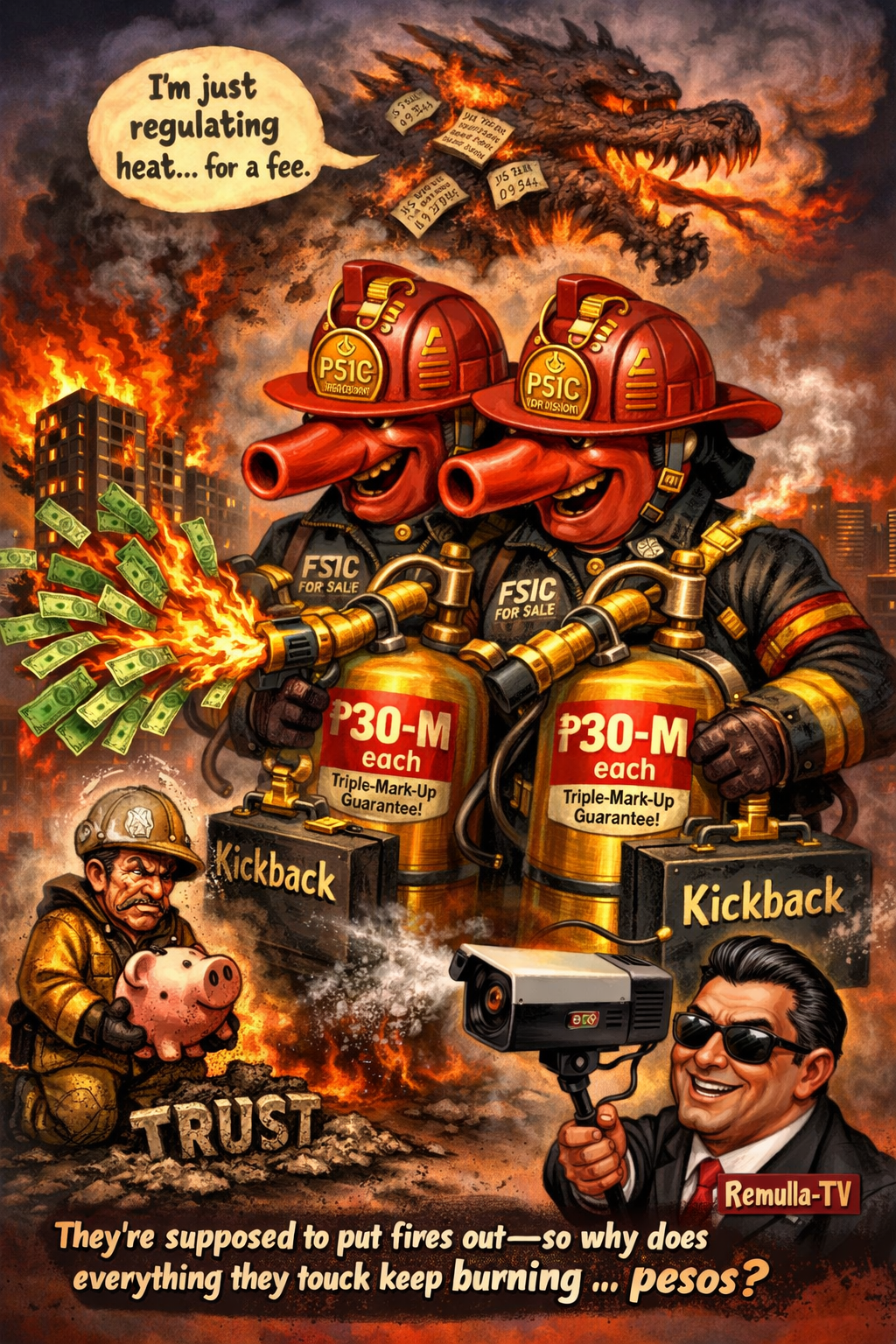
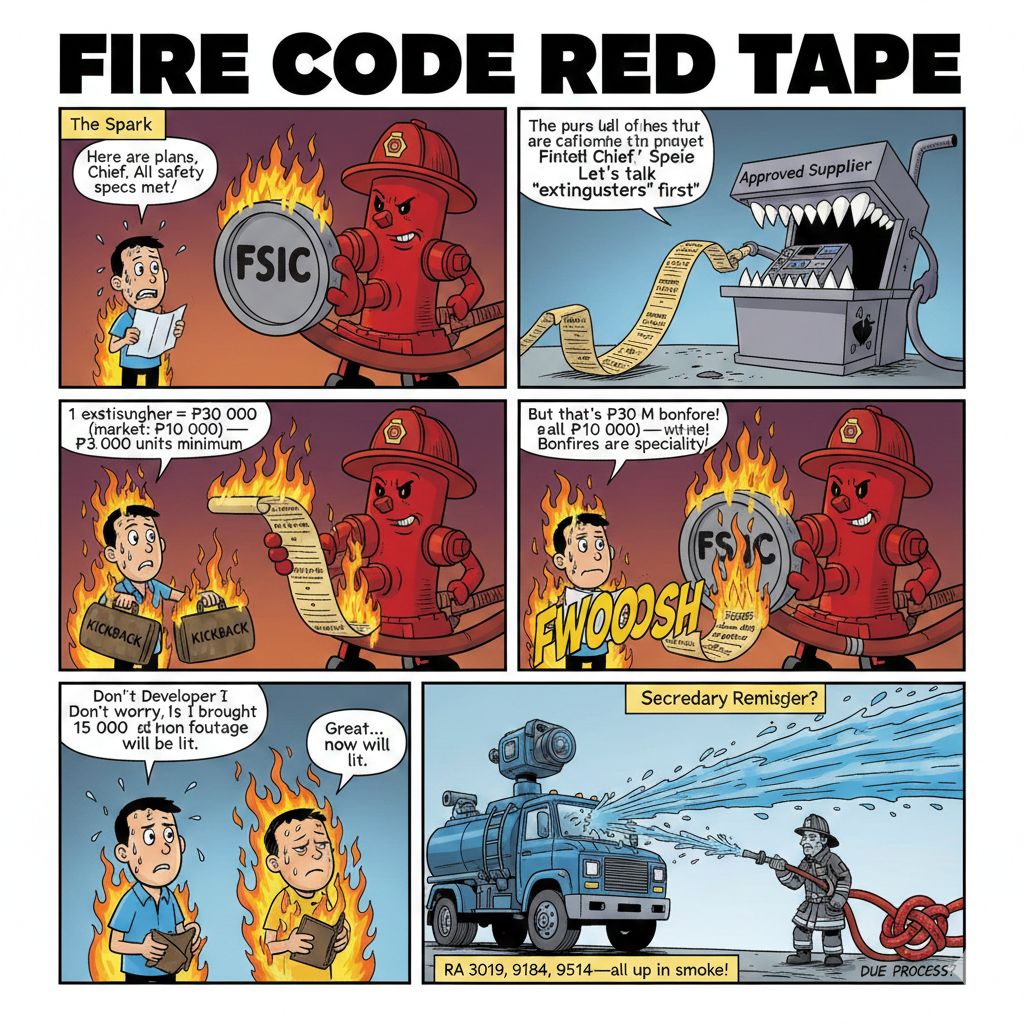
Picture this: a shiny new condominium rises in the metro, needing fire extinguishers to keep the illusion of safety alive. Enter the Bureau of Fire Protection (BFP), the very agency sworn to prevent infernos, allegedly turning the whole thing into a P30-million bonfire of public funds and private pockets. According to DILG Secretary Jonvic Remulla, two senior officials from the BFP’s National Capital Region office and the Quezon City fire district got the boot for their starring roles in this anomalous procurement deal. The extinguishers? Reportedly jacked up to triple the real market price—because why sell safety when you can sell a racket?
But hold on, that’s not all. This isn’t some one-off “oops” in the paperwork. Remulla himself calls out the BFP as the DILG’s most corrupt attached agency: inspectors strong-arming business owners into buying overpriced extinguishers, forcing them to hire pet contractors for sprinklers, all in exchange for that precious Fire Safety Inspection Certificate (FSIC). It’s the classic protection racket, just wearing red helmets instead of fedoras. What should be about saving lives has become a systematic shakedown where the only thing getting extinguished is the public’s trust—and wallets.
The Legal Inferno: Statutes Up in Smoke
Let’s torch the legal excuses one by one.
- Kickbacks and Commissions — Straight-up violations of the Anti-Graft and Corrupt Practices Act (Republic Act No. 3019), especially Section 3(e) for causing undue injury through gross negligence or manifest partiality, and Section 3(g) for grossly disadvantageous government contracts. When officials pocket commissions from forced contractor hires or overpriced sales, they’re not just greedy—they’re felons.
- Overpriced and Anomalous Procurement — The Government Procurement Reform Act (Republic Act No. 9184) demands competitive bidding and fair pricing. Padding a P30-million deal with 300% markups? That’s not negotiation; that’s plunder disguised as paperwork. The contract becomes voidable, and the officials liable for everything from administrative sanctions to criminal malversation.
- Extortion and “Forced” Hiring — This spits on the Ease of Doing Business and Efficient Government Service Delivery Act (Republic Act No. 11032), which bans red-tape shenanigans and unnecessary hurdles. Conditioning an FSIC on buying from “preferred” suppliers is textbook extortion. Add the Code of Conduct and Ethical Standards for Public Officials (Republic Act No. 6713),—no conflicts of interest, no soliciting gifts—and you’ve got ethical ashes.
- Compromised Safety Standards — The crown jewel of irony: the Philippine Fire Code (Republic Act No. 9514) exists to enforce real safety, not to turn inspectors into sales reps for substandard or overpriced gear. When businesses buy junk just to pass inspection, the next fire won’t just burn buildings—it’ll burn lives, all because the agency meant to prevent it was too busy profiting.
The Remulla Gambit: Reformer or Showman?
Credit where it’s due: Secretary Remulla isn’t hiding behind memos. He publicly axed two officials, called out the rot on national TV, and pushed for 15,000 body-worn cameras to record every inspection. That’s decisive. That’s bold. In a country where scandals usually die in committee, this looks like actual fire under the bureaucrats’ seats. If the cameras work (and aren’t just expensive paperweights), they could finally end the “he-said-she-said” extortion games.
But let’s not canonize the man just yet. Naming the agency “the most corrupt” without receipts feels like grandstanding—especially when the dismissed officials remain unnamed. Due process? The Constitution still applies, even to alleged crooks. Public condemnations before full investigation risk turning justice into theater. Is this genuine cleanup, or a well-timed distraction from bigger DILG headaches? The jury’s out—literally.
Pathways to Justice (or Impunity)
The road to accountability has multiple lanes:
- Criminal Prosecution — The Ombudsman takes the wheel, probing for probable cause under Republic Act No. 3019, bribery (Revised Penal Code), or estafa. If sufficient evidence exists
(procurement docs, bank trails, witnesses), cases land in the Sandiganbayan. Real prison time and perpetual disqualification await the guilty. - Administrative Sanctions — The DILG or Civil Service Commission can slap on preventive suspension, then dismissal for grave misconduct. But if dismissals came too fast without hearings, expect certiorari petitions flying.
- Civil Action — The government can claw back ill-gotten gains via forfeiture. Affected businesses (or that condo developer) could sue for damages. Imagine: the extortion victim becoming the plaintiff who bankrupts the extortionist.
If these paths get blocked by politics or “palakasan,” impunity wins—and the next scandal is just a spark away.
Systemic Arson: Why This Fire Won’t Die on Its Own
This isn’t about two bad apples in red uniforms; it’s about a whole orchard wired for arson. The BFP’s power over FSICs isn’t regulation—it’s leverage. Delay a permit long enough, whisper about “requirements,” and suddenly businesses are lining up to buy triple-priced extinguishers from “approved” suppliers. It’s pay-to-play at its most lethal: safety becomes a commodity, lives become collateral.
Honest firefighters risk their necks daily, yet the system rewards the hustlers. Substandard gear gets rubber-stamped, real hazards ignored, all so someone can afford that new SUV. This isn’t corruption; it’s institutionalized betrayal of the public whose taxes pay for those red trucks.
The Call to Action: Demanding More Than a Press Conference
Secretary Remulla, cameras are cute, but they won’t fix a rotten culture. We need more than viral soundbites.
- Immediate: Hand the probe fully to the Ombudsman—transparent, independent, with public updates. No more “trust me, bro” announcements.
- Institutional: Digitize every FSIC application end-to-end. No human middlemen, no discretion for shakedowns. Mandate public, real-time price benchmarking for all fire equipment. Enforce ironclad whistleblower protections so honest insiders aren’t silenced.
- Cultural: Overhaul BFP training from “how to collect” to “how to protect.” Tie incentives to lives saved, not permits issued. Make integrity the only currency that matters.
Until then, every overpriced extinguisher, every forced contract, every delayed permit is a lit match in the hands of those sworn to put fires out. The real blaze isn’t in some condo—it’s in Malacañang’s attached agencies, burning the Filipino people’s right to safety.
Time to stop fanning the flames and start putting them out. For good.
- — Barok, torch in hand, deep in the kweba: where the corrupt break into a sweat and the truth refuses to be put out.
Key Citations
A. Legal & Official Sources
- Philippines. Republic Act No. 3019: Anti-Graft and Corrupt Practices Act. Official Gazette, 17 Aug. 1960.
- Philippines. Republic Act No. 9184: Government Procurement Reform Act. Official Gazette, 10 Jan. 2003.
- Philippines. Republic Act No. 11032: Ease of Doing Business and Efficient Government Service Delivery Act of 2018. The Lawphil Project, 28 May 2018.
- Philippines. Republic Act No. 9514: Revised Fire Code of the Philippines of 2008. Official Gazette, 19 Dec. 2008.
- Philippines. Republic Act No. 6713: Code of Conduct and Ethical Standards for Public Officials and Employees. Official Gazette, 20 Feb. 1989.
- Philippines. Act No. 3815: The Revised Penal Code. Official Gazette, 8 Dec. 1930.

 KWEBA ni BAROK
Leave a comment