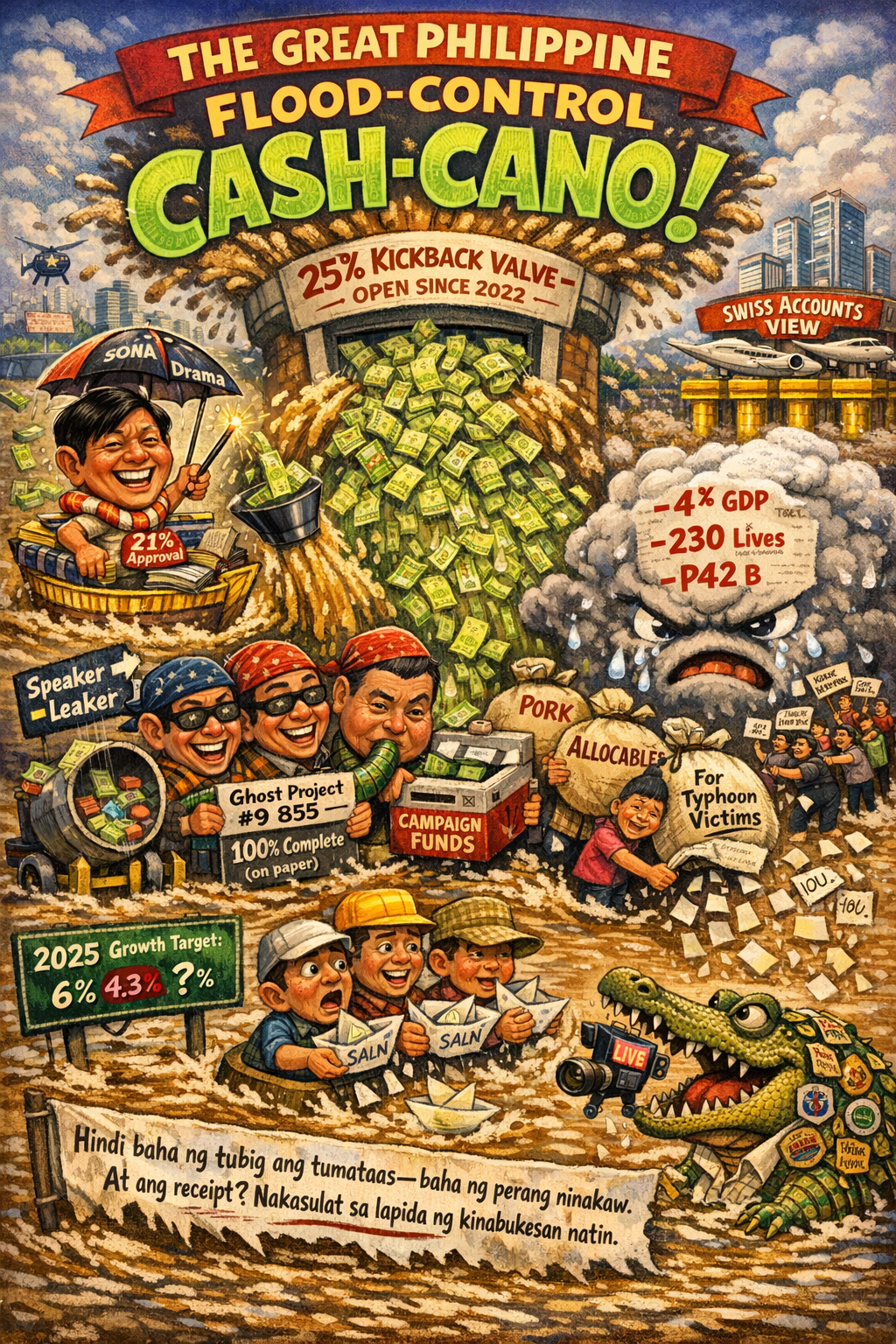
25% Kickbacks: The Only Percentage That Actually Grew in 2025
By Louis ‘Barok‘ C. Biraogo — January 28, 2025
IF AN economy is a testament to a nation’s priorities, then the Philippines’ missed growth target for 2025 is less a technical failure and more a stolen receipt—evidence of billions pilfered from the public till, leaving the country poorer, angrier, and dangerously exposed.
The numbers are now impossible to ignore. Economists, from the Philippine National Bank to Moody’s Analytics, converge on the same grim verdict: full-year 2025 growth likely landed between 4.5% and 5.1%, well below the government’s own 5.5–6.5% target and a clear step down from 2024’s 5.7%. The third quarter crawled at 4.0%—a four-year low—and the fourth quarter is projected to have limped in at 3.2–5.3%. Department of Economy, Planning and Development Secretary Arsenio Balisacan himself conceded the miss, estimating 4.8–5%. This is not a statistical hiccup. This is the sound of a growth engine deliberately sabotaged from within.
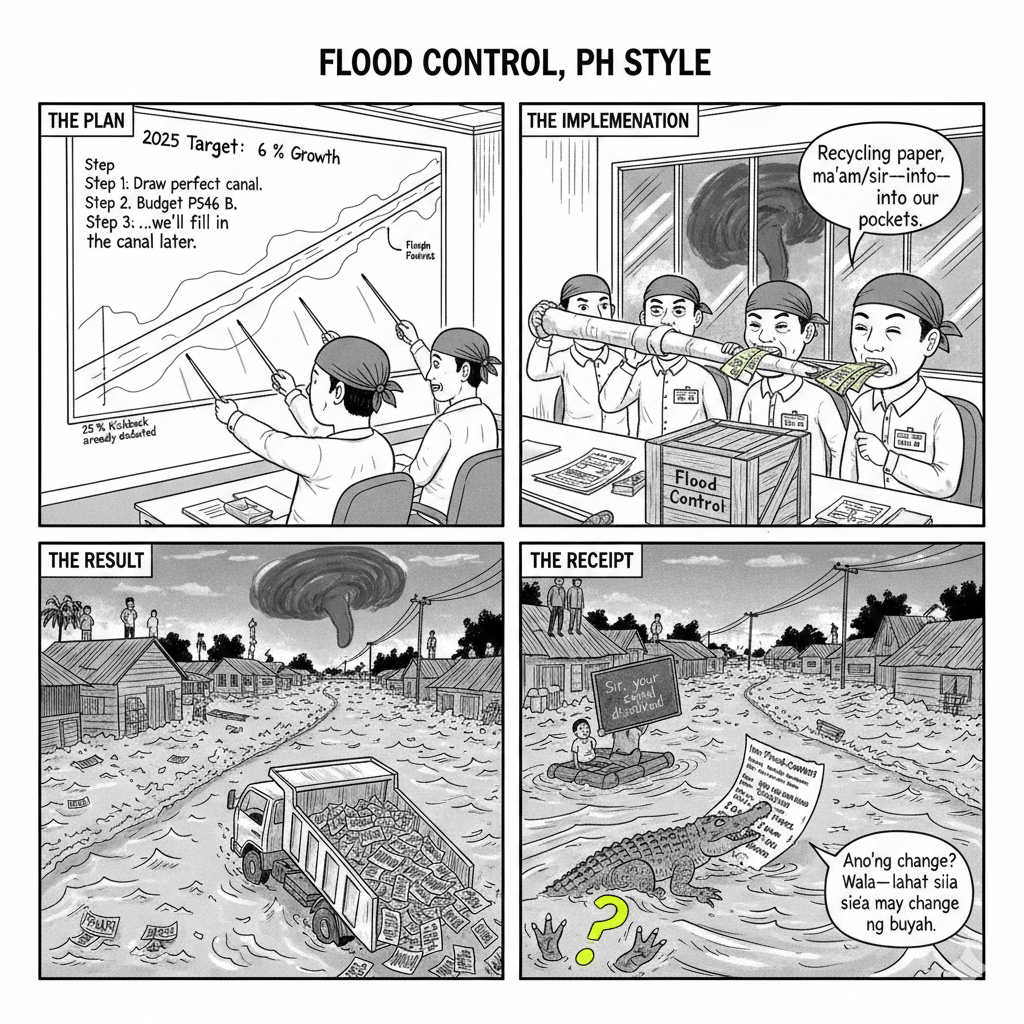
The Anatomy of a Plunder
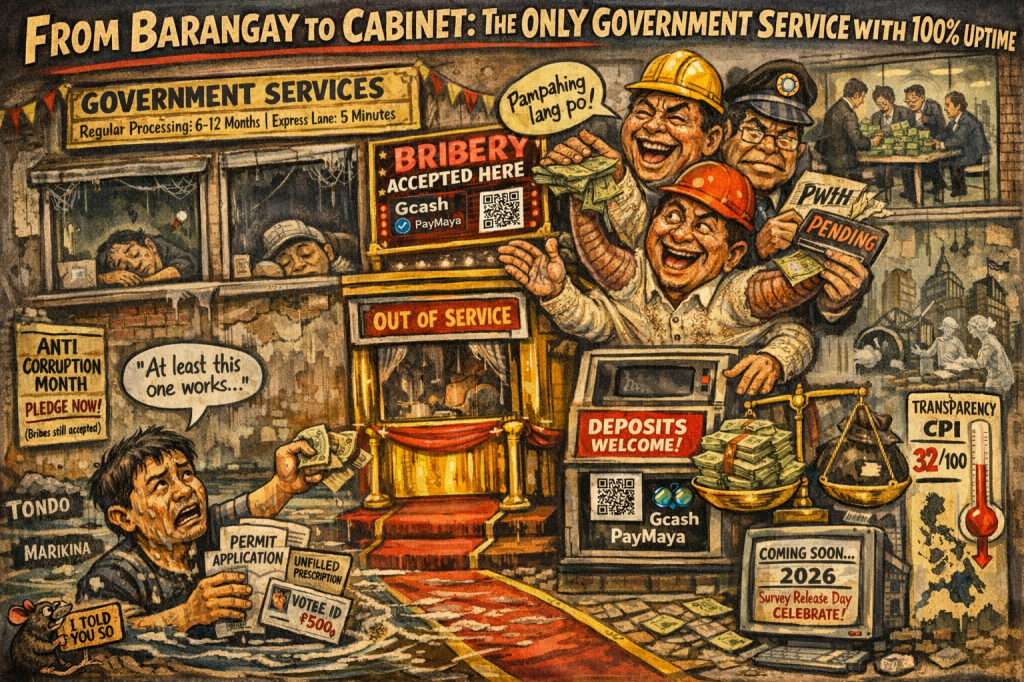
What the headlines politely call “flood control irregularities” is, in plain language, one of the most brazen, systematic heists in recent memory. Since 2022, the government rolled out 9,855 flood control projects worth roughly P546 billion. A staggering portion of that money—estimates suggest annual losses of P42.3–118.5 billion since 2023—vanished into thin air or into the pockets of the connected. Audits and Senate inquiries laid bare the playbook: ghost projects that existed only on paper, substandard materials that crumbled at the first rain, costs inflated beyond reason, and kickbacks routinely pegged at 25% per contract. The collusion was almost elegant in its shamelessness: lawmakers doubling as contractors, DPWH engineers signing off on fiction, private firms funneling campaign donations back to their political patrons. It was less infrastructure development and more a masterclass in cynical entrepreneurship—disaster turned into a profit center.
The Senate hearings and engineer testimonies peeled back the curtain on a machine that had been running for years. Procurement rules weakened since 2015, whistleblowers threatened, transparency rolled back. And when the typhoon season arrived—most brutally with Kalmaegi in November 2025, which claimed over 230 lives—the consequences were no longer abstract. Projects worth billions that were supposed to protect communities instead failed spectacularly. In Cebu alone, P26 billion in implicated spending coincided with deadly flooding. The funds meant to build dams and drainage systems built yachts, mansions, and political war chests instead.
The Ripple Effect of Greed
The economic carnage was immediate and predictable. Public construction, a traditional engine of growth, contracted sharply as projects were frozen under scrutiny or simply abandoned. Infrastructure spending—a key component of GDP’s government expenditure leg—plummeted, dragging the entire growth figure down. Economists are explicit: the scandal shaved points off GDP directly through reduced disbursements and indirectly through the collapse in business and consumer confidence. The stock index fell about 12% year-to-date in 2025, the peso weakened, foreign direct investment hesitated, and households deferred big purchases. When the people who are supposed to protect you are caught looting the very money meant to protect you from floods, trust evaporates. And in a consumption-driven economy, evaporated trust means evaporated spending.
Then came the typhoons—Kalmaegi and others—whose damage was magnified precisely because the money to mitigate them had been stolen. Agriculture was battered, infrastructure work halted, households stayed home rather than spend. The result: a vicious cycle where corruption begets disaster, disaster begets fear, and fear begets stagnation.
The Palace & The Powder Keg
At the center of this storm sits Malacañang, where the occupant inherited a rotten system and now watches it detonate on his watch. President Marcos Jr.’s approval rating cratered to 21% by November 2025. His cousin Ferdinand Martin Romualdez resigned as House Speaker amid the fallout. Impeachment proceedings have begun in the House, charging betrayal of public trust and facilitation of corruption. Protests swell. Youth are in the streets. And the Palace’s response oscillates between theatrical outrage and thinly veiled damage control.
The President’s July 2025 SONA revelation of the “money-making schemes” was dramatic, but the follow-through has been selective: asset freezes totaling about P12 billion, blacklisting of contractors, DOJ complaints. Yet critics see a cover-up dressed as a crackdown—selective prosecutions that spare the most powerful, restricted access to Statements of Assets, Liabilities, and Net Worth, and the continued flaunting of ill-gotten wealth on social media. The options are stark: genuine reform or political survival theater. Restart spending on vetted projects? Tighten procurement? Launch an independent commission? Or simply wait for the news cycle to pass and hope the next typhoon season is kinder? History suggests the latter is the path of least resistance—and the path of greatest long-term damage.
The Human Cost
Step away from the graphs and look at the people. Every percentage point of missed growth translates to jobs not created, wages not raised, children not sent to better schools. Construction workers idle, suppliers bankrupt, small businesses starved of contracts. Poverty rates—already stubbornly high, with self-rated poverty hovering near 50%—remain stubbornly high because the engine that lifts people out of it has been gutted. And the most cruel irony: the very communities most vulnerable to climate shocks are the ones left defenseless because their flood control budgets were diverted to private jets and Swiss accounts. When the next storm comes—and it will—the body count will be higher, the damage more severe, and the grief more profound, all because someone decided public funds were better spent on patronage than on people.
The Indictment & The Imperative
This is not merely a missed GDP target. This is a moral indictment of a political class that treats the public treasury as a personal ATM and the Filipino people as collateral damage. The evidence is overwhelming: billions stolen, growth gutted, lives lost, trust shattered. The question is no longer whether corruption happened—it is whether we will allow it to continue defining our future.
The time for half-measures and photo-op accountability is over. We need prosecutions that reach the powerful, not just the expendable middlemen. We need procurement laws restored and strengthened, transparency returned to the SALN process, and independent oversight bodies with real teeth. Above all, we need a new covenant of public service: one that places the safety of communities above the comfort of dynasties, the future of the nation above the profits of the connected.
The Philippines is not condemned to be a country where the rich get richer and the rest get flooded. But breaking that cycle requires more than outrage—it requires courage. The kind of courage that prosecutes thieves in high places, rebuilds trust brick by brick, and finally puts the people first.
Anything less is simply another receipt for plunder.
— Barok,
scribbling from the Kweba,
where the truth refuses to be laundered and the looters still drip with guilt.
Source:
- ₱75 Million Heist: Cops Gone Full Bandit

- ₱6.7-Trillion Temptation: The Great Pork Zombie Revival and the “Collegial” Vote-Buying Circus

- ₱1.9 Billion for 382 Units and a Rooftop Pool: Poverty Solved, Next Problem Please

- ₱1.35 Trillion for Education: Bigger Budget, Same Old Thieves’ Banquet
- ₱1 Billion Congressional Seat? Sorry, Sold Out Na Raw — Si Bello Raw Ang Hindi Bumili

- “We Will Take Care of It”: Bersamin’s P52-Billion Love Letter to Corruption
- “Skewed Narrative”? More Like Skewered Taxpayers!

- “Scared to Sign Vouchers” Is Now Official GDP Policy – Welcome to the Philippines’ Permanent Paralysis Economy
- “Robbed by Restitution?” Curlee Discaya’s Tears Over Returning What He Never Earned
- “My Brother the President Is a Junkie”: A Marcos Family Reunion Special

- “Mapipilitan Akong Gawing Zero”: The Day Senator Rodante Marcoleta Confessed to Perjury on National Television and Thought We’d Clap for the Creativity
- “Bend the Law”? Cute. Marcoleta Just Bent the Constitution into a Pretzel

 KWEBA ni BAROK
Leave a comment