Mining Permits Approved, Rivers Silted, Now It’s “Unacceptable” in 2026
By Louis ‘Barok’ C Biraogo — March 21, 2026
MGA ka-kweba, ladies and gentlemen of the thirsty Republic, grab your empty buckets and your sense of irony.
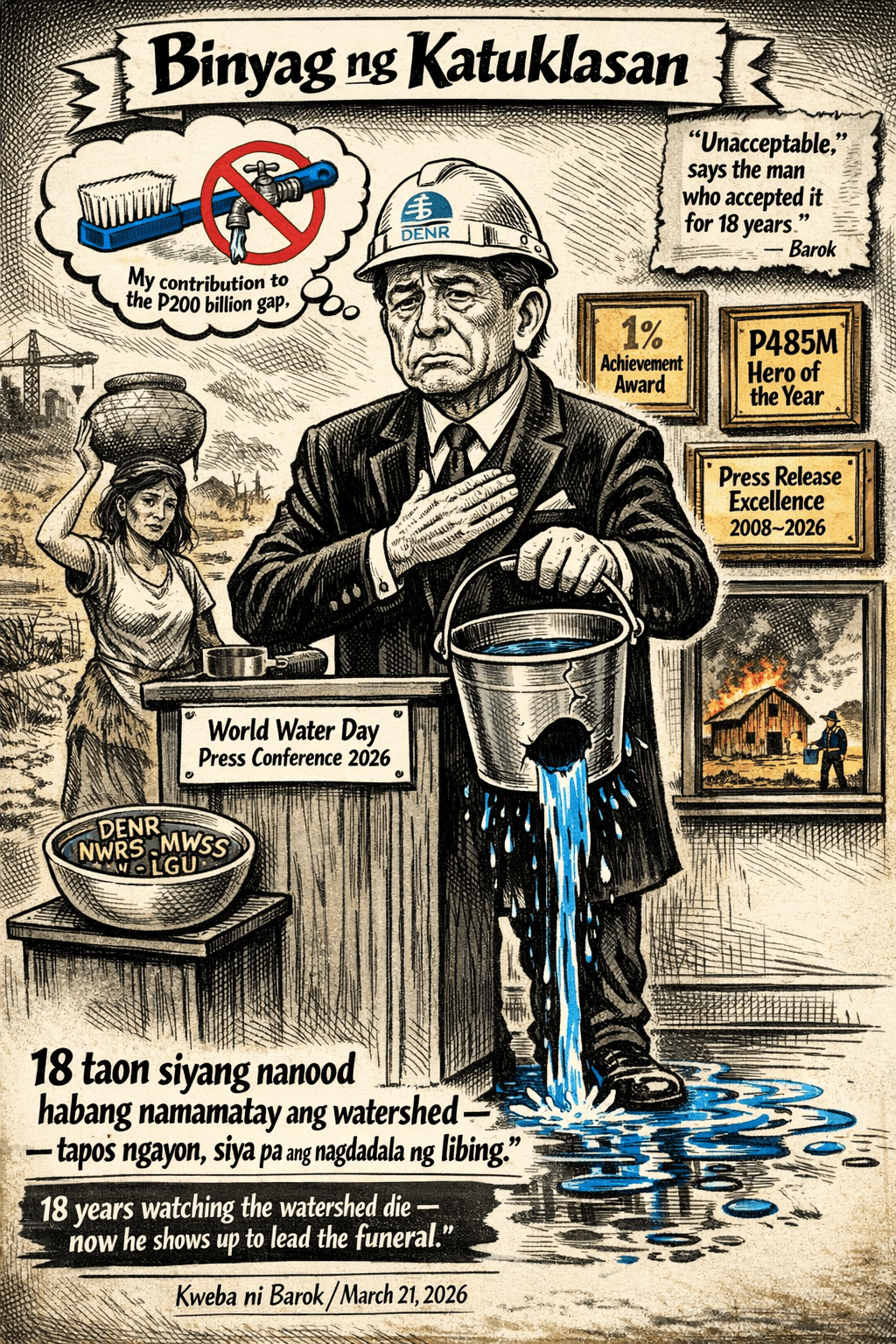
On World Water Day 2026, DENR Secretary Juan Miguel Cuna stood before the cameras and declared the Philippines is facing “water bankruptcy.” Demand outpacing nature’s ability to replenish. Dire. Unacceptable. In 2026, Filipinos still fetching water from shallow wells “like this.” Cue the sad violin.
Except this isn’t a sudden crisis. This is the predictable climax of a 50-year slow-motion suicide by bureaucracy, neglect, and misplaced priorities. The same agency that now sounds the alarm has been the chief accomplice in the crime. Let’s dissect this farce with the scalpel it deserves.
1. “We’re Bankrupt on Water!” – Says the Agency That’s Been Bankrupting It for 18 Years
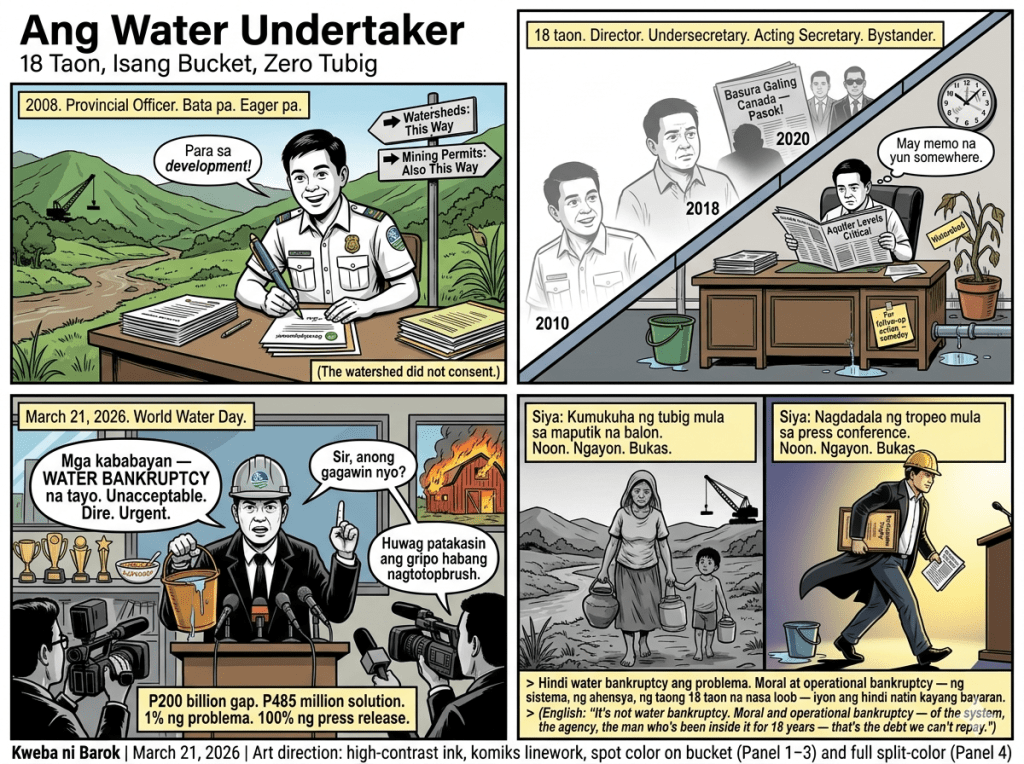
Cuna and Undersecretary Carlos Primo David proudly unveiled a P485 million investment that will “benefit” 440,000 individuals by year’s end.
That’s roughly P1,000 per person for “almost forever” access via desalination, refilling stations, and subsurface wizardry. Heartwarming, right?
Except they immediately admitted these heroic efforts reach only 1% of the 40 million Filipinos still drinking from polluted wells or hauling water like medieval peasants. One percent. They celebrated a rounding error while confessing a P200 billion funding gap.
Imagine your bank announcing, “We invested P485 in a fancy safe and saved 1% of your money from theft! The other 99%? Sorry, limited fiscal space. But every drop matters—turn off the tap while brushing your teeth!”
This isn’t urgency. This is a government admitting systemic collapse and then throwing a press conference to pat itself on the back for the participation trophy. The “water bankruptcy” narrative isn’t a warning bell; it’s a get-out-of-jail-free card designed to deflect decades of their own failure onto “climate,” “population,” and your personal shower habits.
2. From Garbage Gatekeeper to Water Doomsayer – Same Guy, New Script
Juan Miguel Cuna has been inside DENR for 18 years—provincial officer in 2008, director by 2010, undersecretary, and now acting secretary since February 2026. This man has watched the watersheds bleed, the aquifers drain, and the pipes leak for nearly two decades. Now he’s the one clutching pearls about “unacceptable” conditions in 2026?
His big idea for public participation? “Don’t let the water run while brushing your teeth.” And report busted pipes like a good citizen. Brilliant. While utilities lose up to 40% of their water to leaks (non-revenue water that DENR-regulated bodies have failed to fix), the Secretary lectures grandmothers on toothbrushing etiquette.
Let’s talk credibility. In 2018, the Ombudsman found him guilty of simple misconduct over the infamous Canada garbage shipment scandal—hazardous waste that somehow slipped through on his watch. He was suspended without pay for three months. The NBI later filed graft charges against him and others in 2020 for violating the Toxic Substances Act. (DOJ eventually cleared some officials, but the stench lingers.) This is the regulator now demanding “urgency” from the public?
Cuna isn’t the cavalry riding to the rescue. He’s the guy who helped burn the barn down and is now selling us a bucket of water to put out the flames.
3. The Structural Water Deficit: Not Coming—It’s Here, and DENR Owns It
This isn’t a “future risk.” It’s a present reality engineered by decades of inaction. Watersheds razed by illegal logging and mining (both under DENR’s supposed watch). Aquifers sucked dry. Urban pipes hemorrhaging water. Governance? A glorious alphabet soup—DENR, NWRB, MWSS, LWUA, LGUs—where responsibility dissolves like salt in seawater. No one is accountable because everyone has a memo.
And what’s the grand plan? Band-aid tech: modular desalination for tiny islands, subsurface extraction. Cute. But they ignore the root rot: DENR simultaneously greenlighting mining operations that silt rivers and poison recharge zones. The same department that cries “water bankruptcy” is the one eviscerating environmental laws to keep extractive industries happy. Classic conflict of interest dressed up as “balancing development.”
4. Policy Options: The Pros, Cons, and Why Most Are Doomed Under This Setup
Structural Reform (unified National Water Authority): Pros—ends the fragmentation nightmare. Cons—another bloated bureaucracy if the same political hacks run it. Silver bullet? Only if we fire the old guard first.
Massive Investment (the P200 billion): The “limited fiscal space” excuse is insulting. We blow billions on flyovers, expressways, and vanity infra that win photo-ops. Water? Invisible until the taps die. Contrast: P485 million is “money well spent,” but P200 billion is suddenly impossible? Spare me. Sovereign bonds, climate funds, PPPs—none of which this administration has prioritized.
Environmental Accountability: DENR regulating both mining and watersheds? Like asking the fox to guard the henhouse and then wondering why the hens are thirsty. Pros of enforcement: actual clean rivers. Cons under current DENR: zero.
5. Lessons from Abroad (The Satirical Hook)
Singapore: One centralized authority (PUB), Four National Taps, recycled water so clean you can drink it. They planned for decades; we planned task forces.
Israel: Desert nation turned water exporter through desalination, drip irrigation, and 90% wastewater recycling. They innovated; we innovated press releases.
Cape Town’s “Day Zero” scare? They rationed, invested, and averted disaster. The Philippines? We’re sleepwalking toward our own Day Zero while the Secretary tells us to turn off the tap when we brush our teeth.
Meanwhile, we invest in “tactical roadmaps” and modular gizmos for 1% of the problem. Singapore and Israel built nations; we built excuses.
6. Impacts, Implications, and the Coming Political Firestorm
This isn’t just about health or GDP. It’s social justice on steroids. Metro Manila’s elite sip piped water while rural mothers haul buckets from polluted streams. The poor pay first—in cholera, in lost school days, in dignity.
When the taps finally run dry nationwide, voters won’t blame the NWRB or some obscure undersecretary. They’ll look straight at Malacañang and its appointed water undertakers. This scandal will metastasize into electoral cancer. Mark my words: the next election won’t be about “Build, Build, Build.” It’ll be “Water, Water, Nowhere.”
7. Call for a New Paradigm: Enough of the Circus
We don’t need more pilot projects or toothbrushing sermons. We need a revolution in water governance.
Actionable Recommendations—sharp, non-negotiable:
- Truth Commission on Water Governance now. Drag every failed secretary, undersecretary, and regulator before it. No more whitewashing.
- Consolidate into a single National Water Authority—strip overlapping mandates, sunset the alphabet soup.
- Secure the P200 billion via sovereign green bonds + climate adaptation funds + aggressive PPPs. Stop pretending fiscal space doesn’t exist when we fund bridges to nowhere.
- Prosecute environmental violators—illegal loggers, mining firms destroying watersheds, utilities with 35-40% leaks. Jail time, not slaps on the wrist.
- Mandate Integrated Water Resource Management (IWRM)—watershed rehab first, not desalination last. Climate-resilient planning that actually plans.
- Hold public servants accountable. The mother fetching water from a poisoned well doesn’t care about your P485 million “investment.” She cares that you failed her children. Time to measure success by taps flowing, not press releases issued.
Secretary Cuna, your confession is noted. But confessions without contrition and reform are just PR. The Philippines isn’t facing water bankruptcy.
The DENR—and the system it embodies—has been morally and operationally bankrupt for decades.
The taps are dry, the excuses are wet. Wake up, Republic.
— Barok
Key Citations
A. News Articles
- Moaje, Marita. “PH Facing ‘Water Bankruptcy’ – DENR Chief.” PNA.gov.ph, 2026.
- Mangaluz, Jean. “DENR Told: Give 40 Million Filipinos Access to Formal Water Supply.” Inquirer.net, 7 May 2024.
- “Ombudsman Suspends DENR Exec Over Canada Trash.” Rappler, 29 June 2018.
- Gonzales, Cathrine. “NBI Files Graft Case vs DENR, BOC Personnel Over Trash from Canada.” Inquirer.net, 23 Jan. 2020.
- Greenpeace Philippines. “PH Environmental Groups Apprehensive of DENR Sec. Cuna Appointment.” Greenpeace.org/ph, 11 Mar. 2026.
B. Official Websites and Reports
- PUB Singapore. “Singapore Water Story.” PUB.gov.sg. Accessed 20 Mar. 2026.
- “Israel Leads the Way Recycling Nearly 90% of Its Wastewater.” MSW Magazine, 29 May 2024.
- “Cape Town Water Crisis.” WaterAid.org. Accessed 20 Mar. 2026.
- Maynilad Water Services. “Maynilad Cuts NRW to 30.7% by Year-End 2025.” Mayniladwater.com.ph, 26 Jan. 2026.

- ₱75 Million Heist: Cops Gone Full Bandit

- ₱6.7-Trillion Temptation: The Great Pork Zombie Revival and the “Collegial” Vote-Buying Circus

- ₱1.9 Billion for 382 Units and a Rooftop Pool: Poverty Solved, Next Problem Please

- ₱1.35 Trillion for Education: Bigger Budget, Same Old Thieves’ Banquet

- ₱1 Billion Congressional Seat? Sorry, Sold Out Na Raw — Si Bello Raw Ang Hindi Bumili

- “We Will Take Care of It”: Bersamin’s P52-Billion Love Letter to Corruption

- “Skewed Narrative”? More Like Skewered Taxpayers!

- “Scared to Sign Vouchers” Is Now Official GDP Policy – Welcome to the Philippines’ Permanent Paralysis Economy
- “Robbed by Restitution?” Curlee Discaya’s Tears Over Returning What He Never Earned

- “My Brother the President Is a Junkie”: A Marcos Family Reunion Special

- “Mapipilitan Akong Gawing Zero”: The Day Senator Rodante Marcoleta Confessed to Perjury on National Television and Thought We’d Clap for the Creativity

- “Just Following Orders” Is Dead: How the Hague Just Turned Tokhang’s Finest Into International Fugitives



 KWEBA ni BAROK
Leave a comment