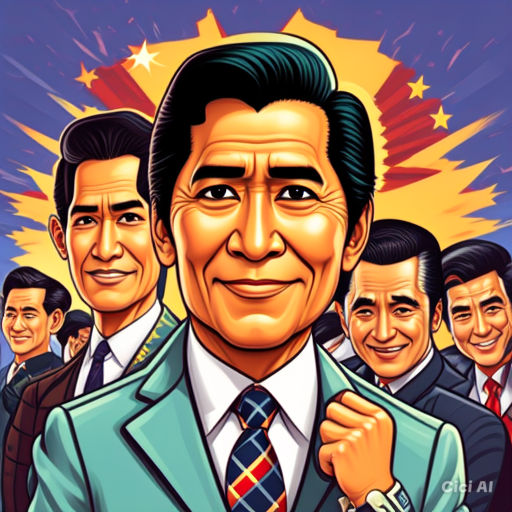
By Louis ‘Barok‘ C. Biraogo
In a striking turn that could reshape the Philippine political backdrop, President Ferdinand Marcos Jr.’s Partido Federal ng Pilipinas (PFP) has cemented an alliance with the National Unity Party (NUP), the nation’s second-largest political party. This union, unveiled at the Manila Golf Club, represents a significant maneuver ahead of the 2025 midterm elections. Marcos, keenly aware of the whispers branding this as a mere “marriage of convenience,” insists that a shared ideology of unity binds the two parties. But as the political chessboard is set for a new round, the stakes have never been higher.
The Philippines’ political party system has historically been a fluid and often fractious affair. Unlike the more rigidly structured party systems found in Western democracies, Philippine politics has been characterized by shifting alliances and coalitions. Since the post-World War II era, parties like the Liberal Party (LP) and the Nacionalista Party (NP) have dominated the landscape, but their influence has waned, giving rise to new political entities and alliances.
President Marcos Jr., son of the late dictator Ferdinand Marcos, has navigated this volatile landscape with strategic alliances and careful positioning. His party, the PFP, has already secured agreements with Lakas-CMD and the Nationalist People’s Coalition (NPC), forging a formidable coalition. The latest pact with NUP, chaired by former interior secretary Ronaldo Puno, marks a critical expansion of this coalition, strengthening Marcos’ hand as he prepares for the upcoming electoral battle.
The NUP’s support is not merely symbolic. As the second-largest political party, its backing brings substantial electoral muscle, organizational infrastructure, and voter base. This alliance could provide Marcos with the momentum needed to secure legislative support and push forward his policy agenda. However, the dissolution of the UniTeam alliance, which initially propelled Marcos and Vice President Sara Duterte to victory in 2022, underscores the fragility of such coalitions.
The historical precedents of Philippine politics offer a cautionary tale. Alliances often dissolve as quickly as they form, driven by personal ambitions and shifting loyalties rather than ideological coherence. The defunct UniTeam, labeled a “marriage of convenience,” serves as a stark reminder. Despite Marcos’ assertions, questions linger about the longevity and stability of his new coalition.
The impact of the NUP alliance on Marcos’ political objectives cannot be overstated. It positions him to potentially dominate the 2025 midterms, ensuring a legislative majority that could streamline the passage of his initiatives. However, the real test lies in the coalition’s ability to maintain unity amid inevitable political squabbles and divergent interests. The alignment of multiple parties under the banner of “unity” will require deft political maneuvering and concessions that might strain the ideological coherence Marcos champions.
As the midterm elections loom, the likelihood of Marcos’ allies prevailing hinges on several factors. The newly forged alliances must withstand internal and external pressures, including potential rifts over candidate selections and policy disagreements. The electorate’s response to these alliances, influenced by the current administration’s performance and public perception, will be pivotal.
To navigate these turbulent waters, Marcos and his coalition must adopt several strategies:
1. Strengthening Internal Cohesion: Regular communication and clear agreements on key policy issues and/or concessions are essential to prevent fragmentation. Establishing mechanisms for conflict resolution within the coalition can mitigate internal disputes.
2. Transparent Governance: Demonstrating a commitment to transparency and accountability will bolster public trust and counteract skepticism about the coalition’s motives. This includes addressing past criticisms, such as the controversy over confidential funds.
3. Grassroots Engagement: Direct engagement with the electorate through grassroots campaigns can reinforce the coalition’s message of unity and address local concerns, building a broad base of support.
4. Policy Delivery: Fulfilling campaign promises and delivering tangible benefits to the public will be crucial. Successes in economic recovery, education, and infrastructure will strengthen the coalition’s position and credibility.
As the political drama unfolds, the alliance between PFP and NUP marks a significant chapter in the Philippines’ political narrative. The coming months will test the durability of this union and its impact on the country’s governance. Marcos’ ability to maintain this coalition and leverage it effectively will determine not only the outcome of the midterm elections but also the future trajectory of his presidency. The stakes are immense, and the nation’s eyes are fixed on the unfolding political theatre.

- “Forthwith” to Farce: How the Senate is Killing Impeachment—And Why Enrile’s Right (Even If You Can’t Trust Him)
- “HINDI AKO NAG-RESIGN!”

- “I’m calling you from my new Globe SIM. Send load!”

- “Mahiya Naman Kayo!” Marcos’ Anti-Corruption Vow Faces a Flood of Doubt

- “Meow, I’m calling you from my new Globe SIM!”

- “No Special Jail for Crooks!” Boying Remulla Slams VIP Perks for Flood Scammers
- “PLUNDER IS OVERRATED”? TRY AGAIN — IT’S A CALCULATED KILL SHOT

- “Several Lifetimes,” Said Fajardo — Translation: “I’m Not Spending Even One More Day on This Circus”




 KWEBA ni BAROK
Leave a reply to Louis ‘Barok’ Biraogo Cancel reply