By Louis ‘Barok‘ C. Biraogo
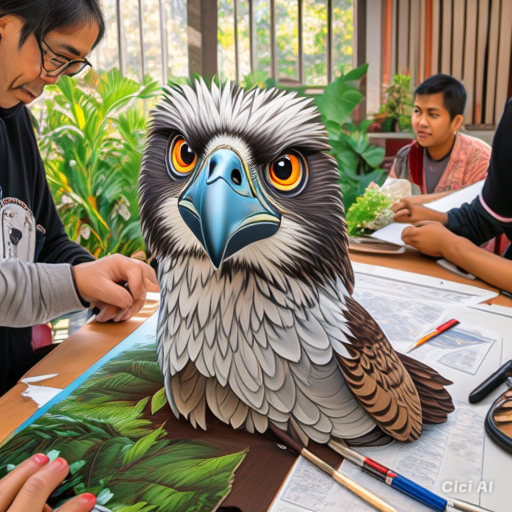
In the heart of the lush forests of Compostela, Davao de Oro, a tragic tale unfolded—a tale that starkly reminds us of the fragility of our natural heritage and the human actions that threaten it. The Philippine Eagle, “Mangayon,” symbolizing the nation’s wild spirit, fell victim not to the perils of nature, but to the recklessness of man. This majestic raptor, with a wingspan that eclipses the sun and a gaze that commands the skies, was discovered by Philippine Army troops on July 8, bearing the grim marks of a gunshot wound. Despite the valiant efforts to save it, Mangayon succumbed to its injuries, casting a long shadow over conservation efforts.
The Philippine Eagle, known scientifically as Pithecophaga jefferyi, is an emblem of the Philippines’ natural splendor and a testament to the nation’s biodiversity. Yet, it is a species teetering on the edge of extinction. The International Union for the Conservation of Nature lists it as critically endangered, with fewer than 400 individuals left in the wild. Conservationists have long struggled against a litany of obstacles—deforestation, habitat destruction, and now, the grievous threat of gunshots.
Governor Dorothy M. Gonzaga of Davao de Oro has stepped forward, offering a P50,000 reward for information leading to the capture of Mangayon’s killer. Her call to action echoes through the valleys and forests, urging citizens to protect these avian treasures. “We must safeguard our wildlife,” Gonzaga implores, her words were a heart-wrenching lament against the senseless destruction that claimed Mangayon’s life.
The necropsy revealed a chilling picture: Mangayon was in robust health, his internal organs unscathed by disease, yet his life was brutally cut short by human malice. The gunshot that pierced his left wing caused severe blood loss, leading to his untimely death. The Philippine Eagle Center, where Mangayon was taken, has seen this tragedy too often. Since 2020, 20 eagles have been rescued, with Mangayon being the fourth this year alone. These numbers tell a grim story of a species under siege.
The laws of the Philippines provide clear condemnation of such acts. The Wildlife Resources Conservation and Protection Act (Republic Act No. 9147) makes it illegal to harm or kill endangered species, with severe penalties for violators. Moreover, the Revised Penal Code, under Article 248, punishes those who cause the death of a person with the intention to kill, which can be analogized to the willful destruction of critically endangered wildlife.
The Philippine Supreme Court has also underscored the importance of environmental protection in various rulings. In the landmark case of Oposa v. Factoran, the Court recognized the doctrine of intergenerational responsibility, emphasizing that the present generation holds the earth’s resources in trust for future generations. This principle extends to the protection of the Philippine Eagle, an irreplaceable part of the nation’s natural legacy.
The killing of Mangayon must be condemned from every angle—ethical, ecological, and legal. From an ethical standpoint, the deliberate harm inflicted upon a defenseless creature is a stark violation of moral principles. Ecologically, the loss of each eagle is a blow to the biodiversity and health of the forest ecosystems they inhabit. Legally, this act is a blatant disregard for the laws designed to protect the nation’s wildlife.
Governor Gonzaga’s initiative to offer a reward is commendable. It sends a clear message that the death of Mangayon will not go unpunished. Her leadership should inspire similar actions across the country, reinforcing the message that wildlife crimes will be met with serious consequences.
To prevent future tragedies, several measures must be implemented. First, there should be a concerted effort to educate the public about the importance of the Philippine Eagle and the laws protecting it. Second, increased patrolling and surveillance in key habitats can deter potential poachers. Third, the legal system must ensure that those caught and convicted of harming wildlife face the full force of the law.
The call for justice rings loud and clear. The person responsible for Mangayon’s death must be brought to justice, not only to answer for this heinous act but to serve as a deterrent to others. The Philippine Eagle, soaring high above the archipelago, is a symbol of the nation’s pride and natural wealth. Its protection is a duty that falls upon all citizens, a trust that must be honored to ensure that future generations can witness the majesty of these incredible birds.
In the end, Mangayon’s death should galvanize us into action. Let it not be a mere statistic in the annals of conservation failures, but a rallying cry for stronger protections, greater awareness, and a unified stand against the forces that threaten our natural world. The skies of the Philippines deserve to be graced by the Philippine Eagle, free and unharmed, a living symbol of our commitment to protect and preserve our environment.

- Andres Heralds DoJ’s Transformative Justice

- Sailing to New Horizons: PEZA Sets Ambitious PHP250-B Approval Target for 2024

- Panga’s Bold Vision: The Paradigm Shift of Iwahig Mega Economic Zone

- Panga’s Pragmatic Approach to Sino-Philippine Investments

- The Shadow Over Manila

- Shadow of the Red Notice: Remulla hunts down Teves

- Frozen Enigma: NBI Bacolod’s Tussle with Darkness

- Quiboloy’s Supreme Court Shenanigans: A Pathetic Attempt to Dodge Justice

- RP’s cunundrum: A pawn in the SCS geopolitical chessboard

- Macapagal Leads: Navigating Relocation Challenges



 KWEBA ni BAROK
Leave a comment