By Louis ‘Barok‘ C. Biraogo — September 8, 2024
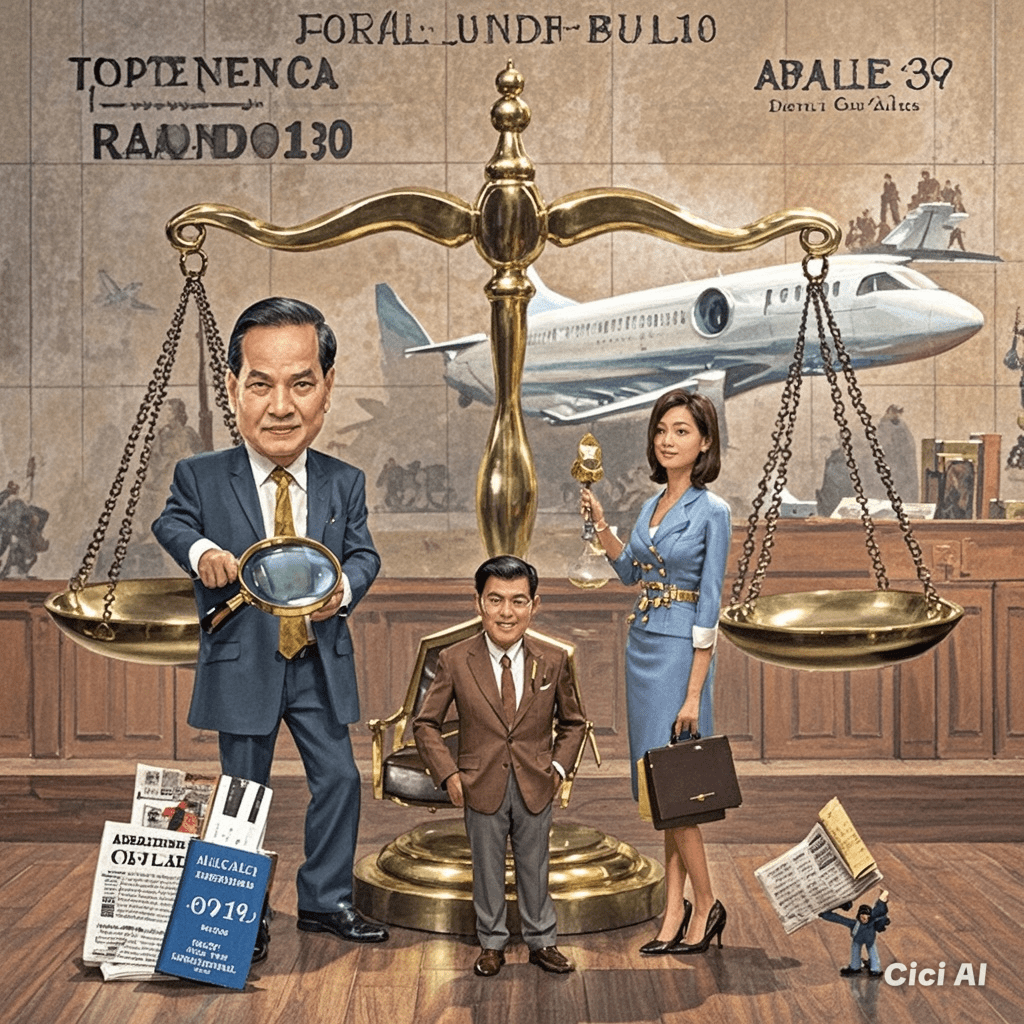
A government official needs to retrieve a fugitive. A private plane is the quickest option. But is it also a violation of the law? The controversy surrounding Interior and Local Government Secretary Benhur Abalos’s decision to borrow a private plane to bring Alice Guo back from Indonesia highlights a delicate balance between efficiency and ethics. While Abalos insists that no government funds were used, lawyer Ferdinand Topacio argues that the act of borrowing a private asset, especially from someone outside the public sector, could be considered a gift given “by reason of his office,” potentially violating the Anti-Graft and Corrupt Practices Act (RA 3019). This raises questions about the limits of official conduct and the potential for undue influence.
This incident brings to the forefront the question of whether Abalos, as a public official, might have violated RA 3019, which is designed to prevent corruption by prohibiting public officers from receiving gifts or favors that could compromise their integrity or independence. This issue becomes even more pertinent when considering Abalos’ role in a high-profile case involving Alice Guo, a fugitive facing human trafficking charges.
Topacio’s Case: Why Abalos’ Actions Might Be Illegal
1. RA 3019 and the Prohibition on Gifts: According to Section 3(b) of RA 3019, it is unlawful for any public officer to “directly or indirectly request or receive any gift, present, share, percentage, or benefit, for himself or for any other person, in connection with any contract or transaction between the Government and any other party.” Topacio’s argument hinges on the interpretation of the private plane as a gift or favor, granted “by reason of his office.” Since Abalos used his position to secure this favor, the presumption arises that the act of borrowing could be seen as improper, especially if future considerations or favors could be implied.
2. Conflict of Interest: The Anti-Graft Act prohibits actions that create conflicts of interest for public officials. While Abalos claimed that the private plane was borrowed purely for logistical purposes, Topacio’s interpretation suggests that accepting such favors, even in emergencies, may set a precedent where public officials might feel indebted to those who extend such favors, thereby blurring the line between personal and official actions.
3. Supreme Court Precedents on Ethical Conduct: In Republic of the Philippines v. Sandiganbayan (G.R. No. 142476), the Supreme Court underscored the need for government officials to act with transparency and avoid any action that could be perceived as granting undue advantages or benefits to private individuals. In this case, even the appearance of impropriety or undue influence can be as damaging as actual misconduct.
Abalos’ Defense: Why Topacio’s Claims Might Be Flawed
1. Necessity and Emergency Doctrine: Abalos justified his actions by highlighting the urgency of bringing Alice Guo back to the Philippines within a 24-hour deadline. The necessity of the mission could serve as a defense under the “emergency situation” doctrine. In cases of urgency, where government interests are at stake, the use of private resources, provided no personal benefit is derived, could be justified under the circumstances. There is precedent for this in Philippine jurisprudence where exigent circumstances, particularly when it benefits public welfare, can mitigate otherwise questionable acts.
2. No Quid Pro Quo Proven: Section 3(b) of RA 3019 requires that the gift or favor be linked to an official transaction. However, Topacio has not presented evidence that the individual who lent the plane had any vested interest in Abalos’ official actions or stood to gain from the transaction. Without a clear quid pro quo, Topacio’s assertions may be speculative, and the Anti-Graft Act requires more than mere suspicion to sustain a violation.
3. Absence of Government Funds: Abalos’ defense that the government did not pay for the plane, and that it was a personal favor, could be interpreted to show that no public resources were misused, which is one of the critical components of RA 3019. This further distances the case from one of corruption, as there is no clear financial gain or direct cost to the government. The Philippine Airlines v. CA case (G.R. No. 159556) illustrated that when no public funds or resources are directly involved, the court’s inclination is often to avoid imposing strict liability for acts that benefit the public service.
Barok’s Unbiased Assessment
While Topacio’s arguments highlight valid concerns about potential conflicts of interest and the broader implications of allowing public officials to accept private favors, the absence of direct evidence showing that the plane’s use constituted a “gift” under the Anti-Graft law weakens his case. Moreover, Abalos’ defense that the situation required immediate action, coupled with no apparent benefit to the plane lender, presents a strong counter-argument rooted in necessity. Based on existing jurisprudence, the courts may lean towards favoring Abalos unless Topacio can establish a clearer link between the favor and an official action that benefitted the lender.
The Legal Stakes: What’s at Risk for Abalos?
If Topacio’s assertions were upheld, Abalos could face charges under RA 3019, potentially leading to his suspension from office or removal, and even criminal penalties if proven guilty. The key issue would be whether the plane’s use created an expectation of reciprocal favors or constituted an abuse of Abalos’ official position.
However, given the lack of clear evidence tying the private plane to an expectation of future favors or an official transaction, and considering the emergency context, such repercussions appear unlikely unless more information surfaces.
Recommendations
1. For Ferdinand Topacio: While Topacio has raised important questions regarding public officials’ ethical responsibilities, he should ensure that any accusations are substantiated by clear evidence. Given the public nature of his statements, he risks undermining his credibility if the allegations prove to be unfounded. Instead, focusing on transparency in government dealings without speculative accusations may enhance the effectiveness of his legal strategy.
2. For Benhur Abalos: To avoid further controversy, Abalos should consider releasing additional details regarding the nature of the private plane arrangement, ensuring transparency. By proactively addressing concerns about the borrowing arrangement, he could prevent further speculation and demonstrate that his actions were purely in the interest of expediency. It may also be wise for Abalos to propose clearer guidelines within his department for handling such emergency situations, thereby setting a precedent for future cases.
In conclusion, while Topacio has raised a compelling argument under the Anti-Graft law, the current facts appear to favor Abalos’ defense of necessity and the lack of financial gain. However, the incident highlights the need for clearer standards on how public officials should navigate personal favors in high-stakes situations. Imagine a future where the lines between personal favors and official conduct are even more blurred, where the potential for undue influence looms large, and where the public’s trust in government officials is eroded further. That’s the danger if we fail to address the issues raised by this case.

- “Forthwith” to Farce: How the Senate is Killing Impeachment—And Why Enrile’s Right (Even If You Can’t Trust Him)
- “HINDI AKO NAG-RESIGN!”
- “I’m calling you from my new Globe SIM. Send load!”
- “Mahiya Naman Kayo!” Marcos’ Anti-Corruption Vow Faces a Flood of Doubt
- “Meow, I’m calling you from my new Globe SIM!”
- “No Special Jail for Crooks!” Boying Remulla Slams VIP Perks for Flood Scammers
- “PLUNDER IS OVERRATED”? TRY AGAIN — IT’S A CALCULATED KILL SHOT
- “Several Lifetimes,” Said Fajardo — Translation: “I’m Not Spending Even One More Day on This Circus”
- “Shimenet”: The Term That Broke the Internet and the Budget
- “We Did Not Yield”: Marcos’s Stand and the Soul of Filipino Sovereignty

 KWEBA ni BAROK
Leave a comment