By Louis ‘Barok‘ C. Biraogo — March 1, 2025
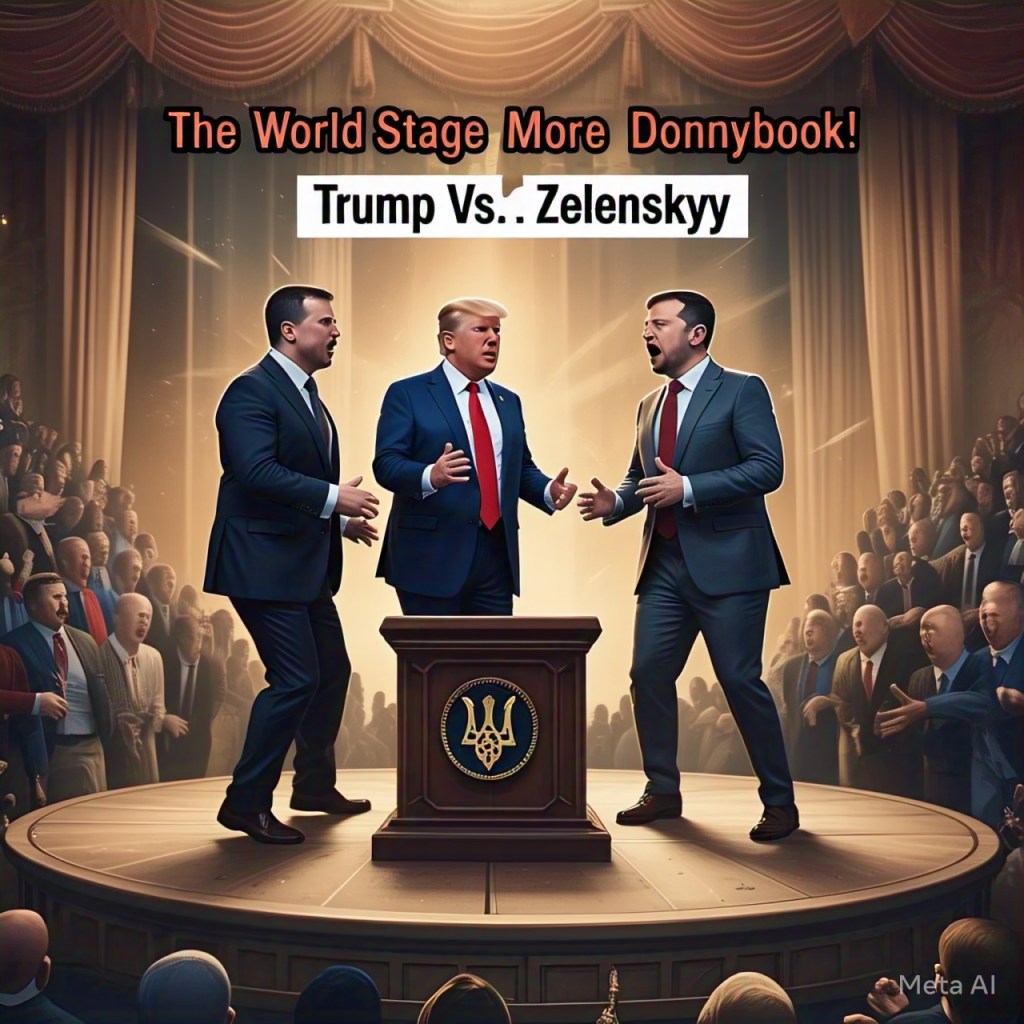
IMAGINE the scene: a wartime leader, his face etched with exhaustion, sits in the Oval Office, thousands of miles from the front lines where his people endure relentless bombardment. Across from him, the most powerful man in the world leans forward, voice rising, finger jabbing the air. “You’re not acting at all thankful,” Donald Trump bellows at Volodymyr Zelenskyy, the Ukrainian president who has become a symbol of defiance against Russian aggression. Cameras roll, capturing a moment that feels less like diplomacy and more like a public reckoning. It’s Friday, February 28, 2025, and the world watches, stunned, as a shouting match erupts in a space once synonymous with measured statecraft. This isn’t just a clash of egos—it’s a fracture in the global order, rippling outward with consequences only beginning to emerge.
Dissecting the Crisis: Strategy and Survival
Strategically, this confrontation signals a thunderclap of potential U.S. retreat from Ukraine’s corner. Trump’s demand for gratitude and his ultimatum—“make a deal or the U.S. is out”—reveal a transactional lens that prioritizes American leverage over alliance solidarity. For three years, Ukraine has leaned on U.S. military aid to hold back Russia’s grinding advance. Now, with Trump accusing Zelenskyy of “gambling with World War III,” the specter of abandonment looms large. The canceled minerals deal, meant to trade Ukraine’s rare earth resources for continued support, lies in tatters, a casualty of this public rupture.
But zoom in closer, to the human lens, and the stakes sharpen. Zelenskyy isn’t just a negotiator—he’s a man carrying the weight of a nation under siege. Kyiv’s streets echo with air raid sirens as Russian drones strike civilian targets. Ukrainian soldiers, outnumbered and outgunned, cling to muddy trenches in the east. For them, this isn’t about diplomatic niceties; it’s about survival. Trump’s rebuke stings not because it’s personal, but because it threatens to unravel the lifeline keeping their fight alive. The moral clarity here is stark: Russia invaded, unprovoked, in 2022, and Ukraine’s resistance has been a desperate stand for sovereignty. Yet in Washington, that clarity now blurs under the shadow of “America First.”
Scenarios: Trajectories of a Fractured World
Consider the possibilities, grounded in what is known today—March 1, 2025—and tempered by history’s lessons.
Scenario 1: U.S. Withdrawal, European Ascendance (High Probability)
Trump follows through, slashing aid and pushing Ukraine toward a hasty peace with Russia. Zelenskyy, defiant but cornered, turns to Europe, where leaders like Macron and von der Leyen double down. The EU ramps up arms production and funding, bolstered by Germany’s industrial might and France’s nuclear backbone. NATO’s cohesion frays as the U.S. steps back, but a European-led bloc emerges, less reliant on Washington. Russia gains ground short-term, securing eastern Ukraine, but faces a galvanized Europe long-term. A black swan—an assassination attempt on Zelenskyy—could ignite Ukrainian resistance into a guerrilla war, complicating Moscow’s victory.
Scenario 2: Stalemate and Proxy Escalation (Moderate Probability)
The Oval Office spat becomes a frozen conflict in diplomacy. U.S. aid trickles on, inconsistent but enough to keep Ukraine afloat. Russia, sensing indecision, intensifies hybrid warfare—cyberattacks, disinformation, sabotage—across Europe and the U.S. China steps in as a mediator, hosting a summit that yields a tenuous ceasefire but no territorial resolution. Tensions simmer, with sporadic fighting in Donbas. A wild card: a leaked recording of Trump praising Putin could tip U.S. public opinion, forcing Congress to override his policy.
Scenario 3: Global Realignment, China’s Rise (Low Probability)
Trump’s isolationism triggers a broader retreat, weakening NATO and emboldening Russia and China. Beijing, seizing the moment, deepens its economic grip on Europe while arming Russia covertly. Ukraine falls, partitioned between Russian control and a Western-backed rump state. The U.S. pivots to Asia, leaving Europe to fend for itself. A black swan—say, a Taiwanese crisis—could accelerate this shift, with China testing U.S. resolve as the West fractures.
Scenario 4: Unexpected Reconciliation (Very Low Probability)
Trump, ever unpredictable, pivots after domestic backlash. A second meeting with Zelenskyy, brokered by a figure like Elon Musk, yields a face-saving deal: U.S. aid resumes, tied to Ukrainian concessions on minerals and a peace framework. Russia, overstretched, agrees to talks. This fragile truce holds short-term but unravels if Putin sees weakness. A wildcard: a major terrorist attack blamed on Russian proxies could rally Western unity, locking in this path.
China’s Calculus: Playing All Sides
Beijing watches this drama with a strategist’s cool eye. Economically, China’s $200 billion trade with Russia—up 60% since 2022—anchors its interest in Moscow’s stability. Diplomatically, it courts Europe, offering infrastructure deals to offset U.S. withdrawal. Militarily, it eyes Taiwan, testing whether Trump’s bluster translates to action. China’s dilemma is exquisite: back Russia too openly, and it risks Western sanctions; stay neutral, and it loses leverage with Putin.
Beijing could exploit Western disarray by pushing its summit idea, positioning itself as a peacemaker while nudging Ukraine toward concessions. Coordination with Russia might deepen—think joint naval drills in the Black Sea—but divergence looms if Putin’s war drains resources China needs for its own ambitions. As U.S.-EU tensions grow, China’s approach may shift from quiet opportunism to bold mediation, especially if Scenario 3’s realignment takes root.
Inflection Points: Where History Turns
- Trump’s Next Move (Weeks): If he doubles down on withdrawal, Europe mobilizes; if he wavers, stalemate persists.
- European Unity (Months): A cohesive EU response could deter Russia; infighting hands Putin an edge.
- Russia’s Battlefield Gains (半年): Significant advances might force Ukraine to the table; stagnation could embolden China’s mediation.
- China’s Taiwan Play (Years): Aggression there could redefine global alliances, pulling U.S. focus from Europe.
Ripple Effects: The Dawn of a New Global Order
Global institutions teeter. NATO, already strained, faces an existential test if the U.S. wavers. The UN, paralyzed by Russia’s veto, loses further credibility. Alliances shift—Poland and the Baltics may forge a new security pact if NATO falters. Normative frameworks erode: if might makes right in Ukraine, observers can expect that precedent to echo from the South China Sea to the Middle East. History whispers warnings—think Munich 1938, where appeasement fueled aggression. The world isn’t there yet, but the parallels chill.
Strategic Directions: Finding Stability Amid Uncertainty
Morally, the world cannot abandon Ukraine’s fight for freedom; strategically, nations must not cede Europe to Russian dominance. The United States should convene an emergency NATO summit—not to grovel, but to recalibrate—offering Ukraine phased aid tied to peace talks, with clear redlines drawn for Russia. European leaders must fast-track their defense union, pooling resources to fill any gap left by American wavering. China should be invited to co-sponsor negotiations, tying its international prestige to a balanced outcome—averting the chaos of a global realignment where Beijing rises unchecked.
Confidence-building measures could begin modestly: a demilitarized zone in Donbas, monitored by neutral parties like India, might ease the immediate bloodshed. Structurally, NATO’s decision-making process needs reform to grant Europe greater weight, ensuring resilience if U.S. commitment falters. A UN resolution for a standing peacekeeping force—though unlikely to pass Russia’s veto—would signal intent to address the war’s root causes. These steps meld realism with hope, acknowledging the limits of power while refusing to forsake humanity’s stakes.
The Road Ahead
In Kyiv, a mother huddles with her child as sirens wail. In Washington, a president fumes over perceived slights. In Beijing, strategists plot amid the tumult. This isn’t just a shouting match—it’s a hinge of history. The world has weathered such moments before: post-WWI isolationism birthed calamity, but post-WWII resolve built a flawed but enduring order. Today, nations teeter between those legacies. With courage and clarity, leaders can still steer toward peace—not a perfect one, but one that spares the next generation this shadow. The choice belongs to those in power, and the time to act is now.

- “Forthwith” to Farce: How the Senate is Killing Impeachment—And Why Enrile’s Right (Even If You Can’t Trust Him)
- “HINDI AKO NAG-RESIGN!”

- “I’m calling you from my new Globe SIM. Send load!”

- “Mahiya Naman Kayo!” Marcos’ Anti-Corruption Vow Faces a Flood of Doubt

- “Meow, I’m calling you from my new Globe SIM!”

- “No Special Jail for Crooks!” Boying Remulla Slams VIP Perks for Flood Scammers

- “PLUNDER IS OVERRATED”? TRY AGAIN — IT’S A CALCULATED KILL SHOT

- “Several Lifetimes,” Said Fajardo — Translation: “I’m Not Spending Even One More Day on This Circus”

- “Shimenet”: The Term That Broke the Internet and the Budget

- “We Did Not Yield”: Marcos’s Stand and the Soul of Filipino Sovereignty

- “We Gather Light to Scatter”: A Tribute to Edgardo Bautista Espiritu

- $150M for Kaufman to Spin a Sinking Narrative






 KWEBA ni BAROK
Leave a reply to zoe Cancel reply