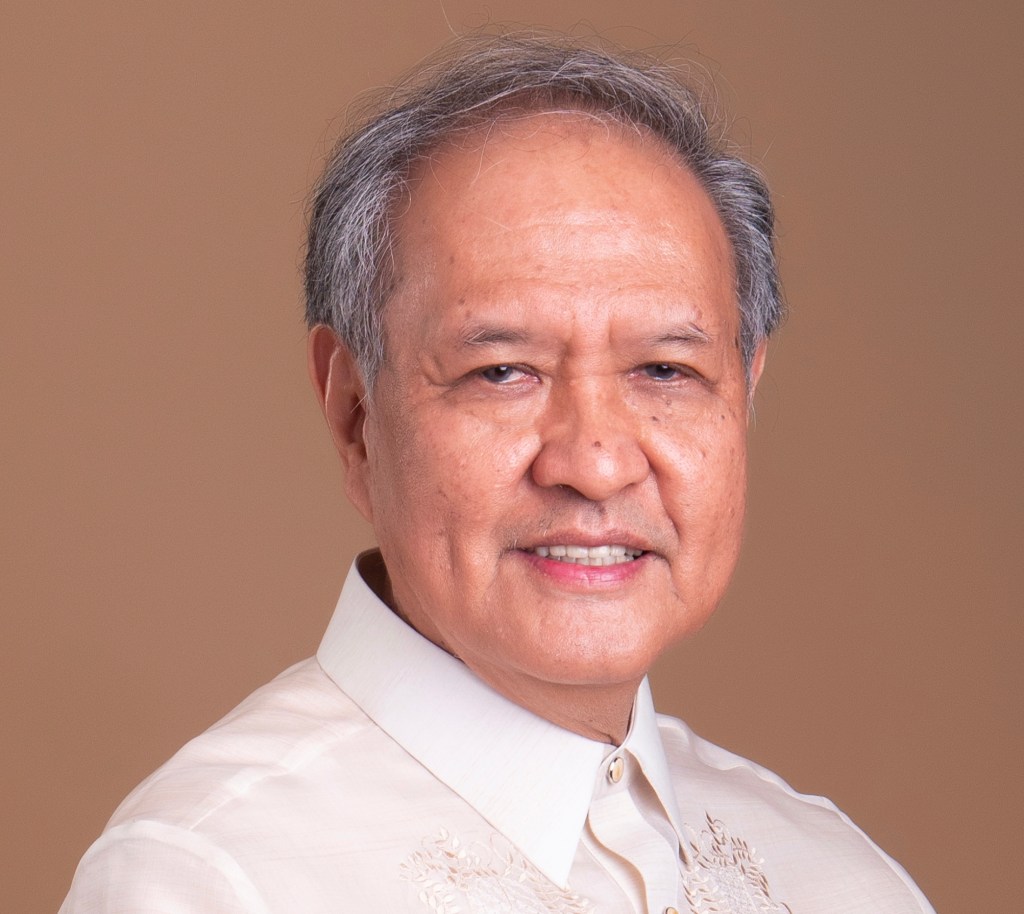
By Louis ‘Barok‘ C. Biraogo — August 10, 2025
TO speak of Romy S.A. Carlos is to trace the outlines of a mural whose pigments have not yet faded, though the hand that shaped them has set down its brush. He lived in that rarefied space where artistry becomes not just expression but stewardship—where each stroke, each hue, guarded the memory of a people even as it dared to innovate. He was, as his mentor José Joya once cautioned him to be, an artist who knew when to stop. The wisdom of restraint—how to leave space for silence in color, how to allow a work to breathe—would come to define not just his canvases, but his way of moving through the world.
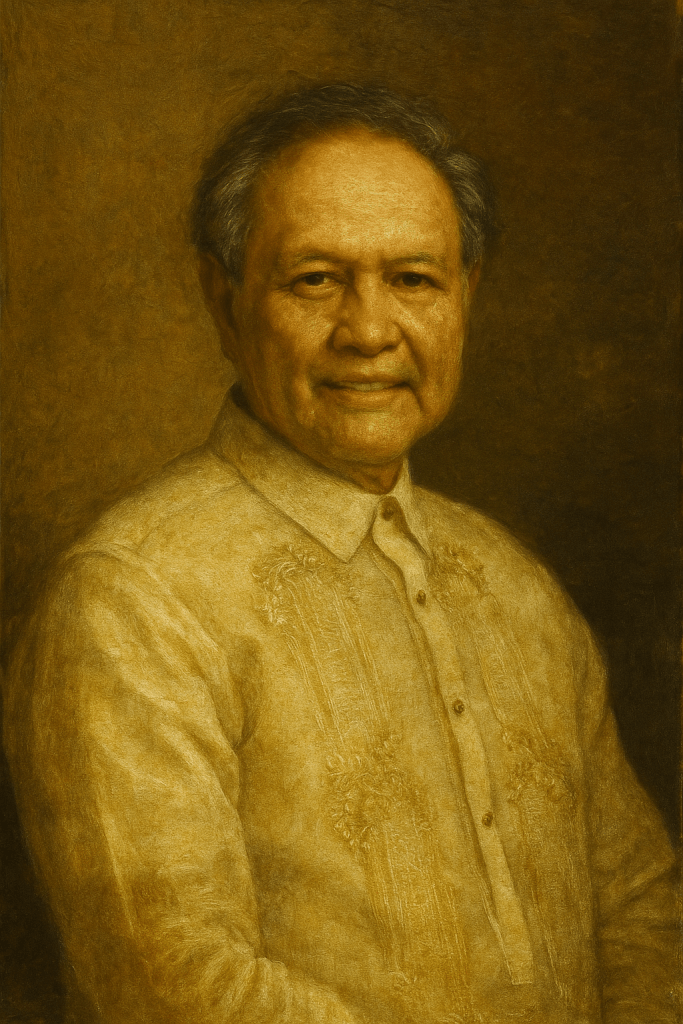
Romy’s art carried the chromatic pulse of Filipino history, yet it was never mere nostalgia. In his hands, the past was not embalmed but quickened, refracted through modern sensibilities, a dialogue between heritage and horizon. Exhibited in galleries here and abroad, his work became a kind of diaspora of images—Filipino culture scattered across continents, gathered again in the gaze of those who understood what was being preserved. His elevation to the UNO Award in 2025—golden-lit under the vaulted ceilings of the Aguado Residence—felt less a coronation than an affirmation. It recognized the sum of decades spent elevating Filipino artistry, not in a solitary ascent, but in communion with others.
For Romy was never only an artist. He was a convenor of people, a quiet architect of bridges. In the UP Alumni Association and the College of Fine Arts Alumni Association, he channeled the same compositional sense into projects that restored not only spaces, but the sinews of community. He understood that alumni networks, like murals, are living things—layers of experience bound by shared vision. These undertakings were, in their own way, acts of portraiture: framing a fraternity and a university in their best light.
To his fraternity brothers in Upsilon Sigma Phi, he was a constant flame, though never the loudest in the room. In the century-spanning arc of the fraternity—its triumphs and its darker chapters—Romy’s presence was a reminder that Brotherhood and Integrity are not mottos to be engraved on brass plaques but lived, daily, in the small and unpublicized acts. He gathered light, as the motto commands, not to store it for himself but to scatter it—across canvases, across generations.
It is impossible to speak of his life without noting the constellation of influences and peers: the tutelage under Joya, the collaborative ease with Bencab, the fraternity bonds that outlasted formal rites. In these relationships, Carlos was both student and mentor, recipient and giver of light. One imagines him offering quiet encouragement to a young painter wrestling with a stubborn canvas, or discreetly underwriting a community exhibit, never with fanfare, always with purpose.
The UNO evening itself remains vivid in memory: the cardinal red of Upsilon banners glowing against the Manila dusk, the mingling of art and fraternity as if two parallel currents had converged for a moment’s confluence. There was applause, yes, but more telling was the hush—an almost painterly pause—when his name was called, as though everyone present recognized that here was a man whose life was less a speech than a composition.
What endures now is not the ceremony nor the citations, but the permanence of his work, the way a viewer in some distant future might still feel the brush’s decisive lift, the careful refusal to overwork a scene. In a fraternity reckoning with its complex legacy—its luminous contributions and its undeniable shadows—Romy stands as proof that individual integrity can refract collective identity into something finer.
His story leaves us with lessons: that tradition and innovation need not be antagonists; that art is most vital when it serves; that recognition, while fleeting, can point us toward what should endure. And perhaps most of all, that knowing when to stop is not an abdication but a mastery—whether on the canvas, in leadership, or in life itself.
Some lives are like murals: meant to be approached slowly, studied in sections, understood over time. Romy S.A. Carlos’s was such a work—layered, complex, luminous at its core. The paint may be dry now, but the light he gathered continues to scatter, still finding its way to those who need it.
“Brod Romy, when I meet you under the sun, I shall tell you much.”
Louis ‘Barok‘ C. Biraogo ’79




 KWEBA ni BAROK
Leave a reply to Louis ‘Barok’ Biraogo Cancel reply