By Louis ‘Barok‘ C. Biraogo
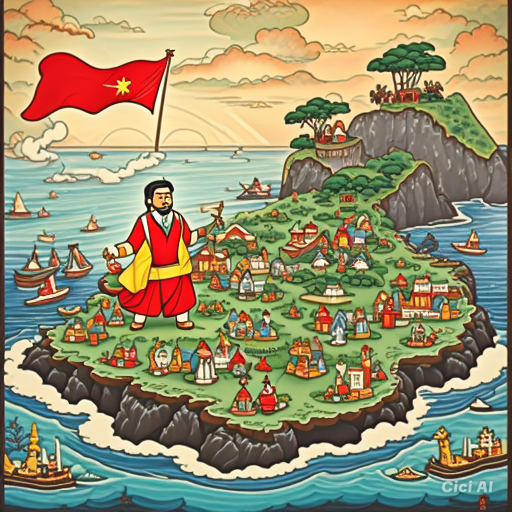
IN AN audacious move that underscores its contempt for international law, China has reclaimed an alarming 3,000 hectares in the South China Sea, including features within the Philippines’ Exclusive Economic Zone (EEZ). This brazen land grab, coupled with the militarization of these artificial islands, starkly highlights China’s expansionist ambitions and its disregard for the sovereignty of its neighbors.
The Genesis of the Dispute
Since 2013, China has pursued an aggressive campaign of land reclamation and fortification in the South China Sea, transforming once-submerged reefs into militarized islands. Key features such as Subi Reef, Mischief Reef, and Johnson Reef have been converted into military bases equipped with airstrips, harbors for warships, aircraft hangars, and military-grade communication facilities. These developments not only violate the sovereignty of the Philippines but also threaten regional stability and the freedom of navigation in one of the world’s most crucial maritime conduits.
A Fractured Timeline: Historical and Diplomatic Breakdown
China’s actions in the South China Sea are not an isolated case but part of a long history of territorial expansion. The annexation of Tibet in 1950, the invasion of India in 1962, and the skirmishes with Vietnam in 1979 are all part of a pattern of aggressive territorial claims. These historical precedents reveal a consistent strategy of using military might to achieve territorial ambitions, often flouting international norms and agreements.
The international community’s response to China’s aggression has been tepid at best. Despite the 2016 ruling by the Permanent Court of Arbitration in The Hague, which unequivocally rejected China’s expansive claims in the South China Sea, Beijing has continued its activities with impunity. The failure to enforce this landmark ruling underscores the weaknesses in the international legal system and the challenges of holding a major power accountable.
The Rising Dragon’s Gambit: Consequences and Challenges
China’s strategy in the South China Sea involves creating faits accomplis through land reclamation and militarization, backed by a robust naval presence. The deployment of 122 Chinese vessels, including maritime militia, coast guard ships, and People’s Liberation Army Navy (PLAN) ships, is a testament to Beijing’s resolve to consolidate its control over these contested waters.
This strategy has significant implications. By fortifying these artificial islands, China can project power far beyond its shores, threaten the freedom of navigation, and exert control over a region through which over $3 trillion in trade passes annually. The construction of military facilities on these reclaimed lands allows Beijing to establish a permanent presence in the heart of Southeast Asia, undermining the security and sovereignty of its neighbors.
Counteracting Challenges: The Philippines’ Strategic Response
In stark contrast to China’s belligerence, the Philippines has sought to address the issue through legal and diplomatic channels. The 2016 Hague ruling, which favored the Philippines, was a significant legal victory. Furthermore, Manila’s recent move to seek recognition of its extended continental shelf in the West Palawan region under the United Nations Convention on the Law of the Sea (UNCLOS) is a commendable effort to assert its rights through international law.
However, the effectiveness of these measures is hampered by the lack of enforcement mechanisms and the reluctance of major powers to confront China. While the Philippines’ legal and diplomatic efforts are laudable, they must be backed by a broader international coalition willing to support the rule of law.
Recommendations
To counter China’s aggressive actions, a multifaceted strategy is required:
- Strengthening Alliances: The Philippines should strengthen its alliances with like-minded countries, particularly the United States, Japan, Australia, and the European Union, to build a coalition that can exert diplomatic and economic pressure on China.
- Enhanced Naval Capabilities: Investing in naval and coast guard capabilities will enable the Philippines to better patrol its waters and assert its sovereignty.
- International Advocacy: Manila must continue to advocate for its case in international forums, rallying global opinion against China’s unlawful actions.
- Economic Leverage: Leveraging economic ties, particularly with countries that have significant trade relations with China, can be a powerful tool to pressure Beijing into compliance.
- Public Awareness Campaigns: Raising awareness about the legal and moral dimensions of the South China Sea dispute can help garner international support and put additional pressure on China.
The reclamation of 3,000 hectares in the South China Sea is not just a regional issue but a global challenge to the rule of law and the principles of sovereignty. The international community must not stand idly by as China flouts international norms and undermines regional stability. The Philippines, with its steadfast commitment to legal and diplomatic solutions, deserves our unwavering support in this critical endeavor.

- Andres Heralds DoJ’s Transformative Justice

- Sailing to New Horizons: PEZA Sets Ambitious PHP250-B Approval Target for 2024

- Panga’s Bold Vision: The Paradigm Shift of Iwahig Mega Economic Zone

- Panga’s Pragmatic Approach to Sino-Philippine Investments

- The Shadow Over Manila

- Shadow of the Red Notice: Remulla hunts down Teves

- Frozen Enigma: NBI Bacolod’s Tussle with Darkness

- Quiboloy’s Supreme Court Shenanigans: A Pathetic Attempt to Dodge Justice

- RP’s cunundrum: A pawn in the SCS geopolitical chessboard

- Macapagal Leads: Navigating Relocation Challenges







 KWEBA ni BAROK
Leave a comment