
By Louis ‘Barok‘ C. Biraogo
AS THE dust begins to settle on President Ferdinand R. Marcos Jr.’s administration, the political landscape of the Philippines is once again taking center stage with the upcoming 2025 midterm elections. In what could be seen as a high-stakes game of political chess, major political parties have coalesced under the banner of Marcos Jr.’s Alyansa Para sa Bagong Pilipinas, forming a formidable bloc. The recent meeting at Malacañang’s Aguado residence signaled not just a strategic collaboration but the forging of a coalition that could shape the future of Philippine governance. However, the absence of the Duterte clan from this coalition introduces a narrative filled with suspense, uncertainty, and the possibility of a political showdown of unprecedented scale.
The Evolution of Political Coalitions in the Philippines
To understand the gravity of this new coalition, one must look back at the intricate history of political alliances in the Philippines. Political coalitions in the country have long been tools of convenience—temporary pacts forged to secure electoral victories and maintain power. They are as much about ideology as they are about survival, often crumbling under the weight of personal ambitions and diverging interests.
The Alyansa Para sa Bagong Pilipinas, spearheaded by Marcos Jr.’s Partido Federal ng Pilipinas (PFP), includes heavyweights like Lakas-Christian Muslim Democrats (CMD), the Nationalist People’s Coalition (NPC), Nacionalista Party (NP), and the National Unity Party (NUP). These parties, each with their own storied past and political clout, have decided to align under a single vision: the continuation of Marcos Jr.’s agenda for unity, peace, and prosperity. But history reminds us that such alliances, while powerful on paper, are often fragile in practice.
The Duterte clan’s decision to remain outside this coalition is not just a political statement; it is a potential harbinger of conflict. Their absence deprives the coalition of a crucial ally, particularly in the southern regions of the Philippines, where the Dutertes’ influence is deeply entrenched. The implications of this decision could reverberate throughout the political arena, setting the stage for a possible confrontation that could redefine the balance of power.
The Significance of the Coalition Parties
The parties under the Alyansa Para sa Bagong Pilipinas banner are no strangers to Philippine politics. Each brings a unique strength to the table:
- Partido Federal ng Pilipinas (PFP): The driving force behind the coalition, PFP’s power stems from Marcos Jr.’s presidency and his political capital. The party’s victory in the 2022 presidential election underscores its current dominance, yet its reliance on the Marcos name could be both a strength and a potential vulnerability if internal divisions arise.
- Lakas-Christian Muslim Democrats (CMD): Led by Speaker Martin Romualdez, this party has consistently demonstrated its influence in the House of Representatives. CMD’s organizational prowess and Romualdez’s close ties with the administration make it a key player in the coalition’s strategy.
- Nationalist People’s Coalition (NPC): With its deep roots in the Philippine Senate, NPC, under the leadership of Vicente Sotto III, adds legislative heft to the coalition. However, its members’ individual ambitions could pose a risk to coalition unity.
- Nacionalista Party (NP): As the oldest political party in the Philippines, NP’s historical significance and electoral machinery make it a valuable asset. Yet, its traditionalist approach might clash with the more populist elements of the coalition.
- National Unity Party (NUP): A relatively younger party, NUP’s strength lies in its ability to adapt and align with the prevailing power structure. Its flexibility could prove beneficial in navigating coalition dynamics but could also lead to internal discord if its interests are sidelined.
Together, these parties represent a potent force, but their unity is precarious. The absence of the Duterte clan, with their significant political base in Mindanao, raises questions about the coalition’s ability to maintain a truly national reach. This gap could create opportunities for the opposition or even provoke internal strife within the coalition.
Confrontation on the Horizon: A SWOT Analysis
As the coalition prepares for the 2025 midterm elections, it faces both opportunities and threats. A SWOT analysis reveals the potential dynamics at play:
- Strengths:
- Unified Leadership: The coalition’s strength lies in its unified leadership under Marcos Jr., which could streamline decision-making and present a cohesive front.
- Electoral Machinery: The combined electoral machinery of these parties could prove formidable in mobilizing voters and securing seats in both houses of Congress.
- Legislative Dominance: With key members in leadership positions within the legislature, the coalition can effectively push its agenda and maintain control over legislative processes.
- Weaknesses:
- Internal Conflicts: The diverse interests and ambitions of the coalition’s members could lead to internal conflicts, weakening its overall effectiveness.
- Dependence on the Marcos Name: The coalition’s reliance on the Marcos legacy could be a double-edged sword, particularly if public sentiment shifts or if Marcos Jr.’s popularity wanes.
- Opportunities:
- Expansion of Influence: The coalition has the opportunity to consolidate its power and extend its influence across the country, particularly in regions where it has traditionally been weak.
- Policy Continuity: By maintaining control of the legislature, the coalition can ensure the continuity of Marcos Jr.’s policies, which could lead to long-term stability and economic growth.
- Threats:
- Duterte-Backed Opposition: The Duterte clan’s absence from the coalition could embolden opposition forces, particularly in Mindanao, where the Dutertes hold significant sway.
- Electoral Backlash: If the coalition fails to deliver on its promises, it could face an electoral backlash, with voters turning to the opposition or alternative political movements.
Weighing the Odds: Analyzing the Advantage
In this looming political battle, both the coalition and its potential adversaries have their strengths and vulnerabilities. The coalition’s advantage lies in its unified structure, legislative dominance, and the political capital of Marcos Jr. However, the Duterte clan’s strategic absence and potential to rally opposition forces, particularly in the southern regions, pose significant risks.
The Duterte-backed adversaries, though lacking the formal structure of a coalition, have the advantage of regional loyalty and a distinct political identity. Their populist, anti-establishment rhetoric could resonate with voters disillusioned by the status quo, particularly if the coalition struggles with internal conflicts or policy missteps.
Tactical Tips for Both Sides
For the Coalition:
- Strengthen Internal Cohesion: The coalition must prioritize internal unity, addressing potential conflicts before they escalate. Establishing clear roles and responsibilities for each party could help prevent power struggles.
- Expand Regional Influence: To counter the Duterte clan’s influence, the coalition should invest in building a stronger presence in Mindanao and other regions where it is weak. Engaging with local leaders and addressing regional concerns could help broaden its appeal.
- Deliver Tangible Results: The coalition must focus on delivering tangible policy outcomes that resonate with the electorate. Success in addressing key issues like poverty, infrastructure, and public safety could bolster its standing in the 2025 elections.
For the Duterte Clan and Their Allies:
- Build a Cohesive Opposition: The Duterte clan should consider forming alliances with other opposition groups to create a more unified front. A fragmented opposition would struggle to compete with the well-organized coalition.
- Capitalize on Regional Strengths: The Dutertes should leverage their strong regional base to challenge the coalition’s dominance. Focusing on local issues and presenting themselves as champions of regional interests could resonate with voters.
- Differentiate Policy Platforms: To effectively challenge the coalition, the opposition must present clear and distinct policy alternatives. Critiquing the coalition’s shortcomings while offering viable solutions could attract undecided voters.
Conclusion: A Battle Yet to Be Fought
As the 2025 midterm elections approach, the political stage in the Philippines is set for a confrontation that could have far-reaching implications. The Alyansa Para sa Bagong Pilipinas coalition, with its powerful mix of parties, appears strong but is not invulnerable. The Duterte clan’s decision to remain outside the coalition is a gamble that could either pave the way for a formidable opposition or leave them isolated and diminished.
In this unfolding drama, the stakes are high. Both sides have much to gain and everything to lose. The outcome of this political chess game will not only shape the future of the Marcos administration but could also redefine the trajectory of Philippine politics for years to come. The question now is: who will make the next move, and will it be a masterstroke or a misstep? The suspense, as always in Philippine politics, is palpable.

- “Forthwith” to Farce: How the Senate is Killing Impeachment—And Why Enrile’s Right (Even If You Can’t Trust Him)
- “HINDI AKO NAG-RESIGN!”

- “I’m calling you from my new Globe SIM. Send load!”

- “Mahiya Naman Kayo!” Marcos’ Anti-Corruption Vow Faces a Flood of Doubt

- “Meow, I’m calling you from my new Globe SIM!”

- “No Special Jail for Crooks!” Boying Remulla Slams VIP Perks for Flood Scammers
- “PLUNDER IS OVERRATED”? TRY AGAIN — IT’S A CALCULATED KILL SHOT

- “Several Lifetimes,” Said Fajardo — Translation: “I’m Not Spending Even One More Day on This Circus”

- “Shimenet”: The Term That Broke the Internet and the Budget

- “We Did Not Yield”: Marcos’s Stand and the Soul of Filipino Sovereignty


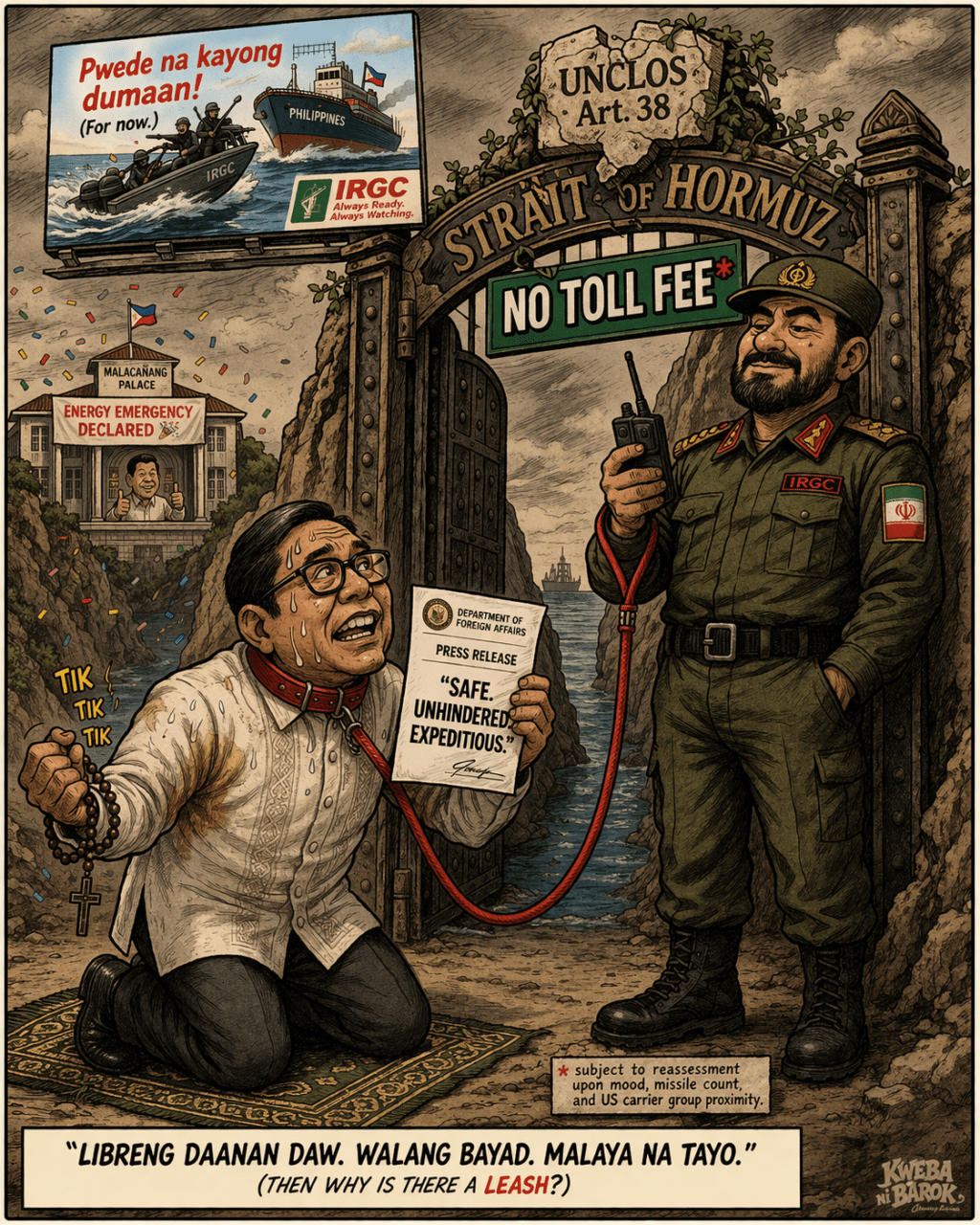
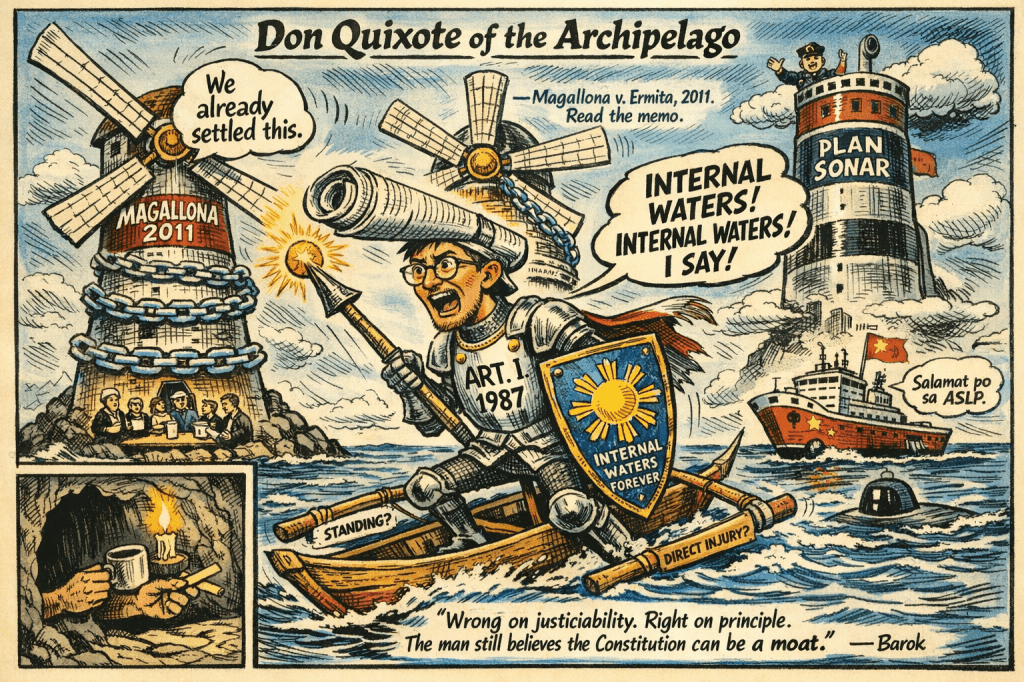

 KWEBA ni BAROK
Leave a comment