
By Louis ‘Barok‘ C. Biraogo — February 2, 2025
WHEN is exploitation not exploitation? The Philippine Supreme Court’s landmark decision in People v. Villaria and Maghirang (G.R. No. 259133, December 4, 2023) shatters any ambiguity: recruiting children for sexual exploitation is human trafficking, regardless of threats or coercion. This ruling bolsters protections for minors but also forces us to confront new challenges in interpreting and applying the Anti-Trafficking in Persons Act. Justice, it seems, is never static.
A Night at the Hotel: The Case That Exposed Child Exploitation
The case stemmed from a 2016 entrapment operation by the Philippine National Police (PNP), which led to the arrest of Jhona Galeseo Villaria and Lourdes Aralar Maghirang. The accused had offered minors aged 14 to 18 for sexual activities at a birthday party, charging fees ranging from PHP 1,000 to PHP 3,000. During the trial, the victims testified that they were enticed to attend the party and perform sexual acts in exchange for money.
The Regional Trial Court (RTC) and the Court of Appeals (CA) convicted the accused of qualified trafficking under Section 4(a) of RA 9208, as amended. The Supreme Court, in a decision penned by Senior Associate Justice Marvic M.V.F. Leonen, upheld the conviction, emphasizing that the recruitment of minors for sexual exploitation is sufficient to establish trafficking, regardless of whether threats, force, or coercion were used.
The Court’s Bold Move: Strengths of the Landmark Ruling
The Supreme Court’s ruling is a significant victory for anti-trafficking advocates and underscores the protective intent of RA 9208. By clarifying that the absence of threats, force, or coercion does not negate the crime of trafficking when minors are involved, the Court has reinforced the law’s focus on safeguarding the most vulnerable members of society.
This interpretation aligns with Section 3(a) of RA 9208, which defines trafficking as the recruitment, transportation, or transfer of persons for exploitative purposes, including prostitution, through threats, force, coercion, deception, abuse of power, or by giving or receiving payments or benefits. Crucially, the law explicitly states that the consent of the victim is irrelevant when the act involves a child.
The Court’s reliance on the victims’ testimonies and the evidence of recruitment and financial exchange is consistent with Section 26 of the Revised Rules on Evidence, which allows courts to consider all forms of evidence, including testimonial and circumstantial evidence, to establish the elements of a crime. This approach is particularly important in trafficking cases, where victims may be unable to provide physical evidence of coercion or force.
The decision also aligns with precedents such as People v. Casio (G.R. No. 220598, March 20, 2019), where the Court held that the recruitment of minors for sexual exploitation constitutes trafficking, even if the victims initially consented. This principle reflects the international consensus on human trafficking, as articulated in the Palermo Protocol, which the Philippines ratified in 2002.
Not Without Flaws: Key Concerns About the Court’s Decision
While the decision is a step forward in combating child trafficking, it raises several concerns. First, the Court’s interpretation of RA 9208, though consistent with the law’s protective intent, may risk conflating trafficking with other offenses, such as child prostitution or exploitation. The absence of a requirement for threats, force, or coercion could lead to overly broad applications of the law, potentially undermining the distinct legal framework for trafficking cases.
Second, the decision highlights the challenges of balancing the rights of the accused with the need to protect victims. The accused argued that the prosecution failed to prove the use of threats, force, or coercion, which are traditionally central to trafficking cases. By dismissing this argument, the Court has effectively lowered the evidentiary burden for trafficking convictions involving minors. While this approach is justified given the vulnerability of child victims, it may raise due process concerns under Section 14(2), Article III of the 1987 Constitution, which guarantees the right of the accused to be presumed innocent until proven guilty.
Third, the decision does not address the potential for misuse of the law in contentious cases. Without clear guidelines on what constitutes recruitment for exploitation, there is a risk that the law could be applied inconsistently, leading to varying outcomes in similar cases. This concern is particularly relevant in light of Section 3, Rule 133 of the Revised Rules on Evidence, which requires proof beyond reasonable doubt for criminal convictions.
The Bigger Picture: Societal and Legal Consequences of the Ruling
The Supreme Court’s ruling has far-reaching implications for the legal system and society at large. On one hand, it empowers law enforcement and prosecutors to pursue trafficking cases more aggressively, particularly those involving minors. On the other hand, it underscores the need for clearer standards and safeguards to ensure fair and consistent application of the law.
Moving forward, it may be prudent for the judiciary to develop guidelines or benchmarks for proving trafficking in cases involving minors, balancing the need for accessibility with the protection of due process. Additionally, increased access to support services for victims, such as counseling and legal assistance, could help address the underlying issues that contribute to trafficking.
Conclusion
The Supreme Court’s decision in People v. Villaria and Maghirang is a landmark ruling that reaffirms the Philippines’ commitment to combating child trafficking. By clarifying that threats, force, or coercion are not required to establish trafficking when minors are involved, the Court has strengthened the legal framework for protecting vulnerable victims. However, the decision also raises important questions about evidentiary standards, due process, and the potential for inconsistent application of the law.
This decision is more than a legal milestone—it is a call to action. As we navigate the complexities of trafficking laws, we must strive to empower victims without compromising fairness. The fight against trafficking is far from over, but each ruling brings us closer to a world where justice prevails, and the most vulnerable are no longer forgotten.

- ₱8B BBM Pork: CCTV for Every Captain’s Kumpare?

- ₱8.9 Billion, 331 Ghost Police Stations: The TIKAS Scandal Explained

- ₱8.4 Billion, 42,000 Barangays, 1 Election: The “Bawat Barangay Makikinabang” Vote-Buying Masterclass

- ₱75 Million Heist: Cops Gone Full Bandit

- ₱6.77B Ghost Haunts Duterte: RTC Dismisses Mans Carpio’s Desperate Plea
- ₱6.77 Billion and Zero Cash: The Sara Duterte SALN Math That Doesn’t Add Up

- ₱6.7-Trillion Temptation: The Great Pork Zombie Revival and the “Collegial” Vote-Buying Circus

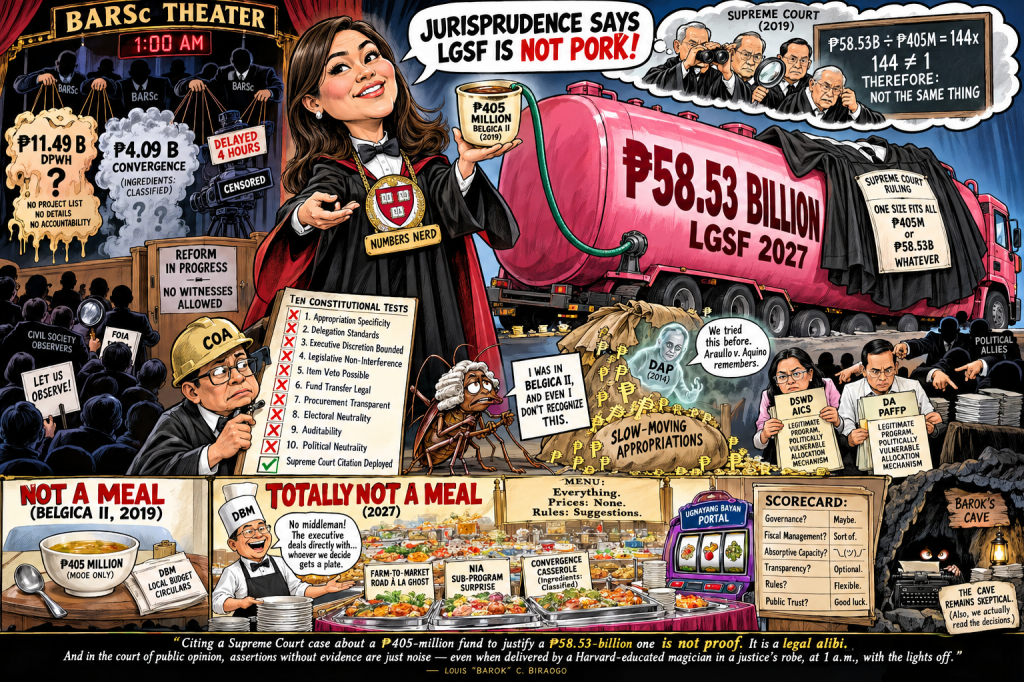
- ₱58.53B, Zero Receipts: The LGSF Pork Barrel Nobody Wants to Name
- ₱53 Million Man Tells ₱695-a-Day Workers to Stop Being ‘Mayabang’: The Audacity of BSP’s Remolona

- ₱4.4 Billion and a Witness Who Can’t Explain It: The Duterte Impeachment’s Most Expensive Non-Answer
- ₱3.06 Billion for Evacuation Centers—But Nobody Knows Where They’ll Stand (Or If They’ll Exist)
- ₱16 Billion, 280 Accounts, 8 Helicopters: Boying Remulla’s Case Against the Yaps Is Not a Drill







Leave a comment