Online
By Louis ‘Barok‘ C. Biraogo — March 4, 2025
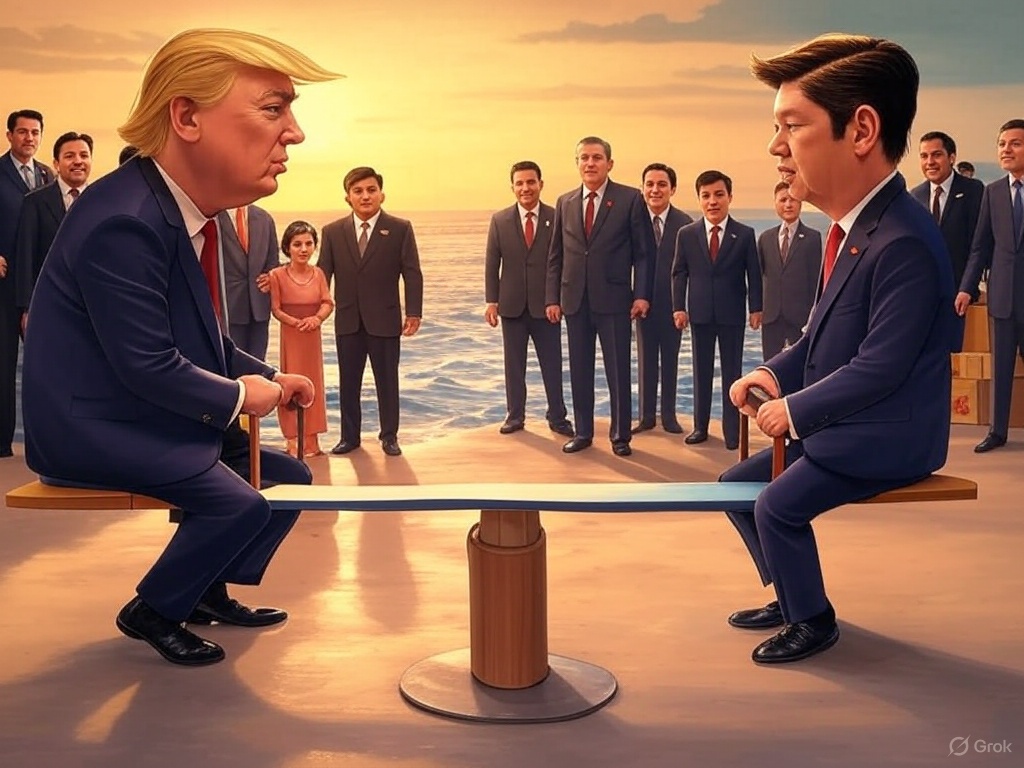
THE Indo-Pacific is on the brink. As Donald Trump’s second term erupts with a fiery clash against Ukraine’s Volodymyr Zelensky, the shockwaves are felt thousands of miles away—in the Philippines, a nation teetering on the edge of the South China Sea’s volatility. For President Ferdinand ‘Bongbong’ Marcos Jr., this isn’t just another diplomatic storm; it’s a seismic shift that could redefine Manila’s century-old alliance with Washington. Will the U.S. stand firm, or will this partnership crumble under the weight of Trump’s transactional politics? The clock is ticking.
The Scene Is Set
A White House meeting gone awry. Trump, bristling with impatience, berates Zelensky for stalling peace talks with Russia, abruptly canceling a mineral rights deal meant to bolster Ukraine’s war-torn economy. The message is clear—America First is back, and it demands quid pro quo. Across the Pacific, Philippine analysts watch with growing unease.
“He should be careful,” warns Don McLain Gill Aguirre, a Manila-based geopolitical expert. “Trump expects something in return.” The question looms large: What will Trump demand of Marcos, and can the Philippines afford the price?
A Partnership on the Precipice
The Philippine-US alliance, forged in the crucible of 1898 and cemented by the 1951 Mutual Defense Treaty, has weathered storms before. From the Cold War’s proxy battles to the closure of Subic Bay in 1992, this partnership has bent but rarely broken. Yet Trump’s return introduces a new variable—unpredictability laced with self-interest. His administration’s vote against a UN resolution condemning Russia’s invasion of Ukraine sent shockwaves through Manila.
“Maybe tomorrow, Trump will say you cannot blame China for invading the Spratlys,” cautions former Supreme Court Justice Antonio Carpio. It’s a chilling prospect for a nation locked in a tense standoff with Beijing over its maritime claims.
The pressure points are stark:
- The South China Sea – Chinese aggression—water cannons, blockades, and militarized reefs—tests Philippine resolve daily. The US has pledged $500 million to modernize Manila’s military, a lifeline against this creeping encroachment. Yet Trump’s exemption of Philippine aid from his broader foreign assistance freeze feels less like generosity and more like a calculated hedge.
- Trump’s Transactional Lens – The Zelensky debacle is a case study in what happens when allies fail to deliver on unspoken expectations. For Marcos, this raises a haunting dilemma: What will Trump ask for—more bases, deeper economic concessions, or perhaps a quieter stance on China?
- The Indo-Pacific Balance – Trump’s “America First” redux clashes with the Biden-era vision of a latticework of alliances—think AUKUS, the Quad, and the US-Japan-Philippines trilateral. If Washington retreats into Fortress America, the Philippines risks becoming a lonely outpost in a region dominated by US-China rivalry.
History whispers warnings. In 1972, Nixon pivoted to China, sidelining Taiwan to counter the Soviet Union—a move that left an ally reeling. Could Manila face a similar fate if Trump strikes a grand bargain with Xi Jinping? The past suggests caution; the present demands it.
Which Way Forward? The Strategic Dilemma
Marcos stands at a fork in the road, with no easy path ahead. Here are four strategic options, each fraught with promise and peril, each a gamble on an uncertain future.
Option 1: Double Down on the US Alliance
Marcos could lean fully into Washington, expanding the Enhanced Defense Cooperation Agreement (EDCA) and securing more aid.
Benefits: Enhanced deterrence, stronger military ties, and a reaffirmed US commitment.
Risks: Over-reliance exposes Manila to Trump’s whims. Domestic critics might cry betrayal of sovereignty.
Implications: The Philippines becomes a frontline pawn in US-China competition, potentially alienating ASEAN partners.
Option 2: Diversify the Portfolio
Picture Marcos courting Japan, Australia, and even India—building a web of security pacts to offset US unpredictability.
Benefits: Reduced dependence on any single power, bolstered regional clout.
Risks: China could retaliate, while the US might view this as disloyalty.
Implications: A nimble, multi-aligned Philippines emerges, but coordination among partners could falter.
Option 3: Hedge and Balance
Marcos could play both sides—deepening US ties while quietly engaging China on trade and infrastructure.
Benefits: Economic gains from Beijing, security from Washington.
Risks: Missteps risk alienating both, leaving Manila isolated.
Implications: Short-term stability, but long-term trust from either power erodes.
Option 4: Go It Alone
A radical pivot: pour billions into military modernization, assert an independent foreign policy, and rally ASEAN.
Benefits: Sovereignty shines, regional leadership beckons.
Risks: Budget strains, China could exploit weaknesses.
Implications: A bold vision, but the timeline is brutal. Isolation looms if ASEAN doesn’t step up.
The Way Forward: A Calculated Dance
Marcos cannot afford to bet the house on Trump’s goodwill. Nor can he turn his back on a superpower that, for now, holds the keys to deterrence. The Philippines must dance a delicate waltz—two steps with the US, one with the region, all while building its own strength.
Immediate Tactics:
- Dispatch Foreign Secretary Enrique Manalo to Washington posthaste.
- Secure a Marcos-Trump summit by April.
- Push for clarity on the $500 million pledge before Trump’s attention drifts.
- Signal openness to Japan and Australia; sign a defense tech deal with Tokyo by June.
Long-Term Positioning:
- Accelerate military modernization—target 2% of GDP on defense by 2028.
- Quietly deepen ASEAN ties; propose a South China Sea code of conduct at the 2025 summit.
- Court European investment—Germany’s precision engineering could rival China’s Belt and Road promises.
Concrete Steps:
- Expand EDCA sites by two, but tie them to joint US-Philippine operations.
- Launch a “Philippine Maritime Initiative” with Japan and Vietnam.
- Host a trilateral economic forum with the US and India in Manila next year.
Time is running out. With Trump’s shadow stretching across the globe and China’s ships encroaching daily, the Philippines stands on a razor’s edge. President Marcos must act—not out of fear, but with the resolve of a leader who knows what’s at stake. Will the Philippines rise as a pillar of freedom in the Indo-Pacific, or will it vanish into the shadows of great power rivalry? The answer lies in the choices made today—choices that will echo for generations.

- ₱9 Billion in ‘Savings’? DILG’s Fire Truck Deal Smells Like Smoke

- ₱8B BBM Pork: CCTV for Every Captain’s Kumpare?
- ₱8.9 Billion, 331 Ghost Police Stations: The TIKAS Scandal Explained

- ₱8.4 Billion, 42,000 Barangays, 1 Election: The “Bawat Barangay Makikinabang” Vote-Buying Masterclass

- ₱75 Million Heist: Cops Gone Full Bandit

- ₱6.77B Ghost Haunts Duterte: RTC Dismisses Mans Carpio’s Desperate Plea

- ₱6.77 Billion and Zero Cash: The Sara Duterte SALN Math That Doesn’t Add Up

- ₱6.7-Trillion Temptation: The Great Pork Zombie Revival and the “Collegial” Vote-Buying Circus

- ₱58.53B, Zero Receipts: The LGSF Pork Barrel Nobody Wants to Name
- ₱53 Million Man Tells ₱695-a-Day Workers to Stop Being ‘Mayabang’: The Audacity of BSP’s Remolona

- ₱4.4 Billion and a Witness Who Can’t Explain It: The Duterte Impeachment’s Most Expensive Non-Answer

- ₱3.06 Billion for Evacuation Centers—But Nobody Knows Where They’ll Stand (Or If They’ll Exist)






Leave a Reply