By Louis ‘Barok‘ C. Biraogo — May 5, 2025
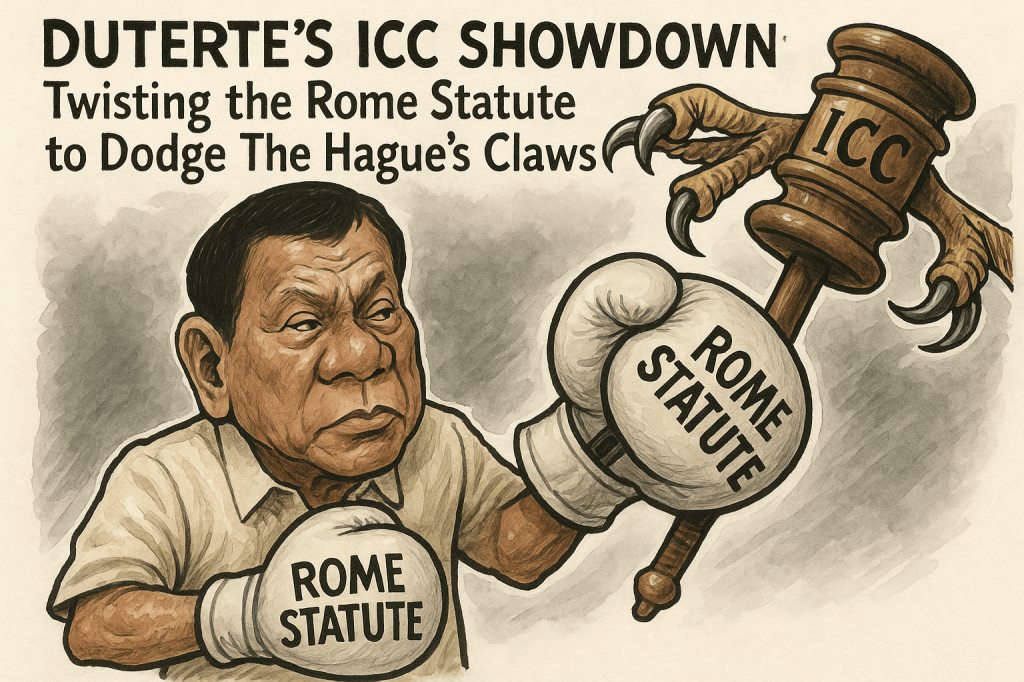
FORMER Philippine President Rodrigo Duterte’s legal team is pulling out all the stops in a jurisdictional cage match, contorting the Rome Statute to argue the International Criminal Court (ICC) lost its claws when the Philippines ditched the Court in 2019. Their 38-page filing cries foul, claiming the ICC can’t touch Duterte for alleged crimes against humanity tied to his brutal “war on drugs” because the investigation fired up post-exit. But the Burundi precedent and a fractious 2023 Appeals Chamber r11uling suggest the ICC’s grip is tighter than Duterte’s lawyers hope. Buckle up as we dissect this legal brawl, roast the defense’s “tooth and nail” melodrama, and predict whether Duterte’s team is throwing a knockout punch or a desperate Hail Mary.
1. Jurisdictional Jiu-Jitsu: Can Duterte Slip the ICC’s Post-Withdrawal Punch?
Duterte’s legal eagles, Nicholas Kaufman and Dov Jacobs, are betting big on a hyper-technical dodge, arguing the ICC can’t exercise jurisdiction over alleged drug war murders from 2011–2019 because the Philippines was out the door by the time prosecutors got rolling in 2021. Their argument leans on two key provisions—and a hefty dose of bravado.
Defense’s Gambit: Articles 12(2) and 127(2) Slam the Door Shut
- Article 12(2) Demands “Live” Membership: The defense insists Article 12(2) of the Rome Statute, which grants jurisdiction over crimes on a State Party’s turf, requires the state to be a party when the Court acts (i.e., when the Pre-Trial Chamber authorized the investigation in September 2021). With the Philippines’ exit effective March 17, 2019, they claim the ICC’s power fizzled.
- Article 127(2) Excludes the Prosecutor’s Snooping: Article 127(2) states withdrawal doesn’t halt “continued consideration of any matter already under consideration by the Court” pre-exit. The defense argues “the Court” means judges, not the Prosecutor’s Office. Since the 2018 preliminary examination was a prosecutorial move, not a judicial one, it doesn’t qualify. They’re essentially saying Fatou Bensouda’s early digging was a rogue op, not ICC business.
- “Tooth and Nail” Theatrics: The filing’s plea for the Prosecutor to stop “fighting tooth and nail” to defend a “predecessor’s error” is pure drama queen energy. It’s less a legal argument, more a soap opera pitch for Duterte’s “immediate and unconditional release” from The Hague’s lockup—a rhetorical overreach that undercuts their credibility.
ICC’s Counterpunch: Burundi Keeps the Case Alive
The ICC’s stance is clear: jurisdiction is locked in for crimes committed during the Philippines’ membership (2011–2019), and Article 127(2) keeps the case rolling. The Pre-Trial Chamber’s March 2025 arrest warrant leaned on this, noting the alleged murders happened on a State Party’s watch.
- Burundi Precedent (ICC-01/17-X): In 2019, the ICC’s Appeals Chamber ruled in the Burundi case that a preliminary examination started pre-withdrawal (2017) kept jurisdiction intact under Article 127(2). The Chamber treated the Prosecutor’s work as part of the “Court’s” mandate, rejecting the idea that only judicial acts count. This precedent is Duterte’s kryptonite: the 2018 preliminary examination, launched while the Philippines was still a party, keeps the case breathing.
- 2023 Appeals Chamber Split (3-2): The ICC’s July 2023 ruling upheld the investigation, with three judges swatting down the Philippines’ objections. But two dissenters—Judges Brichambaut and Lordkipanidze—argued the ICC lost jurisdiction post-2019 because no judicial proceeding was active pre-withdrawal. This split shows the issue’s not bulletproof, giving Duterte’s team a glimmer of hope.
Analysis: Defense’s Stretch Meets ICC’s Iron Grip
The defense’s Article 12(2) argument is a legal long shot. The provision hinges on the crime’s timing, not the Court’s procedural moves. The Philippines was a State Party during the alleged killings, ticking the jurisdictional box. Their “contemporaneous” membership claim lacks textual backing and flies in the face of Burundi, which prioritized crime dates over post-withdrawal steps.
The Article 127(2) play—excluding the Prosecutor from “the Court”—is creative but flimsy. Burundi explicitly counts preliminary examinations as “matters under consideration,” and the ICC’s structure treats the Prosecutor as a core organ. The 2023 dissent offers some fuel, but it’s a minority view unlikely to sway the Pre-Trial Chamber absent new arguments. The defense’s “tooth and nail” histrionics are more performative than persuasive, a cry for sympathy that screams desperation over legal rigor.
Verdict: The ICC’s jurisdiction stands firm under Burundi’s logic, but the 2023 dissent leaves a crack for Duterte’s team to exploit. They’re fighting uphill, banking on judicial soft spots for sovereignty.
2. Procedural Power Play: Fast-Track Ruling or Confirmation Cage Match?
Duterte’s lawyers are pushing hard to settle the jurisdictional fight now under Rule 58 and Article 19, arguing it’s a waste of time and ink to slog through a September 2025 confirmation hearing if the ICC lacks authority. They’ve got a point, but the Pre-Trial Chamber holds the cards.
Defense’s Strategy: Rule 58 and Article 19 Demand Speed
- Rule 58’s Flexibility: This rule lets the Pre-Trial Chamber tackle jurisdictional challenges solo or bundle them with the confirmation hearing. The defense argues a preliminary ruling saves resources and spares Duterte’s liberty in The Hague’s cells.
- Article 19’s Urgency: Article 19(4) encourages early challenges, and the defense frames jurisdiction as a dealbreaker that demands a quick fix. They’re betting the Chamber sees this as a clean way to dodge a drawn-out trial.
ICC’s Likely Jab
The Pre-Trial Chamber could counter that the 2023 Appeals Chamber already settled jurisdiction, making a separate ruling overkill. Bundling the challenge with the confirmation hearing ensures a full review, avoiding fragmented litigation.
Precedent: Al-Bashir (ICC-02/05-01/09)
In the Al-Bashir case, the Appeals Chamber backed early jurisdictional rulings for case-defining issues, citing judicial economy and fairness. This supports the defense but isn’t binding—the Chamber could still opt for a combined hearing.
Analysis: Efficiency vs. Settled Law
The defense’s push for a preliminary ruling is legit—resolving jurisdiction now could spare Duterte months in detention if they win. Al-Bashir backs this, but the Chamber’s discretion under Rule 58 means they might punt to the confirmation hearing, especially since 2023 already tackled jurisdiction. The defense’s plea for “immediate release” is more theatrics than legal necessity, given the ICC’s tight detention rules.
Verdict: A preliminary ruling aligns with fairness and efficiency, but the Chamber may lean toward a combined hearing to avoid rehashing 2023. The defense’s urgency is valid but overplayed.
3. Blood on His Hands? Pinning Crimes Against Humanity on Duterte
The ICC accuses Duterte of murder as a crime against humanity under Article 7, tied to thousands of alleged extrajudicial killings in his drug war. The Pre-Trial Chamber’s warrant found “reasonable grounds” for his responsibility, likely via ordering (Article 25(3)(b)) or command responsibility (Article 28).
Article 7 Charges: A Systematic Slaughter?
- Widespread or Systematic Attack: The Prosecutor alleges the killings were a systematic assault on civilians, with at least 43 documented murders as a “sample” of thousands. Duterte’s Senate testimony claiming “full responsibility” and his public calls to “kill” drug suspects are prosecutorial gold.
- Modes of Liability: The ICC eyes Duterte as an “indirect co-perpetrator” (Article 25) or under command responsibility (Article 28) for failing to rein in police as Commander-in-Chief. His alleged Davao Death Squad ties add pre-presidential spice.
Evidentiary Minefield
- Proving Intent: The Prosecutor must prove the killings were systematic, not rogue cop chaos. Duterte’s statements are incriminating, but the defense could call them political bluster, not orders.
- Bemba Precedent (ICC-01/05-01/08): The Bemba case set a tough standard for command responsibility, demanding proof of effective control and knowledge. The Prosecutor needs hard evidence—think police memos or whistleblowers—to nail Duterte.
Analysis: Strong Start, Steep Climb
The Article 7 charges hold water, given the killings’ scale and Duterte’s own words. But Bemba’s high bar means the confirmation hearing will be a slog, requiring proof of centralized direction or Duterte’s willful neglect. The defense will likely pin the blame on rogue officers, dodging a top-down conspiracy.
Verdict: The Prosecutor’s case is robust but faces Bemba’s shadow. Duterte’s bravado may backfire, but evidence is king.
4. Global Stakes: Sovereignty Smackdown and Fair Trial Fears
Sovereignty vs. Justice: Overreach or Accountability?
Duterte’s case is a litmus test for the ICC’s muscle against non-member states. The Philippines’ 2019 exit was a deliberate shield for Duterte, mirroring Burundi’s playbook. Pursuing him risks cries of imperialism, especially if the ICC leans on Interpol or cooperative states like Marcos’s Philippines to enforce warrants. But folding would signal withdrawal as a free pass, gutting the Court’s mission.
Fair Trial Tightrope
Delays in settling jurisdiction could erode Duterte’s rights under Articles 55 and 67, which demand a fair and speedy trial. The Gbagbo case (ICC-02/11-01/11) warned against dragging out core issues, as prolonged detention without clarity dents legitimacy. Duterte’s age (79) and health raise the stakes—think Milošević’s mid-trial collapse.
Analysis: A High-Wire Act
The ICC must balance bold enforcement with procedural fairness. Duterte’s case could solidify post-withdrawal jurisdiction but risks fueling anti-ICC sentiment in the Global South. The defense’s sovereignty card resonates, but their “kidnapping” claims are a legal non-starter, as the ICC has swatted down similar complaints.
Verdict: The ICC’s pursuit is righteous but risky. A clear, swift ruling is critical to dodge Gbagbo-style backlash.
Game Plan: Slice Through the Twister, Rule Fast
- Fast-Track Jurisdiction: The Pre-Trial Chamber should honor the defense’s Rule 58 request and rule on jurisdiction before the September 2025 hearing. Al-Bashir and Gbagbo back early clarity, safeguarding Duterte’s rights and saving resources.
- Double Down on Burundi: Reaffirm the Burundi precedent, clarifying that preliminary examinations count under Article 127(2). This shuts down the defense’s “Court vs. Prosecutor” sleight of hand and sets a firm rule for future exits.
- Sharpen the Evidence: The Prosecutor should prioritize hard proof—police records, insider testimony—to meet Bemba’s command responsibility bar, avoiding overreliance on Duterte’s bluster.
- Sell the Ruling: The ICC must explain its decision clearly to counter sovereignty gripes, especially in the Philippines, where Marcos’s cooperation is already a lightning rod.
Duterte’s team is swinging for the fences, but their jurisdictional dodge is more flash than substance. The ICC holds the stronger hand—unless it fumbles with delays. Time to cut through the Twister and land a clean ruling.
Disclaimer: This is legal jazz, not gospel. It’s all about interpretation, not absolutes. So, listen closely, but don’t take it as the final word.

- ₱9 Billion in ‘Savings’? DILG’s Fire Truck Deal Smells Like Smoke

- ₱8B BBM Pork: CCTV for Every Captain’s Kumpare?

- ₱8.9 Billion, 331 Ghost Police Stations: The TIKAS Scandal Explained

- ₱8.4 Billion, 42,000 Barangays, 1 Election: The “Bawat Barangay Makikinabang” Vote-Buying Masterclass

- ₱75 Million Heist: Cops Gone Full Bandit

- ₱6.77B Ghost Haunts Duterte: RTC Dismisses Mans Carpio’s Desperate Plea
- ₱6.77 Billion and Zero Cash: The Sara Duterte SALN Math That Doesn’t Add Up

- ₱6.7-Trillion Temptation: The Great Pork Zombie Revival and the “Collegial” Vote-Buying Circus

- ₱58.53B, Zero Receipts: The LGSF Pork Barrel Nobody Wants to Name
- ₱53 Million Man Tells ₱695-a-Day Workers to Stop Being ‘Mayabang’: The Audacity of BSP’s Remolona

- ₱4.4 Billion and a Witness Who Can’t Explain It: The Duterte Impeachment’s Most Expensive Non-Answer
- ₱3.06 Billion for Evacuation Centers—But Nobody Knows Where They’ll Stand (Or If They’ll Exist)




Leave a Reply