By Louis ‘Barok‘ C. Biraogo — June 6, 2025
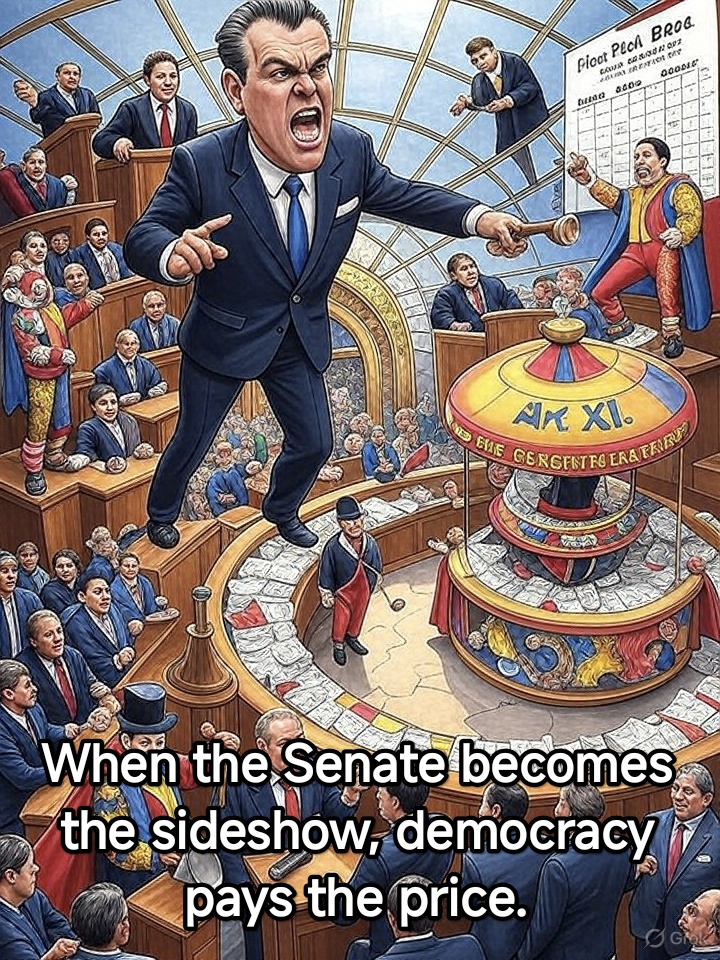
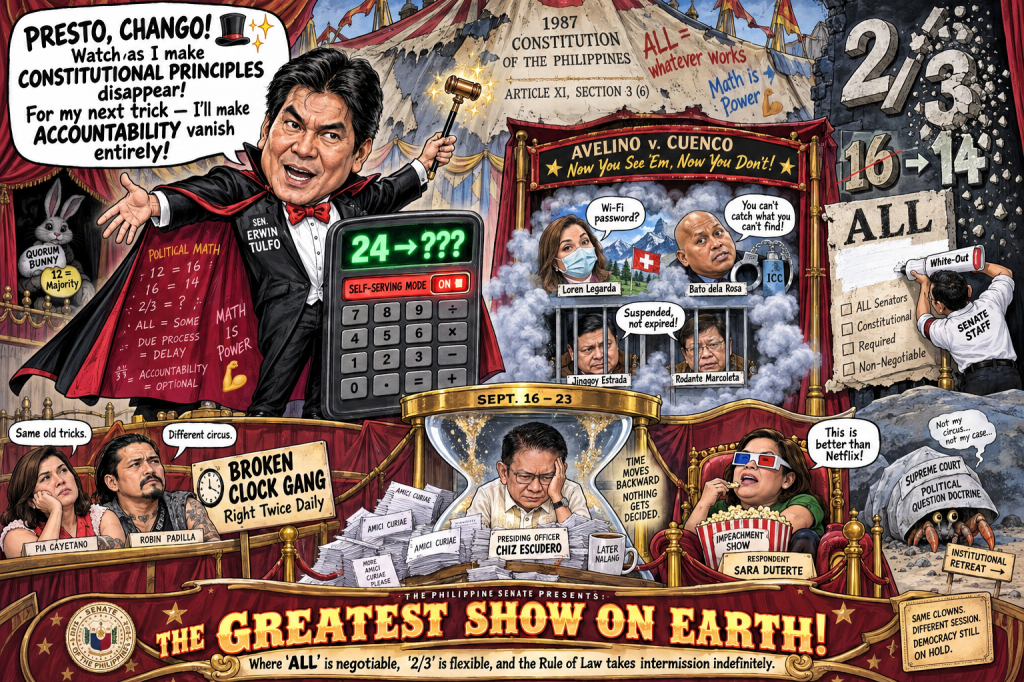
THE Senate is playing with constitutional dynamite—by scheming to dismiss Vice President Sara Duterte’s impeachment without a trial, they risk detonating the very checks and balances designed to protect Philippine democracy. Christian Monsod, a framer of the 1987 Constitution, has ignited a firestorm, charging that such a move would be an outright violation of the Charter. But is Monsod’s fiery critique a legally airtight indictment, or just political theater in a nation weary of partisan games? As the clock ticks, the Senate’s next step could either uphold democratic accountability or plunge the Philippines into a constitutional crisis.
Monsod’s Smoking Gun
Monsod’s case rests on unshakable constitutional bedrock. Article XI, Section 3(4) of the 1987 Constitution declares: “In case the verified complaint or resolution of impeachment is filed by at least one-third of all the Members of the House, the same shall constitute the Articles of Impeachment, and trial by the Senate shall forthwith proceed.” The command is clear—once the House, with over 200 lawmakers endorsing the complaint against Duterte on February 5, 2025, transmits the Articles, the Senate’s duty to act is mandatory.
The continuing body doctrine bolsters his argument. Unlike the House, the Senate’s staggered elections—12 senators replaced every three years—ensure institutional continuity. Monsod dismantles claims of “functional dismissal” at the end of the 19th Congress on June 30, 2025, noting, “If they want technicality… at that exact moment, the incoming 12 assume office. So actually… there is no time at which there are no 24 senators.” Past impeachments, like those of Chief Justice Renato Corona in 2011 and President Joseph Estrada in 2000, saw trials proceed despite political turbulence, setting a precedent the Senate can’t ignore.
“Hindi. That’s because under the Constitution, it is the duty of the Senate to hear the case. So that’s not hearing the case when you entertain a motion to dismiss.”
— Christian Monsod, Dobol B TV
The Senate’s Shell Game
Yet, some senators might clutch at straws to justify a dismissal. Article XI, Section 3(6) grants the Senate “the sole power to try and decide all cases of impeachment,” which critics could stretch to claim procedural discretion, including the power to dismiss without trial. Senator Francis Tolentino’s “functional dismissal” theory hints at practical hurdles—can a trial really bridge the 19th and 20th Congresses? But this wilts under scrutiny: the continuing body doctrine ensures no break in the Senate’s authority, and Corona’s five-month trial proves lengthy proceedings are manageable.
Judicial oversight looms as a wildcard. In Francisco v. House (G.R. No. 160261, 2003), the Supreme Court held it can review impeachment procedures for constitutional compliance, though it defers to the Senate’s trial authority. If senators dodge their duty, Monsod warns, “If there is really… abuse of discretion, then we’ll go to the Supreme Court.” But would the Court dare wade into this political swamp, or leave the Senate to its own devices?
Ethical Landmines and Procedural Sabotage
The Senate’s delay tactics stink of deeper rot. Senate President Francis “Chiz” Escudero’s shifting timeline—moving the presentation of the Articles from June 2 to June 11, 2025, to prioritize legislative agendas—reeks of procedural sabotage. The Supreme Court in Gutierrez v. House (G.R. No. 193459, 2011) rebuked such timeline manipulation, and history may repeat itself. Monsod calls out potential bias, urging Senators Escudero and Tolentino to recuse themselves: “They should think about recusing… on the ground of probable bias or conflict of interest.” Rule 137, Rules of Court, demands impartiality in judicial roles—senators, acting as judges in an impeachment trial, should heed the same standard.
“Respectfully, a dismissal at this point would be deemed by the Filipino people as effectively engineered by the Senate’s own delay and an abdication of its constitutional role in impeachment.”
— UP College of Law Faculty, Open Letter
The Grave Abuse of Discretion Trap
Could dismissal cross the line into “grave abuse of discretion”? In San Fernando Coca-Cola Union v. Coca-Cola Bottlers (G.R. No. 200499), the Court defined this as acts “patent, arbitrary, and despotic.” Monsod’s warning echoes Angara v. Electoral Commission (63 Phil. 139, 1936): evading a constitutional duty is abuse, plain and simple. If the Senate, led by Escudero and allies like Senator Ronald “Bato” dela Rosa, votes to dismiss without trial, they’d be thumbing their noses at Article XI’s mandate. The Supreme Court might see this as a “virtual refusal to perform a duty enjoined by law,” opening the door to intervention.
The Fallout and the Fix
The Senate’s delay isn’t just incompetence—it’s a calculated betrayal of the Constitution. Over 100 UP Law faculty members demand action: convene the impeachment court now and “let the truth unfold.” Failure to do so risks eroding public trust, with the faculty warning of an “abdication of constitutional role” that could scar the Senate’s legacy as an impartial bastion. If the Senate votes to dismiss, the Supreme Court may drop the hammer—and redefine impeachment forever.
Recommendations: The Senate must honor Article XI, Section 3(4) and “forthwith proceed” with Duterte’s trial, regardless of the 19th Congress’s end. Senators with conflicts—Escudero, Tolentino—should step aside to preserve legitimacy. Politically, Escudero’s maneuvering could cost him the Senate presidency if public outrage boils over. The stakes couldn’t be higher: dodge this duty, and the Senate undermines the checks and balances that keep democracy alive. Will they rise to the occasion, or hand the nation a constitutional time bomb?
Key Citations
- 1987 Constitution, Article XI, Sections 3(4) and 3(6): Mandates the Senate’s duty to try impeachment cases.
- Angara v. Electoral Commission, 63 Phil. 139 (1936): Defines evasion of constitutional duty as abuse.
- Francisco v. House, G.R. No. 160261 (2003): Affirms Supreme Court’s power to review impeachment procedure compliance.
- Gutierrez v. House, G.R. No. 193459 (2011): Rebukes timeline manipulation in impeachment processes. Read here.
- San Fernando Coca-Cola Union v. Coca-Cola Bottlers, G.R. No. 200499: Defines “grave abuse of discretion” as patent and despotic acts.
- Rule 137, Rules of Court: Governs recusal for bias or conflict of interest.
Disclaimer: This is legal jazz, not gospel. It’s all about interpretation, not absolutes. So, listen closely, but don’t take it as the final word.

- ₱8B BBM Pork: CCTV for Every Captain’s Kumpare?

- ₱8.4 Billion, 42,000 Barangays, 1 Election: The “Bawat Barangay Makikinabang” Vote-Buying Masterclass

- ₱75 Million Heist: Cops Gone Full Bandit

- ₱6.77B Ghost Haunts Duterte: RTC Dismisses Mans Carpio’s Desperate Plea

- ₱6.7-Trillion Temptation: The Great Pork Zombie Revival and the “Collegial” Vote-Buying Circus

- ₱53 Million Man Tells ₱695-a-Day Workers to Stop Being ‘Mayabang’: The Audacity of BSP’s Remolona

- ₱3.06 Billion for Evacuation Centers—But Nobody Knows Where They’ll Stand (Or If They’ll Exist)

- ₱10B Ghost in New Clark City: Matibag’s Haunted Séance for Cayetano

- ₱1.9 Billion for 382 Units and a Rooftop Pool: Poverty Solved, Next Problem Please

- ₱1.35 Trillion for Education: Bigger Budget, Same Old Thieves’ Banquet

- ₱1 Billion Congressional Seat? Sorry, Sold Out Na Raw — Si Bello Raw Ang Hindi Bumili

- “Your Paperwork Is Wrong”: Sara Duterte’s Epic Non-Answer Defense





 KWEBA ni BAROK
Leave a comment