By Louis ‘Barok‘ C. Biraogo — October 10, 2024
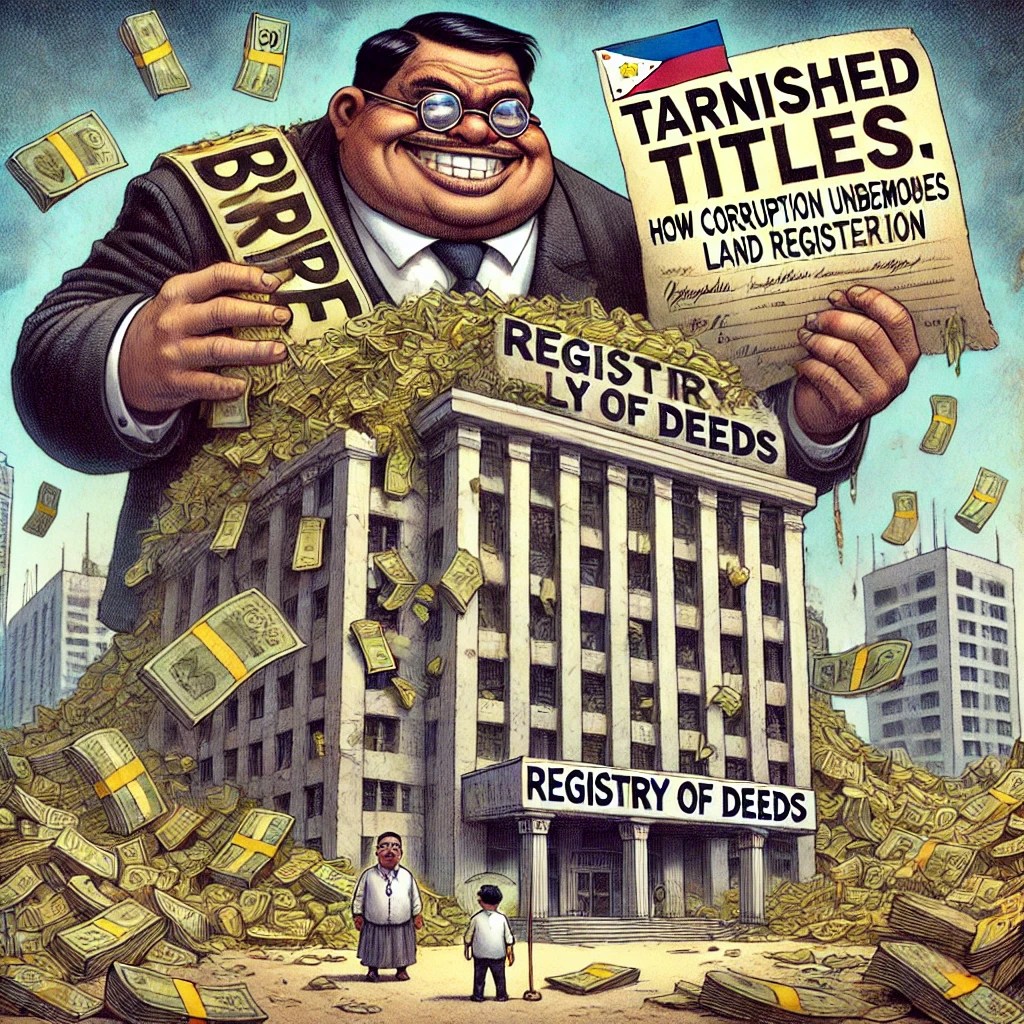
THE dismissal of Atty. Reynaldo Paredes Mayol from the Mandaue City Registry of Deeds isn’t just another case of corruption—it’s a symbol of how deep the rot runs in Philippine institutions. Caught with P150,000 in marked bills, Mayol’s arrest in an entrapment operation pulls back the curtain on an office charged with protecting the country’s most prized asset: land. What happens when those sworn to safeguard it become its biggest threat?
Land, in the Philippines, is not just property; it is heritage, capital, and security. It ties generations to their past and secures futures. Yet, for years, rampant corruption has tainted the process of land registration. The case of Mayol is merely the latest publicized chapter in a longer saga of fraud, bribes, and misuse of power that haunts the Land Registration Authority (LRA) and its sub-offices like the Registry of Deeds.
A Hard Line Against Corruption—But at What Cost?
The case against Mayol is undeniably compelling. According to the Ombudsman’s decision, Mayol’s violation of Republic Act (RA) 6713, specifically Section 7(d)—which strictly forbids public officials from soliciting or accepting gifts or any form of compensation—was clear. In a sting operation, the National Bureau of Investigation caught him red-handed. His offense, as outlined by Ombudsman Samuel Martires, was not just a breach of conduct but a moral violation of public trust, the very foundation on which any functioning bureaucracy stands.
In a strikingly decisive move, Mayol now faces not only dismissal from service but also the forfeiture of all his retirement benefits, accrued leave credits, and other financial entitlements. Should the penalty of dismissal become moot due to his potential separation from service, this will translate into a hefty fine—equivalent to his annual salary. The message from the Ombudsman’s office was clear: corruption will no longer be tolerated.
But is the dismissal of one individual enough to tackle what has clearly become a systemic issue?
A Larger Problem with Systemic Rot
The Registry of Deeds offices across the country have long been viewed as bastions of inefficiency and corruption. These offices, which oversee the registration of land titles and deeds under the Torrens system, have become infamous for processing delays, “lost” documents, and a pay-to-play culture. Citizens desperate to secure land titles—many of them members of the marginalized sectors—are forced to navigate the murky waters of bureaucratic red tape and outright extortion.
Atty. Gerardo P. Sirios, Administrator of the LRA, has been waging a quiet but relentless battle to overhaul the system. His anti-corruption initiatives, including enhanced security features for land titles and the involvement of the National Bureau of Investigation, reflect an understanding that the rot runs deep. Sirios faces immense challenges—chief among them the deeply entrenched corruption networks within the Registry of Deeds offices and public cynicism. His call for the public’s cooperation in rooting out corruption is both practical and desperate. Without public vigilance, the syndicates that thrive within these offices will remain untouchable.
The Ombudsman’s Decision: Justice or Expediency?
The decision to dismiss Mayol seems ironclad—supported by evidence of wrongdoing and adherence to legal frameworks like RA 6713. The technicalities were met: Mayol was caught in the act, and the laws prohibiting his conduct are clear. Yet, the outcome leaves room for scrutiny. The Ombudsman’s ruling focuses on administrative penalties, and while dismissing Mayol is a necessary step, it might not be enough. The decision’s strength lies in its adherence to legal precedent, but should not the next logical step be criminal prosecution?
Republic Act No. 3019, the Anti-Graft and Corrupt Practices Act, provides mechanisms for criminal cases against public officials engaged in corrupt practices. Section 3(b) explicitly outlines that demanding or receiving any form of benefit, whether directly or indirectly, constitutes corruption. Given the gravity of Mayol’s actions, the filing of criminal cases should follow swiftly. This is no mere administrative offense—it is a crime.
Arguments in Defense of Mayol: Thin, but Present
To analyze Mayol’s defense, one must consider whether the entrapment operation was legally sound and conducted within the bounds of the law. Entrapment operations have a fraught history, with legal scholars often debating the fine line between catching a crime in progress and inducing someone to commit one. Mayol could argue that he was lured into the situation under duress, especially given the orchestrated nature of the NBI’s operation. Precedent in Philippine jurisprudence shows that the Supreme Court has, in some instances, acquitted accused individuals based on technicalities related to the conduct of entrapment operations. However, with marked money and overwhelming evidence against him, this defense may amount to little more than a delay tactic.
A Long Road Ahead for Reform
For all the relief that comes with Mayol’s dismissal, it is only the beginning. The LRA’s credibility is on the line, and Sirios must now rally his forces to ensure that this case sets a lasting precedent. If Mayol is indeed prosecuted under RA 3019, it will be a clear message that corruption will not be tolerated. The challenge, however, is immense. Bureaucratic inertia, political pressure, and a public worn down by years of impunity threaten to undermine these efforts.
To truly eradicate corruption, the LRA and the Registry of Deeds need sweeping reforms. These include:
- Digital Transformation: Expanding digitization of land records and transactions, reducing human intervention and, therefore, opportunities for corruption.
- Public Accountability Platforms: Establishing a public verification system where citizens can monitor the progress of their land title applications in real-time, fostering transparency and accountability.
- Whistleblower Protection: Strengthening protections for individuals like Manuel Dy, Jr., whose courage in exposing Mayol’s corruption was instrumental in this case. The existing Whistleblower Act (Republic Act No. 6770) must be bolstered to ensure more robust safeguards for informants.
Mayol’s dismissal is a small victory in a much larger war. Corruption doesn’t end with one man—it’s a system, deeply embedded, and hungry for power. Only when we, as a society, demand accountability at every turn can we hope to dismantle the machinery that has kept corruption alive in the land registration system. The future of public trust rests on our ability to act now, before it’s too late.

- “Ang Hirap Maging Mahirap”: The PAO Scandal That Proves Government Contempt Is Nothing New

- “Far-Off” My Axx: Malacañang’s Claire Castro Drowns in Her Own Legal Gaslighting

- “Forthwith” to Farce: How the Senate is Killing Impeachment—And Why Enrile’s Right (Even If You Can’t Trust Him)

- “HINDI AKO NAG-RESIGN!”

- “I Know Nothing”: Baste Duterte’s Amnesia Defense Meets ₱33M in GenCorp Contracts

- “I’m calling you from my new Globe SIM. Send load!”

- “Mahiya Naman Kayo!” Marcos’ Anti-Corruption Vow Faces a Flood of Doubt

- “Manageable” Debt, Unmanageable Lies: DBM’s ₱21 Trillion Fairy Tale

- “Meow, I’m calling you from my new Globe SIM!”

- “Natrabaho”: One Word, One Ombudsman, and a Judiciary on Trial

- “No Special Jail for Crooks!” Boying Remulla Slams VIP Perks for Flood Scammers

- “Philippine-Controlled” or Yankee Gas Station? The Davao Fuel Depot Farce Exposed








Leave a Reply