By Louis ‘Barok‘ C. Biraogo — April 4, 2025
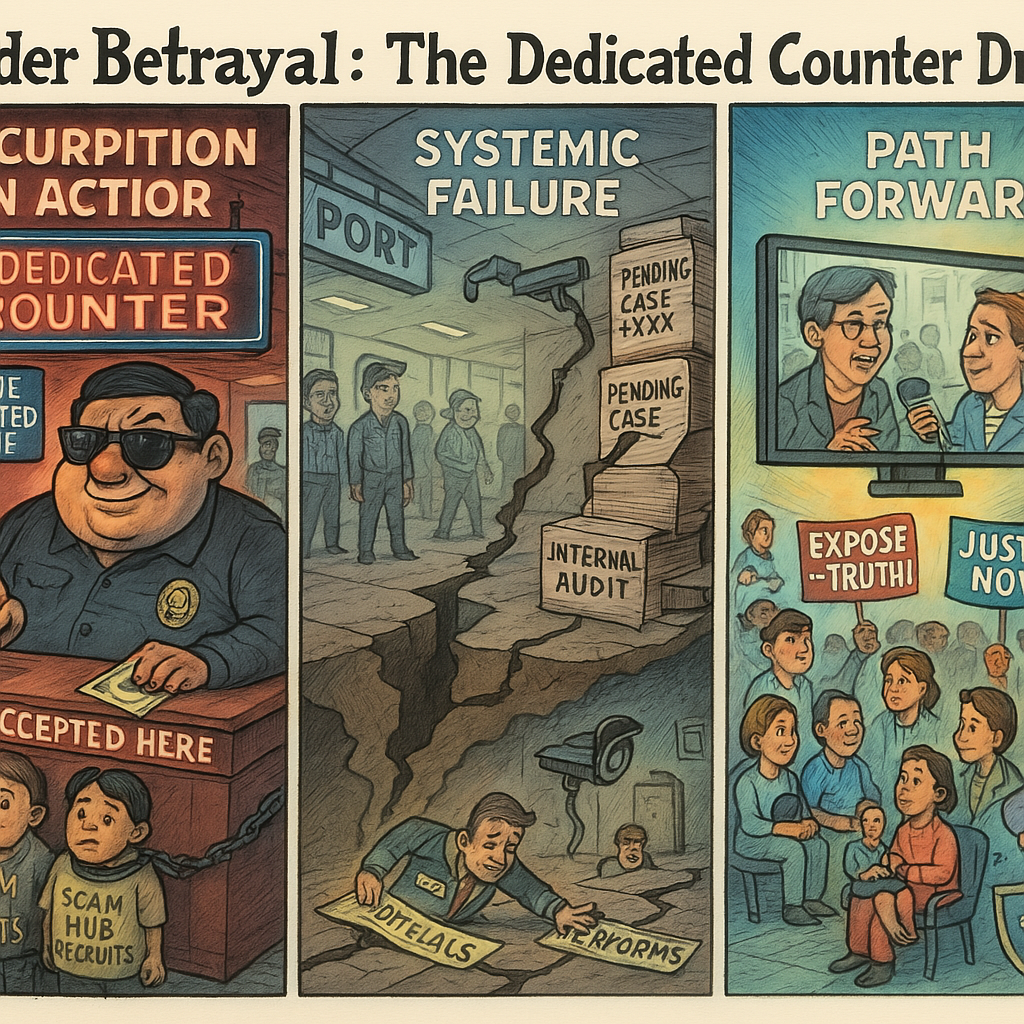
THE Bureau of Immigration (BI) is at the center of a human trafficking scandal that has unveiled a shocking operation: a “dedicated counter” at Philippine airports, allegedly used to expedite the departure of over 200 illegally recruited Filipino workers. According to a recent news report, these victims—many lured with promises of legitimate jobs—were trafficked to scam hubs in Myanmar, Cambodia, and Laos, where they were forced into online fraud schemes.
Repatriated victims revealed that complicit immigration officers facilitated their exits by guiding them past the BI’s “S-queuing” policy, a randomization system designed to ensure fair processing, using a prearranged lane that dodged standard checks. The scandal has triggered the dismissal of seven officers, with additional suspensions pending, though the investigation remains ongoing.
While fewer than 20 victims have confirmed using the dedicated counter, 54 others reportedly slipped through a “southern backdoor” via alternate exit points, hinting at a broader network. This breach exposes critical vulnerabilities in the Philippines’ border security, prompting questions about whether this reflects systemic corruption or a rogue operation that evaded oversight.
Legal Violations: Laws Shredded, Penalties Collecting Dust
The implicated BI officers have blatantly violated multiple statutes. Here’s a breakdown:
RA 9208 (Anti-Trafficking in Persons Act)
- Section 4: Prohibits recruiting, transporting, or harboring persons for exploitation—precisely what occurred with victims coerced into scam operations. Penalties: 20 years imprisonment and fines of P1 million to P2 million.
- Section 6: Elevates the crime to qualified trafficking when public officers are involved, mandating life imprisonment and fines of P2 million to P5 million. With over 200 victims identified, convictions should be imminent, yet none have materialized.
RA 3019 (Anti-Graft and Corrupt Practices Act)
- Section 3(e): Addresses officers causing “undue injury” through “manifest partiality”—such as rigging a counter for traffickers. Penalties: Up to 10 years in prison and disqualification from public office. Seven officers are out, but legal follow-through remains slow.
RA 6713 (Code of Conduct and Ethical Standards)
- Section 7(d): Bans soliciting favors tied to duties. A dedicated counter suggests bribery, with penalties including fines or removal. Enforcement, however, appears stalled.
Procedural Gaps: S-Queuing and CCTV Shortfalls
- The “S-queuing” system was rendered ineffective as traffickers escorted victims to complicit officers.
- CCTV footage, a potential goldmine, was only reviewed post-repatriation, highlighting reactive rather than proactive oversight.
Accountability: Ombudsman’s Role
Under RA 6770 (Ombudsman Act), the Ombudsman can investigate and suspend officers. Seven dismissals and pending suspensions signal progress, but the scale suggests deeper systemic issues requiring broader intervention.
Who’s to Blame: Leadership Challenges and DOJ Constraints
BI Leadership: Navigating a Broken System
- Commissioner Joel Anthony Viado has acted decisively by dismissing seven officers and launching an internal probe.
- However, the scandal’s scope underscores the immense challenges he faces—entrenched corruption and resource limitations hinder comprehensive reform.
- Positive steps forward could include enhanced internal audits, better training, and investment in technology to bolster oversight. Viado’s efforts deserve support, but he needs greater resources and authority to enact lasting change.
DOJ: Overburdened but Essential
- The DOJ holds the key to prosecuting under RA 9208 Sec. 6, which carries life sentences for officer-involved trafficking.
- Yet, the department contends with a backlog of cases and limited manpower.
- A constructive approach would involve prioritizing high-profile trafficking cases and seeking international assistance to build capacity. The DOJ’s role is critical, and supporting it with resources could turn the tide.
Political and International Dimensions
- This scandal erodes trust in the BI and may spur legislative reforms for tighter border controls.
- Internationally, the trafficking of victims to Myanmar, Cambodia, and Laos demands cooperation. Joint task forces and data-sharing with these nations could transform a national failure into a regional anti-trafficking opportunity.
Public Administration Failures: Rot, Oversight, and Victim Neglect
Corruption: A Systemic Issue
- A “dedicated counter” points to a network, not isolated acts.
- Transparency—releasing officer names and probing their connections—is essential to dismantle it.
Oversight: Audits Falling Short
- Internal audits failed to detect this scheme, suggesting a need for external oversight from NGOs or UN bodies to ensure accountability.
Repatriation: Victims Overlooked
- Over 200 victims have returned, but support and debriefing appear minimal.
- Engaging the Inter-Agency Council Against Trafficking (IACAT) more robustly could strengthen victim protection and case-building.
How to Fix This: Concrete Steps
Immediate Actions
- Release CCTV Footage: Publicize unedited tapes to expose the operation.
- Freeze Assets: Use RA 3019 to target officers’ finances.
- Audit Backdoors: Investigate “southern backdoor” exits immediately.
Long-Term Reforms
- Strengthen Hiring: Implement rigorous vetting—background checks and psych evaluations.
- Enhance Training: Mandate frequent anti-trafficking courses.
- Protect Whistleblowers: Encourage insiders to report without fear.
Legal and Collaborative Efforts
- DOJ Support: Establish a dedicated trafficking unit to expedite RA 9208 cases.
- International Cooperation: Partner with affected countries to combat cross-border trafficking.
The Verdict
The BI’s “dedicated counter” scandal reveals a system strained by corruption and inadequate resources. Laws exist, but enforcement lags; leadership is responding, yet needs support; and victims remain underserved. By publicizing evidence, bolstering agencies like the BI and DOJ, and fostering international collaboration, the Philippines can address this crisis—and prevent its recurrence.

- ₱8B BBM Pork: CCTV for Every Captain’s Kumpare?
- ₱8.9 Billion, 331 Ghost Police Stations: The TIKAS Scandal Explained

- ₱8.4 Billion, 42,000 Barangays, 1 Election: The “Bawat Barangay Makikinabang” Vote-Buying Masterclass
- ₱75 Million Heist: Cops Gone Full Bandit

- ₱6.77B Ghost Haunts Duterte: RTC Dismisses Mans Carpio’s Desperate Plea

- ₱6.7-Trillion Temptation: The Great Pork Zombie Revival and the “Collegial” Vote-Buying Circus

- ₱53 Million Man Tells ₱695-a-Day Workers to Stop Being ‘Mayabang’: The Audacity of BSP’s Remolona
- ₱3.06 Billion for Evacuation Centers—But Nobody Knows Where They’ll Stand (Or If They’ll Exist)
- ₱10B Ghost in New Clark City: Matibag’s Haunted Séance for Cayetano

- ₱1.9 Billion for 382 Units and a Rooftop Pool: Poverty Solved, Next Problem Please

- ₱1.35 Trillion for Education: Bigger Budget, Same Old Thieves’ Banquet

- ₱1 Billion Congressional Seat? Sorry, Sold Out Na Raw — Si Bello Raw Ang Hindi Bumili





Leave a comment