By Louis ‘Barok‘ C. Biraogo — September 9, 2024
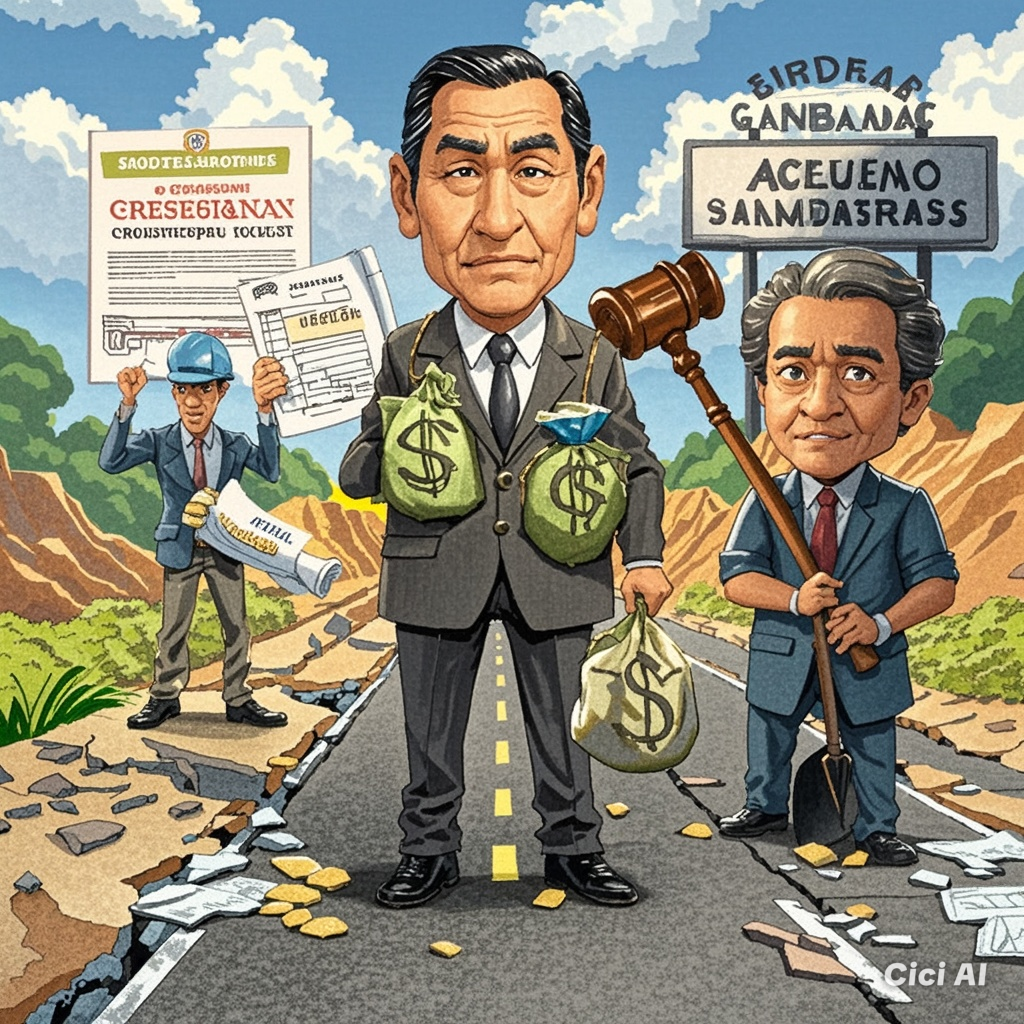
CORRUPTION is a cancer that has infected Philippine infrastructure projects, undermining their quality, eroding public trust, and hindering the country’s development. The recent Sandiganbayan ruling convicting former Aurora Governor Gerardo Noveras and six others over the anomalous award of contracts for two road repair projects in 2014 is just the latest example of this endemic problem. For years, rigged bidding processes, collusion between public officials and private contractors, and the manipulation of project costs have become the norm.
Contextual Background: Corruption and Collusion in Infrastructure Projects
The conviction of Noveras and his co-accused stems from their involvement in rigging bids for two road repair projects in Aurora province: the repair of the Dimalang bridge approach and a road section of the Casiguran-Dilasag provincial road. RMCR Construction, owned by Manding Claro Ramos, was awarded both contracts under highly questionable circumstances. Investigations revealed that RMCR had begun work on both projects before the official bidding process had concluded, and even before the provincial government had issued the required Notices to Proceed.
The Philippine government, through the Department of Public Works and Highways (DPWH), has long been grappling with corruption in public works, particularly the manipulation of bidding processes to favor particular contractors. This not only compromises the integrity of infrastructure projects but also leads to the inflation of project costs, with public officials and contractors sharing the illicit gains while sacrificing the quality of construction. The Noveras case is emblematic of these practices, highlighting how entrenched corruption can derail public infrastructure and erode trust in governance.
The Sandiganbayan Ruling: Unwarranted Benefit to RMCR Construction
On September 4, 2024, the Sandiganbayan’s Sixth Division issued a 49-page decision convicting Noveras and six other former officials of graft under Section 3(e) of Republic Act 3019, or the Anti-Graft and Corrupt Practices Act. This provision prohibits public officials from giving any unwarranted benefit, advantage, or preference to a private party, or from causing undue injury to any party, including the government, through their actions.
While the prosecution failed to prove that the government suffered direct financial loss, it was evident that RMCR Construction gained an unwarranted advantage. The company completed the two projects even before the bidding process had officially concluded, an anomaly made all the more glaring by the fact that an accomplishment report dated August 18, 2014, declared both projects 100% complete—just three days after the Notices to Proceed were issued on August 15, 2014. Despite this, the provincial government disbursed a total of P1.093 million to RMCR for these projects.
The Legal Foundation: Why the Sandiganbayan Ruling is Sound
The court’s decision aligns with established legal principles in the Philippines concerning graft and corruption. Section 3(e) of Republic Act 3019 clearly prohibits the conferral of unwarranted benefits upon private entities, even in the absence of direct government injury. Additionally, the court’s reliance on Ombudsman v. Martel (G.R. No. 217008, 2017) provides a precedent wherein public officials were found liable for giving undue advantage in the awarding of contracts despite no direct proof of government loss. The court’s approach in emphasizing unwarranted benefit over direct injury reflects the broader aim of the Anti-Graft law to safeguard the public bidding process from manipulation and favoritism.
Furthermore, the Government Procurement Reform Act (Republic Act 9184) imposes stringent regulations on the conduct of bidding processes for public works, ensuring transparency, competitiveness, and fairness. The irregularities in the Noveras case—where the contractor began work before the completion of the bidding process—constitute a clear violation of these legal standards.
The Defense Rests: Noveras’ Attempts to Justify His Actions
Noveras and his co-accused argued that the projects were completed on time, and thus, no undue injury was caused to the government. They maintained that the project’s completion demonstrated good faith in their actions, as the public ultimately benefited from the infrastructure improvements.
However, this defense is flawed. The Supreme Court, in Santiago v. Garchitorena (G.R. No. 109266, 1997), ruled that public officials may still be found guilty of graft even when projects are completed if the award of contracts involved fraud or favoritism. The completion of the projects does not absolve officials of liability for violating procurement laws or manipulating the bidding process to favor a specific contractor. In this case, the rigged bidding and premature start of work nullify the accused’s claims of good faith.
Moreover, the defense’s reliance on the argument of no undue injury does not hold weight under Section 3(e) of RA 3019. The law focuses on the granting of unwarranted benefits, which was clearly established in this case. RMCR Construction undeniably received an advantage through the manipulated bidding process, regardless of the project’s outcome.
A Lesson Learned? The Legal Consequences of Corruption in Infrastructure Projects
The court sentenced Noveras, the six other officials, and RMCR owner Manding Claro Ramos to 6 years and 1 month to 10 years of imprisonment. They were also perpetually disqualified from holding public office, sending a strong message about the consequences of engaging in corrupt practices in government procurement.
This ruling highlights the gravity of violating the integrity of the public bidding process. Perpetual disqualification serves as a legal barrier to prevent convicted individuals from re-entering public service, preserving the public’s trust in its officials.
A Long Shot: Noveras’ Legal Options and the High Bar for Overturning a Conviction
The defendants may appeal the Sandiganbayan ruling to the Supreme Court through a petition for review on certiorari under Rule 45 of the Rules of Court. However, they face significant legal hurdles. The Supreme Court rarely overturns factual findings of lower courts unless there are compelling reasons to do so, such as gross misapprehension of facts or a clear violation of the law. In People v. Sarabia (G.R. No. 149375, 2005), the Court reaffirmed that the findings of the Sandiganbayan are accorded great respect, especially when supported by substantial evidence, as in this case.
Recommendations
To the Respondents: An appeal should focus on procedural or factual errors that could demonstrate a miscarriage of justice. However, given the strength of the evidence, a plea for mitigation of sentence may be more prudent.
To the Government and DPWH: A thorough review of all ongoing and future infrastructure projects should be conducted to prevent similar anomalies. Strengthening oversight mechanisms, such as independent project audits, can reduce opportunities for collusion.
To Contractors: Transparency in dealings with government agencies is key to maintaining integrity. Companies involved in public works must adhere strictly to procurement laws and ensure that all projects undergo the required legal processes before any work begins.
To the Public: Vigilance in monitoring government projects is essential. Whistleblower protection laws must be utilized to encourage the reporting of corruption, and civil society should engage in audits and public monitoring to safeguard against the misuse of public funds.
In conclusion, the conviction of Noveras and his co-accused serves as a reminder that corruption in government procurement carries significant legal and ethical consequences. For the Philippines to build a future of transparent and accountable governance, systemic reforms and heightened enforcement of laws are imperative. But will this conviction be a turning point, or will it be just another chapter in the long saga of corruption in Philippine infrastructure?

- ₱9 Billion in ‘Savings’? DILG’s Fire Truck Deal Smells Like Smoke

- ₱8B BBM Pork: CCTV for Every Captain’s Kumpare?

- ₱8.9 Billion, 331 Ghost Police Stations: The TIKAS Scandal Explained

- ₱8.4 Billion, 42,000 Barangays, 1 Election: The “Bawat Barangay Makikinabang” Vote-Buying Masterclass

- ₱75 Million Heist: Cops Gone Full Bandit

- ₱63 to the Dollar: The Only Thing Falling Faster Than the Peso Is the Government’s Credibility

- ₱6.77B Ghost Haunts Duterte: RTC Dismisses Mans Carpio’s Desperate Plea
- ₱6.77 Billion and Zero Cash: The Sara Duterte SALN Math That Doesn’t Add Up

- ₱6.7-Trillion Temptation: The Great Pork Zombie Revival and the “Collegial” Vote-Buying Circus

- ₱58.53B, Zero Receipts: The LGSF Pork Barrel Nobody Wants to Name







Leave a Reply