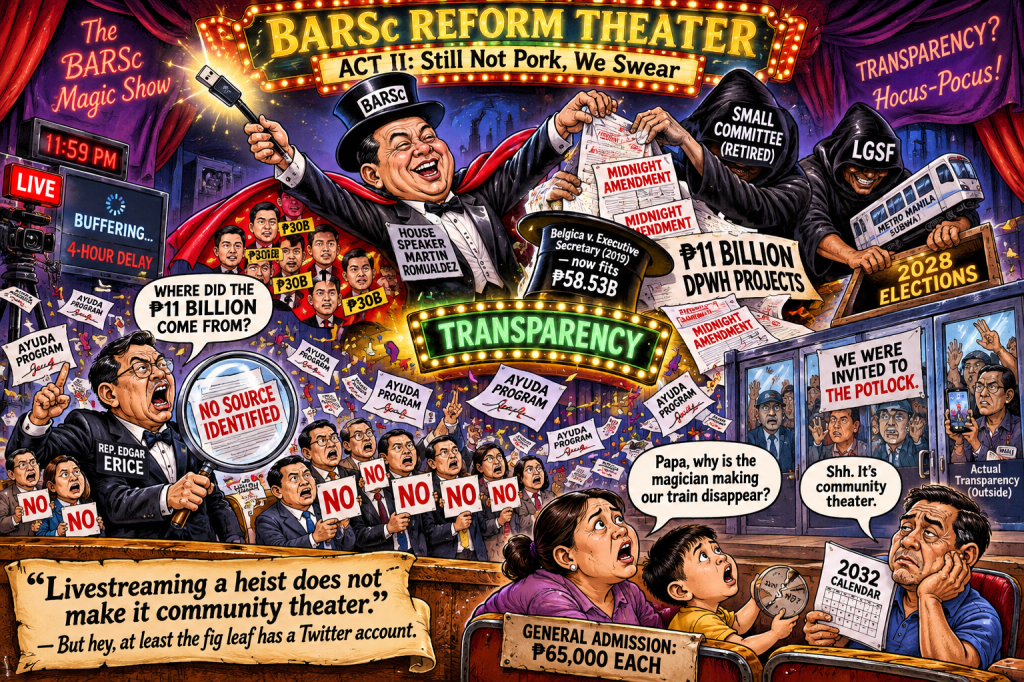
The BARSc Was Built to Shine a Light. Instead, It Texted Lawmakers at Midnight and Called It Transparency.
By Louis ‘Barok’ C. Biraogo | October 18, 2026
WELCOME back to the cave, where the echo of ₱100 billion bouncing off the walls sounds suspiciously like a campaign jingle for 2028.
Let me get this straight. The House of Representatives—that august chamber of 316 souls, 13 of whom apparently still possess a functioning conscience—passed a ₱7.2-trillion national budget for 2027 after receiving amendments at midnight, one day before the vote. The Budget Amendments Review Subcommittee, or BARSc, which was literally created to replace the notorious “small committee” and billed as a transparency initiative, texted the final changes to lawmakers like a group chat reminder about tomorrow’s potluck. And the response from the House leadership is… what, exactly? That it was livestreamed?
Livestreaming a heist does not make it community theater.
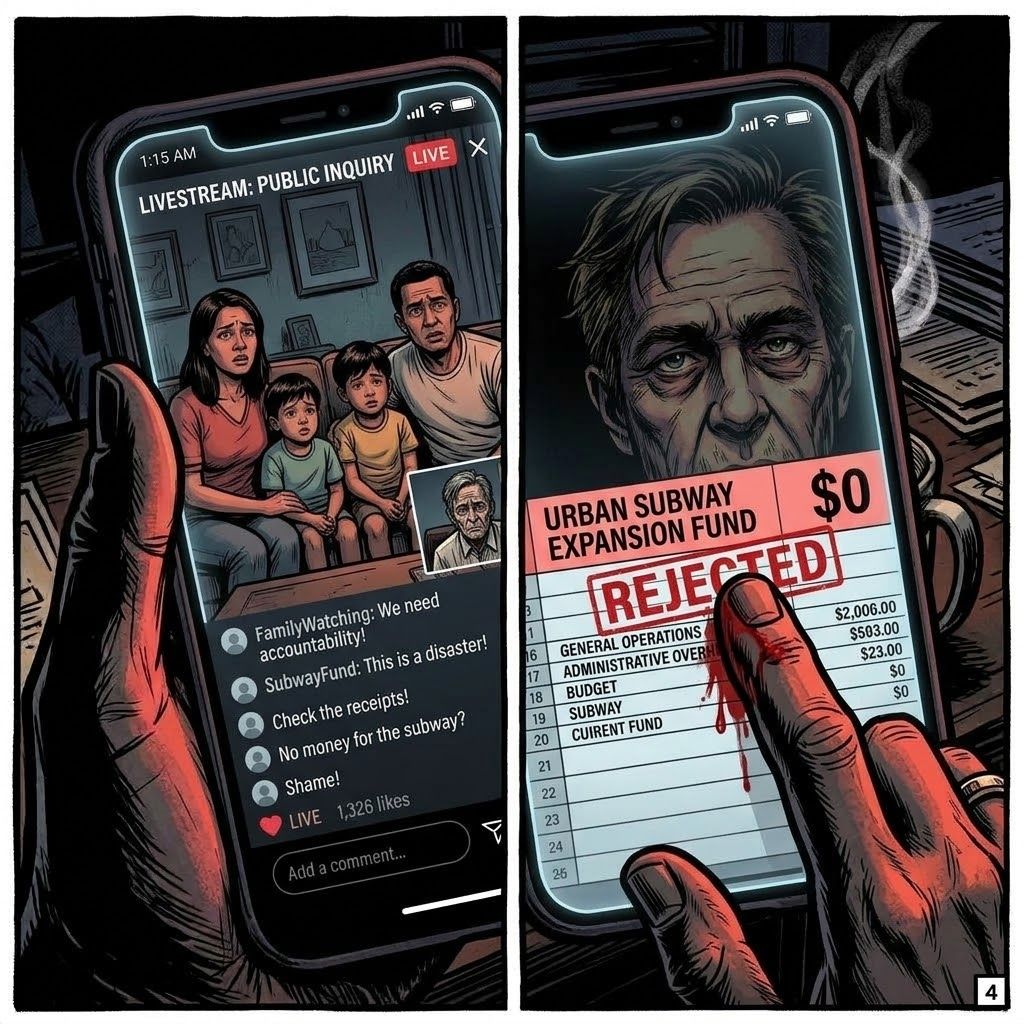
The Anatomy of a Midnight Special
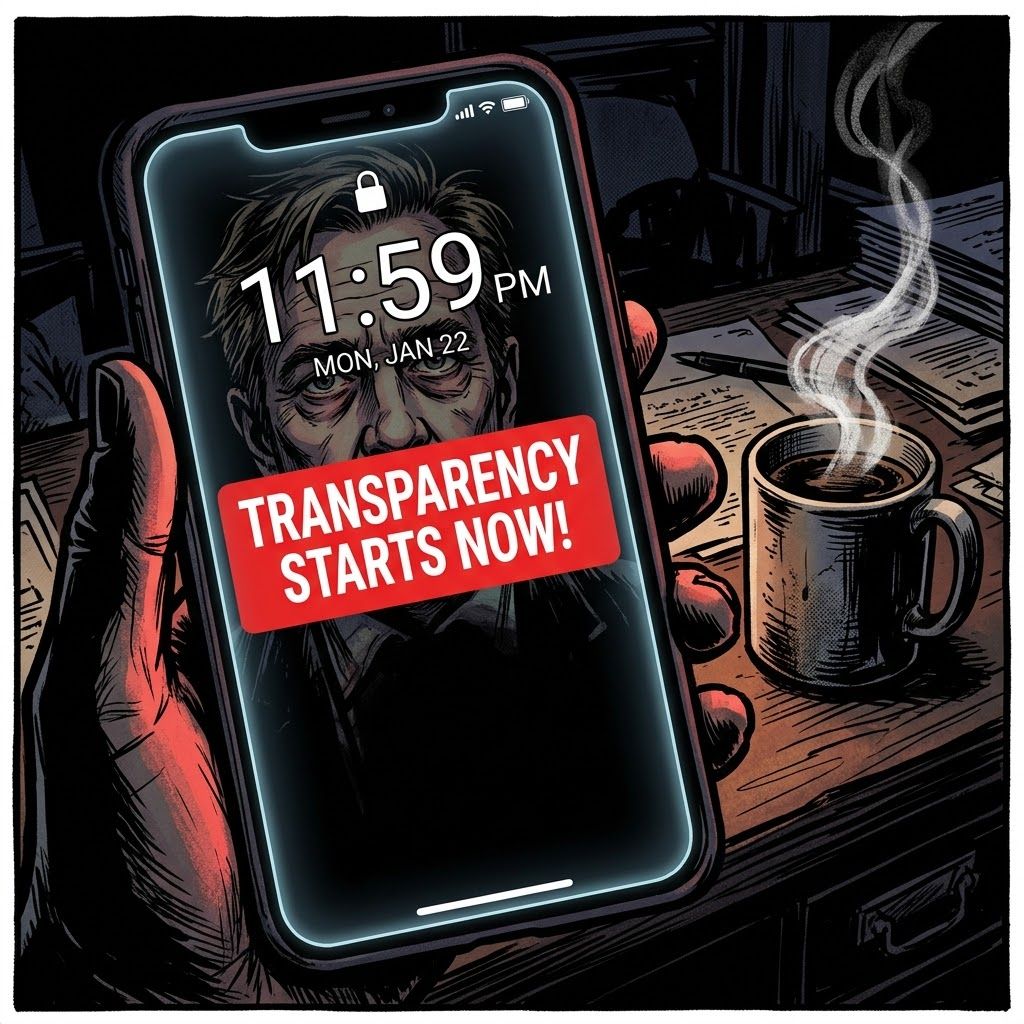
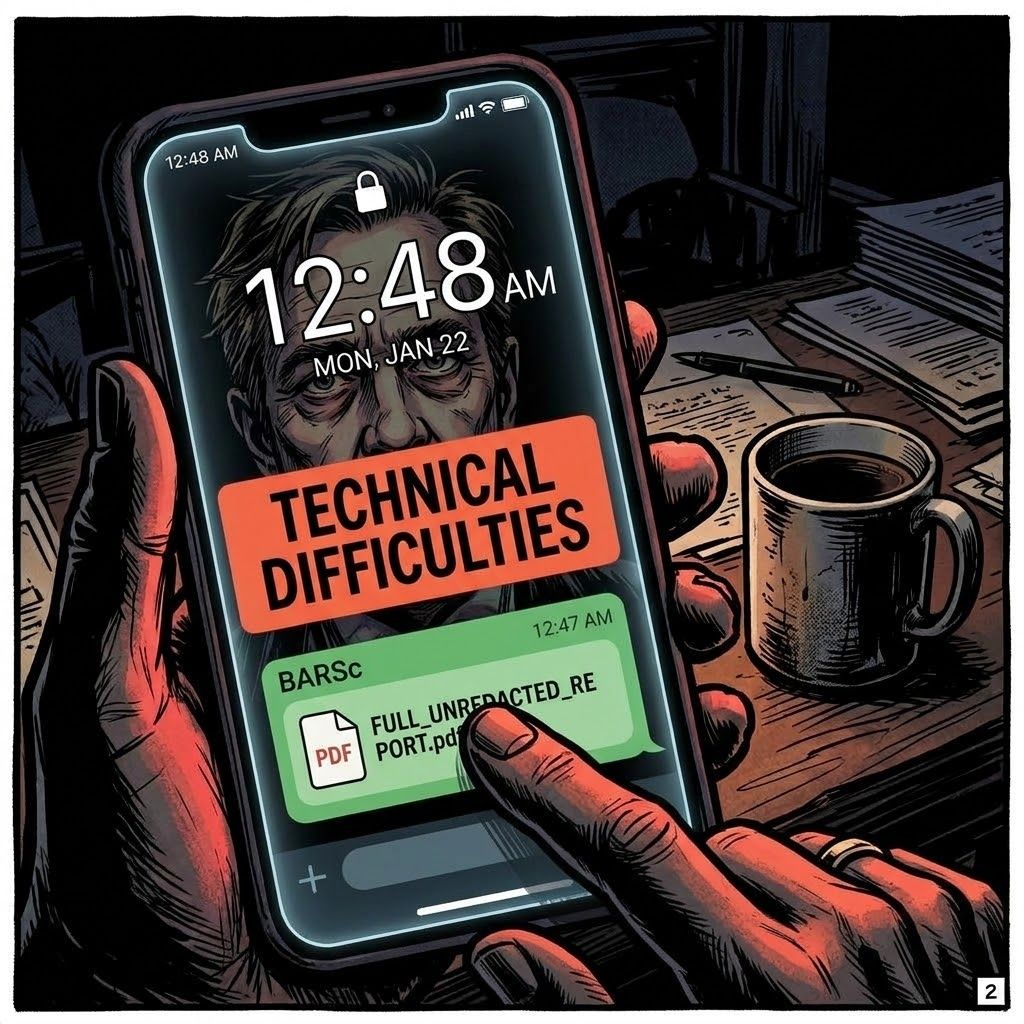
Let’s reconstruct the timeline, because the timeline is the crime. On October 1, the BARSc convened. Civil society was barred from the room. Reporters were ushered out. The livestream was delayed by four hours. By midnight, amendments worth ₱11.49 billion in Department of Public Works and Highways projects materialized in lawmakers’ inboxes.
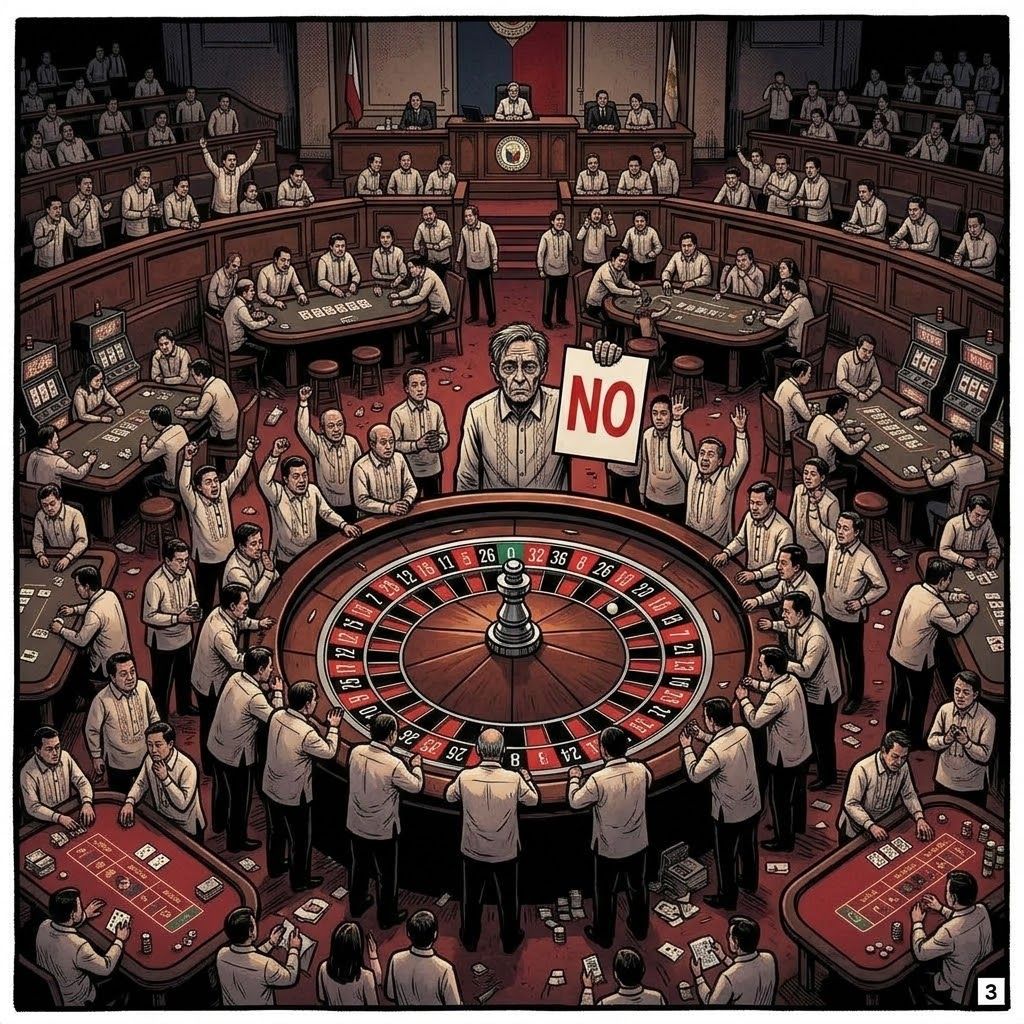
The next day, the House approved the bill on second reading. On October 12, it passed third reading. Thirteen lawmakers voted no. Edgar Erice was one of them.
Erice’s allegation is deceptively simple: ₱11 billion was added to public works and infrastructure with no clear source. More than ₱100 billion was moved. The Metro Manila Subway—a flagship project with signed contracts and foreign financing commitments—was trimmed without plenary debate. And the BARSc, that gleaming monument to House transparency, was, in Erice’s words, “not very transparent.”
Now, before the House propagandists fire up their laptops to call Erice a sore loser, let’s be precise about what is and isn’t established. The ₱11 billion figure is unverified. The ₱100 billion estimate is unverified. Erice’s claim that House allies got billions while impeachment opponents got zero is unverified. The man himself admits his review was preliminary.
But here’s what is verified: the amendments arrived at midnight. The vote happened the next day. Civil society was excluded from the BARSc proceedings. The livestream was delayed. And the House’s own press releases touted the BARSc as a transparency mechanism.
So let me ask the question that no one in the House seems willing to answer directly: If the amendments were so thoroughly vetted, so institutionally justified, so transparent—why couldn’t lawmakers see them before midnight? Why couldn’t the public see the BARSc deliberations in real time? What exactly was being hidden, and from whom?
The “Idle Funds” Defense and Other Fairy Tales
The House defense, such as it is, goes like this: The ₱116.32 billion in BARSc amendments represents reallocation of “idle funds”—programs with unutilized appropriations since 2024. Fiscal responsibility, they call it. Instead of money lying idle, it’s being moved to programs that actually need it.
This is a lovely story. It is also, as a defense against Erice’s specific allegations, entirely beside the point.
The question is not whether reallocation is permissible. Of course it is. Congress has the constitutional power to realign appropriations within the President’s proposed ceiling. The question is whether the process of reallocation met basic standards of legislative deliberation.
The 1987 Constitution of the Republic of the Philippines (the Constitution) requires three readings on separate days, with printed copies distributed three days before passage, unless the President certifies urgency. The spirit of that provision—and I use “spirit” advisedly, because the House seems to have misplaced it somewhere between the BARSc hearings and the plenary vote—is that lawmakers should have time to read the damn bill before they vote on it.
Midnight delivery is not deliberation. It is ratification. It is the legislative equivalent of being handed a restaurant menu after the kitchen has closed and told to order quickly because the chef is waiting.
And the “idle funds” explanation doesn’t even begin to address Erice’s more specific claims. Where did the ₱11 billion come from? If it was idle funds, which programs were cut? Why weren’t those cuts disclosed alongside the additions? If the Metro Manila Subway was trimmed, what was the justification, and why wasn’t it debated on the floor? These are not radical questions. They are the baseline requirements of fiscal oversight in any functioning democracy.
The BARSc: Reform Theater, Act II
Let us pause to appreciate the institutional irony. The BARSc was created in 2025 to replace the “small committee”—a four-member cabal that privately deliberated amendments without minutes, which civil society had rightly condemned as a pork-barrel clearinghouse. The new body has 23 members. It holds public hearings. It livestreams. It displays amendments line by line.
And yet, on the night of October 1, 2026, reporters were ushered out of the room. Civil society was barred. The livestream was delayed for four hours. And the final amendments reached lawmakers at midnight.
Public finance expert Zy-za Nadine Suzara put it with admirable restraint: “They call it reform. Good grief. It is simply another name for the ‘small committee.’”
The BARSc is what happens when an institution learns the vocabulary of transparency without internalizing its grammar. Livestreaming a meeting where the actual decisions are made in executive session, then releasing the outputs at midnight, is not transparency. It is transparency performance—a spectacle designed to generate plausible deniability for the next round of insertions.
And the numbers bear this out. Of the ₱116.32 billion in amendments, ₱98.86 billion—85 percent—was flagged by budget watchdogs as questionable, funneled into “ayuda” programs that run on politician referrals, infrastructure insertions with opaque project plans, the Local Government Support Fund (LGSF), and confidential and intelligence funds. These are, as the People’s Budget Coalition noted, “the exact lines where the last few years’ ghost projects, and political or pet insertions lived.”
The BARSc didn’t eliminate the pork. It gave it a livestream and a press release.
The LGSF: The Presidential Pork Barrel Nobody Wants to Name
Erice’s broader critique extends beyond the midnight amendments to the ₱58.53 billion LGSF, which he has repeatedly called a “presidential pork barrel” designed to grease the wheels for the 2028 elections. The Palace’s response has been consistent: the LGSF is subject to Department of Budget and Management (DBM) evaluation, local government units (LGUs) apply directly, there’s a scorecard, there’s no political intermediary.
This may even be true in form. But form is not the issue. The issue is discretion.
The LGSF, as Erice points out, is a lump-sum fund under the Executive’s control. Congress appropriates the money but doesn’t specify which LGUs get it or how much. The DBM decides. And while the DBM insists there’s a transparent process, the process itself is opaque to anyone outside the executive branch. What are the scorecard criteria? How are they weighted? Why did Naga City get ₱500 million? Why did some districts get billions while others got nothing?
The Palace says the LGSF isn’t a pork barrel because the Supreme Court upheld it in Belgica v. Executive Secretary (2019). But that decision concerned a ₱405-million fund in the 2014 General Appropriations Act (GAA). The current proposal is ₱58.53 billion—144 times larger. The Court’s reasoning in 2019—that the fund had “sufficient standards” because the GAA specified the amount and limited its use—does not automatically scale to a fund of this magnitude, especially when the fund is timed to precede a national election.
The Palace says the LGSF isn’t a pork barrel because the Supreme Court upheld it in Belgica v. Secretary of Budget and Management (G.R. No. 210503, 2019). But that decision concerned a ₱405-million fund in the 2014 General Appropriations Act (GAA)—a figure the Court specifically cited as evidence that the fund had “sufficient standards” because the GAA identified the exact amount and limited its use to maintenance and other operating expenses. The current proposal is ₱58.53 billion. That is 144 times larger. The Court’s reasoning in 2019 does not automatically scale to a fund of this magnitude, especially when the fund is timed to precede a national election and has grown from ₱23 billion in 2025 to nearly ₱58 billion in 2026.
If a ₱405-million fund with restricted use satisfied the constitutional standard, the Court has never explained how a ₱58.53-billion fund distributed at executive discretion in the year before a presidential contest satisfies the same standard. The Palace’s invocation of Belgica is not a legal defense. It is a citation without a theory.
Erice has threatened to take the LGSF to the Supreme Court if Marcos signs the 2027 budget. Good. Let him. The Court should have the opportunity to explain whether a ₱58-billion discretionary fund, distributed by the Executive in the year before a presidential election, meets the constitutional standard for specificity and non-delegation. If it does, then the Belgica doctrine is effectively dead, and we should all stop pretending that the 2013 Priority Development Assistance Fund (PDAF) decision meant anything.
The Reward and Punishment Machine
Erice’s most explosive claim—the one that should, in any sane political system, trigger an immediate ethics investigation—is that the budget was used as a “reward and punishment system.” Allies who supported Vice President Sara Duterte’s impeachment got billions. Opponents got zero.
He cited Ilocos Norte Rep. Sandro Marcos, the President’s son, whose district reportedly received ₱30 billion in infrastructure funding during the 19th Congress and another ₱1 billion in 2026, boosted by nearly ₱5 billion after BARSc revisions. He cited the appropriations chair, who allegedly received over ₱1 billion in additional allocations.
The Palace’s response? Press Officer Claire Castro called Erice’s claims “mema lang”—empty noise. She challenged him to a face-to-face debate. She said the government bases its actions on evidence.
Fine. Then produce the evidence. Publish the amendment matrix. Show the funding sources for every increase. Explain why Sandro Marcos’s district needed ₱5 billion more after the BARSc process. Explain why impeachment opponents received nothing. If the allocations were based on need, show the needs assessment. If they were based on project readiness, show the project documents.
The House has the data. The DBM has the data. The Budget department has the spreadsheets. The refusal to publish a line-by-line reconciliation of the National Expenditure Program (NEP), the BARSc amendments, and the House-approved bill is not an oversight. It is a choice. And that choice speaks louder than any press release about transparency.
The Subway: A Case Study in Fiscal Vandalism
The Metro Manila Subway deserves special attention, because it illustrates what happens when midnight amendments meet multiyear infrastructure commitments.
Erice alleges that the subway was among the projects trimmed in the House version, and that the delay from a 2028 completion target to 2032 is attributable to cuts made during the 19th Congress. The project has signed contracts, foreign financing commitments, and a construction schedule that doesn’t care about the House’s political calendar.
If the subway was cut without plenary debate, without a public explanation, and without an assessment of the contractual and financial consequences, then the House has done something that is arguably worse than pork-barreling. It has jeopardized a flagship infrastructure project—one with real contracts, real penalties, and real consequences for commuters—in service of… what, exactly? Making room for ₱11 billion in untraceable public works insertions?
The government’s estimated exposure to commitment fees and penalties from delayed or defunded foreign-assisted projects has been pegged at ₱300 billion in some analyses. Even if that figure is exaggerated, the principle remains: you cannot treat a signed contract like a line item to be moved at midnight. International creditors and contractors do not care about the BARSc’s livestream schedule. They care about whether the Philippine government honors its commitments.
The Legal Cloud That Won’t Go Away
There is a constitutional cloud hanging over this entire exercise, and it has nothing to do with Erice’s credibility or lack thereof.
Article VI, Section 25(1) of the 1987 Constitution states that Congress may not increase the appropriations recommended by the President. If the ₱11 billion added to public works was not offset by equivalent reductions elsewhere—if it represents a net increase above the NEP ceiling—then the House has violated the Constitution.
Article VI, Section 25(5) prohibits the transfer of appropriations except as specifically authorized. If the BARSc amendments effectively transferred funds from the Metro Manila Subway and other programmed projects to untraceable public works insertions, the constitutional question is whether that transfer occurred during the legislative process (permissible) or constitutes a post-enactment transfer disguised as a legislative amendment (impermissible).
Article VI, Section 27 grants the President line-item veto power. But the veto power is meaningless if the appropriations are so vaguely worded or so lumped together that the President cannot identify what he is vetoing. If the ₱11 billion was inserted as a block allocation with insufficient project specificity, the President’s veto power has been effectively nullified.
The Supreme Court has pending petitions challenging ₱449.5 billion in insertions across the 2024, 2025, and 2026 budgets. The 2027 budget will almost certainly join that docket. And when it does, the House will have to explain, under oath and in writing, how midnight amendments, excluded civil society, delayed livestreams, and untraceable insertions comport with the Constitution’s demand for deliberative appropriation.
What Erice Gets Right, and What He Doesn’t
Let me be fair to the House, because fairness is a discipline, not a concession.
Erice’s estimates are preliminary. His ₱100 billion figure is an approximation, not an audit. His claim that the ₱11 billion had “no source” may turn out to be wrong—there may be corresponding reductions elsewhere that he simply didn’t see in his initial review. His assertion that the subway delay is entirely attributable to budget cuts requires project-level causation analysis, not just correlation. And his broader political narrative—that the budget is a 2028 campaign war chest—is a hypothesis, not a proven fact.
The man was also disqualified by the Commission on Elections (Comelec) from the 2025 elections for spreading false information about the automated election system, a disqualification later dismissed by the Supreme Court on procedural grounds. He is a perennial oppositionist with a talent for generating headlines and a limited legislative track record. He is not a neutral auditor. He is a politician with his own incentives, his own grievances, and his own ambitions.
But none of that changes the central fact: the amendments arrived at midnight. The vote happened the next day. Civil society was locked out. The livestream was delayed. And the House’s response to questions about this process has been, essentially, “trust us, it was transparent.”
Trust is not an accountability mechanism. It is a substitute for one.
The House could resolve this controversy tomorrow by publishing a complete, machine-readable reconciliation of the NEP, the BARSc amendments, and the House-approved bill, with funding sources identified for every increase and every reduction. It could explain the Metro Manila Subway cut. It could publish the LGSF evaluation criteria and the list of approved LGU requests. It could do all of this without admitting any wrongdoing, without validating Erice’s allegations, and without conceding that anything improper occurred.
The fact that it hasn’t done so—that it has chosen instead to dismiss Erice as a noise-maker and defend the process as transparent—tells you everything you need to know about whether the transparency is real or theatrical.
The Cave Echoes
The 2027 budget is ₱7.2 trillion. That is roughly ₱65,000 for every Filipino man, woman, and child. It is the largest single appropriation of public money in the nation’s history. And it was amended at midnight, voted on the next day, and defended with press releases about livestreams.
Erice may be wrong about the ₱11 billion. He may be wrong about the subway. He may be wrong about the reward-and-punishment scheme. But he is not wrong that a budget process that excludes civil society, delivers amendments at midnight, and refuses to publish a traceable funding reconciliation is not a transparent process. It is a process that has learned to perform transparency while practicing something else entirely.
The BARSc was supposed to be reform. Instead, it is the small committee with a Twitter account. The livestream is the fig leaf. The midnight delivery is the truth.
And the Filipino people—who will pay for this budget in taxes, in debt, and in delayed infrastructure—deserve better than a legislative process that treats them like spectators at a magic show, invited to watch the sleight of hand but forbidden from inspecting the hat.
Louis ‘Barok’ C. Biraogo is the author of Kweba ni Barok, where he writes about Philippine governance, fiscal policy, and the ongoing tragedy of public money disappearing into the dark. He has never received a midnight budget amendment, which is probably why he still believes in reading things before voting on them.
Key Citations
A. Legal & Official Sources
- The 1987 Constitution of the Republic of the Philippines. Official Gazette of the Republic of the Philippines, 1987, http://www.officialgazette.gov.ph/constitutions/1987-constitution/.
- Belgica v. Executive Secretary. G.R. No. 210503, Supreme Court of the Philippines, 8 Oct. 2019, http://www.lawphil.net/judjuris/juri2019/oct2019/gr_210503_perlas-bernabe.html.
- “BARSc Livestream and Line-by-Line Amendments.” Press Release 10277, House of Representatives of the Philippines, 2026, congress.gov.ph/media/press-releases/10277.
- “BARSc Membership and Priorities.” Photo Journal 6071, House of Representatives of the Philippines, Sept. 2026, congress.gov.ph/media/photojournal/6071.
B. News Reports
- “P100B Moved, P11B from Who Knows Where, Erice Says; Budget Changes Reached House Members at Midnight.” Bilyonaryo News Channel, Bilyonaryo, 2026, bnc.bilyonaryo.com/p100b-moved-p11b-from-who-knows-where-erice-says-budget-changes-reached-house-members-at-midnight/business/.
- “House Allies Got Billions, Impeachment Opponents Got Zero in 2027 Budget: Rep. Erice.” Politiko, 2026, politiko.com.ph/house-allies-got-billions-impeachment-opponents-got-zero-in-2027-budget-rep-erice/.
- “Watchdogs Tag Pork Insertions.” Daily Tribune, 16 Oct. 2026, tribune.net.ph/2026/10/16/watchdogs-tag-pork-insertions.
- “JV Ejercito Flags House Budget Cuts to Rail Projects, P8B Hike in Flood Control.” Daily Tribune, 14 Oct. 2026, tribune.net.ph/2026/10/14/jv-ejercito-flags-house-budget-cuts-to-rail-projects-p8b-hike-in-flood-control.
- “House Approval of ₱116B Budget Amendments.” Philippine Daily Inquirer, 2026, newsinfo.inquirer.net/2319399.
- “House OKs P7.2-Trillion 2027 Budget Bill.” Senate eClips, Senate of the Philippines, 2026, eclips.senate.gov.ph/congress/house-oks-p72-trillion-2027-budget-bill.
- ₱9 Billion in ‘Savings’? DILG’s Fire Truck Deal Smells Like Smoke

- ₱8B BBM Pork: CCTV for Every Captain’s Kumpare?

- ₱8.9 Billion, 331 Ghost Police Stations: The TIKAS Scandal Explained

- ₱8.4 Billion, 42,000 Barangays, 1 Election: The “Bawat Barangay Makikinabang” Vote-Buying Masterclass

- ₱75 Million Heist: Cops Gone Full Bandit

- ₱6.77B Ghost Haunts Duterte: RTC Dismisses Mans Carpio’s Desperate Plea
- ₱6.77 Billion and Zero Cash: The Sara Duterte SALN Math That Doesn’t Add Up

- ₱6.7-Trillion Temptation: The Great Pork Zombie Revival and the “Collegial” Vote-Buying Circus

- ₱58.53B, Zero Receipts: The LGSF Pork Barrel Nobody Wants to Name
- ₱53 Million Man Tells ₱695-a-Day Workers to Stop Being ‘Mayabang’: The Audacity of BSP’s Remolona
- ₱4.4 Billion and a Witness Who Can’t Explain It: The Duterte Impeachment’s Most Expensive Non-Answer
- ₱3.06 Billion for Evacuation Centers—But Nobody Knows Where They’ll Stand (Or If They’ll Exist)




Leave a Reply